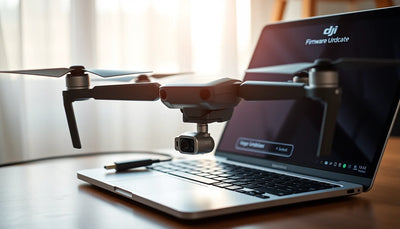
Fine for Drone without CE Marking in Spain
Purchase and use guide in Spain
Quick response
- A photo of a CE marking in an advertisement does not by itself prove that the specific unit, its documentation, and intended use comply in Spain.
- Separate unit inspection, purchase or import, and planned flight: these are related decisions, but they are distinct and not the same decision.
- Before making a payment, request the model, serial number, invoice, provenance history, and the documentation that the seller claims is included with the unit.
- Before flying, confirm the category, location, operator, and applicable training using current AESA/EASA guidance.
What does the CE marking of a specific unit really show?
Product marking and documentation are part of a review of the unit, not a general promise about any drone in the same family. A prudent buyer compares the exact model, serial number, invoice, seller's stated provenance, and available documents before accepting that the unit fits into his or her plan.
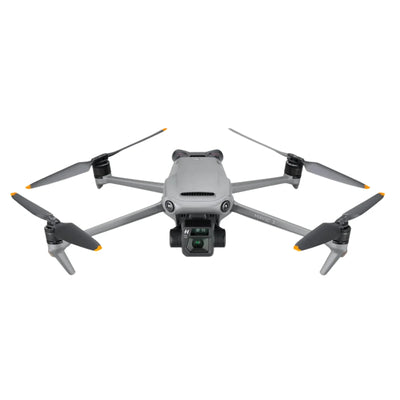
It is also advisable to separate the product rules from the flight rules, as even when the equipment, such as a DJI Mini 5 Pro or Mavic 3, seems appropriate, the way it operates, the location, and the person or organization who will use it can open up other questions, and AESA and EASA are the starting point to confirm the route of the operation, rather than relying on a photograph of an advertisement.
- Keep screenshots of the advertisement and the documents offered before paying.
- Match the serial number and model to the invoice and photos of the unit.
- Do not rely solely on a label, app configuration, or seller claim as a substitute for the complete record.

Why does a purchase from China need a more careful record?
A cross-border purchase may raise concerns about provenance, documentation, battery transportation, local support, and the true identity of the seller, and it is essential to consider these factors when making a purchase. This does not imply that every unit purchased from China will have the same outcome, rather it is advisable to request tests of the specific unit instead of assuming that the sales channel will resolve all issues.
The decision to proceed with the purchase may change if a consistent invoice is missing, if the seller is unable to show the actual unit, if the serial number cannot be properly documented, or if the details of the service and return policies after delivery are unclear. In these situations, the most prudent response is to pause the purchase and clarify the details.

What needs to be confirmed with AESA before planning the flight?
The current AESA/EASA guidance helps to determine the operation based on the equipment, environment, proximity to people, purpose of the flight, and location limitations, and this review should be conducted with the actual mission in mind, rather than a generic product description.
Before the consultation, identify the planned takeoff location, the type of data to be recorded, who will be in control of the operation, the number of people that can be in the surrounding area, and any potential site restrictions to ensure a focused discussion.

What to do if documents are missing or the unit does not match the advertisement?
Do not attempt to complete the unit's history with assumptions, instead ask the seller for current photographs of the equipment, the label or serial number, invoice, and a clear explanation of its origin. If the material received does not match what was offered, document the difference before activating, modifying, or putting the drone into service.
When purchasing a pre-owned unit, the condition record is also a crucial factor, including the condition of the airframe, camera, control, batteries, accessories, and any declared repairs, as this information enables the buyer to make an informed decision based on evidence rather than relying on a promise of fulfillment.

How does a second-hand purchase fit into this decision?
Buying a pre-owned item is not solely determined by price. It is also crucial to ensure that the unit has a traceable history and a viable support system in place. To make an informed decision, compare the unit and its intended use to model references, review its condition history, and confirm the shipping, return, and service terms in writing before making a commitment.
Reboot Hub can provide a clearer purchasing path when you require a specific unit, a condition record, and useful links to compare the model, but it does not replace the AESA review for the flight you are going to take.
File that should be resolved before purchasing
| Topic | Useful evidence | Who should clarify it |
|---|---|---|
| Unit identity | Model, serial number and current photographs | Seller and buyer before payment |
| Product documentation | Invoice, declared origin and available documents | Seller, distributor or manufacturer support |
| Purchase and import | Description of shipment, battery transportation and delivery conditions | Seller, carrier or customs agent |
| Planned flight | Place, close people, purpose and person responsible for the operation | AESA/EASA and those responsible for the place |
| Rear support | Condition, accessories, return and repair route | Seller and service provider |
Keep exploring
Further reading
From The Reboot Hub Chronicle




From Drone Guides