Skip to content

Available 24/7: (852) 5537 6652

Support & Learning

DJI Smart Battery Charging Guide: The Complete Do's, Don'ts & Error Code Breakdown

by LauThomas 29 May 2026 0 comments

Whether you fly a DJI Mavic 3, Air 3, Mini 4 Pro, or a professional Matrice 300 RTK, understanding DJI smart battery charging is essential — your battery is the single most critical component standing between a successful flight and an expensive paperweight. DJI's intelligent flight batteries are marvels of engineering — they communicate real-time voltage data, regulate their own temperature, and even self-discharge to safe storage levels. But none of that intelligence protects you from using the wrong charger, ignoring error codes, or letting cells drift out of balance over time.

At Reboot Hub, our Shenzhen, China workshop has diagnosed and resolved over 800+ DJI battery-related cases since 2022, with technicians holding MOHRSS Level 3 Advanced Technician certification recognised by China's Ministry of Human Resources and Social Security. We see dozens of battery-related issues every week. The overwhelming majority are preventable. This guide distils everything we know about charging DJI smart batteries correctly, reading and resolving error codes, and maintaining cell balance so you get the longest possible service life from every pack you own.

How Does a DJI Smart Battery Work?

Quick Answer: Always use an original DJI charger or a USB-C PD charger matching the required wattage (65 W for Mavic 3 / Air 3, 30 W for Mini series). Allow batteries to cool below 40 °C before charging, never interrupt cell balancing at 95–99 %, and enable auto-discharge for storage. A single battery charges in 50–70 minutes; three batteries via a hub take 2–3.5 hours.

Before we talk about chargers and charge rates, it helps to understand what makes a DJI battery "smart." Unlike a simple LiPo pack with bare balance leads, every DJI Intelligent Flight Battery contains an onboard Battery Management System (BMS). This tiny circuit board does several things:

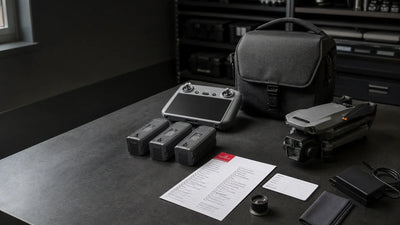
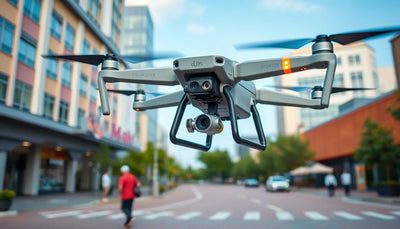
DJI Smart Battery Charging Guide The Complete Dos - professional image
  • Cell monitoring: It reads the voltage of each individual cell (typically 3S or 4S, depending on the model) hundreds of times per second.
  • Temperature sensing: One or more thermistors report pack temperature to the BMS, which can throttle or halt charging if things get too hot.
  • Communication: The BMS talks to the aircraft and the charger via a proprietary data bus, transmitting state-of-charge (SoC), cycle count, cell voltages, and error flags.
  • Auto-discharge: After a configurable idle period (default is usually 10 days, adjustable in DJI Fly or DJI Pilot), the battery slowly discharges itself to a storage-safe voltage of approximately 3.85 V per cell.
  • Over-charge and over-discharge protection: Hardware-level cutoffs prevent cells from exceeding safe voltage windows.

This architecture means you cannot treat a DJI battery like a generic LiPo. It expects to communicate with a DJI-protocol charger or charging hub, and it will reject input that falls outside its safety parameters.

Which Charger Should You Use for DJI Smart Battery Charging?

Why the Right Charger Matters

DJI designs its chargers to deliver a specific voltage and current profile that the onboard BMS expects. Using a third-party charger that does not speak DJI's communication protocol may result in the battery refusing to charge, charging at a reduced rate, or — in the worst case — charging unsafely. We always recommend using an original DJI charger or a DJI-approved accessory.

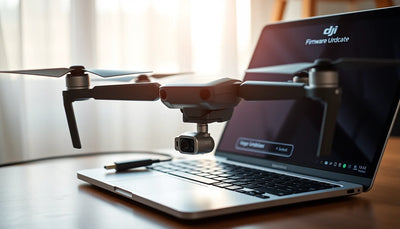
DJI Smart Battery Charging Guide The Complete Dos - technical diagnostic close-up view

DJI Charger Line-Up by Product Family

Battery Family Official Charger Output Notes
Mavic 3 Series (Mavic 3, 3 Classic, 3 Pro) DJI 65W Portable Charger 65 W (USB-C PD) Also charges RC Pro and phones via USB-C
DJI Air 3 / Mini 4 Pro DJI 65W Portable Charger or DJI Mini 30W Charger 65 W / 30 W USB-C 30 W unit charges one battery at a time; 65 W required for hub
DJI Mini 3 / Mini 3 Pro DJI 30W USB-C Charger 30 W USB-C PD Compact; no hub charging at higher rates
Matrice 300 / 350 RTK DJI BS60 Intelligent Battery Station Up to 2 × 189 W simultaneous Industrial-grade; supports hot-swap cycling
Matrice 30 / M30T DJI WB37 Charging Hub Dual-port, model-specific Supports parallel charging with firmware update
DJI FPV / Avata Series DJI FPV/Avata Charging Hub Model-specific Sequential charging; one battery at a time through hub

Can You Use a Generic USB-C Charger?

In many cases, yes — but with caveats. DJI's newer batteries charge via USB-C Power Delivery (PD). A generic USB-C PD charger will work if it supports the required voltage and wattage. For example, the Mavic 3 battery needs at least 20 V / 3.25 A (65 W). A 45 W PD charger will charge the battery, but noticeably slower. A 20 W phone charger may not initiate charging at all, or it will charge at a crawl. The key rule: match or exceed the wattage, and ensure PD protocol support. Quick Charge (QC) alone is not sufficient.

How Do DJI Multi-Battery Charging Hubs Work?

How DJI Charging Hubs Work

A DJI Charging Hub is not a parallel charger in the traditional RC sense. Instead, it is a sequential charger with intelligence. You insert up to three (or four, depending on model) batteries, and the hub communicates with each battery's BMS to determine which one needs charging most urgently. It then charges them one at a time, typically prioritising the battery with the highest state of charge so you can get one flyable pack as quickly as possible.

DJI Smart Battery Charging Guide The Complete Dos - tools and equipment workspace setup

Some newer hubs — like the DJI Mavic 3 Charging Hub — support a mode where the hub will charge the most depleted battery first (configurable in the DJI Fly app under the hub's settings). Always update your hub's firmware through the app to get the latest charging algorithms.

Charge Rate and Throughput

The charge rate is governed by two factors: the charger's wattage and the hub's internal electronics. Here is what you can expect in practice:

  • DJI Mavic 3 Charging Hub + 65 W charger: approximately 1 hour 10 minutes per battery (from 0 % to 100 %). Three batteries take roughly 3 hours 30 minutes total.
  • DJI Air 3 / Mini 4 Pro Charging Hub + 65 W charger: approximately 50–60 minutes per battery. Three batteries take about 2.5 hours.
  • DJI Mini 3 Charging Hub + 30 W charger: approximately 70–80 minutes per battery; sequential.
  • DJI BS60 Battery Station (M300 RTK): two batteries simultaneously in roughly 60 minutes; supports up to eight batteries in rotation.

Important: the hub will only charge as fast as the charger feeding it allows. If you connect a 65 W hub to a 30 W charger, each battery will take proportionally longer. Always pair the hub with the highest-wattage charger DJI specifies for it.

Tips for Multi-Battery Charging Sessions

  1. Let batteries cool before inserting them. A battery straight off a flight may be 45–55 °C. The hub will either refuse to charge it or charge it at a very slow rate until it cools below 40 °C. Wait 10–15 minutes.
  2. Update firmware before charging. Connect each battery to the aircraft and update via DJI Fly or DJI Pilot before a bulk charge session. Out-of-date firmware can cause erratic charging behaviour.
  3. Don't stack batteries in a hot car. If you are charging in a vehicle, ensure air conditioning is running. The charging hub itself generates heat, and an enclosed 50 °C cabin will push batteries into thermal throttling.
  4. Use the hub's LED indicators wisely. A solid green LED means fully charged. Blinking green means charging in progress. A solid red LED indicates an error — see the error code section below.

What Do DJI Battery Charging Error Codes Mean — and How Do You Fix Them?

DJI batteries communicate errors through LED blink patterns on the battery itself, through the hub's LEDs, and through on-screen notifications in the DJI Fly or DJI Pilot app. Below is a comprehensive reference table of the most common charging error codes and their solutions.

DJI Smart Battery Charging Guide The Complete Dos - professional repair and inspection process

Common Charging Error Codes

Error / Symptom Likely Cause Solution
Battery LED blinks red 2× then pauses Cell voltage too low (deep discharge) Attempt a slow trickle charge. If the battery does not accept charge within 30 minutes, the cell may be permanently damaged. Contact Reboot Hub for evaluation.
Battery LED blinks red 3× then pauses Over-temperature protection triggered Remove battery from charger/hub. Let it cool to room temperature (below 35 °C) before retrying.
Battery LED blinks red 4× then pauses Communication error between BMS and charger Clean the battery contacts with isopropyl alcohol. Try a different charger or charging port. If persistent, the BMS board may need repair — see our DJI repair cost guide for pricing.
Hub LED solid red General charging fault Remove all batteries. Power-cycle the hub. Reinsert batteries one at a time to identify the faulty unit.
"Battery cell damage" in app One or more cells have fallen below the minimum safe voltage (usually 3.0 V) The battery is flagged as unsafe. Do not fly with it. Read our LiPo storage safety guide for proper disposal procedures.
"Battery firmware mismatch" in app Battery firmware is older than the aircraft's expected version Connect the battery to the aircraft and perform a firmware update via DJI Fly / DJI Pilot.
"Battery authentication failed" Non-genuine battery or corrupted BMS data Only DJI-genuine batteries are supported. If you believe the battery is genuine, contact DJI support or bring it to Reboot Hub for diagnostics.
Charging stops at 95–99 % and won't reach 100 % Cell balancing in progress (normal behaviour) Leave the battery on the charger. Balancing can take an additional 10–30 minutes. This is expected and healthy.
"Battery temperature too low" in app Ambient temperature below 5 °C Warm the battery to above 5 °C before charging. Charge indoors or in a heated environment.

When to Stop Using a Battery

If any of the following conditions are present, retire the battery immediately:

  • Visible swelling or puffing of any cell
  • A burnt or chemical smell emanating from the pack
  • The battery will not hold more than 50 % of its rated capacity after a full charge cycle
  • The aircraft repeatedly reports "cell voltage error" despite successful balancing
  • Physical damage — cracks, dents, or exposed wiring on the battery casing

Never dispose of lithium-polymer batteries in household waste. Bring them to a certified e-waste recycling centre. In Shenzhen, the Reboot Hub workshop accepts old DJI batteries for safe disposal.

What Is Cell Balancing and Why Does It Matter for DJI Batteries?

What Is Cell Balancing?

Every DJI smart battery is a multi-cell pack (typically 3S or 4S — meaning three or four cells wired in series). In an ideal world, all cells would have identical capacity and internal resistance, and they would charge and discharge at exactly the same rate. In reality, manufacturing tolerances mean that over time, cells drift. One cell may sit at 4.18 V while another is at 4.22 V at the end of a charge. This imbalance reduces usable capacity and, in extreme cases, can cause one cell to be over-charged or over-discharged.

Cell balancing is the process of equalising the voltage across all cells. DJI's BMS performs this automatically during the final stage of charging. When the first cell reaches 4.20 V (full charge), the BMS begins to bleed off small amounts of current from the higher cells while continuing to charge the lower ones. This is called passive balancing, and it is why your battery sometimes sits at 98–99 % for an extra 10–30 minutes.

How to Encourage Good Balance

  1. Always charge to 100 % periodically. If you only ever fly your battery down to 50 % and then recharge to 80 %, the balancing circuitry never gets a chance to equalise the cells. Aim for a full 100 % charge at least once every 3–5 cycles.
  2. Don't interrupt the balancing phase. When you see the battery hovering at 95–99 %, resist the urge to pull it off the charger. Let the BMS finish its work.
  3. Store at storage voltage. DJI's auto-discharge feature handles this, but if you manually manage storage, aim for 3.83–3.87 V per cell (roughly 60 % charge). This is the voltage range with the least chemical stress on lithium-polymer cells.
  4. Avoid repeated deep discharges. Flying until the battery auto-lands at 10 % stresses cells unevenly and accelerates imbalance. Plan to land with at least 20 % remaining.
  5. Monitor cell voltages in the app. In DJI Fly, go to the battery settings and check individual cell voltages during flight. If you see a cell that is consistently 0.1 V or more lower than the others under load, that cell may be degraded. Our battery lifespan guide has additional tips on diagnostics.

When Balancing Is Not Enough

If you charge a battery to 100 %, leave it on the charger for an extra hour, and the cells still show a spread greater than 0.05 V at rest, the pack may have elevated internal resistance in one cell. This is a sign of aging or damage. The battery may still be usable for non-critical flights, but its total capacity will be reduced, and it will sag more under load. Consider it a candidate for replacement or send it to a professional repair centre for further evaluation.

What Are the Do's and Don'ts of DJI Smart Battery Charging?

Do's

  • Do use the official DJI charger for your battery model whenever possible.
  • Do update battery and charger firmware before a long charging session.
  • Do allow batteries to cool below 40 °C before charging.
  • Do let the BMS complete cell balancing — leave the battery on the charger until the hub LED shows solid green.
  • Do charge in a dry, well-ventilated area on a non-flammable surface.
  • Do perform a full charge cycle every 3–5 flights to allow proper balancing.
  • Do use DJI's auto-discharge feature and set the idle period to match your flying schedule (typically 1–10 days).
  • Do inspect battery contacts for dirt or corrosion before each charge session.
  • Do carry a fireproof LiPo safety bag when charging in the field.

Don'ts

  • Don't charge a battery that is swollen, damaged, or smells unusual.
  • Don't charge unattended overnight in an enclosed space without a smoke detector nearby.
  • Don't leave batteries at 100 % charge for more than 48 hours — use the auto-discharge feature or manually fly them down.
  • Don't use a charger with a different voltage or connector, even if it physically fits.
  • Don't charge in direct sunlight or inside a parked car in summer.
  • Don't ignore red LED error codes — investigate before retrying.
  • Don't mix batteries of different firmware versions on the same charging hub without updating them first.
  • Don't attempt to disassemble or modify a DJI smart battery — the BMS calibration will be lost, and the battery becomes a safety hazard.

What Pro Tips Do Reboot Hub Technicians Recommend for DJI Battery Care?

After thousands of battery cycles through our Shenzhen, China facility, here are some field-tested tips that go beyond the manual:

  1. Label your batteries with purchase dates and cycle counts. DJI Fly records cycle count, but a physical label on the battery helps when you have multiple packs in rotation. Most DJI batteries are rated for 200–400 cycles depending on the model; tracking this helps you plan replacements before failure.
  2. Rotate your batteries evenly. If you own four batteries, don't always grab the same two. Even use extends the collective lifespan of your fleet because no single pack is disproportionately cycled.
  3. Use a USB-C power meter. A small inline USB-C meter (widely available for under $7) lets you verify the actual wattage being delivered to the charger or hub. This is invaluable for troubleshooting slow charge issues.
  4. Keep firmware current — but not bleeding-edge. DJI occasionally releases battery firmware that optimises charge curves. However, if a new firmware version has just been released, wait a week and check community forums for reports of issues before updating your entire fleet.
  5. Consider a cooling fan. In hot Shenzhen summers, placing a small desk fan near your charging hub can reduce charge times by 10–15 % by keeping battery temperatures in the optimal charging window (15–35 °C).
  6. For commercial operators: invest in a Battery Station. If you are flying daily with a Matrice or Inspire series, the BS60 or equivalent battery station pays for itself in time saved and battery longevity. These stations have active thermal management and optimised charge profiles that consumer hubs lack.

Frequently Asked Questions

Can I charge a DJI battery with a power bank?

Yes, if the power bank supports USB-C Power Delivery at the required wattage. For a Mavic 3 battery, you need at least 65 W PD output. Many high-capacity power banks (20,000 mAh+) now support this. Charging will be slower than from a wall outlet, but it works well for field top-ups. Ensure the power bank can sustain the wattage continuously — some banks throttle output after a few minutes.

Why does my battery stop charging at 96 % for a long time?

This is normal cell balancing behaviour. The BMS has detected a voltage difference between cells and is actively equalising them. Leave the battery on the charger and it will reach 100 % within 10–30 minutes. If it stays at 96 % for more than an hour, try a different charger or hub to rule out a communication issue.

How long can I leave a fully charged DJI battery before it is damaged?

DJI's auto-discharge feature will begin draining the battery to storage voltage after your configured idle period (1–10 days, set in DJI Fly). Leaving a battery at 100 % for 48 hours is not harmful, but prolonged storage at full charge accelerates capacity loss. If you are not flying for more than a week, ensure auto-discharge is enabled. For long-term storage (months), charge to approximately 60 % and check the battery every three months.

Is it safe to charge DJI batteries overnight?

DJI's BMS includes over-charge protection, and the charger will stop delivering current once the battery is full. Technically, it is safe. However, we recommend charging in a ventilated area, on a non-flammable surface, and ideally in a LiPo safety bag. Avoid charging unattended on a bed, sofa, or inside a closed drawer. If you must charge overnight, ensure a working smoke detector is present in the room.

What does "battery cell damage" mean, and can I fix it?

This error indicates that one or more cells have fallen below the minimum safe voltage (typically 3.0 V) or have developed excessive internal resistance. In some cases, a very slow trickle charge with an official DJI charger can recover a mildly over-discharged cell — but there are no guarantees. If the battery accepts charge and balances within spec after recovery, you may cautiously resume use while monitoring performance closely. If the error persists after multiple charge attempts, the cell is permanently degraded and the battery should be retired. Reboot Hub offers professional battery diagnostics if you want a definitive assessment.

How much does DJI battery BMS repair cost at Reboot Hub?

A Battery Management Board repair at Reboot Hub costs $60–80 for chip-level component replacement — significantly less than US/EU authorised service rates of $100–160. Turnaround is typically 2–4 business days from receipt. See our full DJI Repair Cost Database 2026 for model-by-model pricing.

How do I send a faulty DJI battery to Reboot Hub for inspection?

Contact us through Reboot Hub's professional DJI repair service page to request a free diagnostic quote. We accept shipments worldwide. Pack the battery in a LiPo safety bag, include a brief fault description, and ship to our Shenzhen, China facility. We diagnose within 24 hours of receipt and provide a detailed repair quote before any work begins. All repairs carry a 90-day warranty.

Reboot Hub · Support

Need Professional Help?

If your drone needs repair after troubleshooting, Reboot Hub offers certified chip-level repair in Shenzhen, China — genuine OEM parts, 90-day warranty.

Prev post
Next post

Leave a comment

Please note, comments need to be approved before they are published.

Thanks for subscribing!

This email has been registered!

Shop the look

Choose options

Edit option
Back In Stock Notification
this is just a warning
Login
Shopping cart
0 items
0%