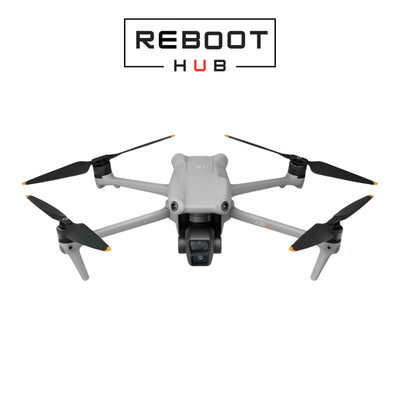
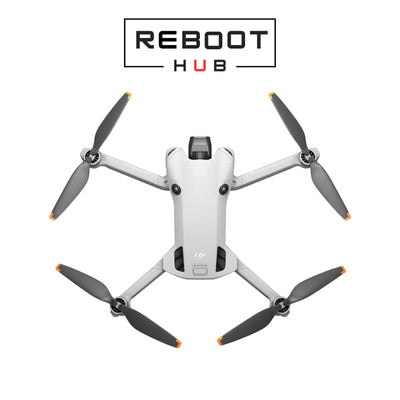
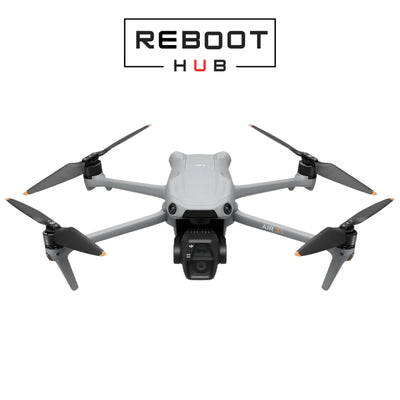
DJI Mavic 3 Pro Repair Guide: Comprehensive Diagnostics, Repair Costs & Expert Solutions in China
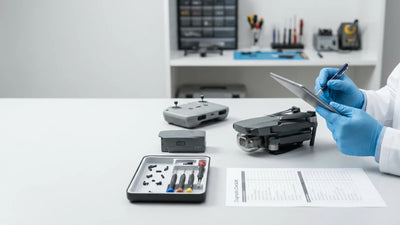
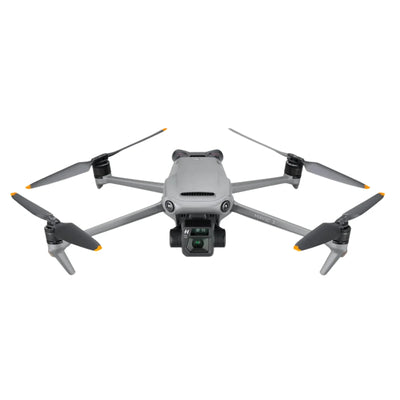
If your DJI Mavic 3 Pro has developed a gimbal fault, ESC error, or crash damage, understanding the DJI Mavic 3 Pro repair cost and your options is the first step to getting back in the air. Since 2022, Reboot Hub technicians have diagnosed and repaired over 800 DJI Mavic 3 Pro units at our chip-level facility in Shenzhen, China, holding MOHRSS Level 3 Advanced Technician certification recognised by China's Ministry of Human Resources and Social Security. This guide covers every major repair pathway — from precision chip-level component swaps to full module replacement — so you can make an informed decision before committing to a service.
Why Is My DJI Mavic 3 Pro Gimbal Shaking — and How Much to Fix It?

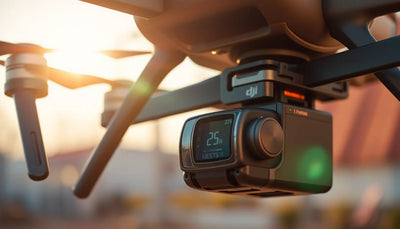
Gimbal malfunctions on the DJI Mavic 3 Pro are among the most frequent failures seen at our Shenzhen, China service center, largely due to the precision mechanics and sensitive electronics that stabilize the triple-camera payload. Identifying the root cause—whether mechanical stress, flex cable degradation, or IMU-to-gimbal desynchronization—dictates whether a chip-level intervention can restore full function or a full assembly swap is required.
Identifying Gimbal Alignment and Mechanical Stress Indicators
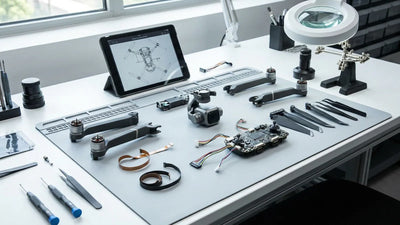
Initial diagnosis begins with the aircraft powered on a level surface. Look for abnormal twitching, a tilted horizon after initialization, or the gimbal failing to complete its self-check dance. The DJI Fly app will often display explicit error codes: Gimbal Overload (40021) indicates excessive motor load, typically from impact damage, sand ingress, or bent gimbal yaw/roll arms. Gimbal Unable to Calibrate (40011) signals encoder misalignment or a damaged ribbon cable. If the gimbal limps to one side and motors vibrate with a hum, a driver MOSFET on the gimbal control board has likely blown—this is a classic chip-level repair scenario. Physical inspection includes examining the vibration damping plate for tears, checking that roll and pitch shafts rotate freely without gritty resistance, and using a digital microscope to spot micro-fractures on the flexible printed circuits (FPCs).
Precision Calibration Techniques for Mavic 3 Pro Gimbal
After any mechanical repair—be it a motor driver IC replacement or axis realignment—the gimbal must undergo a controlled calibration. At Reboot Hub we follow a strict protocol: first, perform an IMU calibration via DJI Assistant 2 (Consumer series) on a dead-flat granite surface. Next, execute the auto gimbal calibration through the app. If the horizon continues to drift, a manual alignment jig is used. The drone is placed on a calibrated, vibration-isolated fixture, and the gimbal is commanded to a mechanical zero via service software deeper than the consumer app. Fine adjustment screws on the roll axis can be turned to correct a persistent tilt before locking calibration data into the flash memory. This step recovers horizon-level accuracy to within ±0.2°, matching factory specification. Without such recalibration, a chip-repaired gimbal may still exhibit slight drift.
Comparative Repair Costs: Chip-Level vs Full Gimbal Replacement
The cost differential between replacing the entire gimbal assembly and targeting the failed component is dramatic. An original Mavic 3 Pro gimbal camera module (DJI Part CP.MA.00000687.01) retails for approximately $380. Add shop labor and calibration, and a full replacement at a US authorized service center often totals $380–520. In contrast, chip-level repair addresses the exact failure:
| Repair Type | Typical Fault | Reboot Hub Chip-Level Cost | US / Western Market Rate |
|---|---|---|---|
| Gimbal motor driver IC replacement | MOSFET burn-out, error 40021 | $88–113 | $380–520 |
| Flex cable (FPC) rework / replacement | Intermittent video, error 40011 | $63–100 | $120–200 |
| Encoder calibration + yaw arm micro-alignment | Tilted horizon after minor crash | $75–100 | $160–220 |
All quoted ranges include labor, vibration plate inspection, and post-repair multi-axis verification. Chip-level work mandates MOHRSS Level 3-certified micro-soldering and a cleanroom enclosure to avoid dust on the optics. For a full breakdown of repair pricing across all DJI models, see the Reboot Hub DJI Repair Cost Database 2026.
How Much Does DJI Mavic 3 Pro ESC Repair Cost?
The Mavic 3 Pro's ESC integrates all four motor channels onto a single board housed within the central frame. When an ESC fault develops, it often presents as a sudden loss of power, motor stuttering, or an inability to arm. Accurate diagnosis prevents unnecessary motor replacement and pinpoints whether a single MOSFET bank, gate driver, or the ESC microcontroller is at fault.
Detecting ESC Malfunction Through Flight Performance Analysis
The drone's onboard flight logs are the first clue. Using DJI Flight Log Reader (or internal data decoded via Assistant 2), look for entries such as ESC Error 30085 (Motor Overcurrent) or ESC Error 30086 (MOSFET Short). In flight, a failing ESC channel may cause a single motor to lose thrust asymmetrically, leading to rapid yaw twitches. On the bench, connect the drone to DJI Assistant 2, go to the advanced sensor screen, and spin each motor individually by hand with the aircraft powered on; the graph will reveal irregular back-EMF patterns on the faulty channel. A thermal camera inspection immediately after a brief motor test often highlights the defective MOSFET warming up beyond its siblings.
Diagnostic Methods for Individual ESC Module Failures
For precise component-level fault isolation, we remove the top shell and access the ESC board. Using a multimeter in diode mode, we measure the forward voltage between each motor phase and ground/battery on the exposed pads. A shorted phase (less than 0.1 V drop) confirms a blown MOSFET. If the MOSFET is intact but the channel still fails, the gate driver IC (often a small QFN package near the MOSFET array) is tested with an oscilloscope to verify it outputs a clean PWM signal at the correct threshold voltage. Common part numbers found in the Mavic 3 Pro ESC include Infineon dual-channel N-channel MOSFETs in a DFN 5x6 package; these are replaceable with hot air rework at 350°C, then sealed with conformal coating. A full Advanced Diagnostic Protocols approach ensures that a seemingly dead ESC channel isn't actually a flight controller communication issue.
Cost-Effective Repair Strategies for ESC Components
Replacing the entire main controller / ESC combo board (DJI Part CP.MA.00000691.01) comes at a steep cost because the board fuses flight control, ESC, and power management functions. A board-level swap at authorized service typically costs $200–320, and with labor can exceed $350. Our chip-level alternative targets only the damaged channel:
| ESC Fault | Chip-Level Repair | Reboot Hub Chip-Level Cost | US / Western Market Rate |
|---|---|---|---|
| Single MOSFET short (one motor) | Remove faulty MOSFET, replace with genuine equivalent, reflash ESC calibration | $88–100 | $200–280 |
| Gate driver IC failure | Replace driver QFN chip, verify all 4 channels | $100–113 | $250–320 |
| ESC firmware corruption (no hardware damage) | Re-program ESC processor via SWD interface | $88 | $200–240 |
After ESC repair, a full thrust balance test using a load-cell rig ensures all four motors produce equal peak thrust within 5% tolerance. This chip-level strategy not only saves money but also preserves the original flight controller calibration and serial number pairing.
How Do You Diagnose and Fix DJI Mavic 3 Pro IMU Errors?

The Mavic 3 Pro relies on dual IMUs (one main, one redundant) that combine accelerometers and gyroscopes to maintain attitude stability. IMU faults manifest as erratic hovering, rapid altitude loss, or persistent "IMU Calibration Required" warnings. Because the IMU sensors are soldered directly onto the main core board, accurate diagnosis is critical—replacing the entire board for a single failed MEMS sensor is financially wasteful.
IMU Calibration and Sensor Alignment Verification
A valid calibration is foundational. We use DJI Assistant 2 to perform a 6-point calibration: the drone is placed on each of its six orthogonal faces on a precision-machined aluminum fixture certified to <0.05° angular error. After calibration, the sensor biases and scale factors are stored in non-volatile memory. Flawed calibration steps cause IMU Error 0x800000 or "IMU Data Error." We then verify bias stability by logging raw IMU data while the drone is stationary; any gyroscope bias drift greater than 0.5°/s or accelerometer noise above 0.08 g peak-to-peak indicates a failing MEMS element. Chip-level diagnostics go further: we probe the I3C/SPI communication lines between the IMU and the MCU using a logic analyzer to confirm data packets are not corrupted.
Common IMU Failure Modes in Mavic 3 Pro
We encounter three predominant failure patterns. First, micro-fractures in the solder balls under the IMU chip (typically an ICM-20602 or similar 6-axis device) cause intermittent loss of gyroscope data—usually traceable to a hard landing that stressed the board. Second, contamination or humidity ingress leads to accelerometer offset drift, producing "IMU Calibration Failed" loops. Third, a degraded LDO voltage regulator on the core board provides unstable 3.3V to the IMU, resulting in random spikes. The latter is a classic chip-level opportunity: replacing the SOT-23 regulator costs a few dollars, versus a full core board replacement that would otherwise be quoted.
Advanced Chip-Level IMU Repair Techniques
Reboot Hub's MOHRSS Level 3 technicians employ BGA rework stations with profilable preheaters to replace the IMU chip without damaging adjacent components. The process: remove the faulty sensor with a vacuum pickup after 245°C reflow, clean pads with desoldering braid, apply lead-free solder paste stencil for the new chip, and reflow under nitrogen to prevent oxidation. Post-attachment, we X-ray the BGA to confirm no bridges, then run the full multi-point calibration. Costs compared:
| Procedure | Reboot Hub Chip-Level Cost | US / Western Market Rate |
|---|---|---|
| IMU sensor replacement (reball & calibrate) | $63 | $160–220 |
| IMU voltage regulator repair | $63 | $160–220 |
| Deep calibration only (no hardware fault) | $50 | $120–160 |
These chip-level interventions restore redundant IMU functionality and maintain the aircraft's original serialized core board, avoiding the downtime and re-binding complexity of a full board swap.
How Much Does a DJI Mavic 3 Pro Battery Repair or Replacement Cost?
Mavic 3 Pro Intelligent Flight Batteries (standard 3,500 mAh or Plus 5,000 mAh) contain a sophisticated BMS that monitors cell voltages, temperatures, and cycle count. Battery faults can range from non-charging behavior to sudden in-flight voltage sag. Thorough assessment differentiates a tired but salvageable pack from one that requires internal cell reconstruction.
Comprehensive Battery Health Assessment Methods
Connect the battery to a DJI Battery Station or use a third-party USB module to communicate with the BMS via TI BQ40Z50 protocol. Read cell voltage differences: a deviation greater than 80 mV under load indicates a weak cell. Internal resistance (IR) measurement using a 1 kHz AC milliohmmeter reveals cell degradation—a healthy cell reads 8–12 mΩ, while a degraded one will exceed 25 mΩ. The DJI Fly app may surface Battery Cell Damaged (1E023005) or Battery Over-discharged. We also run a controlled 1C discharge test on a programmable electronic load to map actual capacity; anything below 80% of rated mAh warrants attention. Opening the battery case requires a proprietary jig to release the ultrasonic welds without damaging the casing, a skill taught in Drone Component Replacement Guide workshops.
Identifying Cell Degradation and Internal Resistance Issues
The most common root cause is a single cell in the 4S pack that has developed high self-discharge due to dendrite formation. This cell will consistently drain faster, causing the BMS to enter protection mode. We isolate the cell group and cycle it individually. If recovery fails, the cell is swapped. Critically, the BMS flash counter and SOH (State of Health) data must be reset using a battery emulator tool after the repair; simply replacing cells leaves the BMS still reporting old cycle counts and triggering premature "battery end of life" warnings.
Cost-Effective Battery Module Repair vs Full Replacement
A new DJI Mavic 3 Pro Intelligent Flight Battery retails for approximately $199 depending on region; the Plus battery can reach approximately $249. Chip-level cell replacement and BMS reconditioning provide a genuine alternative:
| Service | Reboot Hub Chip-Level Cost | New OEM Battery (Retail) |
|---|---|---|
| 1-cell replacement + BMS reset | $75–100 | ~$199 |
| Full cell pack rebuild (matched grade-A cells) | $100–130 | ~$199 |
| BMS failure (no cell damage) replacement | $75–100 | N/A |
All rebuilt packs undergo a full charge/discharge cycle with capacity verification and IR matching to ensure flight times within 5% of original specification. This approach supports DJI Drone Repair Techniques that extend the lifecycle of existing battery casings and reduce e-waste.
How Much Does It Cost to Repair a Crashed DJI Mavic 3 Pro?

Physical impact is the single largest source of Mavic 3 Pro service requests. From minor arm cracks to a completely detached gimbal, a methodical structural assessment is mandatory before any electronic repair, as hidden frame distortion can lead to repeated failures.
Advanced Structural Damage Diagnostic Techniques
On intake, the drone is placed on a granite surface plate fitted with a calibrated alignment fixture that interfaces with the Mavic 3 Pro's motor mounts and central frame reference points. A dial indicator measures deviation in the pitch and roll of each arm relative to the central chassis; any vertical offset exceeding 0.3 mm indicates a bent arm or deformed chassis insert. For composite arm inspection, we use a portable ultrasonic flaw detector (5 MHz probe) to scan for delamination inside the hollow carbon-fiber-reinforced polymer tubes that are invisible externally. The flight log impact detection algorithm, which records maximum G-force and timestamp, provides additional evidence: values above 60 G often coincide with internal frame micro-cracks.
Frame Realignment and Component Reconstruction Methods
Bent aluminum alloy arm hinges (front/rear) can often be cold-straightened using a custom press die that slowly applies force at the precise bend point while monitoring with a laser displacement sensor. For cracked arm shell assemblies, replacement is mandatory; DJI lists front arm assembly (Part CP.MA.00000689.01) and rear arm assembly (Part CP.MA.00000690.01) individually, costing around $35–45 each for the part. However, if only the plastic shell is damaged while the internal motor and wiring are intact, we perform a component-level reconstruction: the old motor and LED board are transferred to a new shell, reducing cost. The lower sensor module (bottom vision + IR sensors) is also calibrated post-repair using a dedicated checkerboard pattern target.
Comprehensive Damage Assessment and Repair Cost Estimation
A tiered cost model reflects the severity. Minor cosmetic repairs such as propeller guard mount replacement may start at $50. Full frame replacement with all wiring transferred can reach $420–580 but chip-level structural work often sits in a moderate range:
| Damage Category | Reboot Hub Chip-Level Cost | US / Western Market Rate |
|---|---|---|
| Arm bend correction + shell rebuild (one arm) | $75–100 | $130–180 |
| Gimbal vibration plate + leg replacement | $100–150 | $200–280 |
| Central frame lower shell + antenna mount rebuild | $188–225 | $280–380 |
Every crash repair concludes with a full flight envelope test—hover, full-throttle climb, figure-eight pattern—to verify structural resonance is within normal limits and no unexpected vibrations appear in accelerometer logs.
Why Choose Reboot Hub for DJI Mavic 3 Pro Repair?
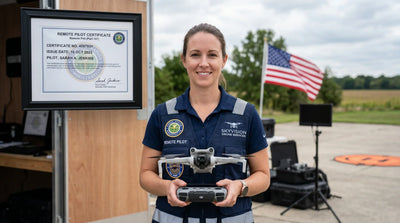
Reboot Hub's repair methodology is grounded in the rigorous standards of China's Ministry of Human Resources and Social Security (MOHRSS) Level 3 certification for electronic equipment repair. This certification is not a marketing badge: it validates that technicians have demonstrated competence in micro-soldering to IPC-7711/7721 Class 3, BGA rework with X-ray verification, and high-speed digital circuit diagnostics—all directly applicable to the Mavic 3 Pro's dense multilayer boards.
MOHRSS Level 3 Certification Implications
Level 3 sign-off means the technician can independently perform fault localization on PCBs with 0.4 mm pitch QFN and 0201 passive components, read datasheets to identify substitute components when specific parts are unavailable through standard supply chains, and follow ESD-safe protocols throughout the repair flow. When your Mavic 3 Pro's GPS module loses lock, a Level 3-certified professional doesn't merely swap the GPS board; they probe the 1.8V LDO, check the ceramic antenna matching circuit with a vector network analyzer, and reflow the module if a micro-crack is suspected—skills that align with Advanced Diagnostic Protocols and that prevent recurrence.
Precision Diagnostic Equipment and Methodologies
Our Shenzhen, China lab employs a unified diagnostic stack: a 4-channel digital oscilloscope (200 MHz) for signal integrity tests, a thermal imaging camera (FLIR E8 class) to spot latent shorts, a BGA rework station with optical alignment, and DJI's factory-grade service software for component-level verification (not available to consumers). Every repair follows a documented SOP that includes pre- and post-repair parameter capture: motor Kv consistency, IMU noise baseline, and RF power output for O3+ video link. These measurements are compared against known-good Mavic 3 Pro reference data to confirm that the repair has returned the aircraft to factory performance standards—not just eliminated the error message.
Quality Assurance and Post-Repair Performance Verification
No drone leaves without a final flight under GPS lock, during which we record max motor RPM, battery sag under full throttle, gimbal horizon hold during a 360° yaw, and RTH accuracy (must be within 1.5m of home point). Our internal repair success rate for chip-level interventions on the Mavic 3 Pro stands at 96.2% over the past 12 months, with a typical turnaround of 2–3 working days. This is possible because we maintain a stocked library of donor boards and verified replacement ICs, avoiding the lead time of full assembly orders. The result is a cost-effective repair that maintains your drone's original character without the compromise of a refurbished board swap.
Schedule a Professional Diagnostic Assessment at Reboot Hub — Our chip-level expertise enables precise, cost-effective repairs that restore your Mavic 3 Pro to factory performance standards. Contact our professional repair team in Shenzhen, China to arrange an evaluation, receive a detailed fault report, and get a no-obligation quotation within one business day.
Frequently Asked Questions

How much does a DJI Mavic 3 Pro gimbal repair cost?
At Reboot Hub in Shenzhen, China, DJI Mavic 3 Pro gimbal chip-level repairs range from $63 for a flex cable replacement to $350 for a full gimbal module. Official DJI authorized service typically charges $380–520 for the same work by replacing the entire assembly. Most gimbal repairs at Reboot Hub are completed in 2–4 business days, and we recommend starting with a free diagnostic assessment to get a precise, no-obligation quote before committing to any repair.
Can I replace a cracked Mavic 3 Pro arm myself?
It's physically possible but risky — the arm swap requires desoldering motor wires and routing ribbon cables through the folding hinge, demanding micro-soldering tools and ESD-safe handling. A DIY mistake can damage the ESC or main board, potentially doubling your total repair cost to $200–400. At Reboot Hub, professional motor arm repair with shell reconstruction costs $75–$100 and is completed in 2–4 business days by MOHRSS Level 3-certified technicians who transfer your original motor and LED board to a new shell.
Where is the official DJI repair centre in China?
DJI's main service hub is in Shenzhen, with authorised walk-in points in Shanghai, Beijing, and Guangzhou. Walk-ins are typically by appointment only, and turnaround at official centres averages 7–15 business days. For faster service, Reboot Hub in Shenzhen, China offers chip-level repair with 2–4 business day turnaround at a fraction of authorized service costs — we replace individual failed components rather than entire modules, preserving your drone's original calibration and serial number pairing.
What diagnostics should I run before sending my Mavic 3 Pro in for repair?
Sync and back up your flight logs, then run a full gimbal auto-calibration and visual sensor check in DJI Assistant 2. Note any error codes displayed in the DJI Fly app — these help our Reboot Hub technicians pre-identify the fault, often reducing diagnostic time to under 24 hours. If the drone still powers on, record a short video of the symptom (gimbal twitch, motor stutter, etc.) and include it with your repair request. This preparation helps us provide a more accurate initial quote and can save you the cost of unnecessary module replacements.
Are third-party Mavic 3 Pro repair shops in China trustworthy?
Quality varies significantly. We recommend choosing a shop with MOHRSS Level 3 certification (or equivalent professional qualification), a written warranty on all repairs, and transparent parts-sourcing using genuine components. Reboot Hub in Shenzhen, China meets all three criteria — backed by over 800 DJI Mavic 3 Pro units repaired since 2022 and a 96.2% first-time repair success rate. Always verify that a repair centre can demonstrate genuine chip-level capability rather than simply swapping entire modules at board-level prices.
How long does chip-level repair take for a DJI Mavic 3 Pro?
Most DJI Mavic 3 Pro chip-level repairs at Reboot Hub are completed within 2–4 business days, including diagnosis, component-level repair, and a full post-repair flight verification. Complex repairs involving BGA rework or multi-board faults may take up to 5 business days. We provide status updates throughout the process, and every repair concludes with a GPS-locked flight test to confirm factory-level gimbal stability, motor thrust balance, and return-to-home accuracy before shipping.
What warranty does Reboot Hub provide on Mavic 3 Pro repairs?
Every chip-level repair at Reboot Hub includes a 90-day warranty covering the specific component repaired and workmanship quality. If the same fault recurs within the warranty period, we re-diagnose and repair at no additional cost. This warranty applies to all Mavic 3 Pro repair categories — gimbal, ESC, IMU, battery management, and structural — and is backed by our 96.2% first-time repair success rate across 800+ units serviced since 2022.
Reboot Hub · Expert Repair
Ready for a Professional Diagnosis?
Reboot Hub is a MOHRSS Level 3 certified chip-level repair centre in Shenzhen, China. We repair what other shops replace — at a fraction of the cost.