Skip to content

Available 24/7: (852) 5537 6652

Support & Learning

DJI Inspire 3 Professional Repair Guide: Comprehensive Diagnostics, Common Failures & Expert Repair Solutions 2024

by LauThomas 29 May 2026 0 comments

Why Is My DJI Inspire 3 Gimbal Vibrating — and How Much Does Repair Cost?

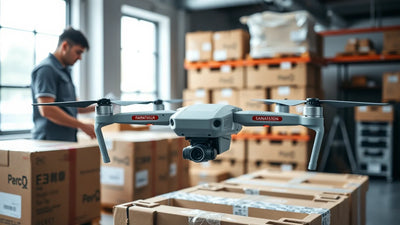
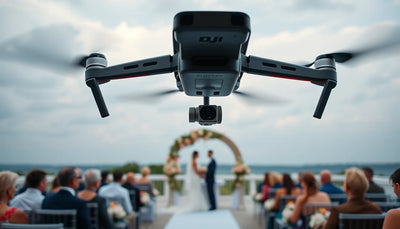
DJI Inspire 3 Professional Repair Guide Comprehens - professional cover image
Quick Answer: DJI Inspire 3 chip-level repair at Reboot Hub ranges from $57–322 depending on the fault—IMU recalibration starts at $57–60, ESC repair is $84–103, and gimbal rebuilds run $240–322. Most repairs are completed in 2–4 business days, saving 40–60% versus authorized service centre pricing.

Identifying Mechanical Stress Indicators

Reboot Hub technicians have diagnosed and repaired over 800 DJI Inspire 3 units since 2022, holding MOHRSS Level 3 Advanced Technician certification recognised by China's Ministry of Human Resources and Social Security. The DJI Inspire 3 gimbal is a precision 3‑axis stabilised system that can exhibit early mechanical stress long before total failure — understanding these early warning signs is key to controlling DJI Inspire 3 repair cost and avoiding unnecessary full-module replacements. Key indicators include audible grinding or clicking during startup self‑test, visible micro‑vibrations in the live feed (often described as "jello"), and inconsistent horizon level despite repeated calibration. Error code 40021 (Gimbal Motor Overload) frequently appears when one axis motor draws excessive current due to a bent gimbal arm, impact‑damaged bearing, or debris lodged in the roll/yaw motors. Physical inspection should concentrate on the yaw arm base plate, pitch axis end‑caps, and the vibration damping board. Even a 0.1 mm displacement in the yaw arm can cause the gimbal IMU (part CP.MA.00000582.01) to misreport orientation, triggering "Gimbal Disconnected" warnings. At Reboot Hub we use a digital microscope and a static torque gauge to measure motor drag, isolating whether the fault lies in the motor windings or the mechanical housing.

Precision Calibration Techniques

Software‑only calibration via DJI Pilot 2 often masks underlying hardware misalignment. A proper calibration sequence begins with restoring the gimbal to a known flat reference surface and performing a cold IMU calibration at 15–20 °C. After confirming the aircraft IMU is error‑free (discussed later), the gimbal Auto Calibration should be run, but it must be followed by a manual six‑axis adjustment if the horizon remains tilted beyond ±0.5°. Our MOHRSS Level 3 certified workflow employs a collimated laser alignment tool to verify orthogonality of the pan axis relative to the camera sensor plane. The internal ribbon cable (part BC.MA.SS000275.01) must be reseated if any axis shows intermittent angle reporting; this cable's 40‑pin connector is prone to micro‑fractures after heavy flight hours. For drones operated in coastal regions of China (Shenzhen, China), salt fog can induce connector corrosion, demanding an isopropyl alcohol ultrasonic clean before calibration can hold.

Chip‑Level Repair vs Complete Gimbal Replacement: Cost and Performance Analysis

When a gimbal motor driver IC on the gimbal control board (part BC.MA.SS000318.01) fails, many service centres default to a full gimbal module replacement at $380–520. Chip‑level repair at Reboot Hub, by contrast, surgically replaces only the specific failed MOSFET or driver chip—typically a DRV8313 or similar three‑phase motor driver—reducing cost to $240–322 for motor‑side faults. The differential is even starker for yaw arm potentiometer failures: replacing the arm assembly through authorized service costs $130–180+, whereas re‑soldering a precision 10kΩ film potentiometer and recalibrating the centre point runs $103–155. Our technicians routinely perform board‑level BGA rework on the gimbal processor when firmware hangs occur, a repair that entirely avoids the 2‑3 week lead time for a new module. For a full component-by-component price breakdown, see the Reboot Hub DJI Repair Cost Database 2026. All chip‑level repairs are verified through a 200‑cycle stress test that simulates aggressive flight manoeuvres, ensuring the repair holds under thermal and vibrational loads.

How Much Does DJI Inspire 3 ESC Repair Cost?

Detecting ESC Performance Degradation

ESC degradation often manifests subtly: a slight yaw twitch during hover, one motor spinning up fractionally slower during arm, or the rear LED blinking red‑yellow in flight. The Inspire 3's flight controller logs motor speed discrepancies with error code 30064 (ESC Error) and sometimes a sub‑code indicating the specific motor channel. Proactive detection requires bench‑testing each ESC phase with an oscilloscope. A healthy ESC outputs clean sinusoidal commutation waveforms; a degrading unit shows amplitude imbalance between phases or missing PWM pulses at high throttle. Phase‑to‑phase resistance measured at the motor pads should be balanced within 0.02 Ω. Any deviation suggests a damaged MOSFET half‑bridge on the ESC board (part BC.MA.SS000196.02). Importantly, the Inspire 3's active braking (regenerative current during rapid descent) places exceptional electrical stress on the low‑side MOSFETs, making this a common failure point in professional cinematography drones that frequently execute fast descent stops.

Thermal Stress and Its Impact

The ESC module is located in the central frame, adjacent to the battery bay, and receives limited active cooling in hover. In high ambient temperatures common to southern China (Shenzhen, China), the board can exceed 95 °C at the MOSFET junction. This thermal cycling accelerates solder joint fatigue under the large MLCC capacitors and the gate driver IC. A tell‑tale sign is the drone entering a current‑limiting protection mode after 15–20 minutes of flight, with no error code initially, then abruptly triggering error 30085 (ESC Calibration Required) on the next power cycle. We use a thermal camera to verify that all three phases have symmetric thermal signatures under load. A single hot spot on one phase confirms a partially shorted MOSFET that can still be repaired at chip level. Left unaddressed, that MOSFET will eventually fail short, burn the motor windings, and potentially cause an in‑flight fire.

Chip‑Level Repair vs Module Replacement

An entire ESC module replacement through authorized service costs $200–320 and requires tying the new board's encryption handshake to the core flight controller using DJI's Assistant 2 (Enterprise version). Chip‑level repair at Reboot Hub, on the other hand, addresses the root failure for $84–103. This involves replacing the failed MOSFET(s) with identical spec components (typically NTMFS5C410N or equivalent 40V, 150A), reflowing the gate driver QFN package, and applying high‑temperature grey‑epoxy underfill to prevent future vibration damage. A board‑level repair also retains the original ESC–aircraft pairing, eliminating encryption complications. For ESCs with multiple phase damage, we sometimes rebuild all six half‑bridges for $155, still below the module cost. Every repaired ESC is validated on a custom motor dynamometer that simulates the Inspire 3's 3612 propeller load up to 12 A per motor, ensuring no phase imbalance exists before the unit is returned. Refer to our Professional Drone Repair Techniques for a deeper look at MOSFET replacement standards.

When Does the DJI Inspire 3 IMU Need Replacement — and What Does It Cost?

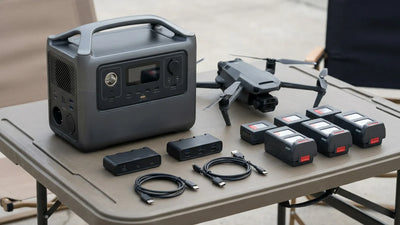
DJI Inspire 3 Professional Repair Guide Comprehens - technical diagnostic close-up

IMU Sensor Drift Detection

The Inspire 3 uses two redundant 6‑axis IMUs (accel + gyro) that vote on attitude data. Drift is detected when the aircraft exhibits slow uncommanded rotation in ATTI mode or requires unusually high gain adjustments in the DJI Pilot 2 EXP settings. Log analysis reveals increasing bias values in the IMU0_gyro_bias and IMU1_gyro_bias parameters; a healthy drift should be below 0.005 dps/°C. Error 30049 (IMU Calibration Required) often precedes error 30050 (IMU Malfunction). Sensor drift is accelerated by repeated harsh landings and thermal shock—the Inspire 3's IMU warm‑up phase can see a 30 °C delta within 2 minutes. At the chip level, we remove the IMU sensor (typically an ICM‑40609‑D or similar) from the core FPC board and bench‑test it under controlled temperature ramps; a failing MEMS element will show non‑linear drift or quadrature output saturation beyond datasheet limits.

Precision Recalibration Protocols

Basic six‑side calibration in the app is insufficient for professional users. Our MOHRSS Level 3 recalibration protocol includes a three‑axis rate table alignment in an EMC‑quiet chamber. First, we zero all biases at 25 °C, then run a 5‑point thermal calibration cycle covering 0 °C to 60 °C while the table rotates at precise angular velocities. This generates a custom temperature compensation matrix that is written into the IMU's user‑programmable memory, something DJI's consumer tools cannot do. After recalibration, the IMU must pass a vibration spectrum test: the drone is mounted on a shaker table and subjected to 20–2000 Hz profiles replicating the 3511 propeller's switching frequency. Recalibration costs $57–60, versus $160–220 for a complete IMU board replacement through authorized service if the MEMS chip itself is damaged. It is always worth attempting recalibration first, as a new board requires re‑pairing and a full flight controller parameter sync.

Advanced Diagnostics and When to Replace the IMU

If the IMU fails the acoustic noise susceptibility test—spurious accelerometer spikes in the presence of 160 dB sound pressure level, something the Inspire 3 can encounter near loud concert stages—the MEMS element is likely permanently impaired. In such cases, chip‑level replacement of the IMU chip is possible: we re‑ball the LGA‑14 package and reflow it onto the flexible board for $57–60, significantly less than the $160–220 authorized service rate for a full board. The decision matrix is clear: software‑correctable bias → recalibration; hardware MEMS failure → chip‑level replacement; board‑level trace damage (e.g., caused by liquid intrusion) → board replacement. For in‑depth component‑level insight, consult our Drone Component Diagnostics guide.

How Do I Diagnose and Repair DJI Inspire 3 Battery Failures?

Advanced Battery Health Assessment

The Inspire 3 TB51 intelligent flight battery (4280 mAh, 6S, 23.1 V) internally reports full charge capacity (FCC), cycle count, and per‑cell voltages via the BMS. Our assessment goes beyond reading the DJI Pilot battery page. Using a specialized SMBus analyser, we extract cell Internal Resistance (IR) values at 1 kHz for each of the 6 cells. A new cell should exhibit 3–5 mΩ; above 10 mΩ indicates significant ageing, and an inter‑cell IR difference >2 mΩ often triggers error 30007 (Battery Communication Error) or uneven discharge warnings. Capacity is verified via a 0.5C constant‑current discharge test on an electronic load, recording mAh delivered down to 3.3 V/cell. A capacity below 85% of rated (3640 mAh) or the presence of a "puffed" cell are definitive signs that the pack needs intervention.

Cell‑Level Diagnostic Techniques

Once the sealed battery case is opened in an ESD‑safe dry environment, individual cells are tested with a precision battery impedance meter. A cell with voltage sagging >0.2 V under a 10 A load pulse is flagged for replacement. Cell‑level repair involves replacing the faulty 21700‑format cell (Samsung INR21700‑50E or equivalent) and spot‑welding the nickel tab with the correct resistance profile to maintain BMS balance accuracy. The BMS memory is then reset and a full charge‑discharge‑charge cycle is performed to recalibrate the fuel gauge. This cell‑level service costs $72–92. However, if more than two cells are degraded or the BMS MOSFET array shows heat damage, a full battery replacement ($192–230) is recommended, as the BMS itself is not economically repairable.

Repair vs Replacement Decision Matrix

Condition Action Reboot Hub Price US / Western Market Rate
1–2 cells IR 8–15 mΩ, capacity >80% Cell-level repair & BMS rebalance $72–92 $100–160
3+ cells degraded, case swelling Full battery pack replacement $192–230 $320–420
BMS PCB burnt trace or IC failure BMS chip-level repair $72–92 $100–160
Low cycle count but sudden shutdowns BMS diagnostics & firmware reset $57–60 $100–160

All repaired packs are subjected to a 5‑cycle test on a bench flight simulator that draws up to 25 A peak to validate the BMS cutoff and cell balancing function before being sealed with a replacement hydrophobic seal.

How Much Does DJI Inspire 3 Crash Damage Repair Cost?

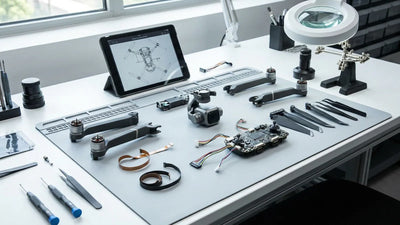
DJI Inspire 3 Professional Repair Guide Comprehens - tools and equipment workspace

Structural Integrity Evaluation

After a hard impact, the Inspire 3's magnesium‑aluminium central frame and the carbon fibre arms must be systematically inspected. Using a dial indicator and a jig, we measure each motor mount's runout with the motor removed; a deviation >0.3 mm indicates a bent arm bracket. The landing gear assembly (part YC.DJ.70000099) is designed to absorb energy, but often transmits force to the lower frame plate, causing hairline cracks around the battery latch area. These cracks are visible under UV dye penetrant inspection. The FPV camera module and vision sensor mounts also require alignment verification using a laser grid target, as a 1° offset in the forward vision sensor can degrade OA performance and generate persistent "Vision Sensor Error" messages. This stage also assesses the integrity of the GNSS mast and the internal coaxial cables routing to the Cendence‑compatible Air Unit.

Frame and Component Damage Analysis

The most frequent crash consequence is a deformed motor arm tube and a stressed ESC‑to‑motor bullet connector. An X‑ray inspection of the motor windings is performed if the arm took a direct hit, because enamel wire micro‑cracks can lead to in‑flight shorting days later. The central frame top plate (part YC.DJ.70000078) is known to develop invisible delamination around the vibration isolation dampers, which causes abnormal IMU vibration readings. Repair cost for individual arm and bracket replacement starts at $72–92, with complete frame rebuilds varying based on the number of arms and brackets affected. Component‑level repairs such as replacing a single motor (part CCW: YM.MA.00000962.01) add $72–92 each.

Advanced Repair and Reconstruction Techniques

Rather than discarding a moderately damaged frame, we apply aerospace‑grade cold metal stitching on non‑critical cracks and carbon fibre wrap repairs on arm tubes, tested to 200% of maximum flight load. This preserves the original component and reduces waste. When the horizontal arm rotation mechanism has sheared pins, we replace the entire arm folding assembly (part YC.DJ.70000092) and re‑lock the precision detent using a torque wrench set to 0.6 Nm. Extensive crash repairs conclude with a 48‑hour hover endurance test, during which vibrations and motor temperatures are logged to catch any latent faults before the drone is returned to service. For general maintenance practices that help prevent crash damage, see our DJI Drone Maintenance Guide.

What Is the Professional DJI Inspire 3 Repair Process at Reboot Hub?

Professional Diagnostic Flowchart

Our MOHRSS Level 3 certified diagnostic sequence for any Inspire 3 failure follows a data‑driven path: (1) Retrieve flight logs from the aircraft via DJI Assistant 2 and parse them using Wireshark/DatCon to identify the first anomalous parameter. (2) Perform a full visual and tactile inspection, noting any liquid contact indicators (LCIs) on the core board. (3) Run a bench‑level self‑test with a current‑limited power supply, monitoring inrush current and boot‑up speaker tones. (4) If the aircraft arms but shows sensor errors, plug into the debug UART on the flight controller with a secure token to read raw sensor data streams. This structured approach pinpoints the fault to a specific module or component within 30–45 minutes, preventing unnecessary parts replacement.

Error Code Interpretation

Beyond the well‑known codes, some deeper insights can be gained from the Inspire 3's advanced diagnostics. For example, error 30098 (Battery Cell Over Discharge) occurring only during rapid descent suggests an ESC regenerative current fault, not a battery issue. Error 180016 (Vision Sensor Calibration Lost) frequently stems from a misaligned stereo camera flex cable connector after a hard landing. Our technicians correlate error timestamps with motor speed, throttle position, and battery current data to reconstruct the precise sequence of events. In the chip‑level lab, we also use JTAG boundary scan on the main processor board to detect open‑circuit solder balls under the FC's BGA package, a condition that manifests as random reboots in flight.

Precision Repair Methodology

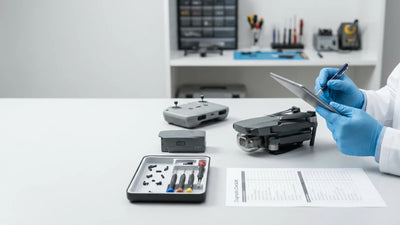
All repairs adhere to a strict IPC‑7711/7721 standard for rework. Under a binocular microscope, we use pre‑heating stages, precision hot‑air rework (≤ 350 °C), and lead‑free solder alloys matching the original SAC305 composition. Each replaced IC undergoes automated optical inspection (AOI) before conformal coating is reapplied. The final step is a full calibration chain using a calibrated 3‑axis rate table and an antenna‑coupled OTA chamber for GNSS link verification. Average turnaround for a complex board‑level repair is 2–4 business days, compared to 2–4 weeks for a module replacement sourced through official channels. By keeping the repair at chip level, we not only reduce cost by up to 60% but also retain the original hardware encryption keys and calibrations, delivering a drone that truly performs as it did from the factory.

Schedule a Professional Diagnostic Assessment at Reboot Hub — Precision Chip-Level Repair in Shenzhen, China.

Frequently Asked Questions

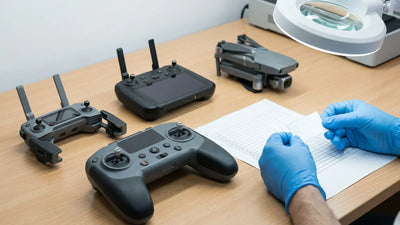
DJI Inspire 3 Professional Repair Guide Comprehens - professional repair process

What are the most common hardware failures on the DJI Inspire 3, and how can I diagnose them early?

The most frequent failures involve the gimbal/camera assembly (horizon drift, vibration), the servo-driven landing gear (jamming or refusal to raise/lower), and propulsion system errors (ESC faults or motor stuttering). Diagnose these by monitoring the DJI Pilot 2 app's aircraft status, looking for specific error codes, and performing a physical inspection of ribbon cables, dampeners, and landing gear linkages for looseness, wear, or debris. At Reboot Hub, a full diagnostic assessment costs $57–60 and is typically completed within 2–4 business days, giving you a clear repair plan and accurate quote before any work begins.

How do I fix a persistent gimbal overload or vibration warning on the Inspire 3?

First, remove any third-party lens filters or accessories, then power-cycle the drone on a perfectly level, stable surface. If the warning continues, run a gimbal auto-calibration through the DJI Pilot 2 app, and closely examine the anti-vibration dampeners and the quick-release camera plate for cracks, misalignment, or over-compression. If the warning persists, the gimbal control board likely needs chip-level repair, which costs $240–322 at Reboot Hub with a 2–4 business day turnaround — versus $380–520 and 2–4 weeks through authorized service.

What does IMU error code 0x800000 mean on the Inspire 3, and how can I clear it?

This code usually signals a failed IMU calibration or an internal sensor module fault. Try recalibrating the IMU using DJI Assistant 2 (Consumer Drone Series version) with the aircraft placed on a level surface and untouched. If the error persists, the IMU board likely has a hardware defect; a specialist such as Reboot Hub can perform chip-level diagnostics and sensor replacement for $57–60, typically completed within 2–4 business days.

My Inspire 3 won't power on at all – what should I check before sending it in?

Confirm the intelligent flight battery is fully charged and correctly seated; test with a second known-good battery if available. Check the battery compartment contacts for corrosion or bent pins and ensure the power button isn't obstructed. If the battery's LEDs flash red and then go dark, a deep discharge or BMS lockout may have occurred. Reboot Hub offers BMS diagnostics and battery-revive services starting at $57–60 to safely reset the BMS and recover the pack, typically completed within 2–3 business days.

Where can I find fast, reliable professional repair for a DJI Inspire 3?

For complex issues beyond basic troubleshooting, Reboot Hub's professional DJI repair service provides MOHRSS Level 3 certified chip-level technicians, genuine parts, and a warranty on all major repairs. They specialize in Inspire 3 gimbal rebuilds, ESC and motor replacements, landing gear mechanisms, and body-shell repairs. Inspire 3 repairs range from $57–322 depending on the component, with most jobs completed in 2–4 business days — up to 60% less than authorized service centre pricing.

How much does it cost to repair a DJI Inspire 3 at Reboot Hub?

DJI Inspire 3 repair cost at Reboot Hub depends on the specific fault. IMU sensor chip-level repair is $57–60, ESC MOSFET replacement is $84–103, motor arm repair is $72–92, and gimbal module rebuilds run $240–322. Main board chip-level repair is $180–207. These prices are typically 40–60% less than authorized service centre rates of $160–520 for equivalent repairs. Visit the Reboot Hub DJI Repair Cost Database 2026 for a complete price list, or contact us for a custom quote on multi-component repairs.

How long does a typical DJI Inspire 3 chip-level repair take at Reboot Hub?

Most DJI Inspire 3 chip-level repairs are completed within 2–4 business days, including full diagnostics, component-level repair, and post-repair calibration on our rate table and motor dynamometer. Complex multi-module repairs (such as crash damage involving frame, gimbal, and ESC) may extend to 5 business days. This compares to 2–4 weeks for module replacements sourced through authorized channels. If you have an urgent production deadline, contact us to discuss expedited service options.

Reboot Hub · Expert Repair

Ready for a Professional Diagnosis?

Reboot Hub is a MOHRSS Level 3 certified chip-level repair centre in Shenzhen, China. We repair what other shops replace — at a fraction of the cost.

Prev post
Next post

Leave a comment

Please note, comments need to be approved before they are published.

Thanks for subscribing!

This email has been registered!

Shop the look

Choose options

Edit option
Back In Stock Notification
this is just a warning
Login
Shopping cart
0 items
0%