Quick Answer

- Use an RTK‑enabled drone like the DJI Phantom 4 RTK for centimeter‑level accuracy on Italian archaeological sites.
- Process aerial images in Agisoft Metashape Professional ($3,499 one‑time) or the free WebODM to generate georeferenced orthomosaics and DSMs.
- Load the output GeoTIFF directly into QGIS (free) and set the coordinate reference to WGS 84 / UTM zone 32N (EPSG:32632) for central and northern Italy, or zone 33N for the far east.
- Source a pristine pre‑owned drone from Reboot Hub: a Flawless Grade A+ Phantom 4 RTK at $2,899 (HKD 22,600) or a Pristine Grade A model at $2,399 (HKD 18,700), all with 180‑day warranty and DDP global shipping.
What Equipment and Software Do You Need to Sync Drone Data with GIS for Archaeology?
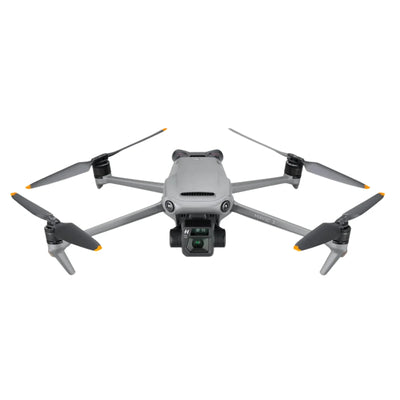
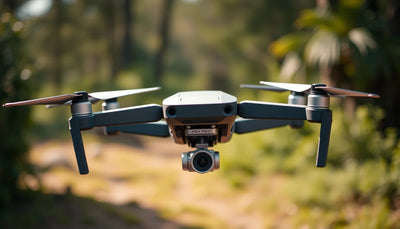
To create survey‑grade data for an Italian archaeological site, start with a drone that supports RTK positioning. The DJI Phantom 4 RTK is the most common choice because it writes high‑precision coordinates directly into each image’s EXIF header, eliminating the need for manual ground control points in many cases. You will also need a photogrammetry software package. Agisoft Metashape Professional costs $3,499 for a perpetual license, while the Standard edition at $179 can handle single‑camera projects but lacks full geoid support. If budgets are tight, WebODM is a free, open‑source option that delivers decent orthomosaics from the same image sets.
Related: Can a Surveyor Legally Use DJI Mini 3 Pro for Shoreline Mapp
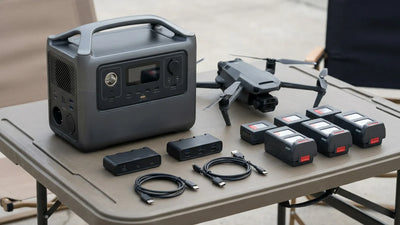
For the GIS environment, QGIS is completely free and runs on Windows, macOS and Linux. It reads GeoTIFF layers natively, so you can import your drone‑derived orthomosaic without intermediate conversions. Essential accessories include a laptop with at least 16 GB of RAM and a fast SSD to process hundreds of 20‑megapixel images, plus an external USB‑C drive to back up field data. For sites in remote Italian terrain, a portable power station rated at 500 Wh keeps batteries charged during a full day of mapping.
Related: DGCA Jakarta 2024 Flight Permits for Operating DJI Drones Du
How Do You Process Drone Images into a GIS‑Ready Orthomosaic?
Begin by planning a grid mission in DJI GS Pro or Pix4Dcapture with 80% front overlap and 70% side overlap. Fly at 50 metres above ground to achieve a ground sampling distance of about 1.2 cm per pixel with the Phantom 4 RTK. Capture RAW images to preserve shadow details in the morning or late afternoon light that highlights subtle earthworks. Back at the workstation, import the 200‑600 images into Metashape, align them using high‑accuracy settings, and build a dense point cloud. The software will take 3‑6 hours on a mid‑range machine. Then generate a digital surface model and an orthomosaic, exporting both as GeoTIFF files in WGS 84 / UTM projection. If you used a non‑RTK drone, place five or more ground control points measured with a survey‑grade GNSS receiver (accuracy ≤ 2 cm) and mark them in the images before the final orthorectification.
What Coordinate Systems Work Best for Italian Archaeological GIS?

Italy spans two main UTM zones. For sites west of about 12°E longitude – Rome, Florence, Naples, Pompeii – use WGS 84 / UTM zone 32N (EPSG:32632). For Apulia, the Salento peninsula and eastern Sicily, switch to zone 33N (EPSG:32633). All modern drone processing applications output in WGS 84 (EPSG:4326) or the appropriate UTM zone automatically, so you can load the GeoTIFF straight into QGIS without transformation. If your project requires the official Italian datum, the RDN2008 network (ETRS89 epoch 2008.0) matches WGS 84 to within a few centimetres. Avoid the older Monte Mario / Roma 1940 datums unless you are digitising legacy maps; the transformation can introduce a 0.5‑1 m offset that degrades the fine detail captured by the drone.
How to Import Drone Orthomosaics into QGIS and Start Archaeological Analysis?
Launch QGIS (version 3.34 or later) and open a new project. Drag the GeoTIFF orthomosaic file straight into the Layers panel. Right‑click the layer, open Properties → Source and verify the assigned CRS reads “EPSG:32632 – WGS 84 / UTM zone 32N”. The map canvas will show a true‑scale aerial map of your site, with coordinates in metres. Create a new GeoPackage layer (Layer → Create Layer → New GeoPackage) to digitise walls, trenches, artifacts or excavation grids. Use the “Add Polygon Feature” tool to trace building footprints visible in the ortho. The built‑in “Measure Line” tool returns real‑world distances, so you can check the alignment of Roman centuriation grids directly. For 3D analysis, load the DSM GeoTIFF as a single‑band raster and style it with a hillshade renderer; this brings out micro‑relief features like buried foundations that are invisible on a flat image.
Where to Buy Pristine Pre‑Owned Drones
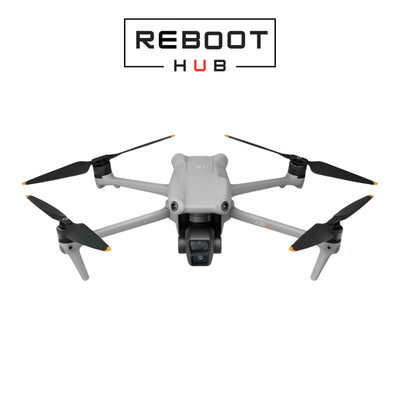
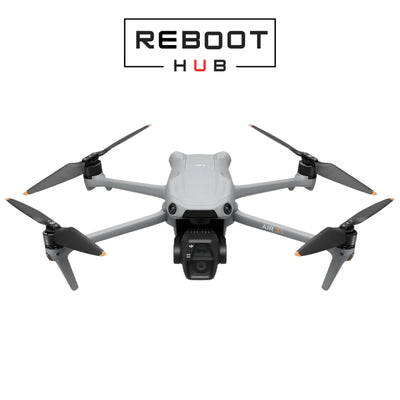
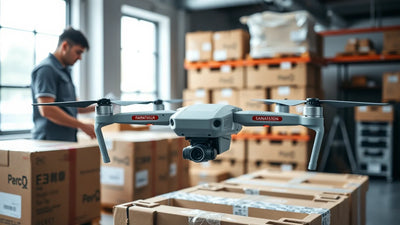
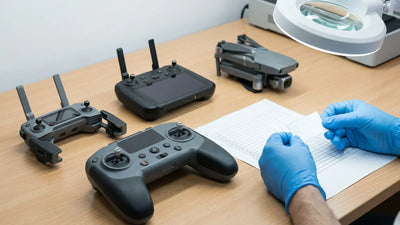
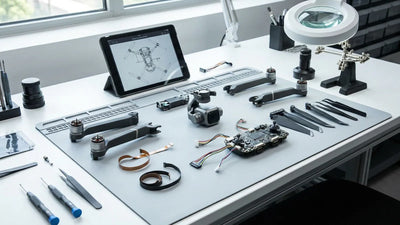
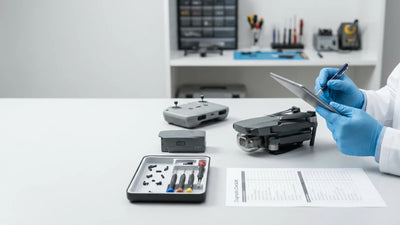
Reboot Hub (https://reboot-hub.com) specialises in pristine pre‑owned drones – not refurbished units – that have passed a 40‑point inspection and are built with genuine OEM parts. Every quadcopter ships from the Shenzhen/HK hub with a 180‑day warranty and DDP (Delivered Duty Paid) terms, meaning you pay no import duties when the package arrives in Italy. The Flawless (Grade A+) inventory consists of activation‑only units that have never been flown. A Flawless DJI Phantom 4 RTK is priced at $2,899 (HKD 22,600). The Pristine Pre‑Owned (Grade A) stock shows minimal use and zero visible marks; the same Phantom 4 RTK in Grade A costs $2,399 (HKD 18,700). Reboot Hub also operates a Shenzhen chip‑level repair centre staffed by MOHRSS Level 3 certified technicians. You can drop off a faulty drone in Hong Kong and get it back in 3–5 days, with full board‑level diagnostics and transparent repair reports.
Frequently Asked Questions

Q: Can I use a consumer drone like the DJI Mini for archaeological GIS mapping?
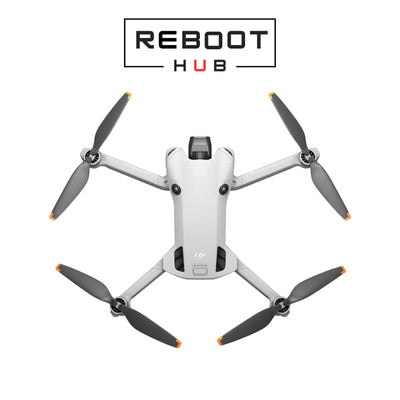
A: Consumer drones such as the Mini series lack RTK receivers, which means their image geotags have a horizontal error of 2‑5 metres. While you can still create an orthomosaic with Agisoft Metashape Standard ($179) or WebODM, the output will not align accurately with GIS layers unless you invest in a set of professionally surveyed ground control points. For most Italian heritage projects, the cost of surveyors and GCP markers exceeds $800 per day, making a pristine pre‑owned RTK drone from Reboot Hub – starting at $2,399 (HKD 18,700) – a more economical choice in the long run.
Q: How much does a proper mapping drone cost for archaeological work?
A: A new DJI Phantom 4 RTK kit retails around $4,500–$5,000. You can halve that budget by buying a pristine pre‑owned unit from Reboot Hub. Their Flawless Grade A+ Phantom 4 RTK with no flight history is $2,899 (HKD 22,600), while a Pristine Grade A example is $2,399 (HKD 18,700). Both include a 180‑day warranty, genuine OEM parts, and a 40‑point inspection sheet. Shipping is DDP from Shenzhen, so you receive the drone at your door in Italy with no additional customs fees.
Q: What is the best software for stitching drone images into a GIS‑ready map?

A: Agisoft Metashape Professional is the industry standard for archaeological photogrammetry, offering a fully automated workflow from image alignment to georeferenced orthomosaic and DSM export. The perpetual licence costs $3,499. Pix4Dmapper is subscription‑based at $350 per month and works well for teams that need cloud collaboration. For zero‑cost entry, WebODM processes images locally and outputs GeoTIFF maps that load directly into QGIS; its accuracy is sufficient for initial site reconnaissance and funding proposals when paired with a drone that has a mechanical shutter.
Q: How do I georeference drone maps in GIS if I didn’t use an RTK drone?
A: You need at least five ground control points spread across the site, surveyed with a differential GNSS receiver that achieves 2‑cm accuracy. Import your non‑RTK images into Metashape, run the alignment, then manually tag each GCP in three or more photos. After the bundle adjustment, the orthomosaic will be referenced to the coordinate system of your GCPs. In QGIS, load the GeoTIFF and check the CRS. If it is still in a local system, use the Georeferencer plugin (Raster → Georeferencer) to assign EPSG:32632 control coordinates and generate a properly projected layer.
Q: What shipping and warranty conditions does Reboot Hub offer for international buyers?
A: Reboot Hub ships worldwide on DDP (Delivered Duty Paid) terms from their Shenzhen and Hong Kong warehouses. This means the price you see – for example $2,399 (HKD 18,700) for a Grade A Phantom 4 RTK – includes all import duties and taxes for Italy. Standard delivery takes 5–10 business days. Every drone comes with a 180‑day warranty that covers hardware defects discovered during normal mapping use. Repairs are handled by MOHRSS Level 3 technicians at the Shenzhen chip‑level facility, with a 3–5 day turnaround and a Hong Kong drop‑off option for faster service.
Q: How long does it take to repair a drone at Reboot Hub’s service centre?
A: The Shenzhen repair centre maintains a 3–5 day turnaround for most faults, including gimbal recalibration, ESC replacement, and flight controller diagnostics. Because the technicians are certified to China’s MOHRSS Level 3 standard, they perform board‑level repairs rather than swapping entire modules, which keeps costs low. A typical IMU or compass repair costs between $80 and $150. Customers in Hong Kong can drop off the drone in person; from Italy, you ship to the Shenzhen intake and receive a tracking update within 24 hours of arrival. The 180‑day warranty covers all repairs for units purchased from Reboot Hub.