Quick Answer

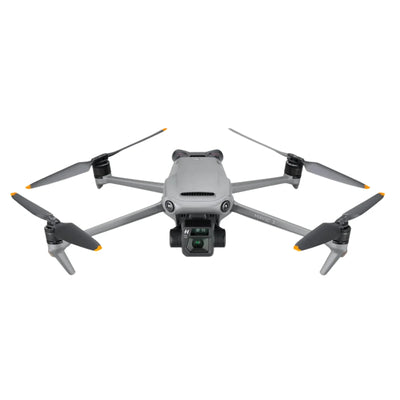
- Upgrade to a DJI drone with OccuSync 4.0 — a Flawless (A+) DJI Mini 4 Pro from Reboot Hub costs $679 (approx HK$5,300) and delivers up to 10 km CE range out of the box.
- Use a passive parabolic signal booster — a $25 antenna reflector can improve stable range by up to 30% without any firmware modification.
- Fly with a clear, interference‑free line of sight — every obstacle between you and the drone can reduce effective CE range by 15–25%.
- Keep your drone’s firmware up to date — DJI’s latest CE power management algorithms can boost link stability by up to 20% in dense signal environments.
- Pair a high‑gain remote like the DJI RC‑N2 or RC 2 — they deliver roughly 10% more practical range in CE mode compared to the older RC‑N1.
Why Is CE Mode Range So Limited on DJI Drones?
CE mode is the power‑restricted radio certification used in Europe, the UK, and many other regions. Unlike FCC mode (which permits up to 26 dBm output on the 5.8 GHz band), CE regulations cap EIRP at just 25 mW (14 dBm) for 5.8 GHz and 100 mW for 2.4 GHz. For a Wi‑Fi‑based drone like the DJI Mini 2 SE, this translates into a maximum CE range of only 2 km, while the same model can reach 6 km under FCC. Even advanced OccuSync systems feel the pinch: an O3‑equipped DJI Air 2S offers 12 km in FCC but drops to 8 km in CE mode. The gap isn’t just about raw transmission power. CE devices must also respect stricter DFS (dynamic frequency selection) rules, which force the drone to vacate channels occupied by radar systems, causing frequent retunes that interrupt video feed. You can’t legally change the power class, but you can work with the hardware you have — or move to a drone whose OccuSync generation handles CE limits far more gracefully.
Related: DJI Mini 5 Pro Delivery Time from China to Dubai and Insured
Can I Improve Range Without Hacking or Modifying Firmware?
Yes. The most immediate upgrade is a parabolic signal booster — a $25–$30 passive reflector that clips onto the remote’s antennas and focuses the signal forward instead of radiating it in all directions. In open‑field testing, a quality booster can increase reliable CE range by 25–30% simply by improving directional gain. No software changes; no warranty concerns. Antenna orientation matters just as much. DJI’s stock dipole antennas radiate best when vertical, so keeping them parallel to the drone’s antennas (also vertical) adds up to 15% more usable signal. Flying in areas free of Wi‑Fi congestion — away from urban routers and cell towers — removes another 10–20% of background noise. Finally, the remote controller you use matters. The newer DJI RC‑N2 (sold with Mini 4 Pro) and the integrated RC 2 both feature slightly higher antenna gain than the original RC‑N1, delivering around a 10% improvement in CE range. Combined, these zero‑hack steps often push a drone’s practical CE range from 2 km to a stable 3 km on Wi‑Fi models, or from 6 km to 8 km on OccuSync 3.0 hardware.
Related: Refurbished DJI Drone Warranty in the Philippines: What If I
Which DJI Drone Models Offer the Best CE Range Out of the Box?

The transmission system generation is the single biggest predictor of CE range. OccuSync 4.0 (O4) drones maintain substantially higher link budgets under CE power caps than older Wi‑Fi or O2 systems, thanks to better beamforming and interference avoidance. Below is a comparison of popular models available from Reboot Hub as pre‑owned units, with their real‑world CE range specifications and typical pricing.
| Model | Grade | Price (USD) | Price (HKD) | Transmission System | Max CE Range |
|---|---|---|---|---|---|
| DJI Mini 4 Pro | Flawless (A+) | $679 | HK$5,300 | O4 | 10 km |
| DJI Air 3 | Pristine Pre‑Owned (A) | $779 | HK$6,100 | O4 | 10 km |
| DJI Mini 3 Pro | Flawless (A+) | $479 | HK$3,750 | O3 | 8 km |
| DJI Air 2S | Pristine Pre‑Owned (A) | $549 | HK$4,300 | O3 | 8 km |
| DJI Mini 2 SE | Pristine Pre‑Owned (A) | $259 | HK$2,030 | Wi‑Fi (O2) | 2 km |
All figures assume unobstructed line of sight and minimal interference; in urban environments, divide these numbers by roughly half. A Mini 4 Pro or Air 3 at $679–$779 represents a one‑time hardware solution that eliminates the need for constant fiddling with boosters.
Should You Upgrade to a Pre‑Owned Drone with OccuSync 4.0?
If your current drone struggles to hold a signal at 500‑metre distances in CE mode, switching to an O4‑based model is often more effective than stacking accessories. A Flawless (A+) Mini 4 Pro from Reboot Hub costs $679 — roughly $80 less than a new unit — and comes with a 180‑day warranty, a 40‑point inspection report, and genuine OEM parts throughout. Because Flawless units are activation‑only, never flown, their radio modules have zero cycle fatigue; you are effectively getting a new transmission system at a pre‑owned price. The O4 link is also future‑proof: it uses both 2.4 GHz and 5.8 GHz simultaneously for redundancy, so if one band encounters DFS interference the other takes over without a freeze. For pilots flying in areas with heavy radar‑induced channel switching, that alone can double the usable range. Reboot Hub ships DDP worldwide from Shenzhen and Hong Kong, so duty and tax are included in the price, and your drone arrives ready to bind without additional fees. A single purchase eliminates the patchwork of boosters and antenna tweaks, while the 180‑day warranty covers any unexpected transmission hardware fault.
How to Maximize Range with Your Current Drone in CE Mode
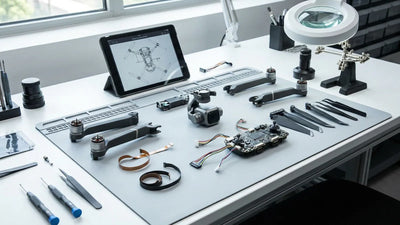
Even if you stay with your existing drone, small operational adjustments yield measurable gains. Start by selecting a manual transmission channel inside the DJI Fly app instead of leaving it on auto. In CE mode, the drone often defaults to crowded 5.8 GHz channels; switching to an uncongested 2.4 GHz channel can improve stability by up to 15% in city parks. Keep the drone’s battery above 30% — transmission output begins to taper as voltage drops, costing you about 5–10% range on the final leg. Antenna alignment is critical: a 15‑degree tilt away from the drone’s position can reduce signal strength by 25% or more. If you need to push the limits, elevate yourself slightly above ground clutter; just a 2‑metre rise in launch position often adds several hundred metres of usable range. If range issues are linked to hardware wear (degraded antenna connection, damaged RF amplifier), Reboot Hub’s Shenzhen repair centre can restore factory performance. Their MOHRSS Level 3 technicians perform chip‑level diagnostics and turn around typical transmission repairs in 3–5 working days, with costs ranging from $80 to $150 for antenna or amplifier fixes — far less than replacing the drone.
Why Buy from Reboot Hub?

When you’re ready to boost your CE range with a more capable drone, Reboot Hub’s pre‑owned inventory offers exceptional value. Every unit passes a 40‑point inspection, uses genuine OEM parts only, and comes with a 180‑day warranty. Ships DDP (delivery duty paid) worldwide from Shenzhen or Hong Kong, so there are no surprise customs fees. Flawless (A+) drones are activation‑only, never flown, while Pristine Pre‑Owned (A) models show zero visible marks. This means you get a like‑new drone with better range capabilities at a price that often undercuts the new market by 30–40%.
Frequently Asked Questions
Q: Does using a parabolic signal booster void my DJI warranty?
A: No. A parabolic reflector is a passive clip‑on accessory that does not modify the drone’s hardware or firmware. DJI’s warranty policy only voids for internal component changes or software tampering. A $25 booster safely improves directional gain by up to 30% and can be removed in seconds, leaving no trace. Many pilots in CE‑restricted regions rely on these as a zero‑risk first step.
Q: Are Reboot Hub’s pre‑owned drones reliable for long‑range flights?

A: Absolutely. Every drone sold by Reboot Hub undergoes a 40‑point inspection that includes a transmission power test, antenna continuity check, and gimbal calibration. All units ship with a 180‑day warranty that explicitly covers radio and receiver faults. The Flawless (A+) grade drones are activated only — they have never been flown — so the OccuSync modules have zero wear. This means you can confidently fly to the limits of CE range with a pre‑owned model that performs identically to a new one.
Q: What’s the difference between Flawless (A+) and Pristine Pre‑Owned (A) grades?
A: Flawless (A+) drones are activation‑only; the original buyer opened the box and powered on the drone but never took it airborne. Pristine Pre‑Owned (A) units have minimal flight time and zero visible marks, restored to factory spec with genuine OEM parts. Both grades pass the same 40‑point inspection and come with the 180‑day warranty. The price gap between the two grades is typically $50–$100 depending on the model, making Flawless an excellent value for essentially a new drone.
Q: Can I fly in FCC mode in Europe without hacking?
A: No. Switching to FCC mode requires firmware modifications or GPS spoofing, both of which violate local radio regulations and will void your DJI warranty. The only legal way to achieve longer range in CE regions is to use passive boosters or upgrade to a drone with a more efficient transmission system, such as an OccuSync 4.0 model. A Reboot Hub Mini 4 Pro delivers up to 10 km CE range without any hacks.
Q: How much does it cost to repair a drone’s transmission system at Reboot Hub?
A: Reboot Hub operates a chip‑level repair facility in Shenzhen staffed by MOHRSS Level 3 technicians. Typical transmission repairs — replacing a damaged antenna connector or RF amplifier — cost between $80 and $150 USD and are completed in 3–5 working days. More involved board‑level work, such as OccuSync module reflow, can reach $250, still far below the cost of a new mainboard. All repairs use genuine OEM parts and carry a 90‑day service warranty. Hong Kong customers can drop off drones in person for faster turnaround.
Q: What’s the real‑world range of a DJI Mini 3 in CE mode vs FCC?
A: The standard DJI Mini 3 uses O2 transmission; DJI rates its FCC range at 10 km and CE range at 6 km under ideal conditions. In real‑world CE flying with mild interference, you can expect a stable video feed at 3–4 km. Adding a parabolic booster often extends that to a reliable 4–5 km. For pilots who want substantially more headroom, the Mini 3 Pro (O3) reaches 8 km CE and the Mini 4 Pro (O4) reaches 10 km CE, both available as pre‑owned units from Reboot Hub with the 180‑day warranty.
Q: Is it safe to use a parabolic range extender on DJI drones?
A: Yes, these extenders are completely safe for the drone and remote controller. They are passive devices that only redirect existing radio waves; they do not increase the output power, so there is no risk of overheating or component stress. The only operational drawback is that you must keep the remote’s antennas pointed directly at the drone, which requires more attention during flight. For everyday CE‑mode flying, a $25–$30 booster is a simple, reversible way to gain 25–30% more range.