Passer au contenu

Disponible 24h/24 et 7j/7 : (852) 5537 6652

The Reboot Hub Chronicle

How to Pay Nigeria Customs Duty for an Imported Drone Online 2024: A Step-by-Step Guide

par LauThomas 27 May 2026 0 commentaire

Quick Answer

  • Nigeria Customs duty on imported drones averages 20%–25% of the CIF (Cost, Insurance, Freight) value, plus 7.5% VAT and a 4% surcharge — totaling roughly 28%–35% of the drone's declared value.
  • All payments are processed online via the Nigeria Customs Service e-Customs portal through the Remita platform — no physical cash payments at ports are accepted.
  • PAAR (Pre-Arrival Assessment Report) is mandatory before payment; you cannot pay duty without a valid PAAR issued through your authorized dealer bank.
  • Reboot Hub's DDP (Delivered Duty Paid) shipping eliminates this entire process — all customs duties, taxes, and clearance fees are pre-paid from Shenzhen/HK, and your drone arrives doorstep-ready with zero additional charges.
  • Customs clearance timelines range from 3 to 14 business days depending on document completeness, with online payment confirmation typically reflecting within 24–48 hours.
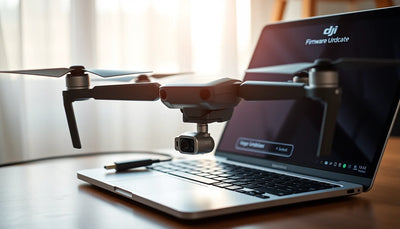
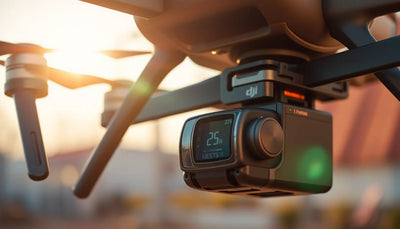
Nigeria Customs online duty payment via Remita platform on laptop screen with debit card

How Much Does Nigeria Customs Duty Cost for an Imported Drone in 2024?

Nigeria classifies consumer drones under HS code 8525.80, which covers transmission apparatus for radio-broadcasting and cameras. The base import duty rate for this category is 20% of the CIF value (Cost + Insurance + Freight). On top of that, you pay 7.5% VAT on the CIF-plus-duty total, a 4% comprehensive import supervision scheme (CISS) charge, and an ETLS levy of 0.5%. In practice, a drone with a declared CIF value of $1,000 USD will incur approximately $280–$350 USD in total customs charges. This climbs fast. A DJI Mavic 3 Pro with a CIF of $2,200 can trigger a duty bill exceeding $700 USD. Below is a breakdown comparing new retail pricing against Reboot Hub's pre-owned grades — and what each means for your customs liability.
Drone Model New Retail (USD) Reboot Hub Flawless A+ (USD) Reboot Hub Pristine A (USD) Est. Customs Duty @ 28% CIF (USD)
DJI Mini 4 Pro $759 $599 $529 $168–$213
DJI Air 3 (RC-N2) $1,099 $869 $769 $243–$308
DJI Mavic 3 Pro $2,199 $1,749 $1,549 $490–$616
DJI Avata 2 $489 $389 $349 $109–$137

Note that customs duty is calculated on the CIF value, not the retail price. If you purchase a pre-owned drone from Reboot Hub at a lower invoice value, your assessable CIF drops proportionally — meaning you pay significantly less duty. For Nigerian buyers, opting for a Reboot Hub Pristine A-grade DJI Air 3 at $769 USD instead of a new unit at $1,099 can reduce your customs bill by roughly $90–$100 USD. When you factor in Reboot Hub's DDP shipping option — where all duties are pre-settled before the drone leaves Hong Kong — the savings in both money and bureaucratic friction become substantial.

How Do You Pay Nigeria Customs Duty Online Step by Step?

Paying Nigeria Customs duty for an imported drone in 2024 is a six-step digital process that begins before your drone even ships. Here is the exact sequence:

Step 1: Open Form M with an Authorized Dealer Bank. Every commercial import into Nigeria requires Form M, which registers your transaction with the Central Bank of Nigeria. Visit any commercial bank (Access Bank, GTBank, Zenith, UBA, etc.), provide your proforma invoice from the seller, and complete the Form M application. The bank uploads it to the Nigeria Trade Hub portal. Processing takes 1–3 business days and costs approximately ₦25,000–₦50,000 NGN ($55–$110 USD) in bank fees.

Step 2: Register on the Nigeria Trade Hub (NTH) Portal. Once Form M is approved, create an account at trade.gov.ng and link your Tax Identification Number (TIN). This portal is where all subsequent document submissions happen.

Step 3: Submit Shipping Documents for PAAR. Upload your final commercial invoice, packing list, bill of lading or airway bill, and Form M approval. The Nigeria Customs Service processes these and issues a Pre-Arrival Assessment Report (PAAR) — the document that tells you exactly how much duty you owe. PAAR issuance currently takes 2–5 business days.

Step 4: Review Your Duty Assessment. The PAAR will show a breakdown: import duty (20%), VAT (7.5%), CISS (4%), ETLS (0.5%), and any applicable excise. Verify the CIF value matches your invoice. Discrepancies can be disputed through the portal, but this adds 7–14 days to the timeline.

Step 5: Pay via Remita. Nigeria Customs integrates exclusively with the Remita payment gateway. Generate a Remita Retrieval Reference (RRR) from the PAAR, then pay online via bank transfer, debit card, or at any commercial bank branch. The payment reflects on the Customs system within 24–48 hours.

Step 6: Download Your Customs Clearance Certificate. Once payment is confirmed, download the final clearance document from the NTH portal. Present this — along with the original PAAR and shipping documents — to release your drone from the port or cargo terminal.

What Documents Are Required to Clear a Drone Through Nigeria Customs?

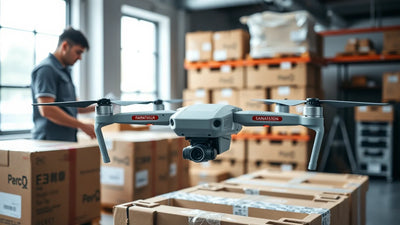
Documentation errors are the number one cause of customs delays in Nigeria. Before your drone arrives at Lagos Port (Apapa or Tin Can Island), Murtala Muhammed International Airport cargo terminal, or any bonded warehouse, you must have the following ready:

  • Form M (approved and stamped) — the foundational import registration document from your authorized dealer bank.
  • Proforma Invoice and Final Commercial Invoice — both must match the seller's details and declared value. Nigerian Customs cross-references these against international pricing databases; undervaluation triggers a penalty of 25% of the underpaid duty plus interest.
  • Packing List — itemizing the drone, batteries, accessories, and their respective values.
  • Bill of Lading (sea freight) or Airway Bill (air freight) — issued by the carrier.
  • PAAR (Pre-Arrival Assessment Report) — the customs duty assessment document.
  • SONCAP Certificate — the Standards Organization of Nigeria Conformity Assessment Program certificate is required for electronic goods. Drones fall under regulated electrical/electronic products. Obtaining SONCAP costs $150–$300 USD through accredited agents and takes 5–10 business days.
  • Tax Identification Number (TIN) — mandatory for all importers.

If any of these documents are missing or inconsistent, your drone sits in customs storage accruing demurrage fees of roughly ₦5,000–₦15,000 NGN ($11–$33 USD) per day after the first 3 free days. For a drone valued at $1,000, a two-week delay can easily add $150–$460 USD in storage and demurrage costs. This is precisely why Reboot Hub's DDP shipping — where all documentation, duties, and clearance are handled at origin in Shenzhen — removes an entire layer of risk and expense for Nigerian buyers.

Can You Avoid Nigeria Customs Duty When Importing a Drone?

Legally, no. Every drone imported into Nigeria with a declared value above the de minimis threshold of $50 USD is subject to customs duty and associated taxes. Attempting to bypass customs — whether by undervaluation, misdeclaration, or using informal shipping channels — carries serious consequences. Nigeria Customs Service penalties for undervaluation include 25% of the underpaid duty plus interest at the Central Bank of Nigeria's prevailing rate (currently 18.75% per annum), and seizure of the goods is a real possibility for deliberate misdeclaration.

However, there is one completely legitimate way to eliminate your personal involvement in the customs process: purchase from a seller that offers DDP (Delivered Duty Paid) shipping. With DDP, the seller assumes full responsibility for all import duties, taxes, customs brokerage fees, and documentation. Reboot Hub offers DDP shipping directly from its Shenzhen and Hong Kong facilities. When you buy a drone from Reboot Hub with DDP, the 40-point inspected, OEM-parts-verified unit arrives at your Nigerian address with every customs obligation already settled. You never interact with the Nigeria Customs portal, never pay a single naira in duty, and never worry about demurrage fees. The price you see at checkout is the final price you pay — period.

Why Buy from Reboot Hub?

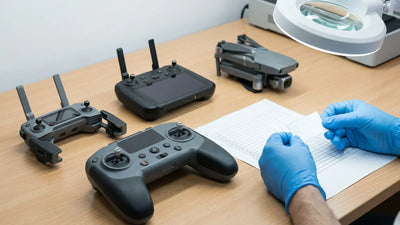
Reboot Hub is not a refurbished-electronics marketplace. Every drone sold through Reboot Hub is a Pristine Pre-owned unit that has undergone a rigorous 40-point inspection at the company's Shenzhen facility by MOHRSS Level 3-certified technicians — the same certification tier required for aerospace component repair in China. Only genuine OEM parts are used if any component needs replacement. Each drone ships with a 180-day warranty, which is longer than many manufacturers offer on brand-new units. Reboot Hub grades its inventory into two tiers: Flawless (A+) — activation-only, never flown, essentially a brand-new drone that was powered on once — and Pristine Pre-Owned (A) — minimal flight hours with zero visible marks on the body, gimbal, or propellers. For Nigerian buyers, the standout advantage is DDP shipping from Shenzhen and Hong Kong: every customs duty, VAT, surcharge, and brokerage fee is pre-calculated and pre-paid. There is no Form M, no PAAR, no SONCAP paperwork, and no risk of a drone sitting in Apapa customs for three weeks. Reboot Hub also operates a chip-level repair facility in Shenzhen with a Hong Kong drop-off point; if your drone ever needs service, the 3–5 day turnaround means you spend less time grounded. For anyone importing a drone into Nigeria, Reboot Hub converts what is normally a multi-week bureaucratic ordeal into a simple online purchase with predictable delivery.

Frequently Asked Questions

Q: Do I need to pay Nigeria Customs duty if I buy a drone from Reboot Hub with DDP shipping?

A: No. DDP (Delivered Duty Paid) means Reboot Hub assumes 100% of the import duty, VAT, CISS surcharge, ETLS levy, and all customs brokerage fees before the drone leaves Shenzhen or Hong Kong. The drone clears Nigerian customs under Reboot Hub's commercial invoice and import credentials. You pay the listed price at checkout — for example, $599 USD for a Flawless A+ DJI Mini 4 Pro or $1,749 USD for a Flawless A+ DJI Mavic 3 Pro — and nothing more. There is no Form M to open, no PAAR to wait for, no Remita payment to make, and zero risk of demurrage charges at Lagos ports or MMIA cargo. This is the single most friction-free way to import a drone into Nigeria in 2024.

Q: What is the total Nigeria Customs duty rate on drones in 2024?

A: The combined effective rate ranges from 28% to 35% of the CIF (Cost, Insurance, Freight) value. This breaks down as: 20% base import duty under HS code 8525.80, 7.5% VAT calculated on the CIF-plus-duty subtotal, 4% CISS (Comprehensive Import Supervision Scheme) charge, and 0.5% ETLS (ECOWAS Trade Liberalization Scheme) levy. For a drone with a CIF of $800 USD, expect to pay roughly $224–$280 USD in total customs charges. If your drone arrives with lithium-ion batteries classified separately, those may face an additional 5% environmental surcharge. Always confirm the exact HS classification with your freight forwarder or customs broker before shipment to avoid surprises at the port.

Q: How long does Nigeria Customs clearance take for an imported drone?

A: With complete and accurate documentation, standard clearance through the Nigeria Customs Service e-Customs portal takes 3 to 14 business days from the date of arrival. The fastest clearances — around 3–5 days — occur when the PAAR is obtained before the drone lands, the SONCAP certificate is valid, and the Remita payment is made within 24 hours of assessment. Delays most commonly stem from missing SONCAP certificates, mismatched invoice values, or Form M discrepancies. Every day beyond the initial 3 free storage days incurs demurrage at approximately ₦5,000–₦15,000 NGN ($11–$33 USD) per day. A drone stuck for 10 extra days can accumulate $110–$330 USD in storage fees alone. Reboot Hub's DDP shipping eliminates this entire variable by clearing customs at origin with pre-vetted documentation.

Q: Can I clear a drone from Nigeria Customs myself without hiring an agent?

A: Yes, technically you can self-clear through the Nigeria Trade Hub portal, but it is rarely advisable for first-time importers. The process requires a registered TIN, an active Form M opened through an authorized dealer bank, a valid SONCAP certificate (costing $150–$300 USD through accredited issuing bodies), and familiarity with the PAAR and Remita payment workflows. A single documentation error — such as a $50 discrepancy between your invoice and the declared CIF — can trigger a customs query that adds 7–14 days to clearance. Licensed customs agents charge approximately ₦50,000–₦150,000 NGN ($110–$330 USD) for full drone clearance service, and for shipments valued above $1,000 USD, the agent fee is often less than the cost of demurrage from a botched self-clearance. If you purchase from Reboot Hub with DDP, neither self-clearance nor an agent is necessary — it is all handled before the drone ships.

Q: What happens if I refuse to pay Nigeria Customs duty on my imported drone?

A: Unpaid customs duty triggers a cascade of consequences. After 30 days of non-payment, the Nigeria Customs Service classifies the drone as abandoned cargo and initiates seizure proceedings under Section 46 of the Customs and Excise Management Act. The drone is transferred to a government-bonded warehouse and listed for public auction within 60–90 days. You forfeit the drone and the entire purchase amount — for example, a $869 USD Reboot Hub Flawless A+ DJI Air 3 — with no recourse. Additionally, your TIN and importer profile may be flagged, complicating all future imports. Even if you later change your mind, reclaiming seized goods requires paying the original duty plus a 25% penalty, accumulated demurrage, and legal administrative fees. The total can exceed 150% of the original duty amount. Always resolve customs obligations promptly or choose DDP shipping to avoid the risk entirely.

Q: Which Reboot Hub drone grade is better for Nigerian buyers — Flawless A+ or Pristine A?

A: Both grades offer exceptional value, but the right choice depends on your priorities. Flawless (A+) units are activation-only drones — the original owner powered them on once and never flew them. They are indistinguishable from brand-new units in every functional and cosmetic respect, and they cost roughly 20%–25% less than new retail. A Flawless A+ DJI Air 3 at $869 USD versus $1,099 new saves you $230 on the purchase price and an additional $64–$80 USD in reduced customs liability if shipping non-DDP. Pristine Pre-Owned (A) units have minimal flight hours — typically under 10 battery cycles — with zero visible marks on the body, gimbal, arms, or propellers. They are priced an additional 10%–15% below Flawless A+, making a Pristine A DJI Air 3 available at $769 USD. For Nigerian buyers using DDP shipping — where customs costs are already absorbed by Reboot Hub — the Pristine A grade offers the highest value-to-cost ratio. Both grades include the same 40-point inspection, genuine OEM parts, and 180-day warranty.

Q: Does Reboot Hub ship drone replacement parts and accessories to Nigeria, and are they subject to customs duty?

A: Yes, Reboot Hub ships replacement parts and accessories to Nigeria, and yes, they are technically subject to customs duty — though at potentially lower rates than complete drones. Individual drone parts (propellers, gimbal assemblies, landing gear, motors) classified under HS chapters 88 and 95 may attract 5%–15% duty rather than the full 20% applied to complete drones. However, the same documentation requirements apply: Form M, SONCAP certification, and PAAR processing. For parts valued under $100 USD, the administrative burden often exceeds the duty itself. Reboot Hub's chip-level repair facility in Shenzhen — staffed by MOHRSS Level 3 technicians with a 3–5 day turnaround — offers an alternative: instead of importing replacement parts and paying duty on each shipment, you can send your drone to the Hong Kong drop-off point for comprehensive repair and have it returned. Many Nigerian drone operators find this centralized repair model more cost-effective than stocking and duty-clearing individual components locally.

Q: What payment methods does Nigeria Customs accept for online duty payments in 2024?

A: Nigeria Customs Service processes all duty payments exclusively through the Remita electronic payment platform, which is integrated directly into the e-Customs portal on the Nigeria Trade Hub. Remita accepts Nigerian-issued debit and credit cards (Visa, Mastercard, Verve), direct bank transfers from all major Nigerian commercial banks (Access Bank, GTBank, Zenith, UBA, First Bank, and others), USSD payments for amounts under ₦500,000 NGN, and over-the-counter cash deposits at any bank branch that displays the Remita logo. International credit cards and PayPal are not accepted for Nigeria Customs duty payments — you must use a Nigerian bank account or card. The RRR (Remita Retrieval Reference) generated from your PAAR is valid for 14 calendar days. If you exceed this window, the RRR expires and you must regenerate it, which may trigger a re-assessment of duty at current exchange rates. For reference, at an exchange rate of approximately ₦1,600 NGN to $1 USD (as of mid-2024), a customs bill of $250 USD equates to roughly ₦400,000 NGN in Remita payable amount.

Article précédent
Article suivant

Laisser un commentaire

Veuillez noter que les commentaires doivent être approuvés avant d'être publiés.

Merci de vous être abonné !

Cet email a été enregistré !

Achetez le look

Choisissez les options

Modifier l'option
Back In Stock Notification
this is just a warning
Se connecter
Panier
0 articles
0%