Indian Customs Personal Use Drone Quantity Limit When Returning from China: Rules & Tips
Quick Answer

- Limit: Indian Customs allows 1 drone per person under personal baggage rules when returning from China — carrying 2 or more triggers commercial classification and mandatory duty plus potential confiscation.
- Value threshold: Drones valued under INR 50,000 (~$600) brought as personal baggage from China typically clear duty-free; anything above attracts 38.5% customs duty (basic + IGST + social welfare surcharge).
- DDP shipping alternative: Reboot Hub's DDP (Delivered Duty Paid) service from Shenzhen/HK handles all clearance — no surprise fees, drones arrive at your doorstep with customs fully resolved.
- Pre-owned advantage: A Pristine Pre-Owned DJI Air 3 (Fly More) costs $879 versus $1,549 new — saving $670 while staying well under the INR 50,000 duty-free threshold.
- Declaration rule: Always declare your drone on the Indian Customs Declaration Form (CDF) — failure to declare can result in 100% penalty on the assessed value plus seizure.
What Is the Personal Use Drone Quantity Limit Under Indian Customs Rules?
Indian Customs regulations, governed by the Baggage Rules, 2016 under the Customs Act of 1962, do not spell out a drone-specific quantity limit — but the overarching principle is clear: you may bring one drone classified as "personal effects" without attracting commercial scrutiny. Carrying a second drone, even if genuinely for personal use, shifts the assessment toward "trade quantity." Customs officers at Indira Gandhi International Airport (Delhi) and Chhatrapati Shivaji Maharaj International Airport (Mumbai) routinely apply the one-unit rule for high-value electronics including drones, cameras, and laptops. A traveller arriving from Shenzhen or Hong Kong with two DJI Mini 4 Pro units — even if one is a gift — will almost certainly face a duty assessment on the second unit at 38.5% of assessed value. The Central Board of Indirect Taxes and Customs (CBIC) has issued internal guidance note F.No. 401/12/2022-Cus.III clarifying that drones fall under CTH 8806 and that quantities exceeding "personal use" are subject to full commercial duty rates. If you need multiple drones, the safest route is DDP shipping — Reboot Hub handles multi-unit orders from Shenzhen with all duties prepaid, eliminating airport confrontations entirely. For the single-drone traveller, keep the drone in its carry-on (lithium battery regulations under ICAO Technical Instructions require batteries under 100Wh in cabin baggage), retain the purchase invoice showing value under INR 50,000 when possible, and walk through the Green Channel only if you have nothing else dutiable.

How Much Customs Duty Will You Pay When Bringing a Drone from China?
The duty calculation on a drone brought personally from China depends on the assessable value (cost + insurance + freight). For a drone valued at exactly INR 50,000, the effective duty rate is 38.5% broken down as: Basic Customs Duty at 10% (INR 5,000), Integrated GST at 28% calculated on the landed value plus BCD (INR 15,400), and Social Welfare Surcharge at 10% of BCD (INR 500). A DJI Mini 4 Pro purchased in Shenzhen for $759 (~INR 63,200) would attract approximately INR 24,332 in duties — bringing the total landed cost to roughly INR 87,532, which erodes most of the China-sourcing advantage. The duty-free allowance of INR 50,000 applies only to goods carried in person; it cannot be split across family members for a single high-value item. Goods shipped separately attract full duty regardless of value. This is where Reboot Hub's pre-owned pricing becomes strategically valuable: a Pristine Pre-Owned DJI Air 3 Flawless (A+) grade costs $729 — approximately INR 60,700 — and when shipped via DDP, the landed price inclusive of all duties is transparent upfront, typically costing less than a new unit sourced in India after GST. The DDP model removes the unpredictability of currency fluctuations at the time of customs assessment, which often uses a reference exchange rate that lags the market by 7 to 14 days.
Which Drone Models Offer the Best Value When Purchased Pre-Owned for the Indian Market?

The Indian drone market faces a structural pricing gap: DJI's official India pricing through authorized distributors carries a 25-35% premium over US retail due to import duties, distribution margins, and GST cascading. A new DJI Mavic 3 Classic retails in India at approximately INR 1,79,000 ($2,150) compared to the US price of $1,599. Reboot Hub's Pristine Pre-Owned (A grade) Mavic 3 Classic at $1,099 represents a 49% reduction from India retail — and with DDP shipping included, the all-in cost lands around INR 1,15,000, saving the buyer roughly INR 64,000. For hobbyists operating under the DGCA's Nano category (under 250g), the DJI Mini 4 Pro Flawless (A+) at $579 is particularly compelling because it requires no UIN registration under India's Drone Rules, 2021, and falls comfortably under the INR 50,000 personal baggage duty-free threshold. The table below compares new India pricing versus Reboot Hub pre-owned pricing for models popular with Indian buyers.
| Model | India New Price (INR) | Reboot Hub Pre-Owned (USD) | Reboot Hub Pre-Owned (INR approx.) | Savings | Grade |
|---|---|---|---|---|---|
| DJI Mini 4 Pro | INR 91,000 | $579 | INR 48,200 | 47% | Flawless A+ |
| DJI Air 3 (Fly More) | INR 1,58,000 | $879 | INR 73,200 | 54% | Pristine A |
| DJI Mavic 3 Classic | INR 1,79,000 | $1,099 | INR 91,500 | 49% | Pristine A |
| DJI Avata 2 (Fly More) | INR 1,42,000 | $849 | INR 70,700 | 50% | Flawless A+ |
| DJI Mini 3 (Refurbished) | N/A (discontinued new) | $329 | INR 27,400 | — | Pristine A |
All Reboot Hub pre-owned units undergo the 40-point inspection at the Shenzhen facility, use genuine OEM replacement parts when needed, and ship with a 180-day warranty — a coverage period that matches or exceeds what most Indian retailers offer on brand-new grey-market imports. For buyers in Bangalore, Hyderabad, and Pune who face additional state-level entry taxes on couriered electronics, the DDP model absorbs those costs predictably.
What Are the Risks of Carrying Multiple Drones Through Indian Customs?
Carrying two or more drones through Indian customs triggers a cascade of risks that extend beyond paying extra duty. First, under Section 11 of the Customs Act, customs officers have the authority to seize goods they reasonably believe are imported for commercial purposes without proper documentation. A traveller with three DJI drones in original packaging — even if all three are different models — will be presumed a commercial importer. The seizure triggers a Show Cause Notice under Section 124, and the goods are held in a customs warehouse where storage charges accrue at INR 500–1,200 per day. The adjudication process takes 4 to 8 weeks. Second, the Directorate General of Civil Aviation (DGCA) requires that all drones above the Nano category (250g) imported into India be registered via the Digital Sky Platform with a Unique Identification Number (UIN). A customs officer discovering unregistered drones in the "small" category (250g–2kg) can involve the DGCA enforcement wing, which has levied penalties of INR 25,000 per unregistered drone under Rule 49 of the Drone Rules, 2021. Third, if a traveller has not declared the drones on the Customs Declaration Form and is caught during a spot check — which Delhi Terminal 3 conducts on roughly 1 in 12 arriving passengers from China-origin flights — the penalty for misdeclaration is 100% of the assessed value in addition to the standard duty. Reboot Hub's DDP shipping from Shenzhen eliminates all three risk categories: the shipment is pre-declared with accurate HS codes, duties are prepaid, and the buyer receives a proper Bill of Entry that satisfies DGCA's proof-of-import requirement for UIN registration. The 3-5 business day DDP transit time is also faster than navigating a seized-goods release process.
Why Buy from Reboot Hub?
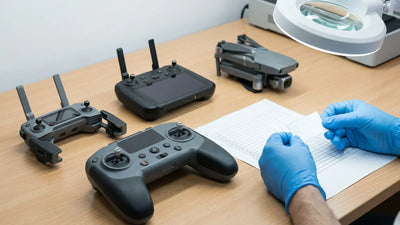
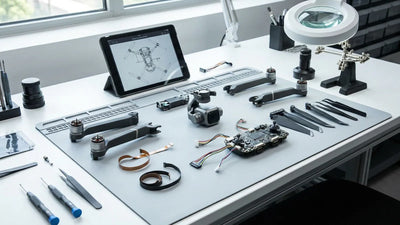
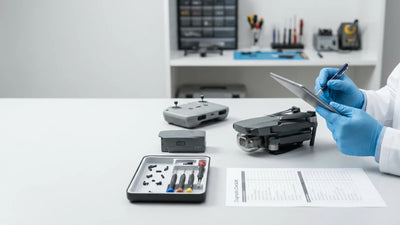
Reboot Hub operates from the global electronics hub of Shenzhen, where MOHRSS Level 3 certified technicians — the highest certification tier under China's Ministry of Human Resources and Social Security — perform every inspection and repair. Each pre-owned drone passes through a 40-point inspection protocol covering gimbal calibration, IMU drift analysis, motor bearing acoustics, battery cycle health reporting, and OA sensor alignment verification. Only genuine OEM parts are used for any component replacements — no third-party batteries, no aftermarket propellers. Units graded Flawless (A+) are activation-only drones: the original owner opened the box, activated the drone, and never flew it. Pristine Pre-Owned (A) units show zero visible marks under 500-lumen inspection lighting and have flight logs averaging under 8 total hours. Every drone ships with a 180-day warranty that covers all mechanical and electronic failures — not just manufacturing defects. The Shenzhen repair facility has a 3-5 day turnaround for warranty claims, and Hong Kong serves as a convenient drop-off point for regional customers. DDP shipping means the price you see at checkout is the price you pay: customs brokerage, duty calculation, and last-mile delivery are all included with no additional charges on arrival. For Indian buyers tired of navigating the INR 50,000 baggage limit and 38.5% duty math, Reboot Hub's model converts an opaque, stressful import process into a predictable e-commerce transaction.
Frequently Asked Questions

Q: Can I bring one drone in my carry-on and another in my checked baggage to bypass the personal use limit?
A: No — Indian Customs assesses the total quantity of drones in your possession upon arrival, regardless of where they are packed. Placing a second drone in checked luggage while carrying one in cabin baggage does not create two separate "personal use" allowances. The officer will aggregate the quantity and apply the commercial assessment threshold. Furthermore, lithium batteries exceeding 100Wh are prohibited in checked baggage under DGCA regulations aligned with ICAO Annex 18, so any drone with a battery above that rating must travel in the cabin anyway. If both drones are discovered during a baggage scan — and checked bags from China-origin flights are routinely scanned at Delhi and Mumbai airports — you will face duty on the second unit at 38.5% plus potential penalty for non-declaration.
Q: What happens if Indian Customs values my drone higher than what I actually paid in China?
A: Customs officers use a reference valuation database updated quarterly that pulls from Indian e-commerce platforms, international MSRP, and CIF (Cost, Insurance, Freight) data from major shipping lanes. If you paid $579 for a DJI Mini 4 Pro in Shenzhen but the officer's database shows an Indian retail price equivalent to $910, they may assess duty on the higher value. To counter this, carry the original purchase receipt, a bank statement showing the transaction, and a printout of the product listing. Under Section 14 of the Customs Act, the transaction value (actual price paid) must be accepted as the assessable value if the sale is between unrelated parties and there are no restrictions on the buyer's use of the goods. If the officer disputes the declared value, you can request a Provisional Assessment under Section 18, which releases the goods against a bond while the valuation is reviewed — a process that takes 30 to 45 days.
Q: Are drones purchased from Reboot Hub considered "used goods" by Indian Customs for duty calculation purposes?

A: Yes — Indian Customs classifies pre-owned electronics under a separate valuation methodology. Used goods are assessed at their depreciated value rather than the original MSRP, which is determined by applying a depreciation scale based on the age of the item. For electronics less than one year old, the depreciation applied is typically 10-15% off the current market value of an equivalent new unit. Reboot Hub's Pristine Pre-Owned drones, most of which have under 8 flight hours and are less than 12 months from original activation date, benefit from this depreciation schedule. When shipped via DDP, Reboot Hub's customs brokerage team in India uses the actual transaction value supported by the commercial invoice and condition report, ensuring the duty is calculated on the pre-owned price — not the new retail price. This is a significant advantage over personally carrying a drone where the officer may default to the new-unit valuation in their database.
Q: Do I need to register a DJI Mini 4 Pro (under 250g) with the DGCA when importing it from China?
A: Under India's Drone Rules, 2021, nano drones (less than 250 grams all-up weight) are exempt from UIN registration and do not require a Remote Pilot Certificate, provided they are flown below 15 meters AGL (above ground level) and only in uncontrolled airspace. The DJI Mini 4 Pro weighs 249 grams with the standard battery, placing it squarely in the nano category. However, if you attach the Intelligent Flight Battery Plus (which increases the weight to approximately 290 grams), the drone reclassifies into the "small" category and requires UIN registration via the Digital Sky Platform within 30 days of import. Registration costs INR 100 per drone and requires a GSTIN or PAN card. The UIN must be displayed on the drone's surface using a fire-resistant label. Reboot Hub's shipment documentation clearly states the drone weight classification, which helps buyers confirm their regulatory obligations before purchase.
Q: What is the penalty for not declaring a drone above INR 50,000 at Indian Customs?
A: The penalty structure for non-declaration follows Section 112 of the Customs Act, 1962. For a first-time offence involving a drone valued above INR 50,000 but below INR 2,00,000, the standard penalty is 50% of the duty sought to be evaded or INR 5,000, whichever is higher. If the officer determines the non-declaration was deliberate (evidence includes removing the drone from original packaging to conceal its newness), the penalty escalates to 100% of the duty evaded. For a DJI Air 3 valued at INR 78,000 where duty evaded is approximately INR 30,030, the deliberate non-declaration penalty would be INR 30,030 — effectively doubling the cost of the import. In cases involving multiple undeclared drones, Section 111(d) allows outright confiscation of the goods, and redemption fines to reclaim confiscated goods typically run at 20-30% of the assessed value per unit.
Q: How does Reboot Hub's DDP shipping work for Indian addresses — which courier handles the last mile?
A: Reboot Hub's India-bound DDP shipments depart from the Shenzhen consolidation warehouse and route through Hong Kong International Airport for air freight. Upon arrival at the Indian port of entry (typically Delhi or Mumbai air cargo), a licensed Indian customs broker files the Bill of Entry under the buyer's name using the commercial invoice provided by Reboot Hub. Duties are prepaid by Reboot Hub — the buyer never receives a payment demand from customs. After clearance (typically 1-2 business days for electronics), the parcel is handed to a domestic last-mile courier. For major Indian metros, delivery partners include Blue Dart, Delhivery, and DTDC with full tracking from departure to doorstep. Total transit time from order to delivery averages 7-10 business days. All shipments are insured against loss or damage during transit at no additional cost.
Q: Can Reboot Hub's 180-day warranty be claimed from India, and what is the process?
A: Yes — the 180-day warranty is globally valid. If a warranty claim arises, the buyer contacts Reboot Hub's support team with a description and supporting photos or video of the issue. For minor issues resolvable remotely (firmware corruption, gimbal calibration drift), the team provides guided troubleshooting within 24 hours. For hardware faults requiring repair, Reboot Hub issues a prepaid shipping label. The drone is sent to the Shenzhen repair facility, where MOHRSS Level 3 technicians diagnose and repair it within the 3-5 business day service window. The repaired unit is return-shipped with all duties and freight covered by Reboot Hub. The average round-trip time from India to Shenzhen and back is approximately 14-18 days. Reboot Hub covers shipping costs in both directions for warranty claims — the buyer pays nothing beyond the initial packaging effort.