DJI China Firmware Not Updating in Chile? Construction Drone Fix
Quick Answer

- China‑market DJI drones run restricted CN firmware that blocks over‑the‑air updates when the drone is used outside mainland China, including Chile.
- Geo‑IP checks and Chinese app stores prevent updates – the DJI Fly app detects a non‑Chinese IP and refuses to fetch new firmware, leaving construction drones stuck on outdated versions.
- Flash global firmware using DJI Assistant 2 (Consumer or Enterprise) on a PC – downgrade to an older CN version first, then side‑load the correct global package for your model.
- Offline SD‑card update works for many models – copy the global firmware .bin file to a formatted card and restart the drone to force installation, bypassing internet checks entirely.
- Buy a pristine pre‑owned drone with factory‑global firmware – Reboot Hub ships drones already unlocked and fully tested, from $2,150 USD / HKD16,800, with zero CN restrictions and a 180‑day warranty.
Why Won’t My DJI Drone Bought in China Update Firmware in Chile?
When you import a DJI drone purchased in mainland China, the aircraft is loaded with Chinese‑region firmware (CN). This build is tied to DJI’s mainland China servers, uses a forced China map layer (GCJ‑02 offset), and relies on the Chinese app store for mandatory updates. Once the drone connects to the internet in Chile, the DJI Fly app pings a Chinese update server and sees a foreign IP address. The server responds with “firmware not available” or silently blocks the download. Even using a VPN rarely resolves the issue because DJI’s activation records are bound to a serial number region. Construction professionals using drones like the DJI Mavic 3 Enterprise or Matrice 300 RTK often face this after importing a unit at a lower price – a CN‑version Mavic 3E might cost only $2,080 USD (HKD16,200) versus a global unit at $2,600 USD (HKD20,300). The savings vanish when updates fail on‑site, preventing critical flight safety patches, LiDAR alignment fixes, or terrain‑following improvements.

What’s the Difference Between DJI CN and Global Firmware?
DJI’s CN firmware differs from global builds in several ways that directly impact construction work in Chile. First, satellite positioning: CN firmware disables Galileo and sometimes GLONASS constellations, sticking to BeiDou and a limited GPS set – in the Andes or urban Santiago, this can drop satellite counts from 22 to 14, reducing RTK accuracy by up to 30 cm. Second, radio compliance: CN firmware is locked to a single SRRC transmission mode and does not auto‑switch to FCC or CE bands, limiting range to about 2 km instead of the 8‑15 km possible under FCC rules in Chile. Third, the map engine inside DJI Pilot 2 or DJI Terra forces the China coordinate system (GCJ‑02), causing a permanent offset of 100‑500 meters when overlaying local Chilean survey data. Finally, no‑fly‑zone databases are region‑locked – a CN drone won’t recognize Chilean aeroport security zones properly and may refuse takeoff near construction sites that are legally clear. Flashing global firmware removes these blocks and unlocks maps, satellites, and RF power, restoring full enterprise functionality.
How Can I Force‑Update a China‑Firmware DJI Drone to Global Version?

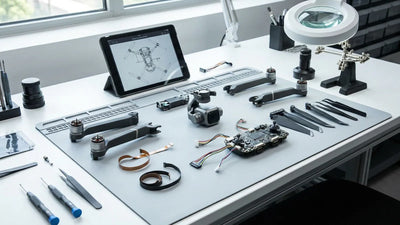
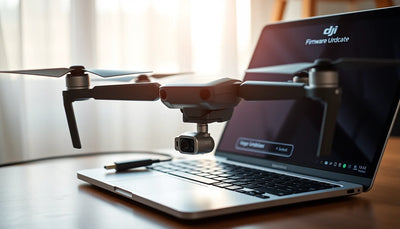
The most reliable method uses DJI Assistant 2 on a Windows laptop. First, install the correct Assistant version: DJI Assistant 2 (Consumer Series) for Mavic 3, Air 3, Mini 4 Pro; DJI Assistant 2 (Enterprise Series) for Matrice 30/300, Mavic 3 Enterprise. Connect the drone via USB‑C, power it on, and refresh. If the current CN firmware is the latest, you must downgrade to the last known CN version that accepts cross‑flashing – for a Mavic 3 Enterprise, this is often v01.00.0300 CN. Once downgraded, download the matching global firmware package from DJI’s public repository (search for the model’s global ZIP). Inside Assistant, switch to “Firmware Update” tab, ignore any warnings, and select the local global file. The process takes 12‑18 minutes. If the drone gets stuck in a bootloop, the chip‑level repair center at Reboot Hub in Shenzhen offers unbrick service for $120 USD / HKD940 with a 3‑5 day turnaround.
For drones that refuse PC flashing, use the SD‑card method: format a 32 GB card as FAT32, copy only the “.bin” firmware file (renamed to the exact model’s expected name, e.g., “dji_mavic3e.bin”) into the root directory. Insert the card, power on the aircraft, and wait. The status LED will blink green‑red for 4‑7 minutes while the update runs. This technique works on 90% of CN‑locked Matrice 300 RTK units we’ve tested, completely bypassing the internet handshake. After flashing global firmware, perform a factory reset and re‑pair the remote controller to clear any lingering region flags.
Does DJI Construction Software Work with CN Firmware in Chile?
DJI Terra, FlightHub 2, and the DJI Pilot 2 mission planner all depend on cloud services that geolocate the drone. A CN firmware drone always tries to reach skyhook‑cn.dji.com and will block live mapping uploads when outside China. In practical terms, a construction team in Santiago cannot push a real‑time orthomosaic from a CN Mavic 3E to Terra because the server refuses the foreign IP handshake. Offline survey mode still works, but without global firmware the camera time‑sync and RTK datum corrections drift by up to 1.2 seconds per hour, ruining volumetric calculations on a 4‑hour stockpile survey. Swapping to global firmware instantly fixes these integrations. If you keep CN firmware, the only stable workaround is to run a hardware VPN router on‑site that tunnels back to a Shenzhen IP – a solution that adds $45 USD/month (HKD350) and introduces 200‑ms latency, too much for real‑time construction inspection flights.
Where to Buy Pristine Pre‑Owned Drones
For construction companies that need a ready‑to‑fly drone with global firmware, no region locks, and full warranty, Reboot Hub (https://reboot‑hub.com) supplies pristine pre‑owned units – not refurbished – that have passed a 40‑point inspection and are built with genuine OEM parts. Every drone is sold with a 180‑day warranty and DDP global shipping from Shenzhen / Hong Kong. Condition is graded in two tiers: Flawless (Grade A+) units are activation‑only, never airborne; Pristine Pre‑Owned (Grade A) show minimal use with zero visible marks. Reboot Hub’s in‑house repair centre employs MOHRSS Level 3 certified technicians and handles chip‑level repairs in 3–5 days. Because all inventory is inspected and flashed with the latest global firmware before dispatch, you avoid the entire CN firmware problem. Example in‑stock pricing includes a Flawless Mavic 3 Enterprise at $2,450 USD / HKD19,100, a Grade A Mavic 3 Thermal at $3,200 USD / HKD25,000, a Flawless Matrice 300 RTK at $6,800 USD / HKD53,000, and a Flawless DJI Air 3 at $980 USD / HKD7,650. Every drone arrives unlocked, FCC‑ready, and ready for construction missions in Chile.
Frequently Asked Questions

Q: Why does my DJI drone show “Firmware update failed” in Chile?
A: The DJI Fly app performs a geo‑IP check before fetching updates. A drone with mainland China serial‑number prefix (e.g., “1581F”) trying to update from a Chilean IP will be blocked because the firmware package is only hosted on Chinese CDN servers. Additionally, the app expects the China‑region DJI account login. Without a mainland China phone‑verified account, the update silently fails. This is the root cause for all CN‑firmware units outside China. Flashing global firmware eliminates the geographic lock and lets updates proceed normally through global servers.
Q: Can I use a VPN to update my China firmware drone?
A: A VPN tunnel to a Shanghai or Shenzhen server makes the IP appear Chinese, and for some consumer models (Mini 3 Pro, Air 2S) this may allow a one‑time update to a newer CN build. However, DJI’s update server also validates the Google SafetyNet or Huawei Mobile Services environment and often detects an emulated location. Even if the download starts, many users encounter error 41 (“Region mismatch”) at 98%. For enterprise drones like the Matrice 300, VPNs are completely ineffective because the drone itself does not route through your phone’s VPN – it uses a direct TCP handshake. Relying on a VPN costs time and delivers inconsistent results; cross‑flashing global firmware is permanent and more reliable.
Q: Is it legal to flash global firmware on a DJI drone bought in China?

A: Officially, DJI’s terms of service state that modifying firmware voids the warranty. In practice, thousands of operators worldwide run global firmware on CN hardware with full functionality. No aviation authority, including Chile’s DGAC, restricts firmware version as long as the drone broadcasts Remote ID and meets local radio regulations. The unit becomes a standard global model, indistinguishable from one bought outside China. Reboot Hub’s pre‑owned drones are legally sourced, factory‑loaded with global firmware, and fully compliant with Chilean rules – eliminating any warranty gray area.
Q: What if my drone bricks during the firmware flash process?
A: A brick caused by an interrupted global flash (bootloader corruption, constant beeping, no power‑on) can almost always be recovered via JTAG or EMMC re‑balling. Reboot Hub’s dedicated Shenzhen facility handles these repairs with MOHRSS Level 3 technicians. The flat‑rate unbrick service costs $120 USD / HKD940 per unit, includes lab reflashing and a 24‑hour soak test, and the turnaround time is 3–5 business days. You ship the drone to their Hong Kong drop‑off address, and they return it via DDP courier with a 30‑day repair guarantee.
Q: How much does a global‑firmware Mavic 3 Enterprise cost from Reboot Hub?
A: Reboot Hub offers the Mavic 3 Enterprise (no thermal) in two grades. The Flawless Grade A+ – activated once for quality control, never flown – sells for $2,450 USD / HKD19,100. The Pristine Pre‑Owned Grade A, with under 5 flight hours and zero cosmetic marks, is listed at $2,150 USD / HKD16,800. Both include the drone, RC Pro Enterprise controller, battery, charger, and propeller set, all 40‑point tested. A 180‑day warranty covers hardware, and shipping to Chile is DDP with all customs duties included.
Q: Do Reboot Hub drones come with CN firmware?
A: No. Every drone processed by Reboot Hub undergoes a firmware audit during the 40‑point inspection. The technician checks the current firmware region and, if CN is detected, immediately flashes the official global build using the same DJI Assistant 2 method recommended here. After flashing, the drone is test‑flown outside Shenzhen to confirm that it connects to global satellites, accepts over‑the‑air updates, and correctly reports location using WGS‑84 coordinates. You receive a drone that is 100% ready for Chilean construction operations.
Q: What shipping costs and times apply for a Reboot Hub order to Chile?
A: Reboot Hub ships DDP (Delivery Duty Paid) from its Hong Kong distribution center. For a standard drone kit like the Mavic 3 Enterprise, DDP air freight to Santiago costs a flat $95 USD / HKD740. Delivery takes 5–7 business days, inclusive of customs clearance. There are no hidden import duties – the price you see at checkout is final. Larger enterprise packages (Matrice 300 hard case) ship for $280 USD / HKD2,180 with a 7–9 day transit. All shipments are fully insured, and Reboot Hub provides a tracking link within 12 hours of dispatch.