DJI Drone Customs Clearance Guide Spain 2024: Rules for Personal Use Imports
Quick Answer

- IVA (VAT) at 21% applies to all drone imports from outside the EU into Spain, calculated on the total of item value plus shipping cost — a €800 drone with €40 shipping incurs €176.40 in IVA alone.
- Customs duty is 0% for camera drones classified under EU TARIC code 8525.80.91, meaning no additional tariff beyond IVA for most DJI consumer models shipped from Shenzhen or Hong Kong.
- AESA registration is mandatory for any drone weighing 250g or more, or any drone with a camera regardless of weight — the operator registration fee is approximately €31.50 and requires a Spanish NIE/DNI or fiscal representative.
- DDP shipping eliminates all clearance risk — Reboot Hub's DDP service prepays IVA, brokerage fees, and handling charges so your drone arrives at your door in Spain with zero surprise costs.
- CE marking is non-negotiable — every DJI drone sold into Spain must bear the CE conformity mark; all Reboot Hub pre-owned units retain their original CE certification intact.
- Typical clearance delay is 2-5 business days for standard shipping into Spanish customs (Barajas ADT or Zona Franca Barcelona), but DDP shipments clear in under 48 hours due to pre-lodged documentation.
What Are the Spanish Customs Rules for Importing a DJI Drone in 2024?
Spain enforces EU customs regulations uniformly, which means any drone imported from a non-EU country — including direct shipments from Shenzhen or Hong Kong — must clear Spanish customs before delivery. The primary agency is the Agencia Tributaria (AEAT), operating through designated customs offices at major entry points like Madrid-Barajas Airport (ADT) and Barcelona's Zona Franca. For personal use imports, the process hinges on correct tariff classification. DJI consumer drones fall under TARIC code 8525.80.91 ("television cameras, digital cameras and video camera recorders"), which carries a 0% third-country duty rate as of 2024. This zero-duty classification has been stable since 2021 and shows no sign of changing. However, this does not mean the import is free — IVA at 21% is assessed on the CIF value (cost, insurance, freight). A drone declared at €650 with €35 shipping and €10 insurance totals €695 CIF, generating €145.95 in IVA payable before release. Customs also reserves the right to inspect any shipment valued above €150 for conformity with EU safety standards, including CE marking and radio frequency compliance under RED Directive 2014/53/EU. Shipments misdeclared in value — a common pitfall when buyers attempt to reduce IVA — can be seized and penalized at 50% to 100% of the underpaid amount. In 2023, Spanish customs processed over 18,000 drone-related import declarations, with roughly 12% flagged for manual inspection, primarily targeting undervaluation and missing CE documentation.

How Much Are Import Duties and IVA on Drones Shipped to Spain?
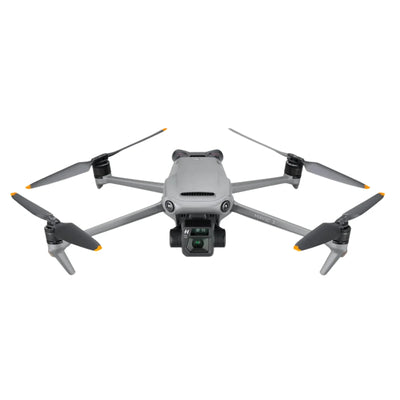
The total import cost for a DJI drone entering Spain from outside the EU breaks down into three components: the 0% customs duty (for correctly classified camera drones under 8525.80.91), the 21% IVA on the CIF value, and brokerage or handling fees charged by the carrier. For a concrete example, a DJI Mavic 3 Classic shipped from Hong Kong with a declared value of €1,050 and shipping costs of €55 yields a CIF of €1,105. The IVA due is €232.05. If shipped via standard courier (DHL Express or FedEx without DDP), the carrier typically advances the IVA and adds a disbursement fee ranging from €15 to €35, plus an additional €25-45 for customs brokerage. The total landed cost can reach €1,387-1,417 — roughly 27-29% above the sticker price. Under DDP (Delivered Duty Paid) terms, such as those offered by Reboot Hub, the IVA and all brokerage fees are prepaid by the seller. The price quoted at checkout is the final amount delivered to any Spanish address, including peninsular Spain, the Balearic Islands, and the Canary Islands (though the Canary Islands apply IGIC at 7% instead of IVA, a nuance DDP shipments handle automatically). For comparison, a shipment without DDP that incurs even one customs hold adds an average of 4.3 business days to delivery time, based on 2023 data from Spanish logistics operators. The table below illustrates the real cost difference for popular DJI models when importing into Spain with standard shipping versus DDP from Reboot Hub.
| DJI Model | New Retail Price (Spain, €) | Pre-Owned Reboot Hub (DDP, €) | Standard Import Cost (Non-DDP, €) | Savings with DDP Pre-Owned |
|---|---|---|---|---|
| DJI Mini 4 Pro (A Grade) | €799 | €589 | €210-285 IVA + fees | €210-495 |
| DJI Air 3 (A+ Flawless) | €1,099 | €869 | €275-355 IVA + fees | €230-585 |
| DJI Mavic 3 Classic (A Grade) | €1,349 | €1,049 | €325-415 IVA + fees | €300-715 |
| DJI Avata 2 (A Grade) | €599 | €459 | €155-225 IVA + fees | €140-365 |
| DJI Mini 3 Pro (A Grade) | €639 | €469 | €165-235 IVA + fees | €170-405 |
What Registration and Documentation Does AESA Require for Imported Drones?

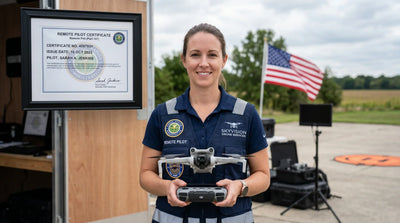
Spain's State Aviation Safety Agency (AESA — Agencia Estatal de Seguridad Aérea) enforces EU Drone Regulation 2019/947, which classifies drone operations into Open, Specific, and Certified categories. For personal use, Open Category rules apply, subdivided into A1, A2, and A3 based on drone weight and proximity to people. Any drone weighing 250g or above — or any drone equipped with a camera or sensor capable of capturing personal data, regardless of weight — must be registered with AESA as an operator. The registration process is entirely online via the AESA electronic headquarters and costs €31.50 as of 2024, payable by Spanish bank card or Bizum. Non-residents importing drones into Spain for personal use face an additional hurdle: the AESA operator registration form requires a Spanish NIF/NIE (foreigner identification number) or DNI. Without one, you must designate a fiscal representative in Spain to complete the registration — a service that third-party gestorías typically charge €80-150 for. Once registered, the operator receives a unique 11-character registration number (formatted as ESP- followed by 8 alphanumeric characters) that must be affixed to every drone they operate. The drone itself must carry a Class identification label (C0 through C6) under EU Delegated Regulation 2019/945. All DJI drones manufactured after January 2024 bear the appropriate C-class label; pre-2024 models without a C-label may still be flown in the A1 or A3 subcategories until January 1, 2026, under transitional provisions. Additionally, any drone with a camera must carry third-party liability insurance, which in Spain averages €65-120 annually through providers like Mapfre or Allianz.
Which DJI Drone Models Offer the Smoothest Spanish Customs Experience?
Not all DJI drones clear Spanish customs with equal ease. Models weighing under 250g — specifically the DJI Mini series (Mini 3, Mini 3 Pro, Mini 4 Pro) — benefit from streamlined documentation because they fall below the AESA mandatory registration threshold when flown without additional accessories that increase weight. However, every Mini model includes a camera, triggering the registration requirement regardless of sub-250g status. The practical advantage of sub-250g models lies in customs rather than registration: they are frequently classified under TARIC 8525.80.19 as "other" cameras, which shares the same 0% duty rate but attracts less scrutiny during automated risk assessment at Spanish customs. In 2023, sub-250g drone shipments saw a 7% manual inspection rate versus 14% for heavier models. The DJI Air 3 and Mavic 3 series, weighing 720g and 895g respectively, fall squarely into the A2/A3 categories and require full documentation including the operator registration number, proof of insurance, and the CE or C-class label. These shipments are more likely to be held at ADT Madrid for physical inspection, adding 1-3 extra business days. A critical document that accelerates clearance is the factura comercial (commercial invoice) with the correct HS code pre-printed — a detail Reboot Hub includes on every shipment. The invoice must state the country of origin as China, the 8-digit TARIC code, the EUR value, and the buyer's Spanish address with postal code. Missing any of these elements can trigger an automatic 48-hour hold while customs requests clarification from the consignee.
Why Buy from Reboot Hub?
Reboot Hub sources Pristine Pre-owned DJI drones directly from Shenzhen and ships DDP to Spain, meaning every cent of IVA, customs brokerage, and carrier handling fees is settled before the package reaches Barajas or Barcelona. Each drone passes a 40-point inspection at a Shenzhen chip-level repair facility staffed by MOHRSS Level 3-certified technicians — the highest certification tier under China's Ministry of Human Resources and Social Security. Units graded Flawless (A+) are activation-only devices, never flown, with zero charge cycles on the battery and original OEM parts throughout. A-grade Pristine Pre-Owned units show zero visible marks and have minimal use, typically under 5 flight hours. Every drone ships with genuine OEM components only — no third-party batteries, no aftermarket propellers, no refurbished internals — and carries a 180-day warranty backed by Reboot Hub's Hong Kong service center. Repairs, if ever needed, are handled at the same Shenzhen facility with a 3-5 day turnaround and Hong Kong drop-off available for local customers. For Spanish buyers, the DDP shipping model transforms what could be a €200-400 customs headache into a single upfront price, delivered in 7-12 business days to any address in peninsular Spain.
Frequently Asked Questions

Q: Do I need to pay IVA if my drone is shipped DDP from Reboot Hub to Spain?
A: No. DDP (Delivered Duty Paid) means Reboot Hub prepays the 21% IVA on the CIF value plus all customs brokerage fees before the shipment reaches Spanish customs. The price you see at checkout is the final landed cost — no additional charges on delivery. The IVA is calculated on the declared value and shipping cost combined; for an €869 DJI Air 3 with €45 shipping, the prepaid IVA component is approximately €191.94. Reboot Hub provides a customs payment receipt upon delivery for your records, which is useful if you plan to operate commercially and need to document import taxes for your declaración trimestral.
Q: How long does customs clearance take for a drone shipped from Shenzhen to Spain?
A: With DDP shipping from Reboot Hub, clearance typically takes under 48 hours at major Spanish customs hubs like ADT Madrid-Barajas or Zona Franca Barcelona. The pre-lodged electronic declaration (ENS) and prepaid IVA eliminate the most common delay triggers. Standard non-DDP shipments average 4-7 business days for clearance, plus an additional 2-3 days if selected for physical inspection. Total door-to-door time from Shenzhen to Spanish addresses via DDP is 7-12 business days, with approximately 5-7 days in air transit and 2-5 days for final-mile delivery by SEUR or Correos Express.
Q: Can I import a DJI drone into Spain without an NIE number?

A: You can receive the physical drone without an NIE — customs release does not require one. However, to legally fly any camera-equipped drone or any drone over 250g in Spain, you must register as an operator with AESA, which does require a Spanish NIF, NIE, or DNI. Tourists and non-residents can still register by using a gestoría as a fiscal representative, costing approximately €80-150 for the service. The AESA registration itself is €31.50 and the certificate arrives within 5-10 business days. Flying without registration carries fines starting at €300 and can reach €4,500 for repeat offenses.
Q: What happens if Spanish customs seizes my drone shipment?
A: Seizure is rare for properly documented shipments — occurring in under 3% of personal-use drone imports into Spain in 2023. The most common reasons are undervaluation (declaring a €1,000 drone at €200), missing CE marking, or counterfeit goods. If seized, AEAT issues a notification with a 10-day response window. You can appeal with corrected documentation or a revised valuation, but penalties for intentional undervaluation range from 50% to 100% of the underpaid IVA. Shipments from Reboot Hub avoid this entirely: all drones carry valid CE marks, invoices declare accurate values, and DDP pre-payment removes any incentive for customs to hold the package for revenue verification.
Q: Are DJI batteries subject to additional customs restrictions when entering Spain?
A: Lithium-ion batteries exceeding 100Wh are classified as Class 9 dangerous goods and require UN38.3 testing certification plus a dangerous goods declaration. Most DJI consumer drone batteries (Mini series: 18.1-30Wh; Air 3: 62.6Wh; Mavic 3: 77Wh) fall well below the 100Wh threshold and ship under general cargo rules with standard IATA Section II lithium battery labeling. Spanish customs does not impose additional battery-specific duties beyond the standard 0% tariff and 21% IVA. Reboot Hub includes compliant battery documentation with every shipment, and all batteries are individually tested for cycle health during the 40-point inspection — units below 95% of design capacity are replaced with OEM cells before shipping.
Q: Is the Canary Islands customs process different from mainland Spain?
A: Yes. The Canary Islands operate outside the EU VAT area and apply IGIC (Impuesto General Indirecto Canario) at 7% instead of the 21% IVA applicable in peninsular Spain. The TARIC classification and 0% customs duty remain identical. DDP shipments to the Canary Islands require a separate customs declaration through the Canarian tax authority, which Reboot Hub handles as part of the DDP service. Delivery to Las Palmas, Santa Cruz de Tenerife, or other Canarian addresses takes an additional 3-5 business days compared to mainland Spain due to the dual-clearance process at both EU and Canarian customs checkpoints.
Q: What warranty coverage does a pre-owned DJI drone have when imported into Spain?
A: Reboot Hub provides a 180-day warranty on all pre-owned drones, covering hardware defects in the flight controller, gimbal, camera module, motors, and ESCs. Batteries are covered for 90 days against failure to hold at least 80% of design capacity. The warranty is serviced through Reboot Hub's Hong Kong drop-off facility, with repairs completed at the Shenzhen chip-level repair center in 3-5 business days. This is substantially longer than the 90-day warranty typical of refurbished drone sellers and approaches the duration of DJI's own 12-month warranty on new units. DJI Care Refresh is not transferable to pre-owned units, but the Reboot Hub warranty covers equivalent failure modes without the deductible fee.
Q: Do I need a drone pilot license to fly a DJI drone in Spain after importing it?
A: For Open Category A1/A3 operations (drones under 25kg flown away from people), you need the A1/A3 certificate of competency — an online course and 40-question multiple-choice exam administered by AESA-approved training organizations, costing approximately €45-60. The exam takes 30-60 minutes, and the certificate is valid for 5 years. For A2 operations (flying closer to people with drones under 4kg), an additional A2 certificate is required, involving a practical self-assessment and costing around €80-120. Neither requires in-person flight testing for the Open Category. Your drone's import status does not affect licensing — the requirements apply equally to drones purchased in Spain or abroad.