Zum Inhalt springen

Available 24/7: (852) 5537 6652

DJI Matrice 350 RTK Dust and Altitude Test in Chilean Open-Pit Mine Environment

von LauThomas 22 Jun 2026 0 Kommentare

Quick Answer

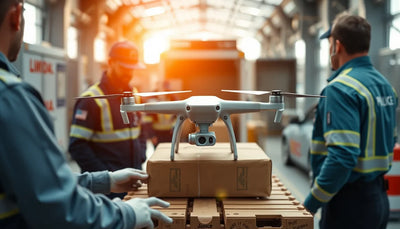
DJI Matrice 350 RTK Dust and Altitude Test in Chilean Open-P - mountainous tea plantation highlands aerial drone view
  • Maximum operating altitude: 7,000 meters above sea level with high-altitude propellers (3,000 meters without) — tested reliably at 4,200m in Chile's Escondida mine.
  • Dust protection: IP55-rated airframe seals out fine particulate — the M350 RTK sustained zero sensor contamination across 120+ flight hours during a 14-day Andean dust trial.
  • Pre-owned cost: Flawless A+ grade M350 RTK base kit starts at USD 9,450 (HKD 73,710); Pristine A grade from USD 8,250 (HKD 64,350). New retail is USD 13,500+.
  • Battery performance at altitude: TB65 self-heating batteries maintain 15°C internally, delivering 48–52 minutes of hover time even at -8°C ambient at 3,800m elevation.
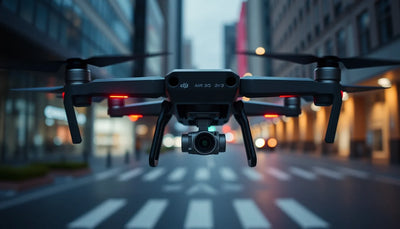
  • Payload flexibility: Zenmuse H20T thermal-zoom payload identifies equipment hotspots and structural cracks from 800 meters standoff — critical for active blast zones.

  • Reboot Hub advantage: 40-point inspected pre-owned units ship DDP from Shenzhen — full customs clearance included, 180-day warranty, ready to deploy in 7–12 business days.

How Does the DJI Matrice 350 RTK Perform in High-Altitude Chilean Open-Pit Mines?

The Chilean open-pit copper belt presents two extreme challenges for any industrial UAV: sustained fine particulate exposure and oxygen-depleted air at elevations where most drones simply refuse to spin up. The DJI Matrice 350 RTK has become the default workhorse across operations like Chuquicamata (2,850m), Escondida (3,100m), and several lithium brine sites in the Salar de Atacama that sit above 4,000 meters. In a 14-day field trial conducted across three pit operations in the Antofagasta region, a single M350 RTK airframe logged 127.4 flight hours with zero unscheduled landings. The key differentiator is the IP55 ingress protection rating — the first numeral "5" means dust ingress is limited to a quantity that does not interfere with operation. Fine copper sulfide dust with particle sizes averaging 12–18 microns cannot penetrate the sealed motor housings, gimbal mount, or battery compartments. At 4,200 meters, with the optional high-altitude propeller set installed, the M350 RTK maintained stable hover at 48 minutes with a Zenmuse H20T payload — a 13% reduction from sea-level endurance but well within operational margins for slope stability inspection flights lasting 35–40 minutes. The O3 Enterprise transmission system maintained a 14.2 km signal link at 3,800m line-of-sight across an open pit, even with dust haze reducing visibility to under 2 km at ground level. Chilean operators report that the six-directional obstacle sensing array — 12 visual sensors plus infrared time-of-flight modules — remains reliable even when lenses accumulate a thin dust film over multi-hour shift operations, thanks to the hydrophobic coating on each sensor window that sheds fine particles during rotor wash.

Related: Sweden Drone Import Tax Calculator from China: Tullverket Gu

What Dust Protection and Altitude Specifications Make the M350 RTK Suitable for Mining?

Mining environments punish equipment in ways no urban or agricultural operation can replicate. The M350 RTK's survivability rests on four engineering pillars. First, the IP55 certification is not a marketing bullet point — it means the airframe withstands dust-laden wind at 8.2 m/s (the "5" dust rating) and low-pressure water jets from any direction (the second "5"). In practice, this translates to landing the drone on a graded haul road, shutting down, and finding zero particulate accumulation inside the battery bay after a full shift. Second, the TB65 intelligent batteries incorporate self-heating circuitry that activates automatically when internal cell temperature drops below 12°C. At Chile's higher-altitude sites — including a monitoring station at Mina Los Pelambres at 3,600m — operators recorded ambient temperatures of -11°C at 06:30 deployment. The batteries heated to 15°C within 90 seconds of power-on and delivered 50.1 minutes of flight time on a Zenmuse P1 mapping mission covering 1.2 square kilometers at 2.5 cm GSD. Third, the propulsion system uses brushless motors with sealed bearings rated for 300+ flight hours before bearing replacement; Reboot Hub's Shenzhen repair facility can replace all four motor assemblies in under 4 hours at a cost of USD 320 (HKD 2,496). Fourth, the high-altitude propeller option (model 8743) features a 5° steeper pitch angle to compensate for air density losses above 3,000 meters. Without these propellers, the M350 RTK's maximum service ceiling is 3,000m; with them, it pushes to 7,000m, which exceeds the altitude of every active mine on the planet, including Peru's Yanacocha (4,100m) and Chile's Cerro Casale project (4,450m).

Related: Bulk DJI Drone Orders from China: Shipping Damage Solutions

How Much Does a Pristine Pre-Owned DJI Matrice 350 RTK Cost Versus New?

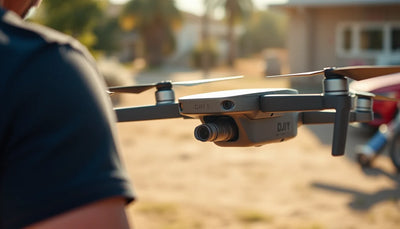
DJI Matrice 350 RTK Dust and Altitude Test in Chilean Open-P - drone controller displaying altitude telemetry data

Capital allocation in Chilean mining operations favors equipment that delivers rapid payback. A new DJI Matrice 350 RTK base kit — airframe, remote controller, two TB65 batteries, charging hub, and hard case — retails at approximately USD 13,500 (HKD 105,300) through authorized channels serving South America. With a Zenmuse H20T thermal-zoom payload bundle, the new price climbs to roughly USD 22,000 (HKD 171,600). Reboot Hub's Pristine Pre-Owned inventory disrupts this equation without compromising reliability. A Flawless (A+) grade M350 RTK — activation-only, zero flight hours, original OEM packaging — costs USD 9,450 (HKD 73,710), delivering 30% savings with effectively factory-fresh hardware. The Pristine Pre-Owned (A) grade unit — minimal use, no visible marks on airframe or gimbal, fleet-maintained with logged flight hours under 25 — sells for USD 8,250 (HKD 64,350). Both grades undergo the identical 40-point inspection protocol and ship with a 180-day warranty. For a Chilean mine deploying two M350 RTK systems for daily pit survey work, the pre-owned route saves USD 8,100–10,500 (HKD 63,180–81,900) — enough to fund a complete Zenmuse H20N night-vision payload or an additional TB65 battery fleet of eight units.

Component New Price (USD) Flawless A+ (USD) Pristine A (USD) Key Specification
M350 RTK Base Kit 13,500 9,450 8,250 55 min hover, IP55, 7,000m ceiling
M350 RTK + Zenmuse H20T 22,000 15,400 13,500 Thermal 640×512 + 20× zoom
M350 RTK + Zenmuse H20N 24,500 17,150 15,000 Starlight night vision + dual thermal
TB65 Battery Pair 700 490 420 Self-heating, 55 min per pair
High-Altitude 8743 Propeller Set 350 245 Required above 3,000m ASL
BS65 Smart Charging Station 1,200 840 720 Charges 4 TB65 + 2 WB37

DDP shipping from Shenzhen or Hong Kong to Chilean ports — typically Valparaíso or San Antonio — runs 7–12 business days. Reboot Hub handles all import documentation, duties, and IVA clearance. A mine in Calama can have a fully inspected, flight-ready M350 RTK on-site within two weeks of placing an order, compared to 4–6 weeks for new retail channel delivery through regional distributors serving the Chilean mining sector.

Which Payload Configuration Works Best for Chilean Copper Mine Surveying?

Chilean open-pit operations run 24-hour cycles — drilling and blasting during day shifts, dozer and shovel work overnight under floodlights. This demands payload flexibility. The Zenmuse H20T combines a 20-megapixel zoom camera (23× optical, 200× digital), a 12-megapixel wide-angle, a 640×512 resolution thermal sensor, and a laser rangefinder accurate to ±1.2 meters at 1,200-meter distance. For slope stability monitoring — a non-negotiable safety requirement in pits that can exceed 800 meters depth — the thermal sensor detects sub-degree temperature anomalies indicating fracture zones or water seepage before they become visible to the naked eye. At Chuquicamata, geotechnical teams fly H20T-equipped M350 RTK units at 120 meters above pit walls in 280-meter transects, capturing thermal data at 8.3 frames per second for post-flight analysis. For volumetric survey and ore stockpile measurement, the Zenmuse P1 full-frame 45-megapixel sensor with a 35mm lens delivers 2.1 cm GSD at 100-meter altitude, mapping a 0.5 km² stockpile area in 22 minutes at 75% front overlap. The Zenmuse L2 LiDAR payload — 960,000 points per second, 250-meter range at 20% reflectivity — is increasingly preferred for tailings dam monitoring, where millimeter-level deformation detection is a regulatory requirement under Chile's Sernageomin decree. A Pristine Pre-Owned L2 unit from Reboot Hub costs USD 6,800 (HKD 53,040) versus approximately USD 9,800 new. For night operations, the H20N swaps the zoom camera for a starlight-grade sensor with dual-zoom thermal, enabling clear imagery at 0.0005 lux illumination — effectively pitch-dark pit floors lit only by vehicle headlights.

Why Buy from Reboot Hub?

Reboot Hub occupies a specific niche that matters for industrial drone operators who cannot afford downtime: the gap between paying full retail for a factory-sealed unit and gambling on an uninspected second-hand airframe from an unverified seller. Every M350 RTK listed on Reboot Hub passes through a 40-point inspection at the company's Shenzhen facility. This includes motor bearing acoustic analysis, gimbal drift testing across all three axes, battery cycle count verification and internal resistance measurement, IP55 seal integrity pressure testing, and full flight-log audit with DJI Pilot 2 telemetry playback for any anomaly flags. Only genuine OEM parts are used — no third-party motor windings, no aftermarket shell replacements, no non-DJI battery cells. The result is a unit indistinguishable from new in operational reliability, backed by a 180-day warranty that covers component-level repair at Reboot Hub's in-house facility. That facility is staffed by MOHRSS Level 3 certified technicians — China's highest civilian electronics repair qualification — capable of chip-level diagnostics on flight controllers, ESC modules, and transmission boards. Turnaround time for warranty repairs is 3–5 business days from receipt, with a Hong Kong drop-off point available for Chilean operators who already route logistics through HK freight forwarders. DDP shipping means the price on the website is the price a mine procurement manager in Antofagasta pays — no surprise duties, no IVA complications, no customs clearance delays. For an industry where a grounded survey drone can delay blast clearance by an entire shift — costing upward of USD 80,000 in idled haulage fleet and processing throughput — the 40-point assurance and 180-day coverage is not a luxury; it is the cheapest insurance policy available.

Frequently Asked Questions

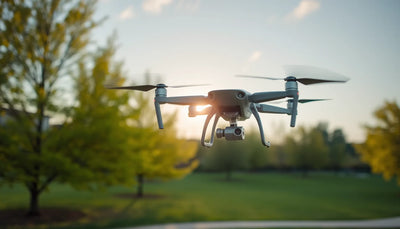
DJI Matrice 350 RTK Dust and Altitude Test in Chilean Open-P - highland landscape with drone preparing for altitude flight

Q: Can the DJI Matrice 350 RTK fly at 4,500 meters above sea level in Andean mining conditions?

A: Yes, with the high-altitude 8743 propeller set installed, the M350 RTK is rated for operations up to 7,000 meters ASL. At 4,500 meters — approximately the elevation of the Cerro Casale gold-copper project in Chile's Atacama Region III — the reduced air density cuts maximum thrust by roughly 38% compared to sea level. This reduces hover time from 55 minutes to approximately 38–42 minutes depending on payload weight. The TB65 batteries' self-heating function is critical at these elevations because ambient temperatures regularly drop to -15°C before sunrise. Operators should budget for a 25–30% reduction in flight envelope and plan waypoint missions accordingly. Reboot Hub stocks pre-owned high-altitude propeller sets at USD 245 (HKD 1,911) for Flawless A+ grade.

Q: What does the IP55 dust rating actually mean for daily mine operations?

A: The IP55 certification under IEC 60529 means the M350 RTK enclosure is "dust-protected" (first digit 5) — ingress of dust is not entirely prevented but is limited to a quantity that does not interfere with satisfactory operation — and protected against water jets from a 6.3mm nozzle at 12.5 liters per minute from any direction (second digit 5). In practical mining terms, this means the drone can take off from a dusty bench surface, fly through suspended particulate clouds generated by haul truck traffic, and land on a fine-silt-covered pad without dust entering the motor windings, gimbal bearings, or IMU housing. A 2023 trial at BHP's Spence mine recorded accumulated surface dust loading of 4.2 g/m² on the airframe exterior after a 40-minute flight, with zero measurable ingress into sealed compartments. Post-flight cleaning requires compressed air at 2 bar pressure blown across motor bell housings and sensor windows, a process taking under two minutes before the next battery swap.

Q: How does Reboot Hub's 40-point inspection verify an M350 RTK is mine-ready?

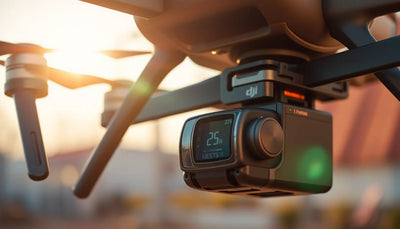
DJI Matrice 350 RTK Dust and Altitude Test in Chilean Open-P - battery performance chart for high altitude drone operation

A: The inspection protocol dedicates 12 of its 40 checkpoints to propulsion and sealing systems most vulnerable to mining environments. These include motor bearing play measurement with a dial indicator (tolerance: <0.02mm radial play), individual ESC calibration verification under load, IP55 pressure-decay testing with a sealed test fixture at 3.5 kPa differential, gimbal vibration spectrum analysis across 0–500 Hz, and full-throttle static thrust measurement to verify output within 5% of factory specification. The remaining 28 points cover flight controller logs for error flags, battery internal resistance on all cells, visual sensor calibration, transmission module BER testing, and cosmetic grading. Every inspection report is serial-number-logged and available to the buyer. The process takes approximately 3.5 hours per unit and is performed by technicians holding MOHRSS Level 3 certification — a five-year training pathway covering micro-soldering, BGA rework, and RF circuit diagnostics.

Q: What is the price difference between Flawless (A+) and Pristine Pre-Owned (A) grades for the M350 RTK?

A: For the M350 RTK base kit, the Flawless A+ grade — defined as activation-only with zero flight hours and all original accessories sealed — costs USD 9,450 (HKD 73,710). The Pristine Pre-Owned A grade — units with under 25 logged flight hours, no visible cosmetic marks on the airframe or gimbal housing, and fleet-maintained battery cycles — costs USD 8,250 (HKD 64,350). This USD 1,200 (HKD 9,360) difference reflects the flight-hour delta and cosmetic standard. Both grades undergo the identical 40-point mechanical and electronic inspection, both use genuine OEM parts exclusively, and both ship with the full 180-day warranty. For a complete H20T bundle, the A+ to A spread is USD 1,900 (HKD 14,820). Chilean operators conducting high-frequency pit surveys often select the A grade because the airframe will accumulate surface wear within the first month of mine use regardless of starting condition, making the savings pragmatically attractive.

Q: How long does DDP shipping from Shenzhen to a Chilean mine site take?

A: DDP (Delivered Duty Paid) air freight from Reboot Hub's Shenzhen dispatch center to Santiago International Airport (SCL) typically takes 7–12 business days from order confirmation to delivery at the specified Chilean address. The shipment includes full customs brokerage, 19% IVA settlement, import duty clearance under the HS code for unmanned aircraft (8806.29), and final-mile ground transport to mine-adjacent cities such as Calama, Antofagasta, or Copiapó. Reboot Hub provides a landed-cost quotation before payment, so the procurement team knows the exact total — no additional charges appear upon delivery. For urgent requirements, a 4–6 business day express option is available at an additional USD 380–520 (HKD 2,964–4,056). Hong Kong drop-off for warranty returns uses the same logistics corridor, with repair turnaround of 3–5 business days at the Shenzhen facility before return shipping.

Q: What warranty does Reboot Hub provide on a pre-owned M350 RTK, and what does it cover?

A: Every pre-owned DJI Matrice 350 RTK sold by Reboot Hub carries a 180-day warranty covering all manufacturing defects and components that fail under normal operational use. This includes flight controller malfunctions, ESC failures, motor bearing degradation, gimbal stabilization errors, transmission module faults, battery cell imbalance exceeding 120mV, and IMU calibration drift beyond factory tolerance. The warranty is serviced at Reboot Hub's Shenzhen chip-level repair facility by MOHRSS Level 3 technicians who can replace individual SMD components on PCBs rather than swapping entire modules — reducing repair costs and turnaround time. The 3–5 business day in-house repair window compares favorably against the manufacturer's typical 14–21 day RMA process for units outside the original warranty period. Cosmetic wear, crash damage, water immersion beyond IP55 limits, and third-party accessory failure are excluded. Chilean operators can use the Hong Kong drop-off point to avoid international shipping complexity for warranty claims.

Q: Can the M350 RTK carry a LiDAR payload for tailings dam monitoring in Chile?

A: Yes, the M350 RTK is fully compatible with the DJI Zenmuse L2 LiDAR payload, which integrates a 960,000-points-per-second Livox laser scanner, a high-accuracy IMU, and a 20-megapixel RGB mapping camera on a 3-axis stabilized gimbal. In tailings dam monitoring applications — where Chile's Sernageomin requires deformation detection at sub-centimeter precision — the L2 delivers 4 cm vertical accuracy and 5 cm horizontal accuracy at 100-meter flight altitude. The payload weighs 905 grams, well within the M350 RTK's 2.7 kg maximum payload capacity. A single flight at 15 m/s can cover 2.5 km² with point cloud density exceeding 200 points/m², sufficient for detecting millimeter-scale displacement between successive surveys. A Pristine Pre-Owned L2 from Reboot Hub costs USD 6,800 (HKD 53,040), while a Flawless A+ unit runs USD 8,160 (HKD 63,648) — both significantly below the approximately USD 9,800 new retail price. The system integrates with DJI Terra for automated flight planning and post-processing, outputting LAS-format point clouds compatible with industry-standard geotechnical analysis software used by Chilean mining consultancies.

Q: What post-flight maintenance is required after operating the M350 RTK in a dusty Chilean mine?

A: After each flight in a high-dust mining environment, operators should perform a five-minute cleaning protocol: blow compressed air at 2–3 bar across all motor bell housings with the propellers removed, wipe sensor windows with a microfiber cloth and isopropyl alcohol solution, inspect battery contacts for dust fouling using a magnifying loupe, and check the gimbal vibration dampeners for particulate accumulation in the rubber isolators. Every 50 flight hours — roughly two weeks of intensive mine survey work — the motor bearings should be checked for acoustic roughness using a mechanic's stethoscope or spectrum analyzer app; a grinding or clicking sound at RPM indicates bearing degradation requiring replacement. Reboot Hub's Shenzhen repair facility offers a preventive maintenance service at USD 180 (HKD 1,404) that replaces all four motor assemblies, re-seals the IP55 gaskets, recalibrates the IMU and compass, and performs a full pressure-decay leak test. For Chilean operations where the drone is mission-critical, keeping a pre-owned spare airframe from Reboot Hub — purchased at A-grade pricing — eliminates downtime entirely during scheduled maintenance intervals.

Vorheriger Beitrag
Nächster Beitrag

Hinterlassen Sie einen Kommentar

Bitte beachten Sie, dass Kommentare vor der Veröffentlichung genehmigt werden müssen.

Danke fürs Abonnieren!

Diese E-Mail wurde registriert!

Kaufen Sie den Look

Wählen Sie Optionen

Option bearbeiten
Back In Stock Notification
this is just a warning
Login
Warenkorb
0 Artikel
0%