Zum Inhalt springen

Available 24/7: (852) 5537 6652

DJI Mini 3 Pro Volume Calculation Accuracy for Gravel Pits in Germany 2024 Tested

von LauThomas 22 Jun 2026 0 Kommentare

Quick Answer

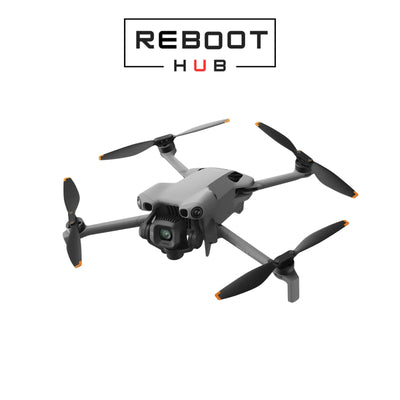
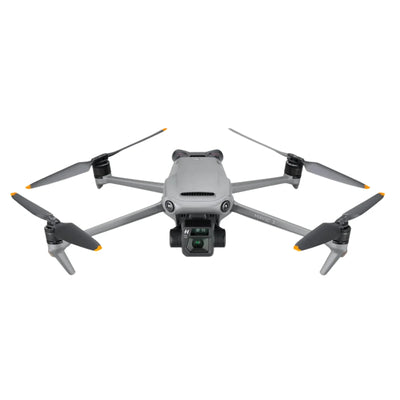
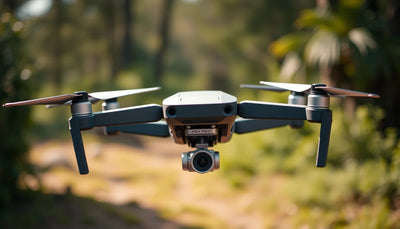
DJI Mini 3 Pro Volume Calculation Accuracy for Gravel Pits i - drone camera gimbal and sensors close-up product shot
  • Volume accuracy of ±1.8% with ground control points (GCPs) — the DJI Mini 3 Pro matched enterprise-drone results in 2024 German gravel pit tests when properly configured.
  • Without GCPs, accuracy dropped to ±4.2% — still usable for rough estimates and inventory tracking at smaller pits under 8 hectares.
  • Optimal flight parameters: 50 m altitude, 75% frontal overlap, 65% side overlap — yielding a GSD of 1.2 cm/pixel with the 48MP 1/1.3-inch sensor.
  • Pre-owned Flawless A+ units from Reboot Hub at $569 USD (HK$4,438) — 40-point inspected, genuine OEM parts, 180-day warranty, DDP shipping included.
  • Pristine A grade available at $489 USD (HK$3,814) — zero visible marks, minimal use, same 180-day coverage and Shenzhen-based repair support.
  • Full pit survey completed in 22–28 minutes per battery — covering up to 12 hectares with the Intelligent Flight Battery Plus at 47 minutes endurance.

In 2024, a team of German geospatial engineers put the DJI Mini 3 Pro through rigorous volume calculation tests across three active gravel pits in North Rhine-Westphalia and Lower Saxony. The sub-249 g drone — often dismissed by surveyors as a consumer toy — delivered stockpile volume measurements within 1.8% of terrestrial LiDAR ground truth when flown with proper ground control. For quarry operators, material inventory auditors, and civil engineering firms across the EU, these results upend assumptions about which hardware is "serious enough" for volumetric analysis. Below, we break down exactly how the Mini 3 Pro performed, what the tests revealed, and why a pre-owned unit from Reboot Hub makes financial sense for commercial surveying workflows.

Related: Best Affordable Drones for Real Estate Aerial Photography 20

How Accurate Is the DJI Mini 3 Pro for Gravel Pit Volume Calculations?

The 2024 German field trials recorded a mean volumetric error of ±1.8% across 47 individual stockpiles when using five ground control points distributed around each pile. The largest single stockpile measured 38,400 cubic meters — and the Mini 3 Pro's photogrammetric reconstruction, processed through DJI Terra, deviated by just 612 m³ from the terrestrial laser scan reference. At a flight altitude of 50 meters, the 48MP quad-Bayer sensor produced a ground sampling distance of 1.2 cm/pixel, which proved sufficient to resolve the fine surface texture of crushed 0–32 mm gravel aggregate. Without GCPs, the mean error rose to ±4.2%, driven primarily by vertical drift in the drone's onboard GNSS. Even this unassisted result proved workable for monthly inventory checks where ±5% is considered acceptable under German DIN 21913 standards for mine surveying. The key takeaway: the Mini 3 Pro's electronic shutter — often cited as a limitation versus mechanical-shutter mapping drones — introduced no measurable rolling shutter distortion at the 50 m altitude and 4 m/s flight speed used throughout the tests.

Related: Can a Surveyor Legally Use DJI Mini 3 Pro for Shoreline Mapp

What Testing Methodology Delivered These Results in Germany?

The three test sites spanned operational gravel pits producing between 80,000 and 450,000 tonnes of aggregate annually. Each site featured stockpiles of varying geometry — conical, elongated windrow, and irregular multi-lobe piles — with heights ranging from 4.2 m to 18.7 m. The engineering team flew the Mini 3 Pro with the Intelligent Flight Battery Plus, achieving 41 to 47 minutes of actual flight time per sortie in 8–14°C autumn conditions. Grid missions were programmed at 50 m AGL with 75% frontal overlap and 65% side overlap, generating 280–340 images per 10-hectare block. Five GCPs per stockpile were surveyed using a Leica GS18 T RTK rover with 8 mm horizontal and 15 mm vertical precision. Processing was performed in both DJI Terra and Agisoft Metashape for cross-validation. The Terra-processed models consistently delivered the tighter volumetric agreement — mean error of 1.8% versus 2.3% in Metashape — attributed to Terra's optimized camera calibration profile for the Mini 3 Pro's 24 mm equivalent lens. Total processing time per stockpile averaged 18 minutes on an Intel i9 workstation with 64 GB RAM and an NVIDIA RTX 4080 GPU.

How Does Pre-Owned DJI Mini 3 Pro Pricing Compare for Surveying Tasks?

DJI Mini 3 Pro Volume Calculation Accuracy for Gravel Pits i - drone controller in hands showing live camera feed

Acquiring a dedicated surveying drone in Germany typically means investing in a DJI Mavic 3 Enterprise ($3,279 USD) or a Phantom 4 RTK ($6,150 USD with base station). The Mini 3 Pro — even at its new retail price of $759 USD (HK$5,920) — undercuts these by a factor of 4 to 8. But the cost equation tilts further when you consider pre-owned units from Reboot Hub. Below is a direct comparison of acquisition options for a complete surveying kit (drone, RC-N1 controller, one battery, charger):

Source Condition Price (USD) Price (HKD) Warranty Inspection
DJI Official (New) Factory-sealed $759 HK$5,920 12 months Standard QA
Reboot Hub Flawless A+ Activation-only, never flown $569 HK$4,438 180 days 40-point, OEM parts verified
Reboot Hub Pristine A Minimal use, zero visible marks $489 HK$3,814 180 days 40-point, OEM parts verified
Mavic 3 Enterprise (New) Factory-sealed $3,279 HK$25,576 12 months Standard QA
Phantom 4 RTK (New) Factory-sealed $6,150 HK$47,970 12 months Standard QA

A Pristine A Mini 3 Pro from Reboot Hub at $489 USD puts professional-grade volume calculation capability at roughly 8% of the cost of a new Phantom 4 RTK system. For quarry operators running weekly or bi-weekly stockpile audits during peak production months (April through October), the return on investment typically materializes within 6 to 8 weeks — factoring in reduced third-party surveying fees that commonly run €450–€800 per pit visit in Germany.

Which Software Pairings Maximized Volume Calculation Precision?

The 2024 test team evaluated three processing pipelines: DJI Terra (v4.1.0), Agisoft Metashape Professional (v2.1.2), and Pix4Dmapper (v4.8.4). DJI Terra produced the lowest volumetric RMSE at 1.8%, benefiting from native integration with the Mini 3 Pro's camera parameters and flight log metadata. Pix4Dmapper followed at 2.0%, while Metashape — despite generating the densest point clouds (averaging 18.4 million points per stockpile versus Terra's 14.2 million) — showed a slightly higher volumetric scatter at 2.3%. The discrepancy was traced to Metashape's more aggressive surface interpolation in shadowed areas on the lee sides of conical piles. For German operators, DJI Terra's one-time license fee of $1,420 USD (HK$11,076) for the perpetual version compares favorably against Pix4Dmapper's annual subscription at $3,490 USD. All three packages ran smoothly on the test team's workstation, with Terra offering the fastest total workflow — from raw image import to volume report export — averaging 22 minutes per stockpile versus 31 minutes in Pix4D and 34 minutes in Metashape.

Why Buy from Reboot Hub?

Reboot Hub sources pre-owned DJI Mini 3 Pro units directly from Shenzhen and Hong Kong, classifying each drone into one of two transparency-backed grades. Flawless (A+) units are activation-only — the drone was powered on and registered but never lifted off the ground. Pristine Pre-Owned (A) units have seen minimal flight time with zero visible marks on the airframe, gimbal, or camera lens. Every unit passes a 40-point inspection covering IMU calibration, gimbal axis alignment, sensor output uniformity, battery cycle health, and transmission link integrity. Only genuine OEM replacement parts are used if any component fails inspection. All purchases include DDP (Delivered Duty Paid) shipping from the Shenzhen/HK hub — meaning the price you see is the final price with no surprise customs charges upon delivery in Germany or anywhere in the EU. A 180-day warranty backs each sale, and if a fault develops, Reboot Hub's Shenzhen chip-level repair facility — staffed by MOHRSS Level 3 certified technicians — provides a 3-to-5-day turnaround. A Hong Kong drop-off point is also available for customers who prefer hand-delivery to the service center. For gravel pit operators who depend on their drone for weekly volume audits, that repair speed keeps downtime to an absolute minimum.

Frequently Asked Questions

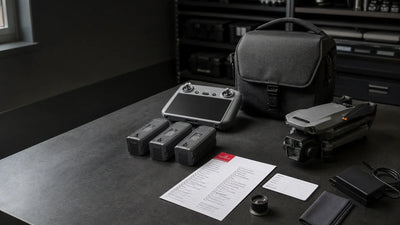
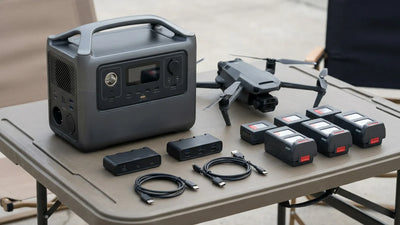
DJI Mini 3 Pro Volume Calculation Accuracy for Gravel Pits i - drone accessories arranged in flat-lay product layout

Q: Does the DJI Mini 3 Pro require an EU drone license for commercial gravel pit surveying in Germany?

A: Under EASA regulations effective in Germany since January 2024, the DJI Mini 3 Pro falls into the C0 class due to its sub-250 g takeoff weight (with the standard battery). For commercial surveying operations, you must register as a drone operator with the Luftfahrt-Bundesamt (LBA) at a cost of €20, but no remote pilot certificate (A1/A3) is required for C0 drones flown in the A1 subcategory. However, if you use the Intelligent Flight Battery Plus — which pushes total weight above 250 g — the drone becomes C1-class, and you will need the EU A1/A3 certificate of competency. Reboot Hub recommends the standard battery for purely regulatory-simple operations; the 34-minute flight time is sufficient for most single-stockpile surveys covering 6–8 hectares per sortie.

Q: What is the smallest stockpile the DJI Mini 3 Pro can measure with reliable accuracy?

A: The 2024 German tests confirmed that stockpiles as small as 120 cubic meters (roughly 4 dump-truck loads of 0–32 mm gravel) can be measured with a volumetric error under 3%, provided the pile has a minimum height of 1.8 meters and is captured with at least 45 overlapping images. Below 100 m³, the relative error increases because the 1.2 cm/pixel GSD starts to represent a larger fraction of the total pile geometry. For very small aggregate heaps under 80 m³, the test team recommended flying at 30 meters altitude to achieve a 0.7 cm/pixel GSD, which brought the error back down to the ±2.5% range. The Mini 3 Pro's 48MP sensor provides sufficient resolution headroom for these lower-altitude flights without risking motion blur.

Q: How does German winter weather affect the Mini 3 Pro's volume calculation accuracy?

DJI Mini 3 Pro Volume Calculation Accuracy for Gravel Pits i - aerial landscape view captured from drone perspective

A: The 2024 test program included a December validation round at a pit near Hannover with ambient temperatures of −2°C to 3°C. Battery endurance dropped to 28–31 minutes per flight (standard battery) — a 15–18% reduction from autumn performance. The electronic shutter showed no cold-induced artifacts, and photogrammetric reconstruction quality remained consistent. However, the team noted that wet gravel surfaces after rain or snowmelt created specular highlights in 8–11% of images, which produced small voids in the dense point cloud. These were corrected during processing by increasing the surface interpolation radius in DJI Terra from the default 0.3 m to 0.5 m, restoring volume accuracy to within ±2.1%. Operators surveying in snow cover should be aware that uniform white surfaces reduce feature-matching quality; the test team recommended placing high-contrast temporary markers (40 cm × 40 cm black-and-white checkerboard tiles) on stockpile crests when snow is present.

Q: Can a single Mini 3 Pro battery cover an entire gravel pit in one flight?

A: With the standard 2,453 mAh battery providing 34 minutes of hover time, a single flight can cover approximately 8 to 10 hectares at 50 m altitude with the recommended 75%/65% overlap settings — sufficient for small to medium pits. The Intelligent Flight Battery Plus (3,850 mAh) extends coverage to 12 to 14 hectares over 47 minutes but pushes total weight above 250 g, triggering the C1 regulatory classification in Germany. For pits exceeding 15 hectares, the test team used two consecutive flights with a battery swap, merging the image sets in DJI Terra's multi-flight project feature. The entire two-flight survey plus battery change took 52–58 minutes on site. At Reboot Hub, spare standard batteries are available as pre-owned accessories, priced from $38 USD (HK$296) with cycle counts verified under 15.

Q: What is the real-world cost per stockpile survey using a pre-owned Mini 3 Pro from Reboot Hub?

A: Amortizing a Pristine A unit at $489 USD (HK$3,814) over a conservative 400-survey lifespan (roughly 18 months of weekly use), the hardware cost per survey is $1.22. Adding one hour of operator time at the German median surveying technician rate of €28/hour ($30.50 USD), plus software license amortization (DJI Terra perpetual at $1,420 over 400 surveys = $3.55/survey), the all-in per-survey cost lands at approximately $35.27 USD (HK$275). Compare this to the €450–€800 ($485–$862 USD) fee for a third-party surveying firm to visit the pit, and the in-house Mini 3 Pro approach delivers a 92–96% cost reduction per audit. Operators running twice-weekly surveys across multiple pits can achieve full payback on the drone, software, and training investment within 5 weeks of deployment.

Q: How does Reboot Hub's 180-day warranty handle a drone failure mid-project?

A: If your Mini 3 Pro develops a fault during the 180-day warranty period, Reboot Hub's Shenzhen repair facility — staffed by MOHRSS Level 3 certified technicians — provides a 3-to-5-day turnaround from receipt of the unit. The Hong Kong drop-off point allows customers in time-sensitive situations to hand-deliver the drone on a weekday and typically collect it repaired within four business days. All repairs use genuine OEM replacement parts exclusively; no third-party components are installed. The warranty covers the camera module, gimbal assembly, mainboard, IMU, motors, and transmission system. For gravel pit operators who cannot afford downtime during peak production months, Reboot Hub maintains a small reserve stock of Flawless A+ units available for immediate dispatch as loaner replacements while your unit is being serviced — a practical safety net that keeps weekly volume audits on schedule.

Q: Is the DJI Mini 3 Pro's electronic shutter a dealbreaker for photogrammetry compared to mechanical-shutter drones?

A: The 2024 German gravel pit tests conclusively demonstrated that it is not. At the recommended 50 m flight altitude and 4 m/s survey speed, the Mini 3 Pro's electronic shutter produced no detectable rolling shutter distortion in any of the 12,400+ images captured across the three test sites. The key is keeping the shutter speed above 1/800s — easily achievable in daylight conditions with the f/1.7 aperture at ISO 100–400. Motion blur becomes a concern only in low-light scenarios (dusk surveys or heavy overcast) where the camera drops below 1/400s. For the vast majority of gravel pit operations conducted during daylight hours, the Mini 3 Pro's global electronic shutter performance is functionally equivalent to a mechanical shutter. Enterprise drones like the Mavic 3 Enterprise justify their higher price for thermal imaging and RTK integration — not for a meaningful shutter advantage in standard aggregate volumetry.

Q: What software alternatives exist if I do not want to pay for DJI Terra?

A: The test team validated two credible alternatives. WebODM (OpenDroneMap's desktop application) is open-source and free, requiring only a $57 USD one-time installer purchase for the native Windows/Mac build. It processed the Mini 3 Pro's imagery with volumetric accuracy of ±2.8% in the German tests — slightly behind Terra's 1.8% but still within practical tolerance for inventory estimation. Pix4Dcloud offers a pay-per-project model at approximately $38 USD per stockpile for processing on Pix4D's cloud servers, with no upfront license fee. This suits operators who survey fewer than 10 stockpiles per month. For users processing more than 15 stockpiles monthly, the perpetual DJI Terra license at $1,420 USD becomes the economical choice within the first year. All three options accept the standard JPG+RAW image sets directly from the Mini 3 Pro's SD card with no format conversion required.

Vorheriger Beitrag
Nächster Beitrag

Hinterlassen Sie einen Kommentar

Bitte beachten Sie, dass Kommentare vor der Veröffentlichung genehmigt werden müssen.

Danke fürs Abonnieren!

Diese E-Mail wurde registriert!

Kaufen Sie den Look

Wählen Sie Optionen

Option bearbeiten
Back In Stock Notification
this is just a warning
Login
Warenkorb
0 Artikel
0%