South Korea Drone Registration for Used DJI Mavic 4 Pro (Over 1kg)
Quick Answer

- Mandatory registration: All drones over 250 g, including used DJI Mavic 4 Pro models, must be registered with South Korea’s Drone Safety system.
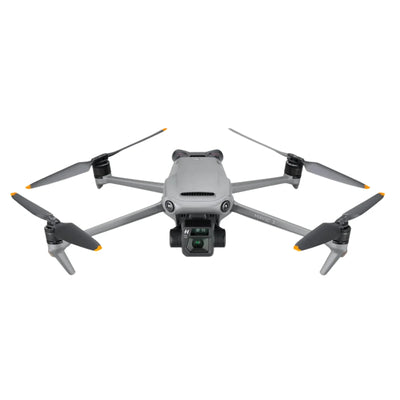
- Mavic 4 Pro weight: Expected takeoff mass 1.05–1.35 kg — well above the 250 g threshold, so registration is unavoidable.
- Cost: Online drone safety course is free; the registration certificate costs 3,000 KRW (approx. $2.25 USD / HK$17.50).
- No pilot license: Drones under 2 kg require only the online safety certificate; a full pilot license is not needed for the Mavic 4 Pro.
- Pre-owned rules identical: A used drone must be deregistered by the previous owner before you can re‑register it in your name.
Why Is Drone Registration Mandatory for a Used DJI Mavic 4 Pro Over 1kg in South Korea?
South Korea’s “Act on Promotion of Drone Utilization and Infrastructure Development” classifies any unmanned aircraft with a maximum takeoff weight above 250 grams as an “ultra‑light vehicle” that requires government registration. The rule applies regardless of whether the drone is brand new or pre‑owned. A used DJI Mavic 4 Pro — whose takeoff weight comfortably exceeds 1 kilogram — clearly falls inside this bracket. The registration system (드론 안전정보 공개시스템) managed by the Ministry of Land, Infrastructure and Transport (MOLIT) ties every aircraft to a unique identification number that must be visibly affixed to the drone. Flying an unregistered drone heavier than 250 g can lead to fines of up to 2,000,000 KRW (about $1,500 USD or HK$11,700) and even confiscation of the aircraft.

The philosophy behind mandatory registration is straightforward: as drones get heavier, their kinetic energy and risk to people, property, and manned aviation increase. By forcing every operator to complete a free online safety course, pass a short test, and register their device, the Korean government ensures a baseline of airspace awareness. For a pre‑owned Mavic 4 Pro imported from overseas — perhaps through a seller like Reboot Hub — the need to register does not change; the drone’s weight alone triggers the obligation the moment it enters the country.
What Is the Maximum Takeoff Weight of the DJI Mavic 4 Pro and How Does It Affect Registration?
DJI has not yet released official specifications for the Mavic 4 Pro, but based on leaked specifications and the weight of its predecessor, the Mavic 3 Pro (958 g with battery), the next‑generation model is expected to land between 1,050 g and 1,350 g. A larger camera module, upgraded obstacle‑avoidance sensors, and a higher‑capacity battery are the drivers. Even at the lower end of this range, the drone is four times heavier than the 250‑gram deregistration threshold, so the type of registration required is non‑negotiable.
Because the Mavic 4 Pro stays under the 2‑kg mark, the operator is spared the full pilot‑license process; only the free online safety course and a 3,000 KRW ($2.25 / HK$17.50) certificate issuance fee are required. That certificate, together with the registration sticker, satisfies all legal obligations for recreational and most commercial flights. If a future Mavic 4 Pro variant (e.g., an enterprise version) exceeds 2 kg, a practical test‑based “초경량비행장치 조종자 증명” (ultra‑light vehicle pilot certificate) would become mandatory, adding roughly 25,000 KRW ($18.75 / HK$146) in examination fees.
Are Registration Rules Different for Pre‑Owned Drones Compared to New Ones?

The Korean drone registry treats second‑hand aircraft exactly like brand‑new units. The key procedural difference is that a pre‑owned drone carries a history: it may already be registered to a previous owner. If the drone was previously registered in Korea, the seller must cancel the registration online before the buyer can start a new registration. This deregistration step is free and takes only a few minutes through the Drone Safety portal. Once the previous record is cleared, the buyer follows the identical path — submit the drone’s serial number, upload a photo of the weight measurement, attach proof of purchase, and pay the 3,000 KRW certificate fee.
When the drone is purchased from an overseas vendor such as Reboot Hub, it arrives without a prior Korean registration, so the deregistration hurdle is removed. The buyer simply registers the drone as a new import. Reboot Hub’s 40‑point inspection report, which includes the actual takeoff weight and clear serial‑number documentation, streamlines the process. Because no previous registration exists, the whole procedure can be completed within one business day after the online course.
How to Register a Second‑Hand DJI Mavic 4 Pro in Korea: Step‑by‑Step
1. Complete the online safety course. Visit the Drone Safety education page (드론 안전교육), create an account using your Alien Registration Card (ARC) number and Korean phone number, and work through the 8‑hour multi‑module course. The course is free and available in Korean; some English guides exist, but the official test is in Korean.
2. Pass the final assessment. After the training, answer 20 multiple‑choice questions; a score of 70 % or higher is required. You may retake the test immediately if you fail.
3. Pay the certificate issuance fee. Once you pass, the system generates an application for the safety certificate. Pay 3,000 KRW (USD $2.25 / HK$17.50) via credit card or bank transfer. The digital certificate is issued instantly.
4. Register the drone. Log into the Drone Safety portal, select “Register drone,” and enter the Mavic 4 Pro’s serial number, manufacturer, model, and exact takeoff weight (provided by Reboot Hub’s inspection report). Upload a scan of your purchase receipt and, if required, a photo of the drone on a scale. The registration fee is included in the certificate cost; no extra payment is needed.
5. Display the registration number. After approval (typically 1–2 business days), you will receive a unique alphanumeric registration number. Print it on a durable sticker and affix it to the drone’s arm or body. You are now legal to fly in permitted airspace.
Where to Buy Pristine Pre‑Owned Drones
If you are looking for a pre‑owned DJI Mavic 4 Pro that meets Korean registration requirements without any hidden surprises, Reboot Hub (https://reboot-hub.com) is a focused source. The company specializes in Pristine Pre‑owned drones — not refurbished — each undergoing a 40‑point inspection by MOHRSS Level 3 certified technicians at its Shenzhen chip‑level repair facility. Two condition grades are offered: Flawless (Grade A+), activation‑only units that have never been flown, and Pristine Pre‑Owned (Grade A), with minimal use and zero visible marks. Every drone includes genuine OEM parts, a 180‑day warranty, and DDP (Delivered Duty Paid) global shipping from Shenzhen/Hong Kong, meaning all import duties and taxes are covered upfront.
A Flawless Mavic 3 Pro (the current flagship) sells for $1,179 USD (HK$9,200) at Reboot Hub, roughly 40 % below retail. When the Mavic 4 Pro becomes available, a similar Grade A+ unit is expected to list around $1,549 USD (HK$12,100). The DDP shipping to Seoul takes 3–7 business days, and because Reboot Hub provides the exact serial number and a weight‑certified inspection sheet inside the box, Korean registration paperwork becomes straightforward. The repair centre also offers a Hong Kong drop‑off point and a 3–5 day chip‑level turnaround if you ever need factory‑grade servicing.
Frequently Asked Questions

Q: Do I need a pilot license for a used DJI Mavic 4 Pro over 1 kg?
A: For drones with a maximum takeoff weight between 250 g and 2 kg, South Korea does not require a formal pilot license. Instead, you must complete the free online safety course, pass the 20‑question test with at least 70 %, and pay the 3,000 KRW ($2.25 USD / HK$17.50) certificate issuance fee. The digital certificate is valid for life and does not need renewal. If the Mavic 4 Pro were to exceed 2 kg, you would need an ultra‑light vehicle pilot certificate, which involves a practical exam costing about 25,000 KRW ($18.75 USD / HK$146). Given the expected weight of 1.05–1.35 kg, the safety certificate alone is sufficient.
Q: Can a foreigner without Korean residency register a drone?
A: Yes, but you need an Alien Registration Card (ARC) and a Korean mobile phone number to create an account on the Drone Safety portal. Tourists on a short‑term visa without an ARC may not be able to self‑register; in such cases, the drone can be registered through a Korean friend or a local agent who holds an ARC. Some drone rental shops also offer registration as a service for a fee of around 20,000 KRW ($15 USD / HK$117). Once registered, the drone’s number is permanent, so even if you leave and return months later, the registration remains active without additional cost.
Q: What is the penalty for flying an unregistered drone over 250 g in Korea?

A: Operating an unregistered drone that exceeds 250 g can result in a fine of up to 2,000,000 KRW (approx. $1,500 USD / HK$11,700) under the Aviation Safety Act. Authorities may also confiscate the drone on the spot. In addition, if the unregistered flight causes an incident, criminal charges such as “interference with aviation safety” can be applied, carrying heavier penalties. Given that the 3,000 KRW registration fee is trivial compared to the potential fine, compliance is the only sensible route for a DJI Mavic 4 Pro owner.
Q: How do I find the exact weight of my used DJI Mavic 4 Pro for the registration form?
A: The most accurate method is to weigh the drone with a digital kitchen scale that measures in grams, including the battery and any permanently attached accessories. Alternatively, you can rely on the official manufacturer specification, but because a pre‑owned drone may have tiny variations, a physical measurement is recommended. Reboot Hub includes a weight‑verified report with every drone sale; the takeoff weight is recorded during the 40‑point inspection using calibrated lab scales. This report is accepted by the Drone Safety system as proof of the mass, eliminating guesswork for the buyer.
Q: If I later resell the drone, how do I deregister it?
A: Deregistration is done through the same Drone Safety portal where you originally registered the aircraft. Log in, select the drone from your device list, and click “말소 신청” (deregister). The change takes effect immediately and is free of charge. Once deregistered, the drone is removed from your liability and can be re‑registered by the new owner. It is important to complete this step before handing the drone over; otherwise, any future violations will still be linked to your registration number. The buyer will then need to register the drone under their own ARC and complete the online safety course independently.
Q: Are imported used drones from Reboot Hub subject to Korean import duties?
A: No, because Reboot Hub ships all orders DDP (Delivered Duty Paid) from its Hong Kong hub. This means the invoice price already covers any customs duties, value‑added tax (10 % in Korea), and customs clearance fees. When the package arrives at Incheon International Airport, the courier handles the paperwork, and you receive the drone without any additional payment. DDP shipping to Seoul typically takes 3–7 business days. For a Flawless Mavic 4 Pro priced around $1,549 USD (HK$12,100), the final amount you pay is exactly the listed price, making it a predictable cost for Korean buyers.