跳到內容

Available 24/7: (852) 5537 6652

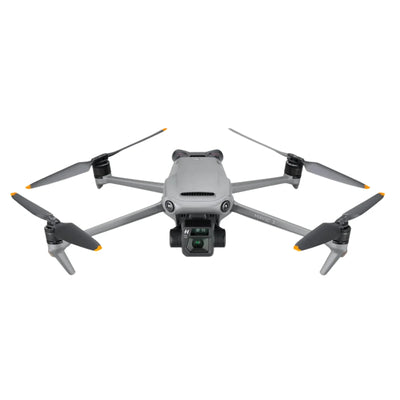
DJI Mavic 3 Repair Guide

by LauThomas 01 Jul 2026 0 評論

Reboot Hub support guide

DJI Mavic 3 Repair Guide

Quick answer: This DJI Mavic 3 repair guide is for buyers, pilots, and technicians deciding whether to repair, replace, or buy another tested unit. The current public planning range from Reboot Hub's 2026 repair matrix is $60-$360, but the correct repair route depends on fault isolation, inspection evidence, and whether chip-level repair is practical.

A low used-drone price is not automatically good value if the gimbal, ESC, main board, or battery-management path is expensive for that model.

Reboot Hub repair price matrix

Current DJI Mavic 3 Repair Cost Matrix

These planning ranges come from Reboot Hub's 2026 repair pricing matrix. The model-level repair span is $60-$360. Use the table below for the common diagnostic paths, then confirm the exact fault before selecting parts or service.

Repair path Matrix range When to use this range
Ribbon / Flex Cable $60-$96 Use this path for camera signal loss, gimbal tilt, image dropouts, or impact-damaged flex routing.
Full Gimbal Module $240-$336 Use this path when the camera, lens, motor, or stabilization assembly is damaged beyond cable-only service.
ESC Module Replacement $84-$108 Use this path for propulsion warnings, no-spin faults, water exposure, or power-stage damage.
Motor Arm Replacement $72-$96 Use this path for arm, hinge, landing gear, motor mount, or crash-load structural damage.
Main Board (Chip-Level) $180-$216 Use this path when a board fault can be isolated to components instead of replacing the full board.
Full Board Replacement $360 Use this path when chip-level repair is not practical or the board is physically unrecoverable.
IMU Sensor $60 Use this path for calibration loops, attitude drift, sensor errors, or unstable hover diagnosis.
Battery Management Board $72-$96 Use this path for BMS, charging, balancing, and power-management faults.

Open the full repair cost database for this model. Open the DJI Mavic 3 Wiki profile.

What usually needs diagnosis first?

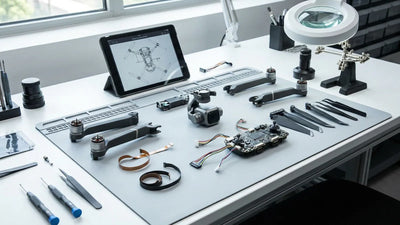
Start with the symptoms that change the repair path: gimbal flex faults, camera stabilization damage, ESC warnings, motor arm damage, IMU calibration loops, and board-level faults. A visible crack or app warning is only the first clue. The useful repair decision is whether the fault is cable-level, module-level, board-level, or a combination caused by crash, moisture, or prior repair attempts.

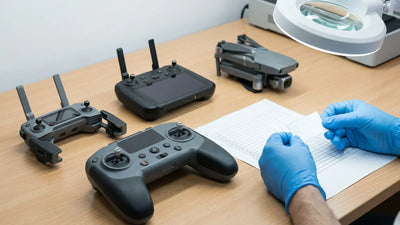
Before choosing a part, confirm the exact model, visible impact, app error, camera behavior, battery health, controller used, and whether the unit was previously opened. Photos, a short fault video, app error screenshots, and battery/controller information help prevent the wrong component from being ordered.

Inspection workflow

  1. Start with the DJI Fly or controller error message, then compare it against visible damage, camera image, gimbal behavior, motor spin, GPS/IMU calibration, and battery condition.
  2. Check whether the symptom follows one subsystem or multiple systems. One flex cable fault is very different from a crash that affects the gimbal, shell, ESC, and main board together.
  3. Use the wiki profile and repair cost database together: the wiki gives model context, while the cost matrix keeps the public price ranges consistent.

Do not order parts from a similar model just because the shell or camera looks close. Confirm the exact model and variant first.

Common failure patterns

Impact faults: Check gimbal alignment, shell stress, arm or frame deformation, motor smoothness, and whether the camera image remains stable after calibration.

Power faults: Separate battery, charging, BMS, ESC, and main-board symptoms before replacing the largest module. No-power and intermittent-power cases often need board-level diagnosis.

Water or corrosion faults: Do not power-cycle repeatedly. Moisture exposure can spread from connectors to flex cables, sensors, and board power rails. Diagnosis should happen before installing replacement parts.

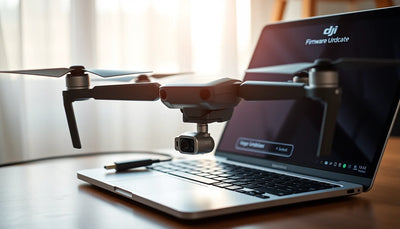
Calibration faults: IMU, compass, gimbal, and vision calibration errors can come from damaged sensors, shifted modules, firmware state, or prior repair work. Treat calibration loops as evidence, not as the final diagnosis.

Repair or replace?

Use the price matrix as a planning tool, not as an automatic checkout price. Cable, sensor, and chip-level paths can keep repair cost controlled; full gimbal, full board, or multi-system water-damage paths may push the decision toward replacement or a verified pre-owned unit.

If the repair involves more than one high-value subsystem, compare the estimate against tested replacement inventory and warranty coverage before approving the job.

What to send for a faster quote

  • Exact model name, storage capacity or payload variant if relevant, and the controller or goggles used with the unit.
  • Clear photos of the damaged area, gimbal/camera area, battery bay, arms or frame, and any signs of water, corrosion, or prior opening.
  • A short video showing power-on behavior, app error messages, camera image, gimbal movement, motor behavior, and calibration prompts.
  • Battery state, charging behavior, firmware/app version, and whether the unit crashed, landed hard, fell into water, or stopped working during storage.

Useful next steps

FAQ

Is the matrix range a final repair quote?

No. It is a public planning range from the Reboot Hub repair price matrix. Final cost depends on inspection, exact fault, parts availability, water exposure, and calibration result.

Should I buy parts before diagnosis?

Not for board, gimbal, ESC, or water-damage symptoms. Confirm the failed subsystem first, then choose OEM parts or technician installation.

What evidence helps Reboot Hub quote faster?

Send the exact model, close photos, a short video of the symptom, app error screenshots, battery state, controller/goggles used, and any prior repair history.

上一篇文章
下一篇文章

留下評論

請注意,評論需要先經過審核才能發佈。

感謝訂閱!

此電子郵件已被註冊!

購買整體造型

選擇選項

編輯選項
Back In Stock Notification
this is just a warning
登入
購物車
0 項目
0%