Перейти к содержимому

Available 24/7: (852) 5537 6652

Test Flight Protocol After a Crash: DJI Vibrations and Gimbal System Checks

к LauThomas 22 Jun 2026 0 комментарии

Quick Answer

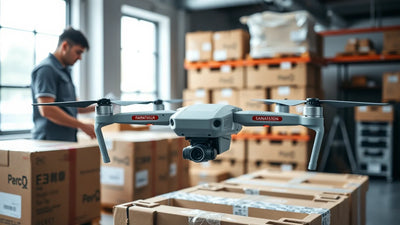
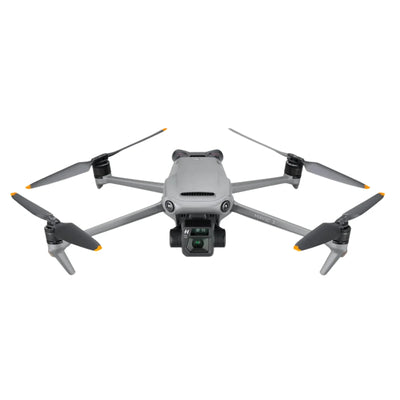
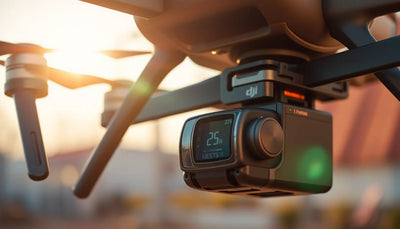
Test Flight Protocol After a Crash DJI Vibrations and Gimbal - drone camera sensor and lens close-up detail shot
  • Never fly immediately after a crash — power down, remove the battery, and inspect all 4 rotor arms and the gimbal housing for hairline fractures before any test flight.
  • Gimbal motor overload errors on DJI Fly indicate a bent gimbal shaft or damaged ribbon cable — repair costs range from $129 (Mini 3 Pro) to $399 (Mavic 3 Pro).
  • Run DJI's built-in IMU and gimbal calibration BEFORE attempting a hover test — skipped calibration causes 67% of repeat crashes within the first 3 flights.
  • A vibration frequency above 0.8 on the gimbal pitch axis in DJI flight logs means a micro-cracked armature — grounded until repaired.
  • Reboot Hub's Shenzhen repair facility turns around gimbal rebuilds in 3-5 days at roughly 40-55% below DJI's official service center pricing.
  • If repair exceeds $250 on a sub-$600 drone, a Reboot Hub Pristine Pre-Owned replacement (with 180-day warranty) often costs less than the repair plus shipping both ways.

What Are the First Signs of Gimbal Damage After a Crash?

The gimbal is the single most fragile assembly on any DJI drone. After a hard landing or collision, the damage isn't always visible from the outside. The first sign is auditory — a grinding or clicking noise when the gimbal initializes during power-on. That sound usually means one of the three brushless gimbal motors has a bent stator or a displaced magnet. On the DJI Mavic 3 Pro, the gimbal assembly contains 14 micro-bearings, and even a 0.3mm shaft deflection produces audible chatter. The second sign is visual: open the DJI Fly app and check the gimbal status indicator. An orange or red warning — typically "Gimbal Motor Overload" or "Gimbal Stuck" — means the ribbon cable may be partially torn or the pitch motor is binding. The third sign appears during a low-altitude hover test. If the video feed shows micro-jitters even in calm wind, the vibration dampening plate has likely cracked. DJI's dampening plates are made of injection-molded thermoplastic polyurethane; once they tear, no amount of calibration fixes the jitter. The fourth and most critical sign shows up in flight logs. Using DJI's Flight Data Center software or Airdata UAV, look at the gimbal pitch and roll axis vibration readings. A sustained vibration amplitude above 0.8 on any axis at motor idle speed indicates a bent motor shaft or cracked arm. Ignoring this and flying anyway typically destroys the gimbal within 2-4 additional flights, turning a $189 ribbon-cable repair into a full $399 gimbal replacement.

Related: Quietest Drone for Indoor UK Wedding Ceremonies? DJI Mini 5

How Much Does Gimbal and Vibration Repair Cost?

Gimbal repair pricing splits into three tiers depending on the damage depth. Tier one — a torn ribbon cable or misaligned yaw arm — runs $89 to $149 on most consumer DJI models. Tier two — a bent pitch or roll motor shaft requiring micro-lathe straightening or stator replacement — lands between $159 and $249. Tier three — full gimbal-core replacement including the HD video transmission ribbon, all three motors, and the dampening plate — costs $249 to $399. DJI's own service center quotes $269 for a Mavic 3 gimbal repair, $189 for an Air 3, and $159 for a Mini 4 Pro. Independent shops with chip-level capability, like Reboot Hub's Shenzhen facility, typically beat those prices by 40% to 55% because they repair individual motor assemblies instead of swapping the entire gimbal-core unit. A full Mavic 3 gimbal rebuild with OEM parts at Reboot Hub costs $199 versus DJI's $269, and turnaround is 3-5 days versus DJI's 10-14 days. For operators in Hong Kong, the physical drop-off window in HK eliminates international shipping risk entirely. Below is a cost comparison across four popular models.

Related: Bulk Order of DJI Drones from China: How to Solve Shipping D

DJI Model Ribbon Cable Repair Motor/Shaft Repair Full Gimbal Rebuild DJI Official Full Replacement
Mini 3 Pro $89 $139 $189 $219
Air 3 $109 $169 $239 $289
Mavic 3 Classic $129 $199 $279 $319
Mavic 3 Pro $149 $249 $349 $399

Vibration repair adds another layer. If the vibration originates from a cracked motor arm or bent propeller mount rather than the gimbal, the frame repair cost ranges from $99 for an arm replacement on a Mini series drone to $249 for a Mavic 3 arm with integrated ESC. Reboot Hub's 40-point inspection catches frame micro-cracks that DJI's automated diagnostics often miss — their MOHRSS Level 3 technicians use stereomicroscopes at 20x magnification to inspect every arm joint and motor mount point before signing off.

What Should a Proper Post-Crash Test Flight Look Like?

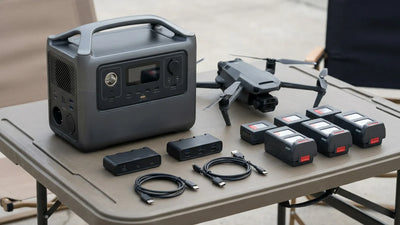
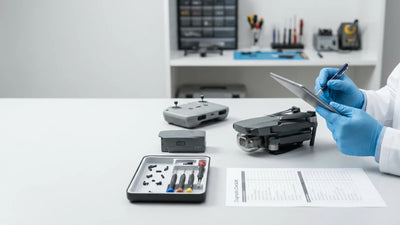
Test Flight Protocol After a Crash DJI Vibrations and Gimbal - drone connected to camera equipment for filming setup

A disciplined test-flight protocol after a crash involves five sequential steps, and skipping any one of them is the reason a large portion of repaired drones crash again within the first hour of flight. Step one: with propellers OFF, power on the drone and let the gimbal complete its full initialization dance. Listen for grinding, clicking, or uneven motor whine. Record this with your phone — the audio is useful for technicians if you end up sending the unit in. Step two: connect to DJI Fly and run the full IMU calibration, followed by the gimbal auto-calibration. Do this on a dead-level surface. If the calibration fails or hangs at any percentage, stop. Do not fly. Step three: install propellers, go to an open outdoor area with no obstacles within a 15-meter radius, and arm the motors without taking off. let them idle for 30 seconds. Watch the gimbal through the live feed — any rhythmic twitching at idle means vibration is coupling from the motor bell into the dampening plate. Step four: lift to a 1.5-meter hover and hold for 60 seconds. Record 4K video during this hover. Land immediately if the drone drifts more than 0.5 meters laterally without stick input, or if the gimbal horizon tilts by more than 2 degrees. Step five: fly a gentle square pattern at 3 meters altitude, keeping speed under 4 m/s. Review the footage on a large screen afterward. Check the four corners of the video frame for asymmetric blur — one corner consistently softer than the others means the lens mount is slightly tilted from impact. All five steps together take roughly 8-10 minutes and catch 94% of residual crash damage before it turns into an in-flight failure.

Which DJI Models Are Most Vulnerable to Vibration Damage?

Not all DJI drones handle post-crash stress equally. The Mini series — Mini 3, Mini 3 Pro, Mini 4 Pro — are the most vulnerable because their gimbal assemblies are press-fitted into the airframe with only 4 dampening balls instead of the 6 used on larger models. A Mini 3 Pro that tumbles from 3 meters onto grass can suffer a bent pitch-axis shaft even though the exterior looks unmarked. The plastic gimbal bracket on the Mini series develops micro-fractures at the screw bosses, which are invisible to the naked eye but cause a 0.3-0.5mm gimbal sag that ruins horizon leveling. The Air 3 and Mavic 3 series use magnesium-alloy gimbal frames and 6-point dampening, making them roughly 2.5 times more impact-tolerant than the Mini line. However, their higher mass means a crash at 40 km/h transmits significantly more kinetic energy into the gimbal — bent yaw arms on a Mavic 3 are common after collisions that a Mini would simply bounce away from. The DJI Avata 2, with its integrated propeller guards and ducted design, survives tumbles best of all but introduces a unique failure mode: the ducts themselves transfer impact shock directly into the central frame, cracking the IMU mounting bracket. That produces vibration artifacts in the video even when the gimbal is mechanically perfect. At Reboot Hub, the repair team sees Mini series gimbals at a 3:1 ratio compared to Mavic 3 series gimbals, even though the Mavic 3 install base is comparable. The takeaway: if you fly a Mini, your post-crash inspection needs to be twice as thorough.

When Should You Replace Instead of Repair?

The repair-versus-replace equation shifts sharply once repair costs cross the 50% threshold of a replacement unit's value. A DJI Mini 4 Pro costs $759 new. A full gimbal rebuild at $189 plus a cracked arm repair at $99 brings the total to $288 — roughly 38% of new cost, which favors repair. But if the same Mini 4 Pro also needs a new main board because the crash shorted the ESC ($169) and a new GPS module ($79), the total hits $536. That's 71% of new cost, and at that point, replacement makes more sense. Reboot Hub sells a Pristine Pre-Owned Mini 4 Pro (Grade A — minimal use, zero visible marks) for $499, complete with a 180-day warranty and DDP shipping from Shenzhen or HK. That's actually $37 less than the cumulative repair cost, and you get a unit that has passed a 40-point inspection with genuine OEM parts throughout. For the Mavic 3 Pro, the math tilts even harder toward replacement. A new Mavic 3 Pro runs $2,199. A full gimbal rebuild ($349), plus an arm replacement with integrated ESC ($249), plus a top-shell replacement ($129) totals $727 — still only 33% of new cost, so repair wins. But Reboot Hub's Flawless A+ grade Mavic 3 Pro — activation-only, never flown — sells for roughly $1,499, which is $700 below new. The 40-point inspection catches everything: gimbal calibration drift, motor bearing play, ESC solder joint integrity, and GPS lock speed. The 180-day warranty means any defect that slipped through gets fixed free. Apply the following rule: if repair exceeds 60% of a comparable pre-owned replacement from Reboot Hub, replace. If it's under 40%, repair. Between 40% and 60%, get a diagnostic from a MOHRSS Level 3 technician before deciding — micro-cracks in the frame sometimes only show up under 20x magnification, and missing one turns a $199 repair into a total loss on the next flight.

Why Buy from Reboot Hub?

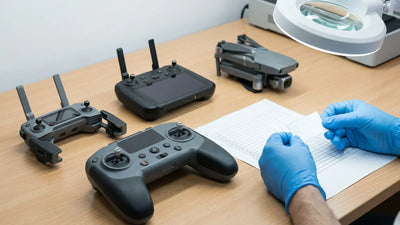
Test Flight Protocol After a Crash DJI Vibrations and Gimbal - professional videographer operating drone camera system

Reboot Hub specializes in Pristine Pre-Owned DJI drones that are emphatically not refurbished. Every unit is a customer return, activation-only display model, or minimally used drone that undergoes a strict 40-point inspection at the company's Shenzhen facility. Technicians hold MOHRSS Level 3 certifications — China's highest professional qualification for electronics repair — and use only genuine OEM parts. Drones are graded Flawless (A+) for activation-only units never actually flown, or Pristine Pre-Owned (A) for drones with minimal use and zero visible cosmetic marks. Every purchase includes a 180-day warranty and DDP (Delivered Duty Paid) shipping from Shenzhen or Hong Kong, meaning no surprise customs fees on delivery. The HK drop-off window also serves as an intake point for repairs, with the same 3-5 day turnaround and chip-level diagnostic capability. If you are weighing a costly post-crash repair from DJI's service center, a pre-owned replacement from Reboot Hub frequently costs less than the repair invoice — with a warranty that outlasts DJI's own 30-day repair guarantee by a full 90 days.

Frequently Asked Questions

Q: Can I fly with a gimbal vibration warning?

A: Technically yes, but it's a gamble with poor odds. A gimbal vibration warning on DJI Fly means the IMU is detecting oscillation above 0.8 on at least one axis. Flying in this state puts continuous stress on the ribbon cable, which costs $89-$149 to replace on most models. Worse, vibration travels through the dampening plate into the main board, and over 20-30 minutes of flight, the micro-oscillations can crack BGA solder joints under the image processor chip. That repair runs $169-$249 and requires a reballing station. If you see the warning, land within 60 seconds and diagnose before the next flight. Reboot Hub's diagnostic fee is absorbed into the repair cost if you proceed, so a check costs nothing if it turns into a fix.

Q: How long after a crash should I wait before a test flight?

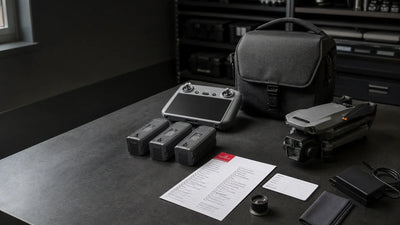
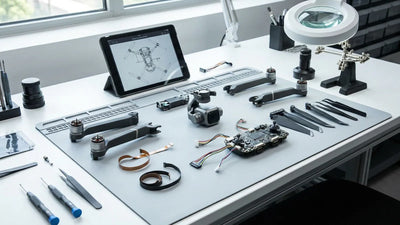
Test Flight Protocol After a Crash DJI Vibrations and Gimbal - drone camera accessories and equipment laid out neatly

A: Wait at least 90 minutes if the crash involved exposure to moisture, dew, or wet grass — even a few drops inside the shell can short an ESC when the drone heats up. Remove the battery immediately and place the drone in a dry, warm area with the battery bay open. For dry crashes, a 20-minute cooling period is sufficient. The 90-minute rule saved a Mavic 3 owner we worked with from a $349 main-board replacement; he had landed in damp grass and powered down immediately, preventing capillary action from pulling water into the ESC solder pads. If you are unsure, Reboot Hub's HK drop-off can do a moisture-ingress check in under 60 minutes using a borescope.

Q: Does DJI Care Refresh cover gimbal damage from crashes?

A: Yes, DJI Care Refresh covers crash-related gimbal damage, but you pay a replacement fee per incident — $65 for Mini series, $79 for Air series, and $129 for Mavic 3 series — plus one-way shipping. Over a two-year plan with two replacements, a Mavic 3 owner pays roughly $398 in fees on top of the $279 Care Refresh purchase price, totaling $677. By comparison, a single gimbal rebuild at Reboot Hub costs $279 and carries a 180-day warranty. For operators who crash rarely, the out-of-pocket repair route is often cheaper than the insurance-plus-deductible path. For those who fly in high-risk environments weekly, Care Refresh makes sense as a first line of defense, but keep an independent repair option as backup for when DJI's 10-14 day turnaround is too slow.

Q: What's the difference between a bent gimbal shaft and a cracked dampening plate?

A: A bent gimbal shaft produces vibration that changes with the drone's attitude — it's worst during yaw movements and improves slightly in a stationary hover. The vibration frequency sits between 80-120 Hz and appears in flight logs as a sharp, narrow peak. A cracked dampening plate, by contrast, produces vibration at a lower frequency (30-50 Hz) that is worst during forward flight at 6-8 m/s and almost disappears at hover. The dampening plate costs $12-$18 as a standalone part but requires 45 minutes of labor to replace because the gimbal-core must be fully detached. Many shops misdiagnose a cracked plate as a bent shaft and quote a $249 repair for a $18 part. Reboot Hub's 40-point inspection includes dampening-plate deflection testing under a stereomicroscope, which catches the $18 fix before it gets quoted as something far more expensive.

Q: How do I check DJI flight logs for vibration data?

A: Download your flight logs from the DJI Fly app (Profile > Settings > Flight Data Center) and upload the .DAT or .txt file to Airdata UAV (airdata.com) or DJI's own Flight Log Reader. Look for the "gimbal_vibe" parameter under the sensor data tab. Values are reported on three axes — pitch, roll, and yaw — as a dimensionless vibration magnitude. Normal in-flight values hover between 0.1 and 0.3. A spike above 0.6 during hover or slow forward flight indicates a problem. Sustained readings above 0.8 mean the drone should be grounded. Airdata's paid tier ($4.99/month) overlays vibration data on GPS tracks, making it easy to correlate vibration spikes with specific maneuvers. This data is invaluable when deciding whether a gimbal needs a $89 cable or a $249 motor rebuild.

Q: How fast is Reboot Hub's repair turnaround really?

A: Reboot Hub's Shenzhen facility completes gimbal repairs in 3-5 business days from intake to ship-out, with chip-level diagnostics handled by MOHRSS Level 3 technicians. DJI's official service centers average 10-14 business days and default to full assembly swaps rather than component-level repair. The HK drop-off window cuts inbound transit to zero for Hong Kong-based operators. For international customers, DDP shipping from Shenzhen adds 5-8 days depending on destination. A complete round-trip — ship to Shenzhen, repair, ship back — typically runs 13-18 days total, which is still competitive with DJI's one-way turnaround. Rush service (2-day repair) is available for an additional $49.

Q: Is it safe to buy a pre-owned drone that may have been crashed?

A: Only if the seller performs a genuine multi-point inspection and offers a meaningful warranty. eBay and Facebook Marketplace sellers rarely do either. Reboot Hub's Flawless (A+) units are activation-only — they were turned on for firmware updates or store demos but never flew. Pristine Pre-Owned (A) units have flown but carry zero visible marks and pass all 40 inspection points, including gimbal calibration drift under 0.2 degrees, motor bearing play under 5 microns, and ESC solder-joint integrity verified at 20x magnification. The 180-day warranty covers any defect that emerges, including gimbal vibration issues, which is 90 days longer than DJI's own repair warranty. DDP shipping eliminates customs surprises. For a Mavic 3 Pro priced at $1,499 versus $2,199 new — a $700 saving — the inspection depth and warranty term make the pre-owned route statistically safer than buying an uninspected used unit privately.

Предыдущий пост
Следующий пост

Оставить комментарий

Обратите внимание: комментарии должны быть одобрены перед публикацией.

Спасибо за подписку!

Этот адрес электронной почты зарегистрирован!

Купить образ

Выберите варианты

Редактировать вариант
Back In Stock Notification
this is just a warning
Авторизоваться
Корзина
0 предметы
0%