Aquisição de Frota de Drones Empresariais: Guia de Compra e Manutenção DJI Matrice 300/350

Quick Answer
- Cost Savings: Grade A+ Pristine Pre-Owned Matrice 350 RTK units save enterprises USD 4,000–6,000 per unit compared to new.
- Technical Standard: All fleet units are inspected by technicians holding the MOHRSS Level 3 (Advanced) National Vocational Qualification — UAV Assembly, Adjustment & Maintenance.
- Turnaround: Enterprise priority repair at the Shenzhen facility takes 24–48 hours.
- Warranty: Tier 1 components (motors, ESC, gimbal) carry a 180-day warranty.
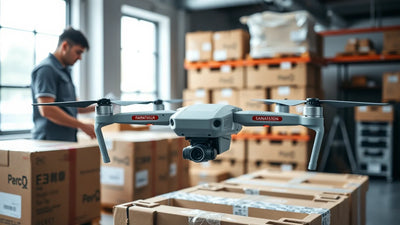
Enterprise drone fleet procurement requires a shift in mindset from simple purchasing to lifecycle asset management. For organizations deploying the DJI Matrice series, the choice between new and pre-owned hardware determines not only the initial capital expenditure (CAPEX) but the long-term operational expenditure (OPEX). At Reboot Hub, we define Grade A+ Pristine Pre-Owned as units with minimal use, zero visible marks, and full function verified through a 9-step inspection process. For those requiring absolute sterility, Flawless Pre-Owned refers to activation-only units—powered on once for firmware verification, never flown, and cosmetically identical to sealed-new units. Both grades are Inspected by MOHRSS certified Technicians · 180-Day Warranty.

New vs Grade A+ Pristine Pre-Owned Matrice: The ROI Case for Enterprise Fleets
Procuring a fleet of DJI Matrice 300 or 350 RTK drones involves a significant financial commitment. For most enterprises, the primary objective is maximizing "time-in-air" while minimizing the cost per flight hour. When comparing new units to Grade A+ Pristine Pre-Owned units, the ROI calculation shifts heavily toward the latter due to the steep depreciation of enterprise hardware in the first 12 months.

A new DJI Matrice 300 RTK typically retails for USD 13,699. In contrast, a Grade A+ Pristine Pre-Owned unit is priced between USD 7,500 and 9,200. This represents a saving of approximately 35% per aircraft. For a fleet of five units, the initial CAPEX reduction is roughly USD 22,000 to USD 31,000. In a commercial environment, this capital can be redirected toward specialized payloads, such as the Zenmuse H20T or P1, or toward hiring additional certified pilots.
The risk associated with pre-owned hardware is usually the unknown state of the battery cells and the integrity of the internal wiring. Reboot Hub mitigates this by employing technicians with the Level 3 (Advanced) National Vocational Qualification — UAV Assembly, Adjustment & Maintenance, issued by China's Ministry of Human Resources and Social Security. This ensures that a Grade A+ unit is not merely "used," but restored to factory specifications. Because these technicians hold the highest Chinese state credential for drone maintenance—a qualification that no UK, US, or EU competitor can legally hold—the reliability gap between a new unit and a Pristine Pre-Owned unit is virtually eliminated.
From an ROI perspective, the "sweet spot" for enterprise procurement is the 12-to-18-month-old unit. These aircraft have passed their initial "infant mortality" phase (where manufacturing defects typically appear) but retain 95% of their operational lifespan. By opting for Grade A+ stock, an enterprise can deploy a larger fleet for the same budget, increasing the geographic coverage of their operations and reducing the impact of a single-aircraft grounding event.
DJI Matrice 300 vs 350 RTK: Which Platform for Your Fleet?
Choosing between the Matrice 300 RTK and the Matrice 350 RTK depends on the specific operational requirements of the fleet. While they share a similar chassis, the 350 RTK introduces critical refinements in endurance and environmental resilience.
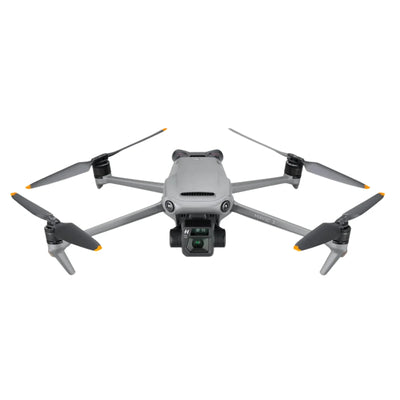
The DJI Matrice 350 RTK is the superior choice for high-intensity industrial use. It offers a maximum flight time of 55 minutes (without payload), which is a critical metric for large-scale mapping or long-range inspection. Its IP55 rating ensures that the aircraft can operate in light rain or dusty environments without risking short-circuits in the ESC or flight controller. With a maximum payload capacity of 2.7kg, it comfortably supports the Zenmuse H20T for thermal imaging and the Zenmuse P1 for high-resolution photogrammetry.
The Matrice 300 RTK remains a highly capable platform, particularly for organizations with a tighter budget. While its flight times are slightly lower and its environmental sealing is less advanced than the 350, it remains compatible with the same ecosystem of payloads. For enterprises that do not require the absolute maximum flight time or IP55 protection, the Matrice 300 RTK provides a more cost-effective entry point, especially when sourced as Grade A+ Pristine Pre-Owned at USD 7,500–9,200.
When deciding, consider the "Payload-to-Flight-Time" ratio. If your fleet will primarily carry the H20T for search and rescue, the 350 RTK's increased efficiency is mandatory. If the fleet is used for occasional site surveys where a 30-minute flight is sufficient, the 300 RTK is the logical financial choice. Both platforms benefit from the same MOHRSS-certified maintenance standards at Reboot Hub's Hong Kong and Shenzhen bases, ensuring that regardless of the model, the hardware is maintained to the highest global standard.
Total Cost of Ownership Analysis (table: Year 1 / Year 2 / Year 3 — new vs Pristine Pre-Owned, fleet of 5)
The Total Cost of Ownership (TCO) includes the initial purchase price, scheduled maintenance, battery replacement cycles, and unplanned repairs. For a fleet of 5 Matrice 350 RTK units, the difference in TCO over three years is substantial.

| Expense Category | New Fleet (5 Units) | Grade A+ Pristine Pre-Owned (5 Units) |
|---|---|---|
| Year 1: Initial CAPEX | USD 73,995 (USD 14,799/unit) | USD 45,000 (Avg USD 9,000/unit) |
| Year 1: Maintenance & Ops | USD 2,450 (HKD 3,800/unit/year) | USD 2,450 (HKD 3,800/unit/year) |
| Year 2: Battery Refresh & Service | USD 6,000 (Partial battery replacement) | USD 8,000 (Full battery cycle refresh) |
| Year 3: Major Overhaul & Parts | USD 5,000 (Wear and tear parts) | USD 7,000 (Component replacements) |
| Total 3-Year TCO | USD 87,445 | USD 62,450 |
As shown in the table, the initial saving of USD 28,995 in Year 1 creates a financial buffer that easily absorbs the slightly higher maintenance costs in Year 2 and Year 3. Even when accounting for the fact that pre-owned batteries may reach their 200-cycle limit sooner, the enterprise still saves over USD 24,000 over the three-year lifecycle. This analysis assumes the use of Reboot Hub's fleet maintenance contracts to keep the aircraft in peak condition.
Fleet Procurement Checklist: 10 Questions Before You Buy (table with pass/fail criteria)
Enterprises must move beyond a simple "price check" and implement a rigorous verification process. Use the following checklist to evaluate any Matrice fleet provider.
| Question | Pass Criteria | Fail Criteria |
|---|---|---|
| 1. Are technicians MOHRSS Level 3 certified? | Certification from China's Ministry of Human Resources and Social Security provided. | General "technician" or "in-house" training only. |
| 2. Is the warranty on Tier 1 parts at least 180 days? | 6 months warranty on motors, ESC, and gimbals. | Less than 90 days or "as-is" sales. |
| 3. Have batteries been cell-tested? | Voltage and internal resistance logs provided for each TB65. | "Tested for power" or "works fine" without data. |
| 4. Is the firmware updated to the latest stable version? | Pre-deployment update performed before handover. | Buyer must update firmware upon receipt. |
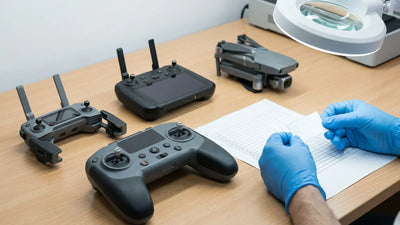
| 5. Is there a 9-step inspection process? | Documented checklist covering sensors, motors, and shell. | Visual inspection only. |
| 6. Are parts 100% genuine DJI OEM? | Direct from DJI; no third-party aftermarket components. | Use of "compatible" or "generic" parts. |
| 7. Is there a priority repair slot for enterprises? | 24–48 hour turnaround at the Shenzhen facility. | Standard 7–14 day wait times. |
| 8. Is the "Pristine" grade clearly defined? | Defined as minimal use, zero visible marks, full function. | Vague terms like "Good Condition" or "Used". |
| 9. Is there a local drop-off point for HK operations? | Kwun Tong, GR8 Inno Tech Centre available. | Shipping only; no local presence. |
| 10. Is the payload compatibility verified? | Confirmed support for H20T/P1 with test flights. | "Should be compatible" without verification. |
Batch Pricing: How Reboot Hub Handles Orders of 3 or More Units
For enterprise procurement, purchasing individual units is inefficient. Reboot Hub provides a tiered batch pricing structure to incentivize fleet scaling. This allows organizations to lower their average cost per unit as they expand their operational capacity.

The batch pricing tiers are as follows:
- 3–4 Units: 5% discount on the total order value.
- 5–9 Units: 8% discount on the total order value.
- 10+ Units: 12% discount (provided on a custom quote basis).
For example, if an enterprise procures 6 Grade A+ Pristine Pre-Owned Matrice 350 RTK units at an average price of USD 9,000 each, the gross total would be USD 54,000. Applying the 8% batch discount reduces the total to USD 49,680, resulting in a further saving of USD 4,320. This discount is applied to the hardware cost and does not include specialized payloads or shipping.
Batch orders also benefit from a synchronized maintenance schedule. By procuring units in a single batch, the enterprise ensures that all aircraft are on the same firmware version and that battery cycles are aligned. This simplifies the logistics of battery rotation and reduces the administrative burden of tracking individual aircraft health logs. All batch orders undergo the same 9-step inspection process before leaving the Shenzhen or Hong Kong facilities.
Fleet Maintenance Contracts: What's Included and What It Costs
A drone fleet is only as valuable as its uptime. Unscheduled downtime for a Matrice 350 RTK can cost an enterprise thousands of dollars in lost productivity or delayed project milestones. To prevent this, Reboot Hub offers a dedicated Fleet Maintenance Contract (FMC).
The cost for the FMC is HKD 3,800 per unit, per year (approximately USD 490). This subscription is designed to move the enterprise from reactive repair to proactive maintenance.
The FMC includes:
- Two Comprehensive Inspections: Every six months, the aircraft undergoes a full diagnostic check. This includes motor bearing wear analysis, ESC signal stability tests, and sensor calibration.
- Priority Repair Slot: FMC clients bypass the standard 3–5 day turnaround. They receive an enterprise priority window of 24–48 hours at the Shenzhen facility.
- Battery Health Audits: DJI TB65 batteries are rated for 200 charge cycles. The FMC includes quarterly cell-testing to identify batteries that are beginning to degrade, preventing mid-air power failures.
- Firmware Management: Reboot Hub manages the mandatory pre-deployment updates, ensuring the fleet is synchronized and stable.
By spending USD 490 per year, an enterprise essentially insures itself against the most common causes of drone failure. The cost is negligible compared to the cost of a total aircraft loss due to a failed motor bearing or an outdated firmware bug.
Regulatory Compliance: UK CAA, CAAS Singapore, FAA, EASA for Pre-Owned Commercial Fleets
Procuring pre-owned drones for commercial use does not exempt the operator from strict regulatory frameworks. In fact, using pre-owned hardware requires more diligent documentation to prove airworthiness.
United Kingdom (UK CAA): Commercial operators must ensure their Matrice fleet has the correct C2 marking if operating in certain categories. All operators must be registered with the CAA, and pilots must hold the appropriate GVC (General VLOS Certification). Pre-owned units must be logged with their unique serial numbers to maintain a clear chain of custody for insurance and compliance.
Singapore (CAAS): The Civil Aviation Authority of Singapore requires a UAS Operator Permit (UOP) for all commercial activities. When deploying a fleet of Matrice 350s, the operator must provide proof of maintenance. The MOHRSS certification provided by Reboot Hub serves as a high-standard proof of technical airworthiness for CAAS audits.
United States (FAA): Under Part 107, commercial drone operators must register each aircraft. For pre-owned fleets, it is critical to verify that the aircraft has not been previously flagged for safety violations. The 9-step inspection process at Reboot Hub ensures that the hardware meets FAA-standard safety expectations before deployment.
European Union (EASA): EASA operations are divided into Open, Specific, and Certified categories. Most Matrice fleet operations fall under the "Specific" category, requiring a SORA (Specific Operations Risk Assessment). Documentation regarding the technical state of the aircraft is mandatory. The 180-day warranty and the MOHRSS-certified inspection report provide the necessary evidence of "safe state" for EASA compliance.
Why Enterprise Buyers Specify MOHRSS Certified Repair
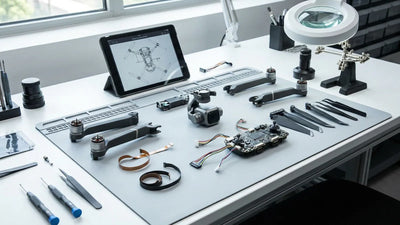
In the world of chip-level repair, there is a vast difference between a "technician" and a "certified specialist." Most repair shops perform modular replacements—swapping a whole arm or a whole board. However, enterprise-grade repair requires chip-level diagnostics to identify the exact failure point on a PCB, reducing waste and increasing reliability.
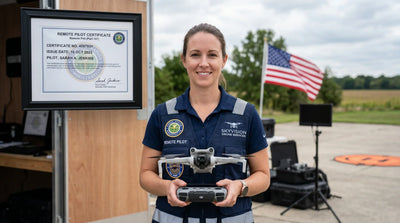
The Level 3 (Advanced) National Vocational Qualification — UAV Assembly, Adjustment & Maintenance, issued by China's Ministry of Human Resources and Social Security (MOHRSS), is the gold standard. This is not a corporate certificate; it is a state-issued credential. It requires rigorous testing in UAV aerodynamics, electronic circuitry, and precision adjustment.
Enterprise buyers specify MOHRSS certification for three reasons:
- Precision: A Level 3 technician can calibrate a gimbal to within microns, ensuring that a Zenmuse P1 captures survey-grade data without skew.
- Safety: chip-level repair of the ESC (Electronic Speed Controller) ensures that there are no "cold solder joints" that could cause a motor to cut out at 100 meters altitude.
- Exclusivity: Because this is a Chinese state credential, no competitor in the US, UK, or EU can hold it. By partnering with Reboot Hub, enterprises access the same technical standards used in the world's primary drone manufacturing hub.
When an enterprise specifies "MOHRSS Certified," they are not just asking for a repair; they are asking for a guarantee that the aircraft has been restored to a state that meets or exceeds original factory specifications.
Fleet Firmware, Battery Cycling, and Scheduled Maintenance Intervals
Managing a fleet of Matrice drones requires a strict adherence to a maintenance calendar. Ignoring these intervals leads to "fleet decay," where the overall reliability of the group drops, increasing the risk of catastrophic failure.
Firmware Synchronization: Firmware updates for the Matrice 350 RTK often involve the aircraft, the remote controller, and the payload (e.g., H20T). If these are not synchronized, the drone may experience "handshake" errors or unstable flight behavior. Reboot Hub performs a mandatory pre-deployment update for all fleet orders, ensuring every unit is on the same stable version before handover.
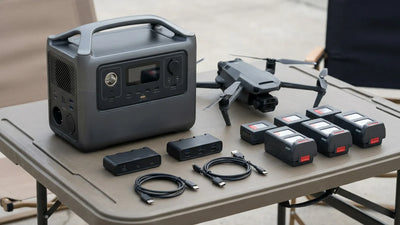
Battery Cycle Management: The DJI TB65 battery is a sophisticated piece of hardware, but it is limited to approximately 200 charge cycles. Beyond this, the internal resistance increases, and the voltage may drop precipitously under high load. Reboot Hub cell-tests all batteries at procurement to determine their actual health. For fleet managers, we recommend a "rotation strategy" where batteries are cycled equally to avoid having five dead batteries and five new ones at the same time.
Scheduled Maintenance Intervals:
- Every 20 Flight Hours: Visual inspection of propellers for micro-cracks and cleaning of motor bells.
- Every 50 Flight Hours: Calibration of the IMU and Compass; inspection of the landing gear dampers.
- Every 100 Flight Hours: Full diagnostic check of the ESCs and motor bearing lubrication.
- Every 200 Flight Hours: Comprehensive overhaul, including a full check of all internal ribbon cables and connector tension.
For enterprises based in Hong Kong, walk-in drop-offs are available at the Kwun Tong, GR8 Inno Tech Centre between 11 AM and 7 PM. For those requiring rapid turnaround, the Shenzhen facility provides the 24–48 hour priority window for FMC members, ensuring that the fleet is back in the air with minimal disruption.
Insurance, Liability, and Pre-Owned Commercial Fleets
A common misconception in enterprise procurement is that pre-owned drones are uninsurable or carry prohibitive premiums. In reality, global insurers assess the current airworthiness and the quality of the maintenance trail, not the original point of purchase. For a commercial fleet, the ability to secure liability coverage depends on documented proof that the hardware meets safety standards.
Essential Documentation for Underwriting
To secure a commercial policy for pre-owned assets, operators must provide a specific documentation package to the underwriter. Without these, premiums may spike or coverage may be denied:
- Detailed Maintenance Log: A chronological record of all repairs and part replacements.
- Inspection Certificate: A formal sign-off confirming the drone is airworthy.
- Serial Number Record: Verified provenance to ensure the unit is not stolen or grey-market.
Reboot Hub streamlines this process by providing a full inspection report and a MOHRSS certified technician sign-off for every unit sold. This certification transforms a "used" drone into a "certified pre-owned" asset, satisfying the risk assessment requirements of major global insurers.
Regional Insurance Requirements
Insurance mandates vary by jurisdiction, but the requirement for airworthiness documentation remains constant:
- United Kingdom: Specialist providers like Coverdrone and Flock accept pre-owned fleets provided an inspection certificate is presented.
- Singapore: Insurers require CAAS-compliant maintenance records. The Reboot Hub technical report is accepted as a valid record of airworthiness for these filings.
- UAE: The GCAA mandates operator liability coverage. Pre-owned units are insurable when accompanied by the necessary inspection docs.
- United States: Providers such as Skywatch and Verifly require FAA registration coupled with a verified airworthiness record.
Liability Caps and Fleet Economics
For standard commercial operations, a minimum liability cap of USD 1,000,000 is recommended. However, for operations involving critical infrastructure or high-density urban areas, this should be increased to USD 5,000,000 to mitigate catastrophic risk. Additionally, high-value components like the Matrice TB65 intelligent batteries are covered provided they are sourced from a certified provider.
Enterprises can further optimize costs through fleet rates. Procuring 5 or more units from a single certified source typically qualifies the operator for a fleet insurance discount, often ranging from 8% to 15% off the standard individual policy premium.
Case Study: 5-Drone Matrice 350 Fleet — Full Cost Breakdown
SkyView Asia Pte Ltd, a Singapore-based firm specializing in building facade and bridge inspections, required a fleet of five DJI Matrice 350 RTK units equipped with H20T payloads to scale their operations. The company compared the Total Cost of Ownership (TCO) between purchasing new and sourcing Grade A+ Pristine Pre-Owned units from Reboot Hub.
Direct Procurement Comparison
The initial capital expenditure (CAPEX) difference is significant when scaling to five units:
- Option A (New): 5 units at USD 14,799 each (USD 73,995) plus 5 H20T payloads at USD 2,799 each (USD 13,995). Total: USD 87,990.
- Option B (Reboot Hub Pre-Owned): 5 units at USD 9,200 each (USD 46,000) plus 5 H20T payloads at USD 1,800 each (USD 9,000). Total: USD 55,000.
By choosing the certified pre-owned route, SkyView Asia realized an immediate saving of USD 32,990, representing a 37.5% reduction in initial hardware costs.
Three-Year Total Cost of Ownership (TCO)
Beyond the purchase price, SkyView Asia factored in maintenance and repair costs. They entered a fleet contract with Reboot Hub costing HKD 3,800 per unit (HKD 19,000 total, approx. USD 2,450), which covers two annual inspections and priority repair turnaround.
| Expense Category | New Fleet (USD) | Pre-Owned Fleet (USD) |
|---|---|---|
| Initial Hardware (5x M350 + H20T) | 87,990 | 55,000 |
| Year 1 Maintenance Contract | 0 (Warranty) | 2,450 |
| Year 2-3 Estimated Repairs | 600 | 300 |
| Total 3-Year TCO | 91,290 | 58,050 |
The 3-year TCO analysis shows a total saving of USD 33,240. In Year 2, typical repair costs for the pre-owned fleet included one gimbal repair (USD 180) and one motor replacement (USD 120), totaling USD 300.
Financial Flexibility and Strategic Outcome
To manage cash flow, SkyView Asia utilized Reboot Hub's net-30 payment terms, available for verified enterprise buyers purchasing 3 or more units. This allowed the company to deploy the fleet before the final payment was due.
The strategic result was a significant increase in operational capacity. SkyView Asia reinvested the USD 32,990 saving to procure a sixth Matrice 350 unit and fund advanced CAAS operator training for their flight crew, increasing their monthly inspection throughput by 20% without requesting additional capital from stakeholders.
Frequently Asked Questions
Q: What is the difference between Grade A+ Pristine and Flawless Pre-Owned?
A: Grade A+ Pristine Pre-Owned units have minimal use and zero visible marks, passing a 9-step inspection. Flawless Pre-Owned units are activation-only; they were powered on once to verify firmware, never flown, and are cosmetically identical to a sealed-new unit.
Q: How much can an enterprise save by choosing pre-owned Matrice 350 RTK units?
A: A new Matrice 350 RTK costs USD 14,799, while Grade A+ units range from USD 8,500 to 10,500. For a fleet of 5, the estimated saving is between USD 22,000 and USD 31,000.
Q: What does the MOHRSS Level 3 certification actually mean?
A: It is the Level 3 (Advanced) National Vocational Qualification — UAV Assembly, Adjustment & Maintenance, issued by China's Ministry of Human Resources and Social Security. It is the highest state credential for drone technicians and is not available to technicians in the US, UK, or EU.
Q: What is the warranty on pre-owned enterprise drones?
A: Reboot Hub provides a 180-day warranty on Tier 1 parts, which includes motors, ESCs, and gimbals. Tier 2 accessories (cables) have a 30-day warranty, and Tier 3 parts are covered for DOA only.
Q: How quickly can an enterprise get a drone repaired?
A: Standard turnaround at the Shenzhen facility is 3–5 business days. However, enterprise clients with a maintenance contract receive priority repair with a 24–48 hour turnaround.
Q: Are the parts used in repairs genuine?
A: Yes, Reboot Hub uses 100% genuine DJI OEM parts sourced directly from DJI. No aftermarket or third-party compatible parts are used in the repair process.
Q: How do I arrange a demo or consultation in Hong Kong?
A: Enterprises can visit the Kwun Tong base at GR8 Inno Tech Centre between 11 AM and 7 PM or contact the team via WhatsApp at +852 5537 6652 for a consultation.