Reboot Hub · Buying Guide

Comprare DJI Mavic 4 Pro dalla Cina evitando contraffazioni

Updated June 12, 2026

Quick Answer

  • Verify the seller’s supply chain; genuine DJI units come through authorised channels, and counterfeit risks are real when buying from unverified marketplaces.
  • Insist on DDP (Delivered Duty Paid) shipping with GST included – it simplifies customs clearance and removes surprise fees when the drone lands in Sydney or Melbourne.
  • Confirm that the drone’s radio firmware aligns with Australian ACMA requirements; models locked in permanent “FCC mode” can create compliance grey areas when operated under CASA Part 101.
  • Budget for total landed cost: product price + freight + insurance + Australian GST (and confirm whether any import duty applies).
  • If you want a pre-inspected, bench-tested unit with a warranty that already factors in Australian customs, explore refurbished and graded inventory from a specialist like Reboot Hub.

Wedding seasons in Australia don’t wait for slow shipping or customs delays. Many photographers are now looking straight to the Shenzhen-Hong Kong supply chain to secure a DJI Mavic 4 Pro at a better price, often before the local retailers even have stock. But buying directly from China introduces a set of puzzles: how to avoid counterfeits, whether DDP really protects you, what happens with GST, and whether that “FCC boost” is worth the legal headache.

At Reboot Hub, we operate inside that same Shenzhen–Hong Kong ecosystem, with MOHRSS Level‑3 certified technicians who handle chip‑level repair and grading. Every unit passes a multi‑point bench test before it leaves our facility, and refurbished drones ship with a 180‑day warranty. We’ve helped plenty of Australian operators navigate the cross‑border purchase path, and this guide is built around the practical questions they ask us.


Why Australian wedding photographers buy DJI Mavic 4 Pro direct from China

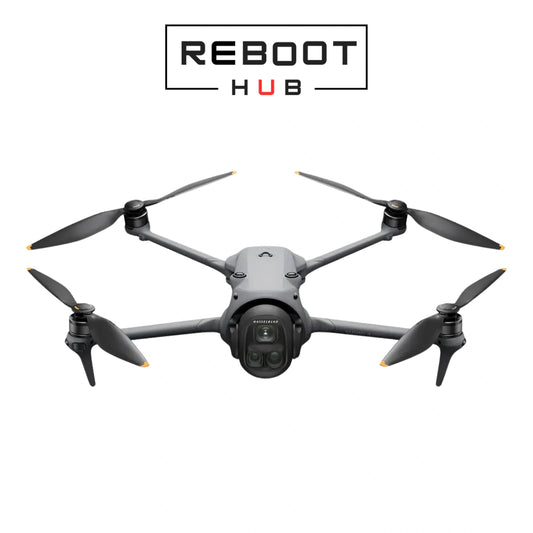
The Mavic 4 Pro brings meaningful upgrades for ceremony and reception work: a larger sensor for cleaner low‑light footage, improved obstacle sensing for tight indoor venues, and a versatile zoom range that lets you stay discreet. But local retail pricing in Australia can sit well above what the same hardware costs when sourced from a trusted partner inside China’s free‑trade logistics zones.

The savings, however, are only real if you avoid three traps:

  1. Counterfeit or cloned units passed off as factory DJI.
  2. Unclear customs liability that leaves you paying unexpected charges.
  3. Radio compliance mismatches that may attract scrutiny.

Below we walk through each so you can price the full journey before clicking “buy.”


Spotting counterfeits and grey‑market risks when buying from China

Counterfeit Mavic drones are a known issue in unregulated reseller markets. Some clones look convincing on a listing page but fail the moment you try to bind them to DJI Fly or update firmware.

Practical checks that reduce the chance of getting a fake:

  • Serial number cross‑reference: Genuine DJI aircraft can be verified through DJI’s official support portal. Run the serial before paying, or buy from a seller who has already completed that check and shows it in listing photos.
  • Packaging and labelling: Authentic units ship with holographic seals and region‑appropriate power adapters. Missing documentation, mismatched labels, or after‑market chargers are red flags.
  • Firmware behaviour: A counterfeit drone may refuse official firmware updates or fail to activate in DJI Fly. If a seller can’t show a screenshot of a successful activation, walk away.

If you’d rather not perform every one of these checks yourself, the Reboot Hub standard includes serial verification, firmware validation, and a multi‑point bench test on each graded unit before it is made available. Our grading tiers — Pristine Pre‑Owned and Flawless — give you a clear picture of cosmetic condition alongside internal health. (See drone grading standard for the full criteria.)


DDP vs DAP: what actually matters for a Sydney wedding photographer

When a seller offers shipping to Australia, the incoterm you choose determines who bears the risk and cost of customs clearance.

↔ Swipe the table to see all columns
Incoterm Who pays import duty & GST? Who clears customs? Likely experience for you
DDP (Delivered Duty Paid) Seller pre‑pays all import charges, including GST Seller’s broker Drone arrives at your door; no surprise bills
DAP (Delivered at Place) You (the buyer) are responsible for duties and GST upon import You or your nominated broker You may be contacted by the carrier for payment before delivery; delays possible

For Australian wedding photographers who cannot afford a drone held at the border a week before a big booking, DDP is the practical choice. It turns the landed cost into a single upfront number. The seller calculates GST (Australia’s Goods and Services Tax, generally applied to imported goods valued above the low‑value threshold) and any applicable customs duty, then builds it into the invoice.

How to approximate your total DDP cost

While exact charges depend on the customs classification on the day of entry, you can build a safe mental model:

  1. Product price (the drone + any accessories or extra batteries)
  2. Freight and insurance (the seller’s shipping charge)
  3. Australian GST (typically applied to the sum of product price + freight + insurance)
  4. Customs duty (many consumer drones fall under duty‑free tariff lines, but you should confirm with a customs broker or the Australian Border Force website for the specific HS code on your consignment)

A legitimate DDP seller will provide a breakdown that shows GST as a separate line or clearly states it is included. If a listing just says “free shipping” without any mention of Australian tax obligations, assume the unit will ship DAP and that you will be the importer of record.

Region‑specific checks help you stay compliant. Always verify current rules with the Australian Border Force and the ATO. This article offers a practical framework, not a legal guarantee.


FCC mode in Australia: CASA and ACMA considerations for 2025

Some sellers advertise DJI drones permanently locked into FCC mode, promising stronger signal range than the CE mode typically designated for Australia. Before you go down that route, understand the lay of the land.

  • CASA Part 101 governs how you fly — altitude, distance, visual line of sight, and proximity to people. It does not itself mandate a specific radio transmission mode. However, operating a drone that does not comply with ACMA‑mandated equipment standards can complicate your position if a spectrum interference issue ever arises.
  • The ACMA (Australian Communications and Media Authority) requires radiocommunications equipment used in Australia to meet the applicable standards. A device that transmits only in FCC‑spec output power levels, without the ability to operate within Australian limits, may be considered non‑compliant.
  • In a real‑world regulatory scenario, you could be asked to demonstrate that the drone operates within the authorised parameters. If the firmware is locked to a mode intended for the US, that documented verification becomes harder to produce.

Many professional wedding photographers operate daily without any interaction with ACMA. Still, a unit set to the regional mode appropriate for Australia lowers the chance of ever having to explain your equipment to an inspector. When buying from China, ask the seller explicitly: “Is this unit set to a mode that automatically adjusts to Australian limits, or is it hard‑locked to FCC?” Suppliers that cannot answer clearly are best avoided.


What about the DJI Mini 4 Pro for low‑light reception work?

While this guide focuses on the Mavic 4 Pro, several photographers ask whether the Mini 4 Pro – with its true vertical video mode – is a smarter choice for wedding receptions. The honest answer: it depends on the lighting.

  • Sensor size: The Mavic 4 Pro’s larger sensor gathers more light, giving it a clear advantage in dim reception halls where you cannot add artificial light.
  • Vertical video: The Mini 4 Pro can shoot native vertical without cropping, which is handy for social‑media reels. The Mavic 4 Pro typically crops from a horizontal frame or requires a mount rotation; image quality remains strong, but the framing workflow differs.
  • Noise profile at higher ISO: In side‑by‑side comparisons under candle‑lit conditions, the Mavic 4 Pro generally retains cleaner shadows.

If your wedding package includes a dedicated aerial highlight reel in vertical 9:16, the Mini 4 Pro might simplify your edit. But if clean, low‑noise footage in mixed lighting is non‑negotiable, the Mavic 4 Pro’s imaging pipeline pulls ahead. Many operators keep both in their kit.

(To see how sensor generation and video specs stack across the current DJI line‑up, visit our drone comparison page.)


Trade‑in and upgrade paths: from Mavic Air 2 or Phantom 4 Pro to Mavic 4 Pro

Selling your existing drone to fund the upgrade is smart cashflow management. In the Sydney used market, trade‑in values fluctuate with condition, battery cycles, and included accessories.

  • Mavic Air 2: Strong demand as a reliable mapping and real‑estate drone means clean units with well‑maintained batteries still hold reasonable value. Expect the offer to be guided by shutter count and the number of charge cycles.
  • Phantom 4 Pro: The mechanical shutter keeps the Phantom 4 Pro relevant for mapping, but its bulk makes it less desirable for wedding portability. Trade‑in value often sits below what the raw imaging capability might suggest, simply because wedding buyers are moving toward foldable platforms.

At Reboot Hub we evaluate trade‑ins on a case‑by‑case basis. If you’re in Sydney and considering swapping an Air 2 or Phantom 4 Pro for a Mavic 4 Pro, contact our team with details — we can often apply the trade‑in value directly toward a pre‑owned or refurbished unit that has already been bench‑tested to our grading standard.


Hiring a Mavic 4 Pro in Sydney: try before you buy

Before committing to an import, some photographers prefer to rent a Mavic 4 Pro for a real wedding shoot. This gives you hands‑on experience with the ergonomics, battery life during a full coverage day, and the file sizes your editing rig can handle.

In Sydney, several camera‑rental houses and specialist drone‑hire services list current‑generation DJI models by the day or weekend. Search for local “drone hire Sydney wedding” services and confirm the unit is a genuine Mavic 4 Pro, not a look‑alike. A weekend rental fee is a strong indicator of whether the drone fits your workflow before you navigate international shipping.


Secure payment options when buying from China

When paying a supplier across borders, use payment methods that retain a dispute process. Common options that offer some buyer protection:

  • Credit card: Chargeback rights can provide recourse if goods never arrive or are materially different.
  • PayPal (Goods & Services): A widely accepted option that separates buyer protection from a direct bank transfer.
  • Escrow services: Some experienced importers use escrow that releases funds only after the package clears Australian customs and the drone is verified functional.

Avoid direct bank transfers or cryptocurrency-only deals with first‑time sellers. A supplier that insists on untraceable payment and cannot show previous successful shipments to Australia should be treated with caution.


FAQ

Can I avoid counterfeit DJI Mavic 4 Pro drones when buying from China?

You can reduce the risk significantly by buying from a seller that provides serial number verification, posts real‑world photos of inventory (not stock renders), and has a track record of shipping to Australian buyers. Graded pre‑owned inventory from a specialist who bench‑tests every unit adds another layer of documented verification.

How do I calculate the total DDP cost including GST for shipping to Australia?

Add the product price, international freight, and insurance, then apply the Australian GST rate (generally 10%, though you should confirm with the ATO). If any customs duty applies to your drone’s tariff classification, the seller will fold that in under DDP terms. Ask for an invoice that breaks out the GST component; this helps with your BAS if you are registered for GST.

Is it legal to use a Mavic 4 Pro in FCC mode in Australia?

CASA Part 101 does not directly regulate radio transmission mode, but the ACMA requires that devices comply with Australian standards. A drone hard‑locked to FCC output may not meet those requirements, which creates a grey area. Many operators choose the regional CE/AU mode to keep their operation straightforward and reduce the chance of compliance questions.

What is the typical DDP delivery time from Shenzhen to Sydney?

Transit times can range from 5 to 12 business days depending on the carrier, customs processing volume at the entry port, and local final‑mile delivery. Peak wedding season (September–March) can see slower clearance. A seller that has shipped similar packages to Australia recently can give you a realistic window based on live tracking data.

Does buying from a Shenzhen Free Trade Zone save GST for Australians?

No. The free trade zone simplifies Chinese export procedures and may reduce the seller’s costs, but when the drone arrives in Australia, GST is assessed on the import value — regardless of whether it shipped from a free trade zone or not. Any claim that FTZ sourcing eliminates Australian tax obligations is misleading.

Can I trade in my Phantom 4 Pro or Mavic Air 2 towards a Mavic 4 Pro?

Yes, several specialist retailers and pre‑owned dealers accept trade‑ins. The value will depend on the drone’s condition, battery health, and included accessories. A bench‑tested refurbished Mavic 4 Pro can sometimes be partially offset by your old kit, keeping the cash outlay manageable.


Bringing it together for the 2025 wedding season

A direct‑from‑China Mavic 4 Pro can fit into an Australian wedding photographer’s kit without drama — provided the purchase is structured around DDP incoterms, a seller who can answer radio‑mode questions clearly, and a supply chain that allows you to verify authenticity before money changes hands. Factor GST into the total, align the drone’s transmission settings with local expectations, and you shift from hoping for a smooth delivery to planning for one.

When you’re ready to stop managing every cross‑border variable by yourself, explore the Reboot Hub inventory. Our Shenzhen‑Hong Kong operations centre is built around the same supply‑chain access you are considering, matched with MOHRSS Level‑3 technicians, a published grading standard, and a 180‑day warranty on refurbished units.

Browse our latest DJI Mavic 4 Pro listings, compare models side‑by‑side, and view the full warranty terms:

Regulatory and tax rules change. The discussion above reflects a practical approach for Australian buyers in 2025, but always check current requirements with CASA, the ACMA, the Australian Border Force, and the ATO before finalising an import.

Skip the gamble — every Reboot Hub drone is graded, bench-tested & warrantied.

Browse verified drones