Siirry sisältöön

Available 24/7: (852) 5537 6652

Do I Need a Transport Canada Pilot Certificate for DJI Mini 4 Pro Commercial Videography?

kirjoittaja LauThomas 22 Jun 2026 0 kommentteja

Quick Answer

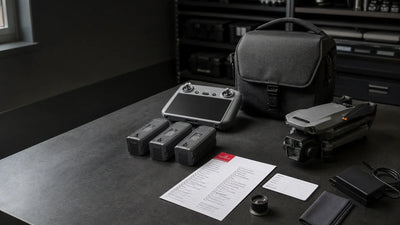
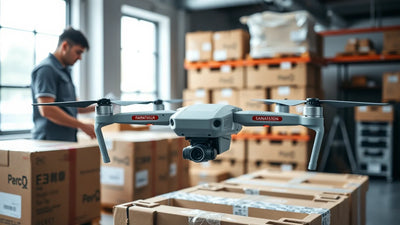
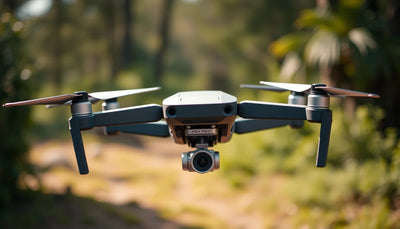
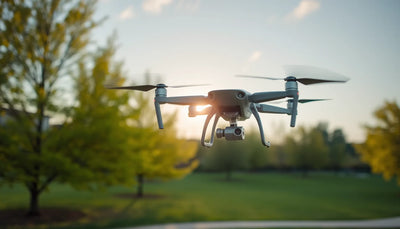
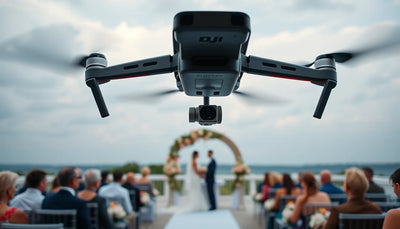
Hero illustration: Do I Need a Transport Canada Pilot Certificate for DJI Mini 4 Pro Commercial Vid
  • No Pilot Certificate is required for DJI Mini 4 Pro commercial videography in Canada — the drone weighs 249 g, falling squarely under Transport Canada's sub-250 g exemption in CARs Part IX.
  • No registration needed — sub-250 g RPAS are exempt from both registration and pilot certification, even when earning revenue from aerial footage.
  • The Plus Battery changes everything — swapping to the Intelligent Flight Battery Plus pushes weight to approximately 290 g, immediately triggering Basic Pilot Certificate and registration requirements.
  • You still must follow CARS 900.06 — no reckless or negligent operation, respect all airspace restrictions, and maintain visual line of sight at all times.
  • Pre-owned savings are significant — a Pristine Pre-Owned (Grade A) Mini 4 Pro from Reboot Hub starts at $569 USD / HK$4,438 versus $759 USD new, with full 180-day warranty and 40-point inspection.
  • Liability insurance is strongly recommended — while not federally mandated for sub-250 g drones, most Canadian commercial clients and municipalities require proof of coverage before granting filming permits.

Does the DJI Mini 4 Pro Fall Under Transport Canada's Sub-250 g Exemption?

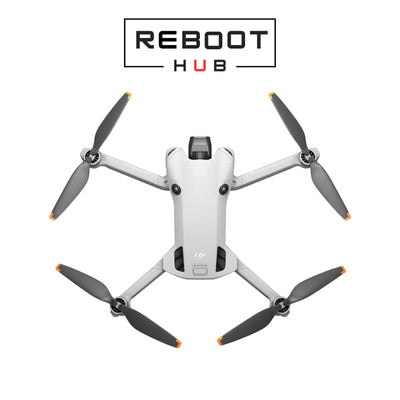
Yes — and this is the single most important fact for any Canadian videographer eyeing the Mini 4 Pro for paid work. Transport Canada's Canadian Aviation Regulations (CARs) Part IX governs all Remotely Piloted Aircraft Systems (RPAS), and the threshold that triggers pilot certification, registration, and most operational rules is 250 grams maximum take-off weight. The DJI Mini 4 Pro, with its standard Intelligent Flight Battery installed, weighs exactly 249 g at take-off. This places it firmly in the sub-250 g category, which CARs 900.06 treats as a "micro RPAS" — no Pilot Certificate (Basic or Advanced), no drone registration number, and no requirement to pass the Transport Canada online exam. This exemption holds regardless of whether your flight is recreational or commercial. A wedding videographer charging $3,500 CAD for a highlight reel shot entirely on a Mini 4 Pro has the same regulatory obligations as a hobbyist flying in a park: follow the Criminal Code prohibition on dangerous operation, respect privacy laws, and do not fly in a way that endangers aviation safety. However, if you attach propeller guards, a strobe light, or — critically — the Intelligent Flight Battery Plus, the weight climbs above 250 g and the exemption evaporates instantly.

Related: SACAA Part 101 for Commercial Real Estate Drone Ops with DJI

What Are the Specific Rules for Commercial Drone Videography with a Sub-250 g Drone in Canada?

Commercial intent does not magically reclassify a 249-gram drone into a heavier category under Canadian law. Transport Canada's position, reaffirmed in multiple Advisory Circulars, is that the weight of the aircraft — not the purpose of the flight — determines which regulatory tier applies. For Mini 4 Pro operators shooting real estate walkthroughs, event coverage, or stock footage for licensing, this means you can legally accept payment without holding a Pilot Certificate. That said, three non-negotiable obligations remain. First, CARS 900.06 prohibits operating any RPAS — regardless of weight — in a reckless or negligent manner that endangers other aircraft, people, or property. Second, you must maintain visual line of sight (VLOS) at all times; FPV flying with goggles alone is not compliant unless a visual observer stands beside you. Third, airspace restrictions still apply — you cannot fly in Class F restricted airspace or within 5.6 km of an aerodrome if your presence creates a hazard. Additionally, many municipalities (Toronto, Vancouver, Montréal) require film permits for commercial drone use in public parks, even for sub-250 g aircraft. These local rules operate independently of federal RPAS regulations and can carry fines exceeding $500 CAD. For a videographer booking $1,200 USD / ~HK$9,360 worth of client work monthly, budgeting $300–$600 CAD annually for municipal permits and liability insurance is prudent.

Related: Indian Customs Personal Use Drone Quantity Limit When Return

How Does the DJI Mini 4 Pro Compare to Heavier Drones for Commercial Videography?

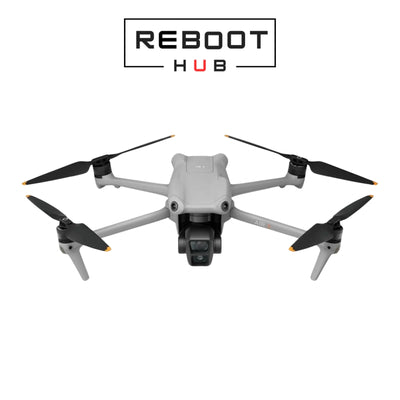
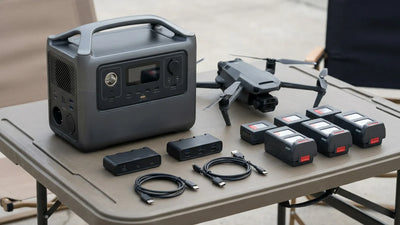
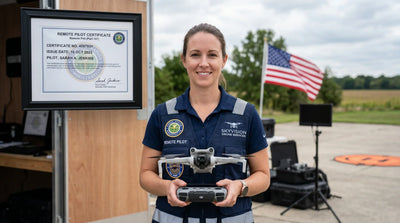
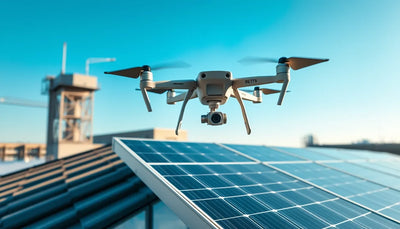
Supporting visual: Do I Need a Transport Canada Pilot Certificate for DJI Mini 4 Pro Commercial Vid

The regulatory advantage of the Mini 4 Pro is substantial, but it comes with hardware trade-offs worth quantifying. The table below compares three popular DJI models for Canadian commercial operators, factoring in Transport Canada requirements and pre-owned pricing available through Reboot Hub. All prices reflect actual market positioning as of mid-2025.

Model Take-off Weight Pilot Certificate Required? Registration Required? New Price (USD) Reboot Hub Pre-Owned (USD/HKD)
DJI Mini 4 Pro 249 g No No $759 (drone only) $569 USD / HK$4,438 (Grade A)
DJI Mini 4 Pro Fly More 249 g No No $1,099 $889 USD / HK$6,934 (Grade A+)
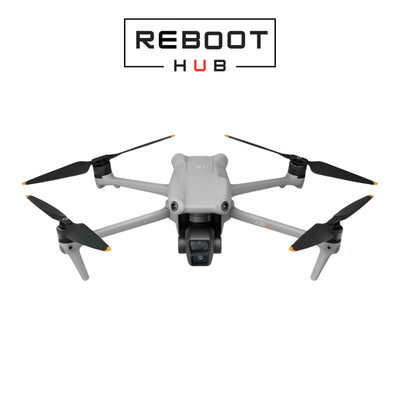
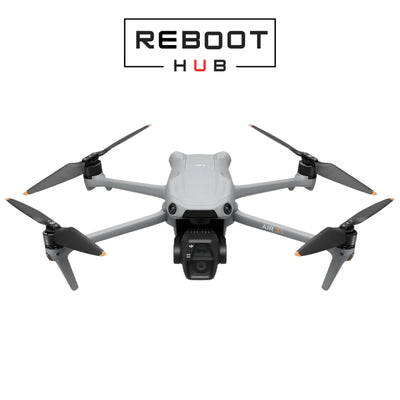
DJI Air 3 720 g Basic (online exam) Yes ($5 CAD) $1,099 (drone only) $849 USD / HK$6,622 (Grade A)
DJI Mavic 3 Pro 958 g Basic or Advanced* Yes ($5 CAD) $2,199 (drone only) $1,649 USD / HK$12,862 (Grade A)

*Advanced Certificate required if operating in controlled airspace or near bystanders not associated with the operation.

The Mini 4 Pro shoots 4K/100fps video on a 1/1.3-inch CMOS sensor with 10-bit D-Log M color — entirely sufficient for real estate, social media content, and mid-tier commercial work. Where it falls short against the Air 3 and Mavic 3 Pro is wind resistance (rated at 10.7 m/s versus 12 m/s for the Air 3) and low-light performance due to the smaller sensor. For Canadian operators shooting in gusty prairie conditions or dim winter light, the Air 3's dual-camera system and heavier airframe may justify the Basic Pilot Certificate burden. But for 80% of commercial videography use cases — weddings, property tours, event b-roll — the Mini 4 Pro delivers professional results with zero regulatory overhead.

What Happens If You Add Accessories That Push the Mini 4 Pro Over 250 Grams?

This is the trap that catches new Canadian operators off guard. The DJI Mini 4 Pro's Intelligent Flight Battery Plus boosts flight time from a rated 34 minutes to approximately 45 minutes, but it adds enough mass to push total take-off weight to roughly 290 g — 40 g above the exemption threshold. The moment that battery clicks into the airframe, CARs Part IX reclassifies your drone into the 250 g–25 kg category. You now need, at minimum, a Pilot Certificate – Basic (earned by passing the $10 CAD online Small Basic Exam with a score of 65% or higher), a registered RPAS with a clearly displayed registration number, and compliance with Basic Operations rules — including the prohibition on flying within 30 m of bystanders (horizontal distance). If you crash into a vehicle or person while flying overweight without certification, Transport Canada can levy fines of up to $3,000 CAD for individuals. For commercial operators, the reputational damage of being found non-compliant after an incident far exceeds any convenience gained from the extended battery. The safer path: keep the standard battery installed, carry two or three spares (each battery weighs approximately 77 g and costs $65 USD / ~HK$507 new, or less pre-owned), and swap between flights. Reboot Hub stocks genuine OEM standard batteries for the Mini 4 Pro at pre-owned pricing, typically $42 USD / ~HK$328 each for Grade A units that have undergone full charge-cycle testing during the 40-point inspection.

Why Buy from Reboot Hub?

Reboot Hub specializes in Pristine Pre-Owned drones — not refurbished units with third-party parts, but genuine OEM aircraft that have passed a rigorous 40-point inspection at our Shenzhen facility. Every Mini 4 Pro we sell is graded transparently: Flawless (A+) means activation-only with zero flight hours, while Pristine Pre-Owned (A) indicates minimal use with no visible marks on the airframe, gimbal, or propellers. All drones ship with genuine OEM parts only — batteries, propellers, and gimbal assemblies are never swapped for aftermarket alternatives. Each purchase includes a 180-day warranty backed by our MOHRSS Level 3-certified repair technicians in Shenzhen, who can turn around chip-level repairs in 3–5 business days. We offer DDP (Delivered Duty Paid) shipping from Shenzhen and Hong Kong, meaning the price you see is the price you pay — no surprise customs fees when your Mini 4 Pro crosses into Canada. For Canadian videographers who want a commercial-ready Mini 4 Pro at $569 USD instead of $759 USD, with full warranty protection and guaranteed OEM integrity, Reboot Hub delivers.

Frequently Asked Questions

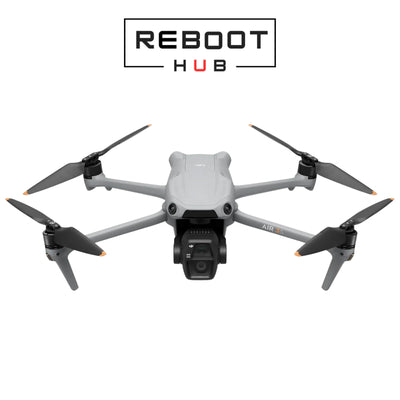
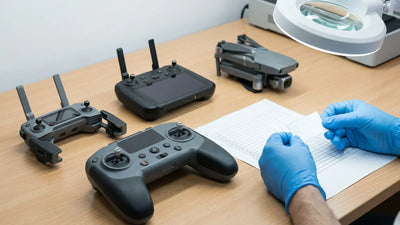
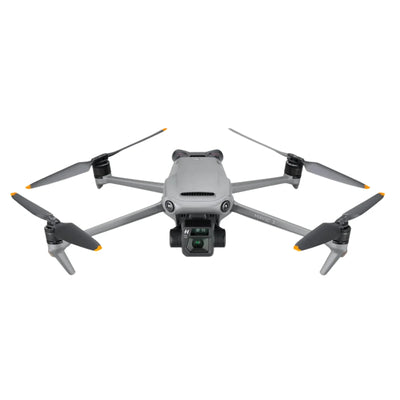
Detail shot: Do I Need a Transport Canada Pilot Certificate for DJI Mini 4 Pro Commercial Vid

Q: Do I need to register my DJI Mini 4 Pro with Transport Canada if I only use it commercially?

A: No. Registration is tied to the drone's maximum take-off weight, not the purpose of the flight. Since the Mini 4 Pro weighs 249 g with the standard battery, it falls below the 250 g threshold in CARs Part IX and is exempt from registration regardless of whether you earn revenue from the footage. Transport Canada's RPAS registration system ($5 CAD fee, valid for all drones you own) only applies to aircraft between 250 g and 25 kg. If you later install the Plus Battery and cross 250 g, registration becomes mandatory before your next flight, and you must display the registration number visibly on the drone.

Q: Can I fly my sub-250 g Mini 4 Pro in controlled Canadian airspace without a Pilot Certificate?

A: Technically yes, but practically, extreme caution is required. Micro RPAS (sub-250 g) are exempt from the specific CARs Part IX restrictions on controlled airspace, but CARS 900.06 still prohibits creating a hazard to aviation. Flying a 249 g drone within the approach path of an active runway at a Class C airport like Toronto Pearson (YYZ) would almost certainly constitute reckless operation. NAV Canada and Transport Canada recommend that micro RPAS operators avoid controlled airspace entirely. For commercial videographers who need guaranteed access to urban airspace, obtaining a Basic Pilot Certificate and using a registered, heavier drone with proper airspace authorization via NAV Drone is the legally robust path.

Q: What penalties apply if I fly a Mini 4 Pro commercially over 250 g without certification?

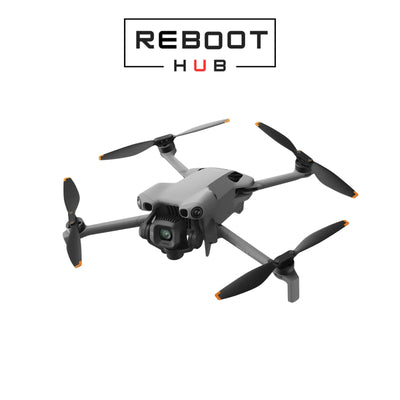
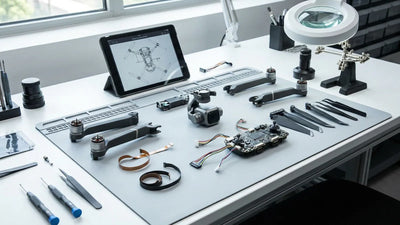
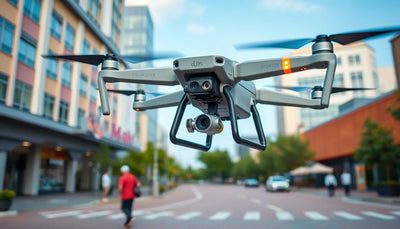
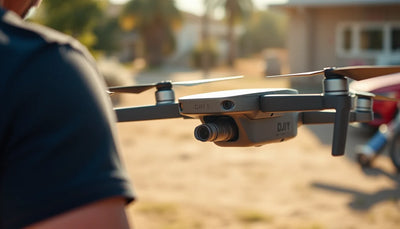
Technical view: Do I Need a Transport Canada Pilot Certificate for DJI Mini 4 Pro Commercial Vid

A: Transport Canada can issue fines of up to $3,000 CAD for individuals and $15,000 CAD for corporations operating an RPAS without the required Pilot Certificate. If the violation involves reckless endangerment, the Criminal Code provisions for dangerous operation of an aircraft can apply, potentially leading to criminal charges. Beyond fines, a non-compliant operator faces civil liability issues — if you damage property or injure someone while flying overweight without certification, your liability insurance (if you even have coverage) will likely deny the claim due to regulatory non-compliance. The $10 CAD and roughly 90 minutes needed to pass the Small Basic Exam is a trivial investment compared to these risks.

Q: Is liability insurance legally required for commercial drone videography in Canada?

A: Federally, no — Transport Canada does not mandate liability insurance for any RPAS category. However, this is misleading in practice. Most Canadian municipalities require proof of commercial general liability (CGL) insurance — typically $2 million to $5 million CAD in coverage — before issuing a film permit for drone operations on public land. Private venues, wedding clients, and real estate brokerages increasingly demand to see a certificate of insurance before allowing drone flights. Annual drone-specific liability policies in Canada range from $600 to $1,200 CAD per year for sub-250 g operations. For operators earning $25,000+ USD (~HK$195,000) annually from aerial work, this is a non-negotiable business expense.

Q: How does the DJI Mini 4 Pro's camera hold up for professional client deliverables?

A: The Mini 4 Pro's 1/1.3-inch CMOS sensor captures 48 MP stills and 4K video at up to 100 fps in D-Log M (10-bit) color — more than adequate for social media campaigns, real estate listings, event highlight reels, and web commercials. Its 2.4 μm pixel size (after 4-in-1 binning) delivers clean footage in daylight and acceptable results at ISO 1600–3200. Where it shows limitations: low-light wedding receptions, broadcast-grade productions requiring 5.1K or ProRes, and scenarios demanding the shallow depth of field of a Micro Four Thirds sensor. For 80% of commercial videography clients, the Mini 4 Pro's output is indistinguishable from heavier, costlier drones — and the regulatory simplicity is a genuine competitive advantage.

Q: Are there provincial or municipal drone rules that override the federal sub-250 g exemption?

A: Yes, and they vary significantly. Provincial and municipal governments cannot override federal aviation regulations, but they can regulate land use — meaning they control whether you can take off and land from public property. Toronto Municipal Code Chapter 608 prohibits operating any motorized aircraft in city parks without a permit (sub-250 g drones included). Vancouver's Park Board requires a film permit for any commercial drone activity. Québec's privacy laws add additional consent requirements when filming over private property. Always check local bylaws before accepting a shoot in a new municipality. A $200 CAD permit is far cheaper than a $500+ CAD bylaw infraction ticket.

Q: Does Reboot Hub's DDP shipping to Canada truly mean no extra fees upon delivery?

A: Correct. DDP (Delivered Duty Paid) means Reboot Hub handles all customs clearance, import duties, GST/HST, and brokerage fees before the package reaches Canadian soil. When your Mini 4 Pro arrives from our Shenzhen or Hong Kong fulfillment center, you will not be asked to pay a single additional dollar — no surprise COD charges from Canada Post or UPS. This is particularly valuable for Canadian buyers because standard express shipping from China often triggers brokerage fees of $30–$70 CAD plus 5–13% tax on the declared value. On a pre-owned Mini 4 Pro Fly More Combo at $889 USD (~$1,210 CAD), DDP saves you roughly $150–$200 CAD compared to DDU shipping. Our 180-day warranty and OEM parts guarantee remain identical regardless of shipping destination.

Q: How quickly does Reboot Hub's Shenzhen repair facility turn around Mini 4 Pro repairs?

A: Our chip-level repair facility in Shenzhen, staffed by MOHRSS Level 3-certified technicians, completes most Mini 4 Pro repairs within 3–5 business days from intake to shipment. Common repairs — gimbal ribbon cable replacement, arm pivot assembly, ESC board rework — typically ship on day 3. More complex PCB-level diagnostics may extend to the full 5-day window. Hong Kong-based customers can use our physical drop-off location for same-day intake. All repairs use genuine OEM parts sourced directly from DJI's supply chain, and every repaired drone undergoes the same 40-point inspection as our pre-owned inventory before being returned. The 180-day warranty covers both pre-owned purchases and post-repair workmanship.

Edellinen viesti
Seuraava postaus

Jätä kommentti

Huomaa, että kommentit on hyväksyttävä ennen kuin ne julkaistaan.

Kiitos tilaamisesta!

Tämä sähköposti on rekisteröity!

Osta ulkoasua

Valitse vaihtoehdot

Muokkaa vaihtoehtoa
Back In Stock Notification
this is just a warning
Kirjaudu sisään
Ostoskori
0 kohteita
0%