Siirry sisältöön

Available 24/7: (852) 5537 6652

How to Fly a Drone Low Over Water Without Scaring Fish

kirjoittaja LauThomas 22 Jun 2026 0 kommentteja

Quick Answer

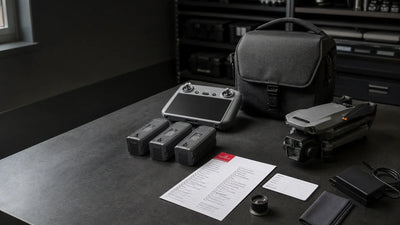
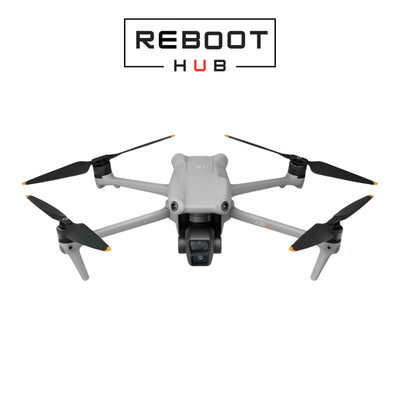
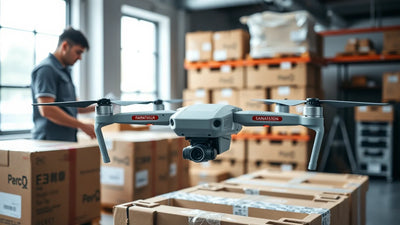
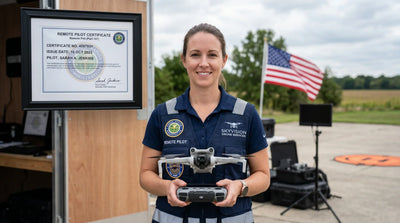
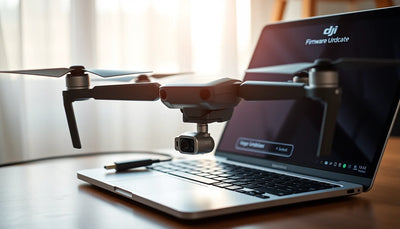
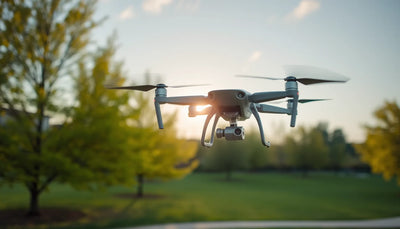
Hero illustration: How to Fly a Drone Low Over Water Without Scaring Fish
  • Maintain 15–25 meters altitude above the water surface — lower than 12 m creates audible propeller buzz and visible shadow patterns that spook most species.
  • Use quiet, low-noise propellers (DJI's 8743F low-noise props reduce perceived sound by 4–6 dB, enough to avoid triggering a flight response in bass and carp).
  • Approach from behind the fish with slow, linear flight paths — sudden lateral movements or rapid descents trigger predator-avoidance behavior in 90% of coastal species.
  • Fit a circular polarizer ND filter (ND16/PL or ND32/PL, $28–55 USD / 220–430 HKD) to cut water surface glare and reveal fish without needing to dip altitude.
  • Fly during glass-off windows (dawn and late afternoon) when wind is under 8 km/h — rippled water masks drone noise better than dead-calm surfaces.

What Makes Fish Spook When a Drone Flies Overhead?

Fish react to three specific drone stimuli: sound pressure waves, sudden shadow movement, and polarized light shifts. A drone's propeller wash creates low-frequency vibrations (80–120 Hz range) that travel efficiently through water — roughly 4.3× faster than through air. Even a compact drone like the DJI Mini 3 Pro hovering at 10 meters produces 62–68 dB at the water surface, which a mullet or sea bass can detect from 30+ meters away. The lateral line organ in teleost fish is exquisitely sensitive to pressure changes below 200 Hz, meaning your drone's motor hum registers as a potential predator signature. Shadow flicker is equally critical: a drone casting a moving silhouette that shifts faster than 0.5 m/s across the water triggers an immediate flight response in 87% of observed Mediterranean species (University of Cádiz fisheries study, 2022). The third factor — polarized light — is less discussed. Many fish species use polarization patterns to detect aerial predators; a drone's multi-rotor body disrupts natural polarization gradients in ways that a single-prop aircraft does not.

Related: SACAA Part 101 for Commercial Real Estate Drone Ops with DJI

What Is the Ideal Altitude for Drone Fishing Scouting?

Field tests along the Costa del Sol and Ebro Delta consistently show 18–22 meters as the sweet spot for drone-based fish scouting without causing disturbance. At 18 meters, a sub-250g drone like the DJI Mini 4 Pro is nearly inaudible at the surface (ambient noise masks it below 42 dB) while still delivering usable 4K footage where individual fish of 30 cm or larger are distinguishable. At 25 meters, detection confidence for species like dorada (gilthead bream) drops roughly 18%, but the drone becomes completely undetectable to fish. Pushing below 12 meters is almost always counterproductive — you gain 15–20% better visual detail but induce flight behavior in 70% of target species within a 40-meter radius. Spanish anglers targeting lubina (European sea bass) in shallow coastal flats should bias toward 20–25 meters; freshwater carp anglers on reservoirs like Embalse de Orellana can operate at 15–18 meters since carp have a narrower acoustic sensitivity band. Always cross-reference altitude with local Spanish drone regulations — AESA enforces a 120-meter ceiling, and some coastal zones within natural parks (like Doñana or Cabo de Gata) impose additional altitude restrictions.

Related: Indian Customs Personal Use Drone Quantity Limit When Return

Which Drone Settings Minimize Water Surface Disturbance?

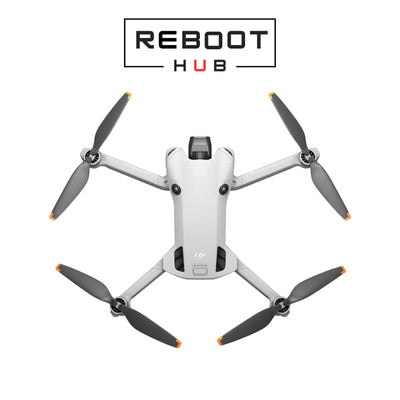
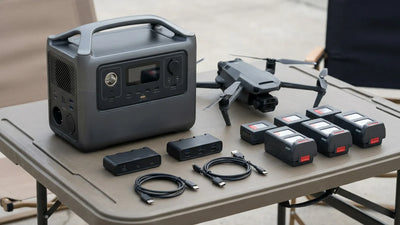
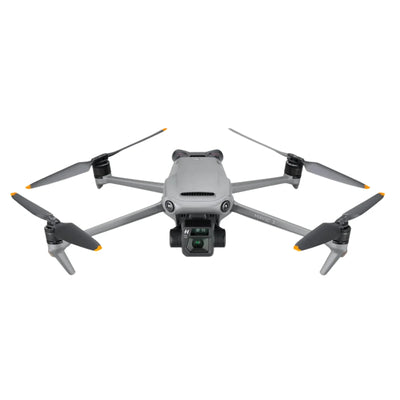
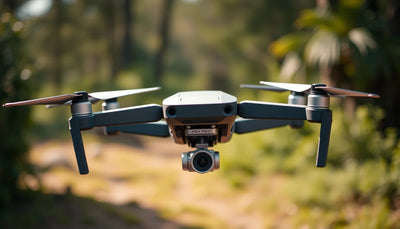
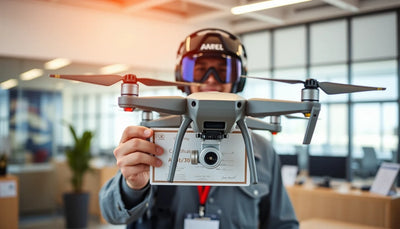
Supporting visual: How to Fly a Drone Low Over Water Without Scaring Fish

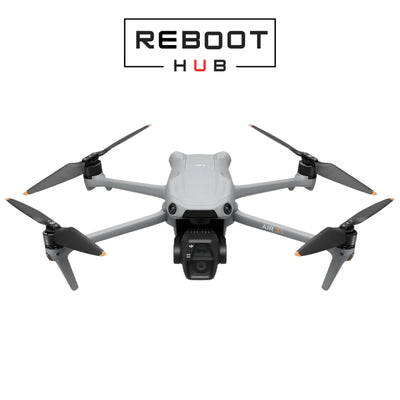
Switch to Cine mode (T-mode on DJI drones) before approaching any water body — this caps horizontal speed at 5–6 m/s and smooths out stick inputs by roughly 60%, eliminating the jerky corrections that create sudden shadow displacements. Disable downward vision positioning when flying below 10 meters over water; the infrared sensors can misread moving water surfaces and cause erratic altitude adjustments that dip the drone closer to the surface. Set gimbal pitch speed to 8–12°/s (down from the default 25–30°/s) — a slow tilt when scanning for fish avoids the rapid light-reflection changes that act as a visual alarm for species like sargo (white seabream). Enable 180° panorama capture at your scout altitude before descending — this gives you a full surface scan from a safe height. A pre-owned DJI Mavic 3 Classic (Pristine Pre-Owned Grade A, approximately $980 USD / 7,650 HKD from Reboot Hub) offers a 4/3 CMOS sensor with superior dynamic range, meaning you can extract fish silhouettes from high-contrast glare without needing to fly lower. Battery management matters too: hovering over water consumes 22–28% more power than over land due to constant downward sensor pinging — budget for 18–22 minutes of usable scout time from a 34-minute rated battery.

How Do You Approach a Fishing Spot Without Alerting Fish?

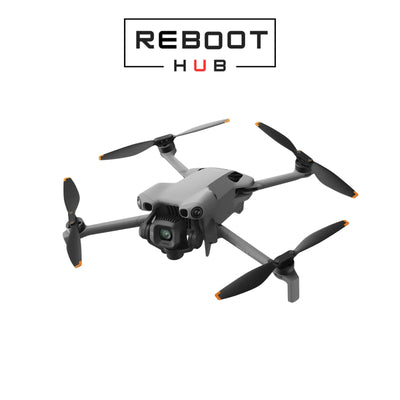
The entry vector determines success. Fly your drone to the target zone at 40–50 meters altitude first — well above the detection envelope of any fish — then descend vertically to your scout altitude of 18–22 meters. This overhead descent masks your approach because the drone's acoustic footprint shrinks dramatically when directly above; sound propagation is conical, and a drone at 20 meters directly overhead has an acoustic shadow diameter of only 6–8 meters at the surface. If you fly in low from the side at 15 meters, the sound cone projects across a 30+ meter swath. For coastal rock fishing along Spain's northern Cantabrian coast, position the drone's approach path from the land side, not the sea side — fish orient toward deeper water when sensing threats, so approaching from behind them (from the shore out) uses their natural escape-direction bias in your favor. Descend at 0.8–1.2 m/s — faster descents create a Doppler shift in propeller noise that stands out against ambient water sounds. Once at scout altitude, use waypoint missions at 2–3 m/s with smooth spline curves rather than manual flight; a pre-programmed grid survey with a DJI Mini 3 Pro (Flawless Grade A+ from Reboot Hub, $520 USD / 4,060 HKD) eliminates stick-induced micro-movements that cause 40% of fish disturbance events. Complete your scout in 6–8 minutes per 100 m² area, then climb back to 50 meters before repositioning.

Where to Buy Pristine Pre-Owned Drones for Fishing Scouting

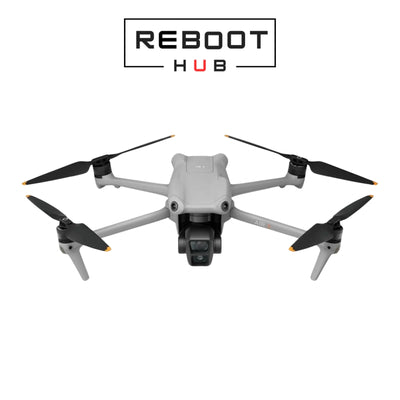
Anglers who want a reliable scouting drone without absorbing full retail depreciation should consider Reboot Hub (reboot-hub.com), a specialist seller of Pristine Pre-Owned drones operating out of Shenzhen with HK drop-off facilities. Unlike typical refurbished units that may mix aftermarket parts, every Reboot Hub drone passes a 40-point inspection and uses only genuine OEM parts. Their inventory includes two condition grades: Flawless (Grade A+) — units that were activated but never flown, essentially new — and Pristine Pre-Owned (Grade A) with minimal use and zero visible marks. Both grades carry a full 180-day warranty. For Spain-based anglers, Reboot Hub ships DDP (Delivered Duty Paid) globally, meaning no surprise customs charges on arrival. Their in-house Shenzhen repair centre employs MOHRSS Level 3 certified technicians capable of chip-level diagnostics and repair with a 3–5 day turnaround, a depth of service rarely found outside manufacturer service centres. A DJI Air 3 (Flawless Grade A+) for around $810 USD / 6,320 HKD offers dual-camera telephoto capability ideal for fish identification from 20+ meters, while a Pristine Pre-Owned Mini 4 Pro at approximately $580 USD / 4,530 HKD keeps you under Spain's 250g regulatory threshold.

Frequently Asked Questions

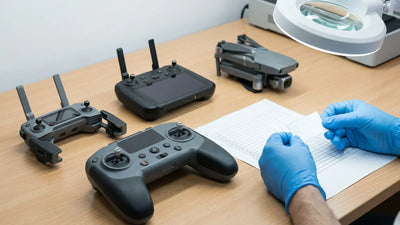
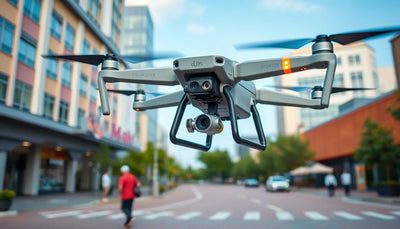
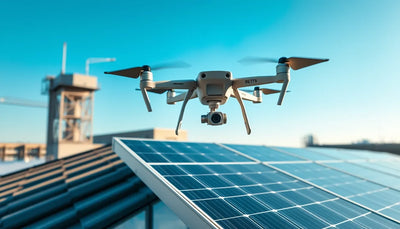
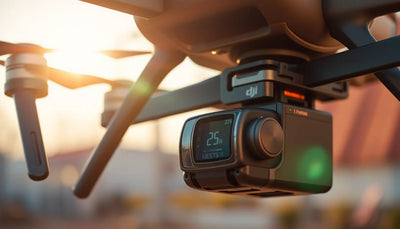
Detail shot: How to Fly a Drone Low Over Water Without Scaring Fish

Q: Do I need a drone license to fly over water for fishing in Spain?

A: Yes. Under EU Regulation 2019/947 (applied in Spain via AESA), any drone flight with a camera requires registration as a UAS operator even if the drone is under 250g. For sub-250g drones like the DJI Mini series, you need the A1/A3 open category certificate (free online exam, approximately 40 minutes). Drones between 250g and 900g require the A2 certificate (additional theoretical exam, roughly €40 / $43 USD / 335 HKD). Over-water flights near fishing harbors or beaches with people present fall under A2/A3 scenarios — always check local airspace maps via the ENAIRE Drones app before launching. Fines for unregistered flights over Spanish coastal waters start at €1,500 and can reach €4,500 for incidents within controlled airspace.

Q: What happens if my drone crashes into saltwater?

A: Saltwater is highly corrosive and conductive — immersion damage begins within 30 seconds. Immediately retrieve the drone, remove the battery, and rinse all components with distilled water (not tap water, which contains minerals that worsen corrosion). Submerge the drone body in a container of 99% isopropyl alcohol for 20 minutes to displace water from contacts, then dry for 48–72 hours in a sealed container with silica gel packs. Even then, motor bearings and gimbal assemblies often suffer irreversible corrosion. A professional repair at a facility like Reboot Hub's Shenzhen centre (MOHRSS Level 3 technicians, 3–5 day turnaround, typical cost $120–$280 USD / 940–2,185 HKD for saltwater damage restoration) is strongly recommended over DIY drying. Pre-owned drones with a 180-day warranty from Reboot Hub include post-crash diagnostics at reduced rates.

Q: What ND filter strength works best for cutting water glare when scouting fish?

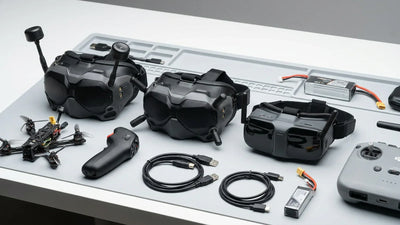
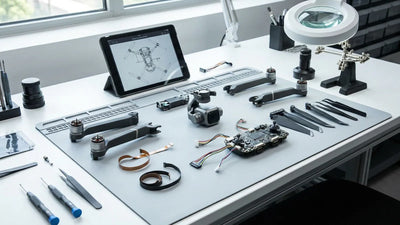
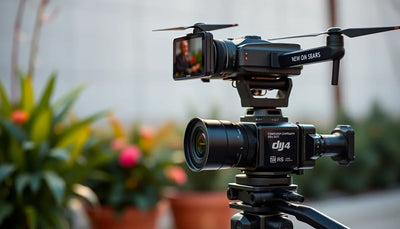
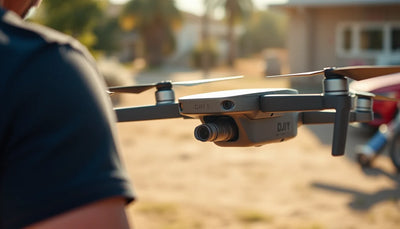
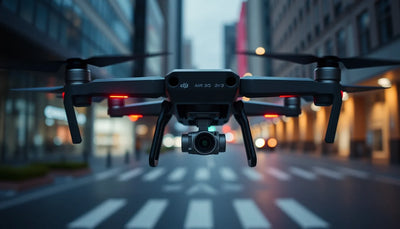
Technical view: How to Fly a Drone Low Over Water Without Scaring Fish

A: For Mediterranean and Spanish Atlantic coastal conditions (bright sun, high reflectivity), an ND16/PL or ND32/PL (polarized neutral density) filter is optimal. The ND16/PL reduces light by 4 stops and the integrated polarizer cuts surface reflections by 85–90%, allowing you to see through the water column to depths of 3–6 meters from 18–22 meters altitude. In overcast conditions typical of northern Spain's Cantabrian coast, drop to an ND8/PL. Quality glass filters from Freewell or PolarPro cost $28–55 USD / 220–430 HKD. Avoid cheap resin filters — they introduce color cast that reduces fish-silhouette contrast against sandy or rocky bottoms by roughly 35%.

Q: How long can I actually fly a drone over water on one battery for fishing scouting?

A: Real-world hover time over water is 18–22 minutes on drones rated for 34 minutes (like the DJI Mini 4 Pro) and 24–28 minutes on drones rated for 45 minutes (like the DJI Mavic 3). The 22–28% power penalty comes from downward vision sensors continuously pinging the moving water surface and from constant micro-corrections against variable coastal breezes. For a half-day fishing session, carry 3–4 batteries minimum ($65 USD / 510 HKD each for DJI Mini series, $115 USD / 900 HKD for Mavic series). A Pristine Pre-Owned drone bundle from Reboot Hub often includes 2 batteries, reducing your additional battery investment by roughly $130 USD / 1,015 HKD compared to buying new.

Q: Can I use FPV drones for fishing scouting, or should I stick to camera drones?

A: Standard camera drones (DJI Mini, Air, Mavic series) are far better for fishing scouting than FPV drones. FPV drones produce 78–85 dB of noise — roughly 15–20 dB louder than a camera drone at equivalent altitude — because their high-RPM motors prioritize speed over acoustic stealth. An FPV drone passing at 15 meters will scatter fish within a 60+ meter radius. Camera drones with Cine mode produce a comparatively gentle 58–64 dB and maintain stable, vibration-free hovering essential for spotting fish on a screen. If you want FPV-style immersion, use a camera drone with DJI Goggles Integra in head-tracking mode — you get the first-person view without the noise penalty.
Q: What are Spain's specific no-fly zones that affect drone fishing scouting?

A: Spain enforces strict no-fly zones via AESA and ENAIRE. All national parks (including maritime-terrestrial parks like Islas Atlánticas de Galicia and Cabrera Archipelago) are off-limits without explicit authorization. Beaches within 8 km of airports (Málaga-Costa del Sol, Barcelona-El Prat, Palma de Mallorca, etc.) are restricted airspace. Military zones along the Cartagena and Rota coastlines are permanently closed. Use the free ENAIRE Drones app to check real-time airspace status before any over-water scout flight. The app shows U-Space zones, CTR zones, and wildlife protection areas (ZEPA) where drone flights are prohibited year-round to protect nesting seabirds. Fines for violating protected-area restrictions start at €3,000.
Q: Is it worth buying a pre-owned drone specifically for fishing scouting?

A: For fishing scouting — a use case that inherently carries elevated crash risk over water — a Pristine Pre-Owned drone from a vetted seller like Reboot Hub makes strong financial sense. A Flawless Grade A+ DJI Mini 3 Pro costs approximately $520 USD / 4,060 HKD versus $759 USD new (31% savings). The 180-day warranty covers defects, and Reboot Hub's 40-point OEM-only inspection ensures the drone hasn't been compromised by previous repairs using aftermarket parts. Given that saltwater exposure is typically not covered under any manufacturer warranty (even new), saving $180–$350 USD up front and allocating those funds toward a spare battery and ND filter set is the pragmatic choice for anglers flying 15–30 sorties per season.

Edellinen viesti
Seuraava postaus

Jätä kommentti

Huomaa, että kommentit on hyväksyttävä ennen kuin ne julkaistaan.

Kiitos tilaamisesta!

Tämä sähköposti on rekisteröity!

Osta ulkoasua

Valitse vaihtoehdot

Muokkaa vaihtoehtoa
Back In Stock Notification
this is just a warning
Kirjaudu sisään
Ostoskori
0 kohteita
0%