Siirry sisältöön

Available 24/7: (852) 5537 6652

Drone Pilot Course for Topography in São Paulo Featuring the DJI Mavic 4 Pro

kirjoittaja LauThomas 22 Jun 2026 0 kommentteja

Quick Answer

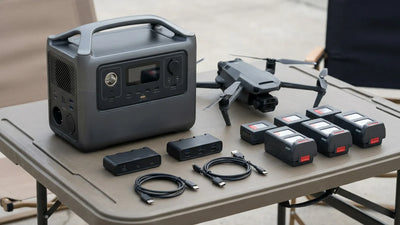
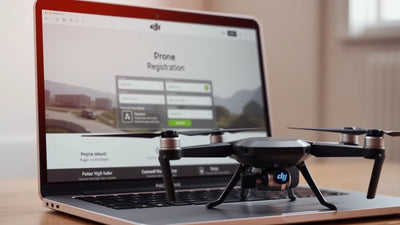
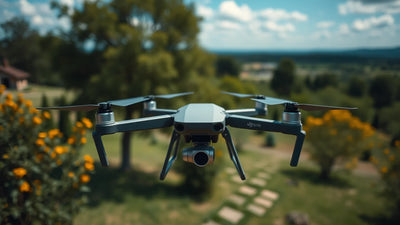
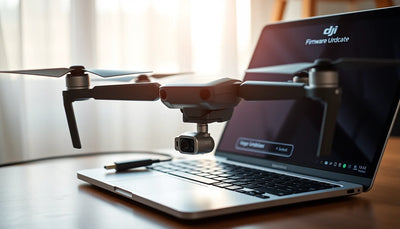
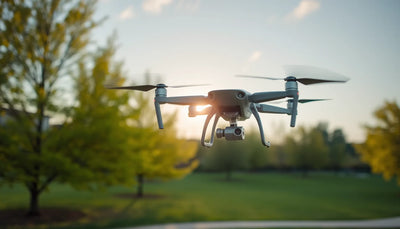
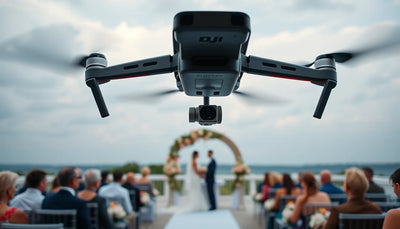
Hero illustration: Drone Pilot Course for Topography in S?o Paulo Featuring the DJI Mavic 4 Pro
  • Course cost in São Paulo ranges from $950 to $1,480 USD (R$ 4,700–R$ 7,300), spanning 5 to 7 days of hands-on flight training and photogrammetry processing with the DJI Mavic 4 Pro.
  • The DJI Mavic 4 Pro with mechanical shutter and RTK module is the recommended configuration — new units cost $3,899 USD (approx. HK$30,400), while Reboot Hub Flawless A+ pre-owned units start at $2,729 USD (HK$21,300).
  • Reboot Hub pre-owned savings reach 30–35% versus new retail, with every unit passing a 40-point inspection, using genuine OEM parts, and backed by a 180-day warranty.
  • Topography-focused coursework includes GCP placement, PPK/RTK workflows, and point cloud generation — graduates leave with a portfolio-ready orthomosaic map and a Brazilian-recognized operator certificate.
  • DDP shipping from Shenzhen/HK means zero surprise customs fees — Reboot Hub handles all import duties, clearing the drone straight to your São Paulo address in 7–10 business days.

What Does the Drone Pilot Course for Topography in São Paulo Cover?

A topography-focused drone pilot course in São Paulo typically runs 5 to 7 days and splits time between classroom theory and field flight operations. The curriculum centers on the DJI Mavic 4 Pro because its mechanical shutter eliminates rolling shutter distortion — a critical factor when capturing overlapping nadir images for orthomosaic reconstruction. Students log a minimum of 12 flight hours across varied terrain, often at sites near the Represa Guarapiranga or rural plots outside Campinas, where elevation changes test real-world mission planning skills.

Related: Waar Kan Ik Vliegen met Mijn Drone in Nederland? Beste Apps

The first two days cover Brazilian airspace regulations (DECEA, ANATEL, and ANAC requirements), sensor theory, and mission design using DJI Pilot 2 or third-party tools like UgCS. Days three through five shift to field work: students manually set ground control points with GNSS receivers, execute automated grid flights at 80–120 meters AGL, and collect datasets with 70% front overlap and 65% side overlap — the industry standard for topographic accuracy down to 2–3 cm GSD. The final days focus on post-processing in Agisoft Metashape or Pix4Dmapper, where students generate dense point clouds, DSM/DTM outputs, and CAD-ready contour lines. Course fees range from $950 USD for a 5-day intensive to $1,480 USD for a 7-day advanced program that includes LiDAR integration workflows with the Mavic 4 Pro's optional payload accessories. Upon completion, participants receive a certificate recognized by Brazilian surveying associations, qualifying them to operate commercially under Brazil's RBAC-E 94 regulations.

Related: Best Affordable Drones for Real Estate Aerial Photography 20

How Much Does the DJI Mavic 4 Pro Cost for Topography Work?

Acquiring a DJI Mavic 4 Pro for topographic surveying involves choosing between three tiers of investment. A pre-owned Mavic 4 Pro with the standard battery and no RTK module retails for $2,199 USD (HK$17,160) at authorized Brazilian dealers, but this configuration lacks the mechanical shutter and precision geotagging that professional topography demands. The Fly More Combo, which adds two extra batteries, a charging hub, and ND filters, pushes the price to $2,799 USD (HK$21,850). For survey-grade accuracy, the Mavic 4 Pro RTK package — including the D-RTK 3 mobile station and mechanical shutter camera — sits at $3,899 USD (HK$30,420) new.

Reboot Hub offers a significantly more accessible path. Their Flawless (A+) grade Mavic 4 Pro RTK units, which are activation-only drones never flown operationally, start at $2,729 USD (HK$21,300) — a 30% reduction from new retail. Pristine Pre-Owned (A) grade units with minimal use and zero visible marks begin at $2,339 USD (HK$18,250). Every unit undergoes the same 40-point inspection regardless of grade, and all components — from gimbal dampeners to IMU modules — are verified as genuine OEM parts. The 180-day warranty covers any hardware defect, giving topography professionals a risk buffer while they integrate the drone into active project workflows.

Configuration New Retail (USD) Reboot Hub Flawless A+ Reboot Hub Pristine A Key Topography Feature
Mavic 4 Pro Standard $2,199 $1,539 $1,319 Basic mapping (no mechanical shutter)
Mavic 4 Pro Fly More Combo $2,799 $1,959 $1,679 Extended flight sessions (3 batteries)
Mavic 4 Pro RTK Package $3,899 $2,729 $2,339 Survey-grade accuracy ±2 cm

Which Mavic 4 Pro Configuration Suits Topographic Surveying Best?

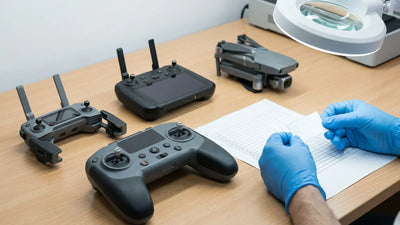
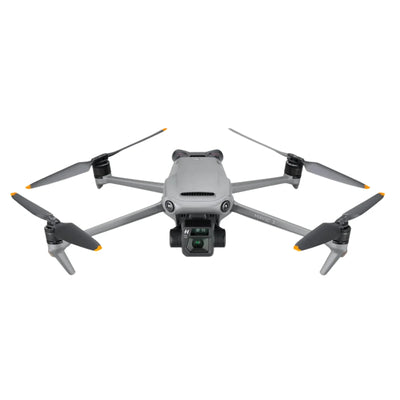
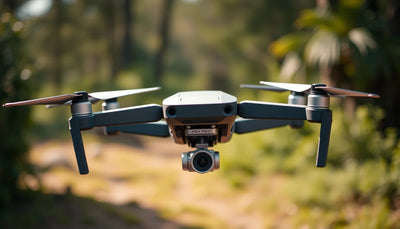
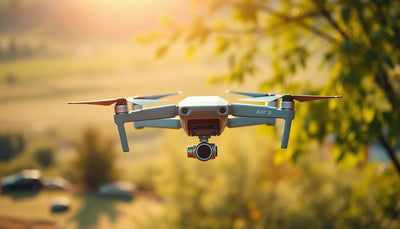
Supporting visual: Drone Pilot Course for Topography in S?o Paulo Featuring the DJI Mavic 4 Pro

For professional topography in São Paulo's varied terrain — from the flat expanses of the interior to the undulating topography of the Serra da Cantareira — the Mavic 4 Pro RTK Package is the definitive choice. The mechanical shutter global-shutter-equivalent capture eliminates the warping artifacts that rolling shutters introduce during fast grid flights, preserving the geometric integrity of every nadir image. When paired with the D-RTK 3 mobile station, the drone achieves absolute positioning accuracy of 2 cm horizontally and 3 cm vertically without requiring a dense network of ground control points. On a 40-hectare survey site, this translates to roughly 3 hours of field time versus a full day with traditional total station methods.

The RTK module also enables PPK (Post-Processed Kinematic) workflows, which are invaluable in São Paulo's semi-urban corridors where RTK correction signals can drop due to interference. Surveyors can log raw GNSS observations onboard, then correct the trajectory in post-processing using IBGE's Brazilian GNSS network bases — a workflow covered extensively in the topography course. The Mavic 4 Pro's 45-minute hover time (or 38 minutes in mapping flight at 12 m/s) means a single battery covers approximately 250 hectares at 100 meters AGL with 70/65 overlap. For larger projects spanning 500+ hectares, the Fly More Combo's three-battery setup eliminates midday downtime. Reboot Hub stocks both configurations in Flawless A+ and Pristine Pre-Owned grades, with the RTK package at $2,729 USD representing the strongest value proposition for serious topography operators.

Why Buy from Reboot Hub?

Reboot Hub occupies a unique position in the drone market — they are neither a typical retailer pushing new inventory nor a marketplace of uncertain secondhand units. Every Pristine Pre-Owned drone that leaves their Shenzhen and Hong Kong facilities passes through a 40-point inspection protocol designed by MOHRSS Level 3 technicians, the same certification tier required for avionics repair in mainland China. Components flagged during inspection are replaced exclusively with genuine OEM parts sourced directly from DJI's supply chain, not third-party equivalents. This means a Flawless A+ Mavic 4 Pro RTK purchased for $2,729 USD delivers the same centimeter-level accuracy as a $3,899 USD factory-new unit. The 180-day warranty — triple the typical 60-day used-market standard — covers gimbal calibration drift, IMU faults, and transmission module failures. For São Paulo buyers, DDP (Delivered Duty Paid) shipping eliminates Brazil's notoriously complex import duties: Reboot Hub pays all taxes, fees, and brokerage charges upfront, delivering the drone to your door in 7–10 business days with no surprise costs. Their Hong Kong drop-off facility also provides a convenient repair intake point for South American operators who want chip-level service without shipping back to mainland China.

Frequently Asked Questions

Q: Do I need prior drone experience to enroll in a São Paulo topography drone course?

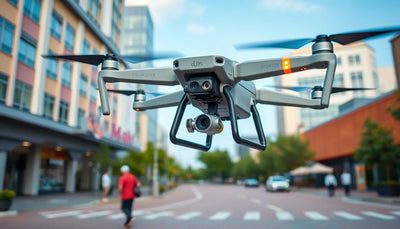
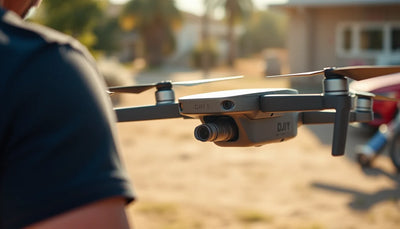
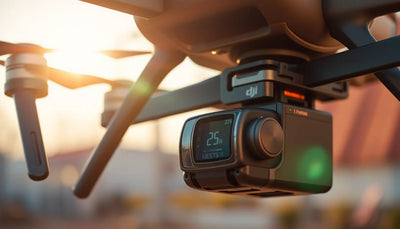
Detail shot: Drone Pilot Course for Topography in S?o Paulo Featuring the DJI Mavic 4 Pro

A: Most courses accept complete beginners, though a basic understanding of cartography or surveying shortens the learning curve considerably. The 5-day intensive ($950 USD) includes a half-day fundamentals module covering stick control, RTH procedures, and airspace awareness before advancing to mapping missions. If you have zero flight hours, budget an extra $120 USD for a one-day pre-course orientation that many São Paulo training centers offer. Instructors typically spend the first two hours assessing each student's comfort level with manual ATTI-mode recovery — a mandatory skill for Brazilian commercial drone certification under ANAC guidelines.

Q: What software do I need for processing Mavic 4 Pro topographic data?

A: The course labs use Agisoft Metashape Professional ($3,499 USD perpetual license) and Pix4Dmapper ($4,990 USD annual), but graduates often start with WebODM (free, open-source) or DJI Terra ($1,400 USD perpetual) for budget-conscious workflows. The Mavic 4 Pro outputs standard EXIF-geotagged JPEG+DNG pairs compatible with every major photogrammetry engine. One critical note: the RTK model's PPKRAW files require RedToolbox or KlauPPK for trajectory correction — both cost under $300 USD one-time and are covered in the advanced 7-day course module.

Q: How long does Reboot Hub shipping take to São Paulo, and are there hidden fees?

A: DDP shipping from Shenzhen or Hong Kong to São Paulo takes 7–10 business days via DHL Express or FedEx Priority. The DDP term means Reboot Hub prepays all Brazilian import duties (typically 60% of CIF value for drones classified under NCM 8525.80), ICMS state tax, and despachante brokerage fees. You pay exactly the listed price — $1,539 USD for a Flawless A+ Mavic 4 Pro Standard, for example — with zero additional charges upon delivery. Tracking updates are provided within 24 hours of dispatch.

Q: Can I use the Mavic 4 Pro Standard (non-RTK) for topography work?

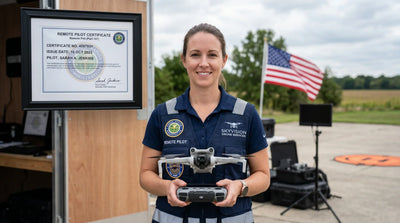
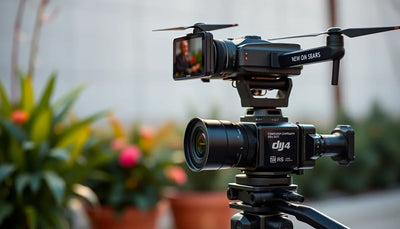
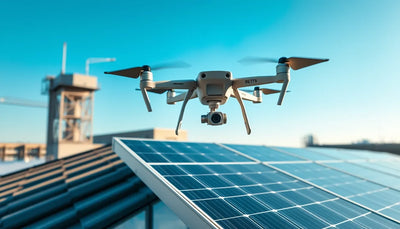
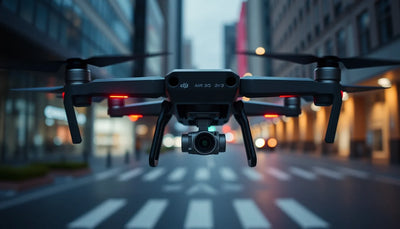
Technical view: Drone Pilot Course for Topography in S?o Paulo Featuring the DJI Mavic 4 Pro

A: Yes, with caveats. The Standard model lacks a mechanical shutter and relies on rolling-shutter capture, which introduces sub-pixel distortion visible in orthomosaics when flying above 8 m/s. For smaller sites under 20 hectares, placing 8–12 ground control points and flying at 10 m/s can yield 4–5 cm horizontal accuracy — acceptable for preliminary feasibility studies but insufficient for cadastral-grade deliverables. The course curriculum covers GCP-dense workflows specifically for non-RTK setups, so students who later upgrade to the RTK package through Reboot Hub (starting at $2,729 USD Flawless A+) can immediately transition to reduced-GCP methodologies.

Q: What happens if my Reboot Hub drone arrives with a defect?

A: Every Reboot Hub drone undergoes a 40-point inspection before shipping, but if a transit-related issue or latent defect surfaces, the 180-day warranty covers it. Contact Reboot Hub's support team within the warranty window, and they will either ship a replacement unit within 48 hours or direct you to their Hong Kong drop-off facility for chip-level repair — average turnaround is 3–5 days. Shipping costs for warranty claims are covered by Reboot Hub in both directions. All repairs use genuine OEM parts installed by MOHRSS Level 3 certified technicians, the same qualification tier that services DJI's enterprise fleet in Asia-Pacific.

Q: Is the Mavic 4 Pro compatible with Brazilian GNSS correction networks?

A: The Mavic 4 Pro RTK's D-RTK 3 mobile station receives NTRIP corrections over 4G, and it is fully compatible with IBGE's RBMC-IP network, which provides free RTK corrections across São Paulo state. During the topography course, instructors demonstrate how to configure NTRIP credentials for the RBMC-IP caster (ntrip.ibge.gov.br:2101) and how to set up a local base station using known survey monuments when cellular coverage is unreliable. The PPK backup workflow — which logs raw RINEX observations onboard — remains functional even in complete signal loss scenarios, making the system robust for remote topographic surveys in the interior.

Q: How many batteries do I realistically need for a full day of topographic mapping?

A: With the Mavic 4 Pro's 38-minute mapping endurance at 12 m/s, a single battery covers roughly 250 hectares per flight. For a typical 8-hour field day — accounting for battery swaps, site relocation, and GCP placement — four batteries provide approximately 6 effective flight hours, covering 1,000–1,200 hectares total. The Fly More Combo includes three batteries; adding a fourth costs $209 USD new or approximately $145 USD through Reboot Hub's pre-owned accessories inventory. The São Paulo course provides all batteries during training, so students can test both three-battery and four-battery workflows before committing to a purchase.

Q: What is the difference between Flawless A+ and Pristine Pre-Owned A grades at Reboot Hub?

A: Flawless (A+) drones are activation-only units — the original packaging was opened and the drone was powered on, but it has zero flight hours and zero takeoffs logged. They are indistinguishable from factory-new units in appearance and performance. Pristine Pre-Owned (A) drones have minimal flight time (typically 5–20 hours) and zero visible marks on the airframe, gimbal, or remote controller. Both grades pass the identical 40-point inspection and receive the same 180-day warranty. The price difference — roughly $390 USD on the RTK package — reflects the flight-hour delta only. For topography professionals who will log hundreds of hours anyway, the Pristine A grade at $2,339 USD offers unmatched value.

Edellinen viesti
Seuraava postaus

Jätä kommentti

Huomaa, että kommentit on hyväksyttävä ennen kuin ne julkaistaan.

Kiitos tilaamisesta!

Tämä sähköposti on rekisteröity!

Osta ulkoasua

Valitse vaihtoehdot

Muokkaa vaihtoehtoa
Back In Stock Notification
this is just a warning
Kirjaudu sisään
Ostoskori
0 kohteita
0%