Support & Learning / Module 5 of 9
Camera, Gimbal and Payload
Before this lesson: How DJI Drones Transmit Commands, Telemetry and Live Video
What you will understand
- Understand imaging, stabilization and payload roles.
- Separate observable evidence from assumptions before choosing an action.
- Continue through the main lesson path or enter a focused topic branch when needed.
Quick answer
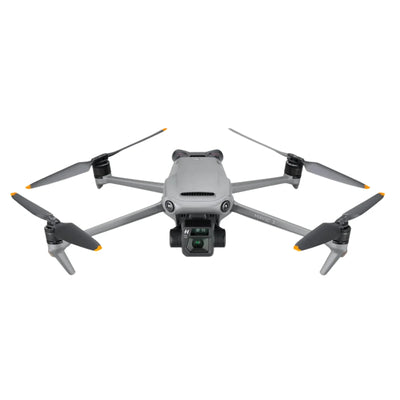
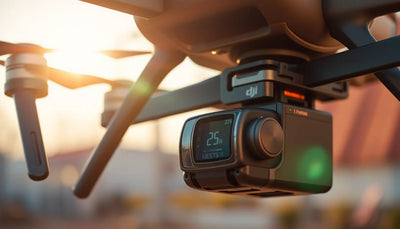
A drone camera, gimbal and payload are one working imaging system, but they do different jobs. The lens and image sensor turn light into image data. Exposure and processing shape the result. The three-axis gimbal controls camera orientation while the aircraft moves. A payload adds a mission-specific sensor or tool and must be supported by the exact aircraft, mount, power, data and software combination. A poor image therefore does not automatically prove a failed gimbal, and a moving gimbal does not prove that the stored file is healthy.
How does a drone turn light into a usable image?
The path begins before software. Light from the scene passes through a lens, which directs it onto the image sensor. Each light-sensitive area contributes information that becomes a digital image after readout and processing. Focus determines where detail is resolved. Exposure determines how much light is represented. Color processing, noise reduction, sharpening, compression and the selected recording format influence what the pilot previews and what the camera stores.
The lens and sensor should be understood as a pair. Field of view, focus behavior, aperture where the design provides control, sensor area and readout behavior all shape the result. A larger sensor can create useful advantages in some conditions, but it does not automatically make every image better. Light, lens quality, focus, exposure, movement, processing, operator choices and the required deliverable still matter.
A buyer therefore needs more than a camera label. The exact aircraft and camera path, visible lens condition, supplied filters or guards, storage support and available original-file evidence should be clear. Reboot Hub treats unknowns as part of the record: if a mode, accessory or scene was not tested, it should not be replaced by a generic promise.

How do shutter speed, aperture, sensitivity and filters change the result?
Shutter time changes how long movement is integrated into one frame. A shorter exposure can hold fast detail more sharply but may require more light or sensitivity. A longer exposure can show more motion blur and may be useful for a chosen visual result, but it also makes aircraft or subject movement more visible. Video frame rate and shutter choice work together, yet one remembered ratio is not a universal rule for every scene, camera or deliverable.
Aperture, when the exact camera provides an adjustable one, changes both incoming light and optical behavior. Sensitivity changes how strongly the captured signal is represented and can make noise or limited highlight range more visible. Neutral-density filters reduce incoming light so the operator can preserve a deliberate exposure strategy in bright conditions. They do not upgrade the sensor, and an incorrect mount can obstruct the camera or affect gimbal clearance.
The useful process is to define the desired result first: still detail, natural-looking motion, low-light evidence, inspection visibility or consistent footage across cameras. Then set exposure using the controls actually available on that model. The DJI ND filter guide owns exact-fit and density decisions; this lesson owns the wider reason those decisions affect the imaging chain.
What is rolling shutter, and why can motion distort an image?
Some image sensors do not capture every row at precisely the same instant. During readout, fast subject motion, rapid aircraft rotation or vibration can change the scene before the frame is fully sampled. The result can appear skewed, bent or wavy. This is commonly described as rolling-shutter distortion. A sensor designed for a different readout method can behave differently, so the exact camera matters.
Rolling-shutter distortion is not the same as ordinary motion blur, and neither is automatically a gimbal motor fault. Motion blur follows exposure time and movement during the exposure. Repeating waves or jello can also track propulsion vibration, damaged propellers, airframe condition, wind, accessory fit or stabilization limits. The original file and the conditions under which it was recorded are stronger evidence than a compressed social-media clip.
When a defect appears, record the camera mode, frame rate, shutter setting where available, aircraft movement, wind, propeller and airframe condition, accessory fit and whether the pattern appears in the stored file. That evidence narrows the question without turning one visual artifact into an invented component diagnosis.
What does a three-axis gimbal actually stabilize?
A three-axis gimbal controls camera orientation around tilt, roll and pan within the mechanical and control limits of the exact design. Motors apply correction while position feedback and control electronics track the assembly. The aircraft's attitude estimate supplies a wider reference, while the gimbal has its own physical movement, suspension and control behavior. The systems cooperate, but they should not be treated as one unnamed part.
This distinction explains why symptoms need separate names. A tilted horizon is a roll-reference observation. Restricted travel, scraping or abnormal sound points toward obstruction or physical condition. Jello can follow vibration through the aircraft. A frozen camera view can occur even while the gimbal completes its startup movement. A camera can record a poor file while remaining mechanically level.
Calibration can be relevant when the supported interface and exact symptom call for it, but it is not a repair for impact damage, binding, moisture or a failed image path. Use the gimbal calibration lesson for the supported routine and the 40011 and 40021 warning branch when those exact warnings appear.

How are aircraft attitude and gimbal horizon related?
The flight controller uses inertial and other sensor evidence to estimate aircraft motion and attitude. The gimbal then controls camera orientation relative to that moving platform. If aircraft-attitude evidence is abnormal, the visible horizon can be affected even when the camera assembly is unobstructed. Conversely, a local gimbal alignment or mechanical condition can produce a visible offset while the aircraft otherwise reports normal attitude.
Do not hide that difference by running every available calibration. Preserve the exact warning, place the powered-off aircraft on a stable surface, check for visible obstruction or damage, and compare what the airframe reports with what the camera shows. The IMU calibration guide owns the aircraft-attitude branch and explains when a supported IMU action is relevant.
A completion message proves only that one software routine reached its programmed end. It does not prove that the lens, image sensor, dampers, motors, payload fit, airframe or stored footage has passed a wider acceptance test. Return-to-use requires separate evidence.
What is the difference between live view and the stored file?
The live camera view helps the pilot frame, inspect and maintain situational awareness. It is carried through the aircraft-controller display path described in Module 4. The stored file is written by the camera system to supported media or internal storage where available. These paths can share source imagery while serving different constraints.
A usable preview does not prove the stored recording is complete, correctly focused or free from file and storage problems. A poor preview does not by itself prove the original file is poor. Compare both. Record whether the camera can start and stop recording, whether the file opens, whether duration and image behavior are plausible, and whether the same symptom appears in an original file rather than only in a messaging-app copy.
This separation is especially useful after impact, moisture, intermittent connection or a storage warning. It prevents a buyer or technician from replacing a gimbal because the display path failed, or blaming the radio link because the stored file contains exposure, focus or vibration evidence.
What does payload mean on consumer and enterprise drones?
On many consumer aircraft, the camera and gimbal are an integrated payload: they are designed as part of that exact airframe rather than chosen independently. Filters and supported accessories can still affect fit, clearance and use, but the aircraft is not an open platform for any camera that appears small enough.
Enterprise aircraft can support detachable cameras, thermal sensors, mapping cameras, spotlights, speakers or other mission equipment, depending on the exact platform. Compatibility is multi-dimensional. The mount must be supported, the aircraft must carry and control the payload, power and data paths must match, the controller and software must expose the intended functions, and the full system must suit the task and local operating requirements.
Physical attachment alone is not proof. Never improvise an unsupported payload, wiring or firmware path from a generic article. Check current exact-model documentation and the model reference in the Drone Wiki. If equipment is being purchased, require the aircraft, payload, controller, supplied kit and known limitations to be identified in writing.

Which evidence separates camera, gimbal, attitude and payload concerns?
The first record should be descriptive rather than diagnostic. Name the exact aircraft and payload, the warning text, the visible behavior, the flight or bench state, the recent history and what continued to work. Preserve original files and a short startup observation where safe. Stop before powered testing if the structure, battery, moisture condition or free movement is uncertain.
| Observed concern | Evidence to preserve | Decision boundary |
|---|---|---|
| Soft, dark, noisy or incorrectly exposed image | Original file, settings, lens and filter condition, focus behavior and scene light. | Review image capture before assigning a gimbal fault. |
| Tilted horizon or restricted movement | Startup movement, stable reference, warning, obstruction, impact and attitude evidence. | Separate supported calibration from damage or aircraft attitude. |
| Jello or vibration | Original footage, propeller and airframe condition, wind, accessory fit and repeatability. | Inspect the whole motion path, not only the gimbal. |
| No live view or no stored file | Controller status, recording state, storage evidence, original file and physical history. | Separate display, link, capture and storage paths. |
| Payload not recognised or unavailable | Exact aircraft, mount, payload, controller, software, supplied cables and warning. | Confirm supported compatibility before hardware diagnosis. |

How should workshop experience be used without turning it into a universal claim?
Workshop case evidence can reveal valuable symptom families. A technician may observe no image while the gimbal still moves, a warning after impact, restricted travel from physical contact, or a problem that changes between preview and stored media. Those patterns improve the questions asked at intake.
The boundary is equally important. One exact model, board revision, impact event or repair result does not become a universal component diagnosis. Private board documentation and internal service procedures are not public owner instructions. A public lesson should preserve the symptom, evidence and safe stop condition, then route internal work through a documented professional scope.
This protects both the reader and the value of real repair experience. The lesson remains technically useful without inviting unsupported disassembly or presenting a case observation as certainty.
How does Reboot Hub remove camera and payload worries before a decision?
We begin from the customer's actual outcome: the footage, inspection evidence, mapping input or field record the system must produce. Then we identify the exact aircraft, camera or payload, controller, supplied accessories, visible condition and evidence that is available for that unit. Known omissions and untested functions remain visible instead of being hidden behind a polished grade or generic tested label.
For equipment selection, the camera and gimbal inventory path is relevant only after exact compatibility and intended use are clear. For a suspected fault, the professional repair route starts with diagnosis, a written scope and approval. The Reboot Hub Standard explains how condition evidence, supplied items, known limits and written terms are handled.
That is what premium support means here: think from the customer's concern, remove every uncertainty that evidence can reasonably remove, state the remaining boundary in writing, and offer the next action only when it fits the exact system.
Which focused camera or gimbal lesson should you use next?
This cornerstone owns the broad imaging-system explanation. The following pages remain independent because they answer narrower action intents. Choose the branch that matches the evidence, then return to the main path.
| Your exact intent | Best next lesson |
|---|---|
| Tilted horizon or supported calibration | Use the focused gimbal calibration lesson. Open branch. |
| DJI error 40011 or 40021 | Preserve the exact warning and use the warning-specific branch. Open branch. |
| ND filter fit or exposure strategy | Match the exact camera, filter mount and exposure goal. Open branch. |
| Aircraft attitude may affect the view | Separate IMU and aircraft-attitude evidence from the gimbal. Open branch. |
| Pocket 2 camera, gimbal or power symptom | Use the exact Pocket 2 repair evidence route. Open branch. |
| Pocket 3 camera, screen or gimbal symptom | Use the exact Pocket 3 repair evidence route. Open branch. |
What should you remember before Module 6?
Follow the image from source to result. The lens and sensor capture light. Exposure, processing and storage shape the file. The gimbal controls camera orientation. Aircraft attitude provides a wider reference. A payload adds mission capability only when the full aircraft, mount, power, data, software and task are compatible.
Carry the same evidence habit into the next module. Camera stability depends on the physical aircraft, and the aircraft depends on controlled thrust and reliable power. Module 6 follows energy from the battery through the power system, ESCs, motors and propellers, then shows how condition evidence changes a safe decision.
Keep exploring
Further reading
From Kronika Reboot Hub


From Průvodci drony