Treci la conținut

Available 24/7: (852) 5537 6652

Drone para Mapeamento Topográfico no Brasil: Bateria, Rendimento, Calor e Umidade

de LauThomas 22 Jun 2026 0 comentarii

Quick Answer

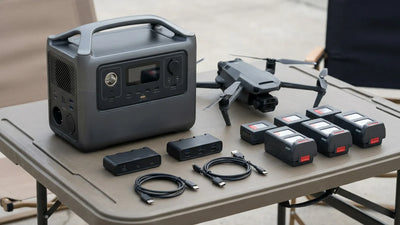
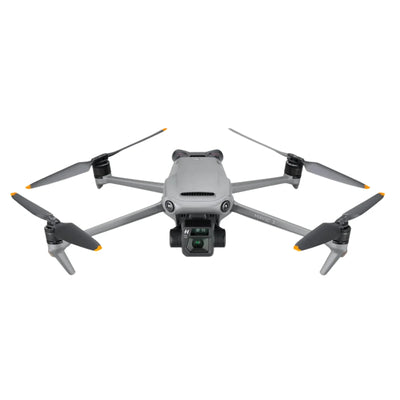
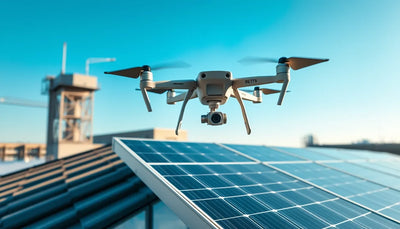
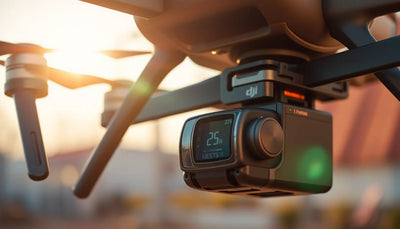
Drone para Mapeamento Topográfico no Brasil Bateria Rendimen - drone camera gimbal and sensors close-up product shot
  • Best drone for tropical topographical mapping: DJI Phantom 4 RTK — 30-minute flight time, mechanical shutter, RTK accuracy to 1 cm, pre-owned A-grade from $2,350 USD at Reboot Hub vs. $7,500+ new.
  • Battery degradation in Brazilian heat (30-38°C): Expect 15-22% shorter flight times vs. lab specs. A Phantom 4 RTK rated at 30 minutes typically delivers 23-25 minutes on-site in Mato Grosso or Pará summer conditions.
  • Humidity impact: Operating above 75% RH risks condensation on internal optics and circuit boards. DJI Mavic 3 Enterprise and Matrice 300 RTK carry IP45 or better moisture resistance — critical for Amazon basin and coastal survey work.
  • Pre-owned vs. new cost savings: Reboot Hub's Pristine Pre-Owned DJI Matrice 300 RTK starts at $7,800 USD (new: $14,600+), with 180-day warranty and DDP shipping to Brazil — no customs surprises.
  • Battery hot-swap workflow: For large-area mapping (500+ hectares per day), budget 6-8 TB60 intelligent flight batteries per M300 RTK unit. Pre-owned TB60 packs at Reboot Hub run $480 USD each, roughly 40% below DJI MSRP.

What Makes a Drone Suitable for Topographical Mapping in Brazil's Climate?

Brazil presents one of the most demanding operational environments for survey drones anywhere in the world. The combination of equatorial heat (ambient temperatures routinely reaching 37°C in states like Tocantins and Mato Grosso), sustained humidity above 80% in the Amazon basin and coastal Northeast, and sudden tropical rain storms means that off-the-shelf consumer drones simply cannot deliver reliable photogrammetry results. For a drone to perform consistent topographical mapping across Brazilian terrain, it must have three non-negotiable characteristics: a mechanical shutter for distortion-free imagery at speed, an RTK or PPK positioning system accurate to within 2 cm horizontal and 5 cm vertical, and battery chemistry robust enough to handle sustained discharge at elevated temperatures without triggering auto-land protection. The DJI Phantom 4 RTK remains the workhorse of Brazilian survey firms precisely because its mechanical shutter eliminates rolling shutter distortion — a critical factor when flying grid missions over undulating terrain at 8-12 m/s. However, the DJI Mavic 3 Enterprise with the RTK module has gained traction in 2024 for corridor mapping and smaller parcel surveys (up to 120 hectares per battery cycle) due to its 20 MP mechanical shutter and 45-minute rated endurance. The critical variable most operators overlook is thermal throttling: LiPo and Li-ion battery packs operating above 40°C internal temperature experience measurable voltage sag, which reduces effective flight time by anywhere from 18% to 25% compared to controlled-condition specifications.

Related: Budget NDVI Drone for Wheat Farm Mapping Saudi Arabia Under

How Much Does a Professional Mapping Drone Cost in Brazil — New vs. Pre-Owned?

Import duties, ICMS taxes, and freight logistics make new drone acquisition in Brazil extraordinarily expensive. A new DJI Phantom 4 RTK kit, including the D-RTK 2 mobile station, typically retails for $7,500 to $8,200 USD equivalent after import taxes when purchased through Brazilian distributors. The DJI Matrice 300 RTK — essential for LiDAR payloads like the Zenmuse L1 — easily climbs past $15,000 USD with a single battery set. Reboot Hub's Pristine Pre-Owned program provides a direct cost-reduction path without sacrificing inspection rigor. An A-grade Phantom 4 RTK (minimal use, zero visible marks, 40-point inspection verified) costs $2,350 USD with DDP shipping to São Paulo, Rio de Janeiro, or Brasília — meaning the price you see at checkout is the final price, with all duties and taxes pre-cleared. A Flawless A+ Mavic 3 Enterprise (activation-only, never flown operationally) runs $2,980 USD, versus $4,600+ new. For enterprise-grade LiDAR work, a Pristine Pre-Owned Matrice 300 RTK airframe at $7,800 USD represents a 47% savings compared to new retail. Every unit ships with genuine OEM batteries that have undergone individual cell voltage testing at Reboot Hub's Shenzhen facility by MOHRSS Level 3-certified technicians, ensuring internal resistance values stay below 12 milliohms — the threshold above which heat-induced voltage drop accelerates.

Related: Best Affordable Drones for Real Estate Aerial Photography 20

Model New Price (USD, Brazil import) Reboot Hub Pristine Pre-Owned (USD, DDP) Max Flight Time (spec) Real-World Time (32°C, 70% RH) Positional Accuracy
Phantom 4 RTK $7,800 $2,350 30 min 23-25 min 1 cm + 1 ppm
Mavic 3 Enterprise (RTK) $4,600 $2,980 45 min 36-39 min 1.5 cm + 1 ppm
Matrice 300 RTK (no payload) $14,600 $7,800 55 min 42-46 min 1 cm + 1 ppm
Phantom 4 Pro V2 (PPK-mod) $4,200 $1,680 28 min 21-23 min 3-5 cm (PPK post-proc)

How Do Heat and Humidity Actually Reduce Drone Battery Performance?

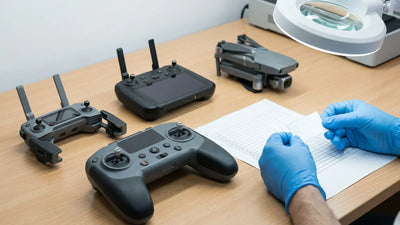
Drone para Mapeamento Topográfico no Brasil Bateria Rendimen - drone controller in hands showing live camera feed

The physics is straightforward but the operational consequences are severe. Lithium-polymer and lithium-ion cells experience accelerated internal resistance growth when discharged at temperatures above 35°C. A TB60 intelligent flight battery used in the Matrice 300 RTK has a nominal internal resistance of 8-10 milliohms when new and at 25°C ambient. At 38°C — a typical mid-morning temperature for a survey flight in Goiás or Mato Grosso do Sul during September — that same cell climbs to 14-16 milliohms. The result is a double penalty: the battery wastes more energy as heat (reducing usable capacity by 12-18%) and the drone's flight controller detects the voltage sag earlier, triggering the return-to-home protocol with 20-25% of the battery's rated watt-hours still chemically present but electrically inaccessible. Brazilian operators running large-area photogrammetry blocks — say, 800 hectares of sugarcane plantation near Ribeirão Preto — should plan their flight lines assuming 75% of the manufacturer's stated endurance and budget an extra 2-3 battery packs per drone per day compared to temperate-climate operations. Humidity adds a second failure mode: DJI's intelligent batteries use gold-plated pin connectors and internal BMS boards that resist mild condensation, but sustained operation in 85%+ RH environments (common in Manaus year-round and along the Serra do Mar escarpment) can cause micro-corrosion on the battery communication pins over 50-80 charge cycles. Reboot Hub's 40-point inspection specifically tests connector oxidation under 10x magnification and replaces any pin showing resistance above 3 milliohms at the contact interface.

Which Drone Models Handle Brazil's Terrain and Climate Best?

Three platforms dominate Brazilian topographical mapping workflows, each suited to distinct project scales. The DJI Phantom 4 RTK remains the default choice for cadastral surveys, construction site monitoring, and agricultural plot mapping up to 300 hectares per day. Its 1-inch 20 MP sensor paired with a mechanical shutter generates orthomosaics with ground sampling distances (GSD) of 2.4 cm at 100 m altitude — perfectly adequate for 1:500 scale topographic plans. The DJI Mavic 3 Enterprise excels in linear infrastructure corridors (transmission lines, pipeline right-of-way surveys) where its 45-minute spec endurance and 20 MP mechanical shutter allow single-battery coverage of 2.5 km linear transects at 120 m altitude with 80% forward overlap. For large-scale mining and forestry inventory across the Carajás mineral province or eucalyptus plantations in Espírito Santo, the DJI Matrice 300 RTK with a Zenmuse L1 LiDAR payload is the only practical choice — it penetrates canopy gaps that photogrammetry cannot resolve, delivering ground-point density exceeding 200 points per square meter even under partial vegetation. The M300 RTK's IP45 ingress protection rating means it can complete a 45-minute LiDAR mission in light rain that would ground a Phantom 4 RTK immediately. All three models are available through Reboot Hub at 40-55% below new retail, with genuine OEM battery sets that carry the same 180-day warranty as the airframe.

Why Buy from Reboot Hub?

Reboot Hub operates on a single principle: a pre-owned drone should perform identically to a factory-new unit. Every airframe — whether a Flawless A+ Phantom 4 RTK with zero flight hours beyond factory activation or a Pristine Pre-Owned Matrice 300 RTK with light use — passes through a 40-point inspection at the Shenzhen technical center before it ships. The inspection covers sensor calibration deviation (must be within 0.3% of factory spec), gimbal motor resistance across all three axes, IMU drift rate, battery cell voltage balance (maximum 15 mV delta across cells), and a full-power hover test that logs real-world flight time against the battery's cycle-count-adjusted benchmark. All replacement parts are genuine OEM — Reboot Hub does not use third-party gimbals, aftermarket batteries, or refurbished ESCs. The 180-day warranty covers any electrical or mechanical failure not caused by pilot error, and MOHRSS Level 3-certified technicians at the Shenzhen chip-level repair facility can turn around a board-level repair in 3-5 business days, with a Hong Kong drop-off option for Brazilian operators who ship equipment through Asia-Pacific logistics channels. DDP shipping means the price displayed at checkout — whether $2,350 for a Phantom 4 RTK or $7,800 for an M300 RTK — is exactly what you pay. No customs holds, no ICMS calculations, no brokerage fees. For Brazilian survey firms signing contracts with fixed equipment budgets, that predictability eliminates the single largest pain point in drone procurement.

Frequently Asked Questions

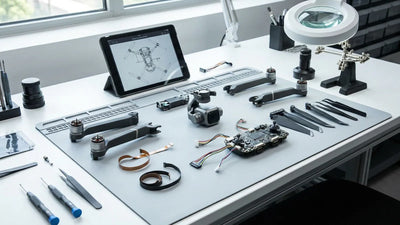
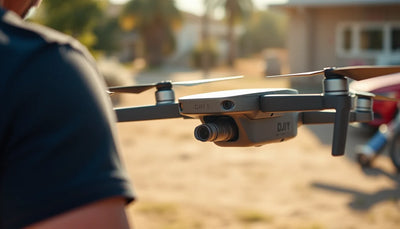
Drone para Mapeamento Topográfico no Brasil Bateria Rendimen - drone accessories arranged in flat-lay product layout

Q: How many batteries do I need for a full day of topographical mapping in Brazil?

A: Plan on 6 to 8 fully charged batteries per drone for an 8-hour field day, assuming you are mapping at 100-120 m altitude with 75% front overlap and 60% side overlap. A Phantom 4 RTK consuming 23-25 minutes of real-world flight per pack will cover approximately 45-55 hectares per sortie. Six packs enable roughly 270-330 hectares of coverage before accounting for battery swaps, data offload, and site transit. If you use a Matrice 300 RTK with TB60 batteries, 4 packs will cover a similar total area thanks to longer per-flight endurance (42-46 minutes real-world), but the cost per pack is higher — pre-owned TB60 units at Reboot Hub run $480 USD each, so a 4-pack field kit adds approximately $1,920 to your equipment budget. Always carry a portable charging station; the DJI BS60 intelligent battery station can charge 8 TB60 packs simultaneously in 70 minutes from a 220V generator, which is standard on Brazilian project sites.

Q: Can I use a standard DJI consumer drone for topographical surveys, or do I need RTK?

A: Standard consumer drones like the DJI Air 3 or Mini 4 Pro lack mechanical shutters and RTK positioning, making them unsuitable for professional topographical mapping where horizontal accuracy must stay within 5 cm. A drone without a mechanical shutter introduces rolling shutter distortion during forward motion — objects appear stretched or compressed, producing orthomosaic errors of 15-40 cm at 100 m altitude, which fails even basic 1:2000 scale mapping standards. RTK/PPK positioning provides direct georeferencing, eliminating the need for 12-15 ground control points (GCPs) per 100 hectares. With an RTK-enabled drone like the Phantom 4 RTK or Mavic 3 Enterprise RTK, you can reduce GCP count to 3-4 checkpoints, slashing surveying labor by approximately 60% per project. At Reboot Hub, a Pristine Pre-Owned Phantom 4 RTK costs $2,350 — roughly $500 more than a new consumer-grade Air 3S Fly More combo, but delivers survey-grade accuracy that the consumer drone cannot approach.

Q: What happens to flight time when I fly in 35°C+ temperatures common in Brazil's Center-West?

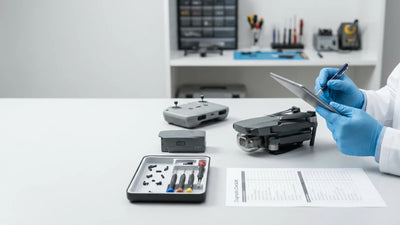
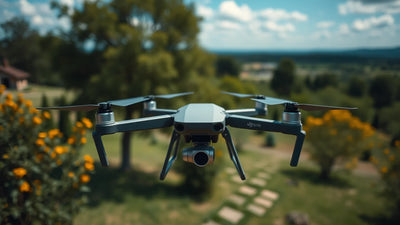
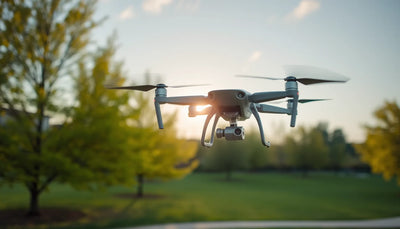
Drone para Mapeamento Topográfico no Brasil Bateria Rendimen - aerial landscape view captured from drone perspective

A: At 35°C ambient, a Phantom 4 RTK battery that delivers 28 minutes at 22°C lab conditions will typically deliver 22-24 minutes of usable flight time before the low-battery RTH triggers. The loss comes from two sources: increased internal resistance wastes roughly 8-10% of stored energy as heat within the battery, and the drone's propulsion system draws 6-8% more current to generate equivalent lift in thinner hot air. For a Matrice 300 RTK flying at 38°C in Mato Grosso, expect 42 minutes from a TB60 pair instead of the rated 55 minutes. Mitigation strategies include storing batteries in an insulated cooler (not directly on ice — target 22-25°C storage temperature before flight), launching before 10:00 AM when ambient temperatures are below 30°C, and reducing payload mass where possible. Reboot Hub's battery testing includes a thermal chamber cycle at 35°C to verify that internal resistance stays below 15 milliohms under load, ensuring the pack meets operational spec for tropical use.

Q: Is the DJI Matrice 300 RTK worth the investment for a small Brazilian survey firm?

A: For firms handling more than 1,500 hectares of topographical mapping per month, the Matrice 300 RTK produces a measurable return on investment within 8-14 months. The platform's key advantage is payload flexibility: a single airframe can carry a Zenmuse P1 45 MP full-frame photogrammetry camera for open-terrain mapping (covering 3 square kilometers per flight at 1.5 cm GSD) and swap to a Zenmuse L1 LiDAR for vegetated terrain the same afternoon. The L1 captures 240,000 points per second with a 450-meter range, enabling ground classification under eucalyptus canopy that photogrammetry simply cannot resolve. At Reboot Hub's Pristine Pre-Owned price of $7,800 USD for the airframe (versus $14,600 new), the capital outlay is 47% lower, making the platform accessible to firms with annual equipment budgets in the $15,000-$25,000 range. Pair it with a pre-owned P1 sensor (available at approximately $3,200) and you have a complete large-area mapping system for roughly $11,000 — less than the cost of two new Phantom 4 RTK kits.

Q: How does DDP shipping to Brazil work, and what does it include?

A: DDP (Delivered Duty Paid) shipping means Reboot Hub handles the entire logistics chain from Shenzhen or Hong Kong to your specified Brazilian address, with all import duties, ICMS state tax, federal IPI tax, customs brokerage fees, and freight costs included in the listed price. For a typical drone shipment valued at $2,500-$8,000, Brazilian import taxes can add 60-93% to the declared value depending on the state of entry — a $3,000 drone can easily become a $5,500 total landed cost without DDP. Reboot Hub's DDP terms eliminate this uncertainty. Shipments typically clear customs through São Paulo (GRU) or Rio de Janeiro (GIG) within 5-8 business days and arrive at your door within 12-16 business days from order confirmation. Every package is fully insured against loss or damage during transit, and the 180-day warranty begins on the delivery date, not the ship date. For firms in Manaus or other Zona Franca de Manaus locations, Reboot Hub can coordinate separate logistics to leverage available tax incentives — contact support before ordering to confirm routing.

Q: What is the difference between Flawless (A+) and Pristine Pre-Owned (A) grading at Reboot Hub?

A: Flawless (A+) units are activation-only drones — the original owner purchased and activated the drone but never flew it operationally. Battery cycle count is 0 to 2 cycles, and the airframe shows zero signs of handling beyond factory packaging removal. These units are functionally pre-owned and carry the same 180-day warranty as all Reboot Hub inventory. Pristine Pre-Owned (A) units have been flown operationally but show zero visible marks upon close inspection — no scuffs on landing gear, no micro-scratches on the camera lens barrel, and no cosmetic wear on the controller. Battery cycle counts range from 5 to 35 cycles, with each pack individually tested to confirm at least 92% of rated capacity retention. For Brazilian mapping operations, an A-grade Phantom 4 RTK at $2,350 USD delivers identical photogrammetric output to a new unit at 70% less cost, while an A+ Flawless Mavic 3 Enterprise at $2,980 suits buyers who want the absolute lowest cycle count possible. Both grades include DDP shipping and full warranty coverage.

Q: How does Reboot Hub's warranty and repair process work for customers in Brazil?

A: Every drone sold by Reboot Hub includes a 180-day warranty covering electrical and mechanical failures, including battery cell imbalance exceeding 25 mV, gimbal motor failure, IMU drift beyond 0.5% tolerance, and ESC or flight controller board faults. If a warranty claim is approved, Reboot Hub provides two paths: ship the unit back to the Shenzhen chip-level repair facility (3-5 day turnaround) or, for customers with Asia-Pacific logistics access, drop off at the Hong Kong intake center for same-week processing. Repair technicians hold MOHRSS Level 3 certification — China's highest industrial electronics repair credential — and use genuine OEM components exclusively. For non-warranty repairs (crash damage, water exposure, third-party accessory failure), the same Shenzhen facility provides quoted repair services with typical costs 40-60% below DJI's official repair center rates. Brazilian customers typically budget $60-$120 USD for return shipping on out-of-warranty repairs, depending on the airframe size. All repaired units undergo the full 40-point inspection before return shipping.

Postarea anterioară
Postarea următoare

Lasă un comentariu

Vă rugăm să rețineți că comentariile trebuie aprobate înainte de a fi publicate.

Multumesc pentru abonare!

Acest e-mail a fost înregistrat!

Cumpărați aspectul

Alegeți opțiuni

Opțiune de editare
Back In Stock Notification
this is just a warning
Log in
Cărucior de cumpărături
0 articole
0%