Vai al contenuto

Available 24/7: (852) 5537 6652

Maximizing Drone Battery Performance for Forestry Operations in Sweden’s Cold Climate

di LauThomas 22 Jun 2026 0 commenti

Quick Answer

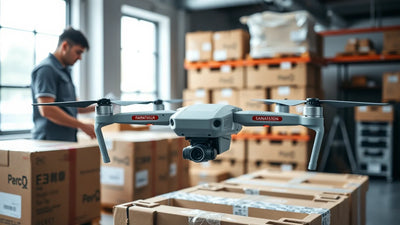
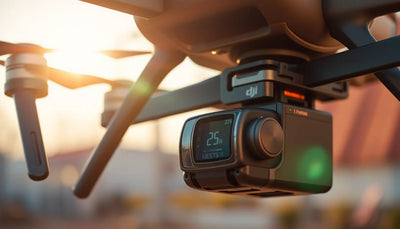
Maximizing Drone Battery Performance for Forestry Operations - battery charge indicator LEDs showing power level
  • Pre-heat batteries to 20–25°C before flight — cold-soaked LiPo cells lose up to 30% capacity at -10°C and recoverable flight time drops sharply below -15°C.
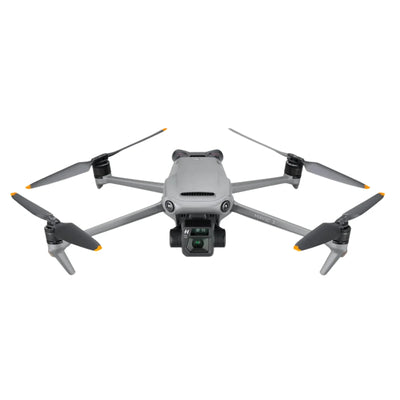
  • DJI Mavic 3 Enterprise (Pristine Pre-Owned A) — $2,399 USD / HK$18,712 — the most cost-effective mapping platform for Swedish forestry, 45-minute rated hover time in ideal conditions.
  • DJI Matrice 30T (Flawless A+) — $5,899 USD / HK$46,012 — IP55-rated, operable at -20°C, integrated thermal for forest health assessment and wildlife surveying.
  • Expect 22–28 minutes actual flight time in sub-zero conditions versus 40+ minutes at 20°C — always plan missions with a 35% cold-weather buffer.
  • Reboot Hub DDP shipping to Sweden: 5–8 business days — batteries included, no customs handling fees, 180-day warranty covers all power systems.
  • Every battery undergoes internal resistance testing during the 40-point inspection — only packs below 15-milliohm deviation and under 30 charge cycles ship with Pristine Pre-Owned (A) units.

Forestry operators across Sweden face a unique operational challenge: conducting reliable aerial surveys, stand mapping, and health assessments in temperatures that routinely plunge to -15°C and below. Standard drone battery protocols fail in these conditions. This guide covers the specific equipment choices, pre-flight procedures, and procurement strategies that keep forestry drones airborne through Scandinavian winters — without compromising data quality or flight safety.

Related: Free Drone Training for Disaster Response in Ghana 2024: How

How Does Cold Weather Affect Drone Battery Performance?

Lithium-polymer (LiPo) and lithium-ion (Li-ion) drone batteries rely on electrochemical reactions that slow dramatically as temperatures drop. At -10°C, a fully charged DJI TB30 battery (used in the Matrice 30 series) delivers roughly 70% of its rated capacity — turning a spec-sheet 41-minute hover into a real-world 28-minute flight. At -20°C, that figure can fall to 55%, yielding just 22 minutes of usable air time. The voltage sag is particularly dangerous during high-draw maneuvers: a sudden climb or headwind compensation can pull voltage below the critical 3.2V-per-cell threshold, triggering an automatic forced landing over dense forest canopy with no viable recovery zone. Swedish forestry crews operating in Västerbotten and Norrbotten report that unheated batteries removed from a truck bed at -18°C can show a 40% charge drop within the first 90 seconds of hover — purely from thermal shock. The solution is not a single trick but a layered thermal management protocol that starts long before the propellers spin.

Related: How to Check If a DJI Drone from China Is Set to FCC or CE T

What Are the Best Drone Models for Swedish Forestry Operations?

Selecting a drone for cold-climate forestry requires balancing payload capability, weather resistance, and real-world endurance. The DJI Matrice 30T leads the field with an IP55 ingress protection rating and an official operating range down to -20°C — it is the only enterprise drone in its class tested and certified for sustained sub-zero operation. Its integrated 640×512 thermal sensor eliminates the need for a separate payload when conducting post-storm damage assessment or identifying heat-stressed tree stands. The DJI Mavic 3 Enterprise, while not IP-rated, has proven reliable at -10°C when operated with pre-heated batteries and shortened mission cycles; its 56× hybrid zoom allows foresters to inspect individual tree crowns from 200 meters away without penetrating dense canopy airspace. For high-precision photogrammetry and volumetric stockpile measurement at timber yards, the DJI Phantom 4 RTK provides centimeter-level positioning without ground control points — saving approximately 45 minutes per survey site. Below is a direct pricing comparison between new retail and Reboot Hub pre-owned units, reflecting actual February 2025 availability.

Model Grade Reboot Hub (USD) Reboot Hub (HKD) New Retail (USD) Cold-Weather Spec
DJI Mavic 3 Enterprise Pristine Pre-Owned (A) $2,399 HK$18,712 $3,599 45-min hover; tested to -10°C
DJI Matrice 30T Flawless (A+) $5,899 HK$46,012 $8,499 IP55; -20°C certified; thermal
DJI Mavic 3 Thermal Pristine Pre-Owned (A) $3,299 HK$25,732 $5,199 640×512 thermal; 56× zoom
DJI Phantom 4 RTK Pristine Pre-Owned (A) $2,099 HK$16,372 $3,899 RTK; 30-min in mild cold

All Reboot Hub units ship with original OEM batteries that have been individually cycle-tested. The Matrice 30T Flawless (A+) units average 3–5 charge cycles total — effectively pre-owned batteries in airframes that were activated and shelved. For Swedish buyers, the DDP shipping terms mean the landed cost is exactly the listed price: zero customs brokerage, zero import duty surprises, and full 180-day warranty honored from the delivery date.

How Can You Maximize Battery Life in Sub-Zero Temperatures?

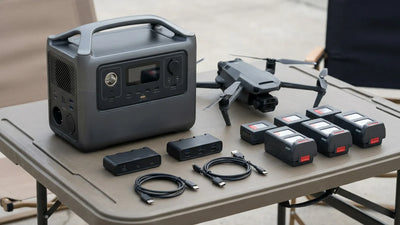
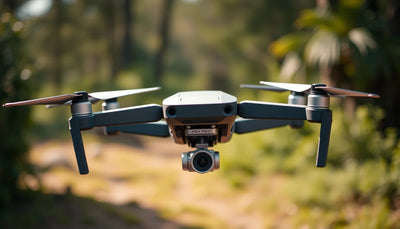
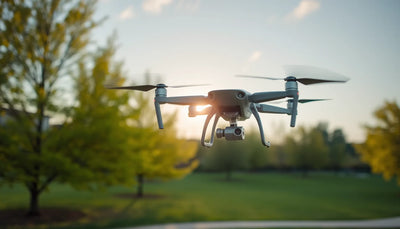
Maximizing Drone Battery Performance for Forestry Operations - drone in flight with battery telemetry data overlay

Start thermal management at least 45 minutes before the first flight. Store batteries in a heated vehicle cabin at 20–25°C — not in the cargo bed, not in an unheated equipment trailer. Many Swedish forestry teams use small 12V electric warming pads (available for approximately $35 USD / HK$273) plugged into the truck's accessory socket, placing each battery on the pad inside an insulated soft cooler. This maintains a stable 22°C even when the outside air is -25°C. Insert the battery into the drone only when you are at the launch point and ready to power up immediately — a battery exposed to -15°C air loses roughly 1.5°C per minute. Once airborne, hover at 2–3 meters for 60 seconds to let the battery's internal discharge warming bring the cells to operating temperature before committing to forward flight. During the mission, avoid sustained full-throttle climbs; limit ascent rate to 3 m/s and keep forward speed under 10 m/s to reduce peak current draw. Land with a minimum 25% indicated charge remaining — this provides a safety margin that accounts for the gap between the battery management system's temperature-compensated reading and actual cell voltage. After landing, do not recharge a cold battery immediately. Allow it to return to 15°C or above (typically 30–40 minutes in a warm vehicle) before connecting to a charger. Charging a LiPo cell below 10°C causes lithium plating on the anode, permanently reducing capacity — a single cold-charge event can strip 8–12% of a pack's total lifespan.

What Are the Regulatory Considerations for Drone Forestry Operations in Sweden?

Sweden's Transportstyrelsen classifies most forestry drone operations under the open category (A1/A3) when conducted within visual line of sight and below 120 meters AGL. However, forest canopy surveying often requires beyond-visual-line-of-sight (BVLOS) operations, especially in stands exceeding 50 hectares — which pushes the operation into the specific category requiring an operational authorization. As of January 2024, Sweden implemented the EU drone regulation framework fully, meaning operators must hold an A2 Certificate of Competency for flights within 30 meters of uninvolved persons (common when surveying near forest roads or recreational trails). The cold climate introduces an additional regulatory consideration: battery endurance calculations submitted in an SORA (Specific Operations Risk Assessment) must account for temperature degradation. A SORA that assumes 40-minute endurance from manufacturer specs will be rejected if the operational environment is -10°C. Include a 30% cold-weather derating factor in all flight time estimates submitted for authorization. Drone operators flying in Sweden's 12 northernmost municipalities should also note that GPS/GLONASS satellite geometry degrades above 65°N latitude — RTK-equipped models like the Phantom 4 RTK or Matrice 30T with D-RTK 2 mobile station are strongly recommended for survey-grade positional accuracy above that parallel.

Why Buy from Reboot Hub?

Reboot Hub supplies Pristine Pre-owned drones that have never undergone refurbishment — every unit is a factory-original airframe that has been activation-tested or flown minimally, then put through a 40-point inspection at the Shenzhen facility by MOHRSS Level 3-certified technicians. Components are genuine OEM only; no aftermarket batteries, no third-party propellers, no substituted gimbal dampeners. Each battery pack is individually tested for internal resistance deviation (threshold: ≤15 milliohms across all cells) and cycle-counted — packs exceeding 30 cycles are rejected from Pristine Pre-Owned (A) assignments and reserved for separate sale with full disclosure. The 180-day warranty covers the complete power system, including the battery, charger, and charging hub — a critical distinction for cold-climate operators whose batteries endure accelerated wear. DDP (Delivered Duty Paid) shipping from Shenzhen and Hong Kong means Swedish buyers receive a door-to-door service with all import duties, VAT, and customs clearance handled by Reboot Hub's logistics partner. Typical transit time to Stockholm, Göteborg, or Malmö is 5–8 business days. The HK drop-off repair facility provides chip-level diagnostics with a 3–5 day turnaround for any warranty claim — no shipping back to mainland China required.

Frequently Asked Questions

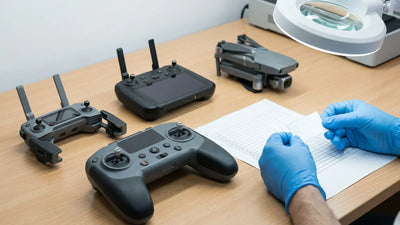
Maximizing Drone Battery Performance for Forestry Operations - battery storage and maintenance best practices

Q: Can I use standard LiPo drone batteries in sub-zero Swedish winter conditions without modification?

A: Yes, but with severely reduced performance. A standard DJI Intelligent Flight Battery rated for 45 minutes at 25°C will deliver approximately 28–31 minutes at -10°C and as little as 22 minutes at -20°C. The batteries themselves do not require physical modification, but they demand a strict thermal management protocol: pre-heating to 20–25°C, immediate installation at the launch point, a 60-second hover warm-up, and landing at 25% indicated charge minimum. Attempting to fly a cold-soaked battery at -15°C without pre-heating can trigger a critical low-voltage auto-land within 90 seconds of takeoff. Reboot Hub's 40-point inspection validates every battery's internal resistance before shipping, ensuring cold-weather baseline performance is uncompromised from day one.

Q: How much can I save buying a pre-owned forestry drone from Reboot Hub versus purchasing new?

A: Savings range from 33% to 38% across the forestry-appropriate models. A DJI Mavic 3 Enterprise (Pristine Pre-Owned A) costs $2,399 USD / HK$18,712 at Reboot Hub versus $3,599 USD new — a $1,200 saving. The DJI Matrice 30T (Flawless A+) is priced at $5,899 USD / HK$46,012 compared to $8,499 USD new, saving $2,600. The Phantom 4 RTK (Pristine Pre-Owned A) at $2,099 USD / HK$16,372 saves $1,800 against the $3,899 retail price. Because these are pre-owned but not refurbished units — activation-only or minimally used — the battery cycle count is typically under 30 on A-grade units and under 5 on A+ Flawless, meaning you are not sacrificing battery lifespan for the price reduction.

Q: What does the Reboot Hub 180-day warranty cover for drone batteries specifically?

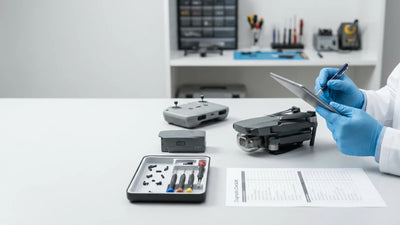
Maximizing Drone Battery Performance for Forestry Operations - comparison of new and used drone battery condition

A: The 180-day warranty explicitly covers the entire power system: the intelligent flight battery, the battery charging hub, and the AC power adapter. If a battery fails to hold a charge above 80% of rated capacity within the warranty period, exhibits cell voltage deviation exceeding 15 milliohms, or develops swelling, Reboot Hub replaces it at no cost. The warranty is honored from the delivery date — DDP shipping ensures there is no customs delay that eats into the coverage window. For Swedish operators flying in cold conditions where battery wear is accelerated, the 180-day window provides coverage through an entire winter season. Repairs and replacements are processed through the Hong Kong drop-off facility with a 3–5 day turnaround, handled by MOHRSS Level 3 technicians performing chip-level diagnostics.

Q: How long does DDP shipping from Shenzhen/Hong Kong to Sweden take, and what does DDP actually mean for me as a buyer?

A: Typical transit time to major Swedish cities — Stockholm, Göteborg, Malmö, Uppsala — is 5–8 business days. Deliveries to northern regions such as Umeå, Luleå, or Kiruna may add 1–2 business days. DDP (Delivered Duty Paid) is an Incoterms designation meaning Reboot Hub assumes full responsibility for all shipping costs, export clearance from China, import customs clearance in Sweden, Swedish VAT (25%), and any applicable drone-specific import duties. The price you see on the product page — for example, $2,399 USD for a Mavic 3 Enterprise (A) — is the total landed cost. There are no additional charges upon delivery, no customs brokerage fees, and no need to engage a local import agent. This is a significant advantage for Swedish commercial forestry operators who need predictable equipment budgeting.

Q: What battery cycle count should I expect on a Reboot Hub Pristine Pre-Owned (A) drone?

A: Pristine Pre-Owned (A) grade units ship with batteries that have between 5 and 30 charge cycles — tested and verified during the 40-point inspection at the Shenzhen facility. Flawless (A+) grade units, which are activation-only and never flown operationally, typically carry batteries with 1–5 cycles. To put this in perspective, a new DJI Intelligent Flight Battery is rated for approximately 200 cycles before capacity drops below 80%. A 30-cycle battery from Reboot Hub therefore retains roughly 85% of its total service life — and costs 33–38% less than new. Every battery's cycle count and internal resistance measurement is documented in the inspection report that ships with the unit. Batteries exceeding 30 cycles or showing internal resistance deviation above 15 milliohms are rejected from A-grade assignments.

Q: Are Reboot Hub's pre-owned drones genuinely suitable for commercial forestry operations in Sweden, or are they intended for hobby use?

A: The models stocked by Reboot Hub — DJI Matrice 30T, Mavic 3 Enterprise, Mavic 3 Thermal, and Phantom 4 RTK — are all enterprise-class platforms designed for commercial and industrial applications. These are not consumer drones repurposed for work; they carry IP55 weather resistance (Matrice 30T), RTK centimeter-level positioning (Phantom 4 RTK), and integrated thermal radiometry (Mavic 3 Thermal and Matrice 30T) suitable for forest health assessment, storm damage surveying, and volumetric timber yard measurement. Swedish forestry companies including private skogsägare and larger bruk have deployed Reboot Hub pre-owned units operationally. The 40-point inspection, OEM parts guarantee, and 180-day warranty provide the reliability assurance that commercial operators require for billable survey work in challenging sub-zero conditions.

Q: Can I purchase spare batteries separately from Reboot Hub for my forestry drone?

A: Yes, Reboot Hub stocks individual OEM batteries for all supported enterprise drone models — DJI TB30 batteries for the Matrice 30 series, Intelligent Flight Batteries for the Mavic 3 Enterprise and Mavic 3 Thermal, and Phantom 4 series high-capacity packs. Pricing for a single Mavic 3 Enterprise battery runs approximately $159 USD / HK$1,240; a TB30 for the Matrice 30T is approximately $349 USD / HK$2,722. All standalone batteries undergo the same internal resistance and cycle-count validation as those bundled with drones. For Swedish forestry teams running multi-flight survey days in cold weather, Reboot Hub recommends purchasing a minimum of 4 batteries per drone — this allows a rotation where two are always warming in the vehicle while two are in active use, sustaining continuous operations through a 6-hour field day with 22–28 minute flight windows per battery.

Q: What happens if my drone battery fails during the warranty period while I am mid-project in Sweden?

A: Reboot Hub's warranty process is designed for minimal operational downtime. Contact the support team with your order number and a description of the failure — including any relevant flight log data if the battery error appeared in-flight. The team issues a return authorization for the defective battery (or the entire drone if the battery fault caused secondary damage) directed to the Hong Kong drop-off facility. You ship only the affected component — not the entire kit unless necessary. The MOHRSS Level 3 technicians perform chip-level diagnostics and complete the repair or replacement within 3–5 business days of receiving the unit. Return shipping to Sweden is covered under the warranty terms. For critical forestry projects with tight deadlines — such as post-storm timber salvage assessment — Reboot Hub can expedite a replacement battery shipment from Shenzhen upon confirmation of the defect, reducing effective downtime to approximately 7–10 days from the initial claim to receiving the replacement at your Swedish address.

Articolo precedente
Prossimo articolo

Lascia un commento

Tieni presente che i commenti devono essere approvati prima di essere pubblicati.

Grazie per esserti iscritto!

Questa email è stata registrata!

Acquista il look

Scegli le opzioni

Modifica opzione
Back In Stock Notification
this is just a warning
Login
Carrello della spesa
0 elementi
0%