Ugrás a tartalomhoz

Available 24/7: (852) 5537 6652

Switching DJI Drone from FCC to CE Mode: Legal Risks for Peruvian Operations

által LauThomas 22 Jun 2026 0 megjegyzéseket

Quick Answer

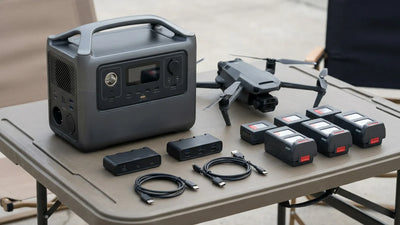
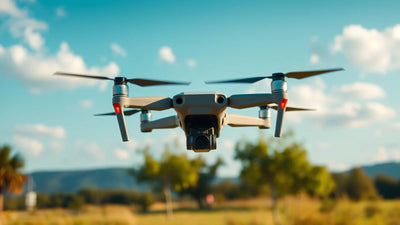
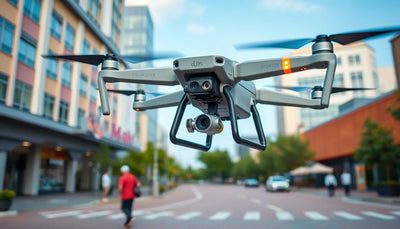
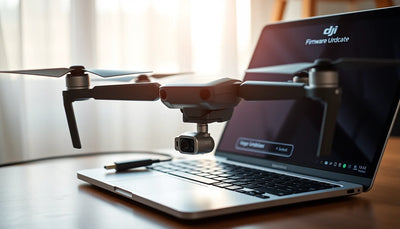
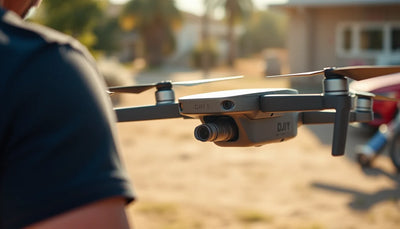
Hero illustration: Switching DJI Drone from FCC to CE Mode: Legal Risks for Peruvian Operations
  • FCC mode boosts DJI transmission power to 26 dBm (0.4W), while CE mode caps it at 20 dBm (0.1W) on 2.4 GHz — a 4× power difference that dramatically extends range but violates Peruvian spectrum regulations.
  • Peru's MTC enforces CE-compatible radio standards under the National Frequency Allocation Plan (PNAF) — operating a drone in FCC mode without authorization carries fines starting at 1 UIT (S/ 5,350, approximately $1,420 USD in 2025) and scaling to 500 UIT ($710,000+ USD) for severe violations.
  • Authorities can detect FCC-mode drones via spectrum analyzers during routine inspections at popular flight locations — the distinct 5.8 GHz high-power signature (26 dBm vs the legal 14 dBm CE limit) makes unauthorized transmissions identifiable within seconds.
  • A pre-owned DJI Mini 4 Pro from Reboot Hub costs approximately $650–$720 USD shipped DDP to Peru — arriving correctly configured for CE compliance with full 180-day warranty coverage, eliminating any need for risky firmware modifications.
  • Switching modes via third-party firmware hacks voids DJI manufacturer warranty and introduces flight stability risks — repairs at unauthorized shops average $180–$350 USD, whereas Reboot Hub's Shenzhen facility offers MOHRSS Level 3 chip-level service at $85–$210 USD with 3–5 day turnaround.

What Is the Difference Between FCC and CE Mode on DJI Drones?

DJI drones ship with region-locked radio transmission profiles that determine maximum output power across frequency bands. FCC mode (Federal Communications Commission, United States) permits transmission power up to 26 dBm (approximately 0.4 watts) on the 2.4 GHz band and similarly elevated levels on 5.8 GHz. CE mode (Conformité Européene, European Union) restricts output to 20 dBm (0.1 watts) on 2.4 GHz and just 14 dBm on 5.8 GHz. This 6–12 dBm gap translates to a real-world range reduction of 40% to 55% depending on terrain and interference. The DJI Mini 4 Pro, for instance, achieves a manufacturer-claimed 20 km maximum transmission distance in FCC versus approximately 10 km in CE mode under ideal conditions. The DJI Air 3 and Mavic 3 Pro exhibit similar splits — roughly 20 km FCC vs 10 km CE and 15 km FCC vs 8 km CE, respectively. These figures assume unobstructed line-of-sight in interference-free environments. In practical Peruvian scenarios — urban Lima with 2.4 GHz congestion or Andean highlands with topographical obstacles — the CE-mode penalty becomes even more pronounced, often yielding 3–5 km usable CE range against 7–12 km in FCC. This performance delta is precisely why some operators consider region-switching hacks, despite the legal consequences outlined below.

Related: Calculating Saudi Customs Duty on Used DJI Drones from China

Is It Legal to Switch Your DJI Drone from CE to FCC Mode in Peru?

No. Peru's Ministerio de Transportes y Comunicaciones (MTC) governs all radio frequency spectrum usage through the Plan Nacional de Atribución de Frecuencias (PNAF), last updated via Ministerial Resolution No. 187-2023-MTC/01. The PNAF aligns Peru's unlicensed short-range device limits with CE-style parameters — specifically, 2.4 GHz wideband transmissions are capped at 100 mW EIRP (20 dBm) and 5.8 GHz at 25 mW (14 dBm) for most consumer drone applications. Activating FCC mode — which pushes 5.8 GHz output to 26 dBm (400 mW) — exceeds these limits by a factor of 16× on 5.8 GHz alone. Under Ley de Telecomunicaciones (Law No. 29022) and its amending decrees, operating radio equipment outside authorized parameters constitutes an infringement punishable by fines, equipment seizure, and potential criminal liability if interference affects licensed services. Importers and retailers in Peru are required to obtain homologación (type approval) from the MTC for radio-emitting devices; a drone modified to transmit above CE limits loses its compliance status and becomes illegal to operate. This applies regardless of whether the drone was purchased domestically or imported — including units bought from international sellers like Reboot Hub, which ship drones configured to the buyer's regional standard by default.

Related: Quietest Drone for Indoor UK Wedding Ceremonies? DJI Mini 5

What Are the Penalties for Operating in FCC Mode Illegally in Peru?

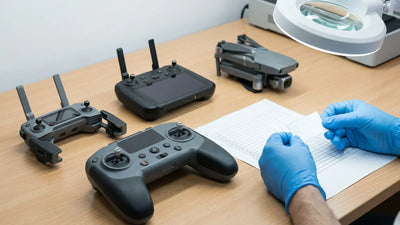
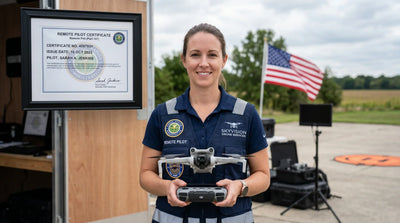
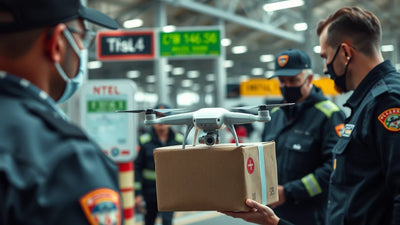
Supporting visual: Switching DJI Drone from FCC to CE Mode: Legal Risks for Peruvian Operations

MTC enforcement actions escalate by violation severity. For a first-time individual infraction — such as a recreational pilot caught with an FCC-modified drone — the fine typically ranges from 1 to 10 UIT. With the 2025 UIT set at S/ 5,350 (approximately $1,420 USD), this means a minimum penalty of $1,420 USD and a maximum of $14,200 USD for moderate cases. Commercial operators — real estate photographers, surveyors, agricultural inspectors — face steeper sanctions under the Reglamento de Sanciones de Telecomunicaciones, with fines reaching 50 to 500 UIT ($71,000 to $710,000+ USD) if the unauthorized transmission causes interference with licensed spectrum users such as aviation radar, cellular backhaul, or emergency services. Beyond financial penalties, MTC inspectors carry legal authority to confiscate non-compliant equipment on the spot. Confiscated drones are rarely returned; the MTC maintains a destruction protocol for seized non-homologated radio devices. For professional operators holding MTC-issued drone operation permits under Resolución Directoral No. 126-2021-MTC/12, an FCC-mode violation triggers immediate permit revocation and a minimum 24-month disqualification from reapplying. Insurance policies from Peruvian providers like Rímac Seguros and Pacífico Seguros explicitly exclude coverage for flights conducted with unlawfully modified equipment — leaving operators personally liable for third-party damage claims that can exceed $100,000 USD in urban incident scenarios.

How Does FCC vs CE Mode Affect Your Drone's Real-World Performance?

The table below compares manufacturer-specified transmission ranges and actual field performance across four popular DJI models, alongside Reboot Hub pre-owned pricing for units shipped DDP to Peru in CE-compliant configuration:

Model FCC Max Range CE Max Range Real-World CE (Urban) Reboot Hub Pre-Owned (USD)
DJI Mini 4 Pro 20 km 10 km 2.5–4 km $650–$720
DJI Air 3 20 km 10 km 3–5 km $820–$950
DJI Mavic 3 Pro 15 km 8 km 3–4.5 km $1,550–$1,850
DJI Avata 2 13 km 6 km 1.5–3 km $480–$560

Urban environments — central Lima, Miraflores, San Isidro — impose additional range penalties from Wi-Fi congestion, cellular towers, and building reflection. In CE mode, a DJI Mini 4 Pro in Parque Kennedy typically maintains stable video downlink to 2.8–3.5 km before signal degradation begins. The same unit in FCC mode can push 6–9 km in identical conditions — a 150%–200% improvement that explains the persistent appeal of region-switching modifications. Coastal routes along the Costa Verde see less interference; CE-mode ranges stretch toward 5–7 km, while FCC achieves 10–14 km. In the Andean highlands near Cusco or Huaraz, altitude-thinned air reduces signal attenuation for both modes, but the CE power cap still limits practical range to roughly 60% of FCC capability. Peruvian drone operators conducting mining surveys or agricultural mapping across large parcels — where every kilometer of range translates to fewer battery swaps and landing relocations — feel this gap acutely. However, the performance gain never justifies the legal exposure detailed above.

Why Buy from Reboot Hub?

Reboot Hub supplies pristine pre-owned DJI drones — not refurbished units with third-party components, but individually graded machines that undergo a 40-point inspection protocol at the company's Shenzhen facility. Every drone ships with genuine OEM parts only, backed by a 180-day warranty that covers both hardware defects and transmission system faults. For Peruvian buyers, Reboot Hub handles DDP (Delivered Duty Paid) shipping from Shenzhen and Hong Kong, meaning the listed price includes all import duties, MTC homologation-compatible documentation, and door-to-door logistics — no surprise customs charges upon arrival in Lima, Arequipa, or Trujillo. Drones leave Reboot Hub's facility configured to the destination region's radio standards by default, so Peruvian customers receive CE-mode-compliant units with no unauthorized firmware tampering required. Should any issue arise, Reboot Hub's chip-level repair center in Shenzhen — staffed by MOHRSS Level 3 certified technicians — delivers 3–5 day turnaround on most repairs, with Hong Kong drop-off available for clients who prefer in-person service. Pre-owned Flawless (A+) grade units are activation-only drones never flown beyond factory testing, while Pristine Pre-Owned (A) grade shows zero visible marks from minimal use. Pricing runs 30%–45% below new retail, making compliant, warrantied equipment accessible without the temptation of illegal modification.

Frequently Asked Questions

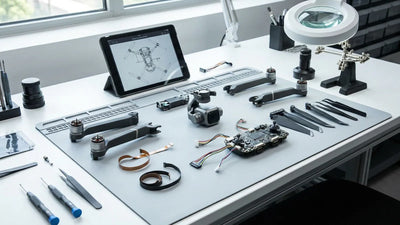
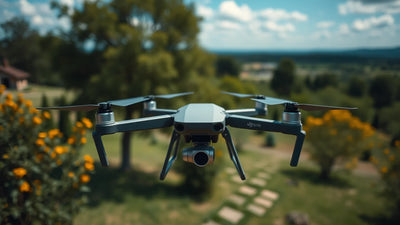
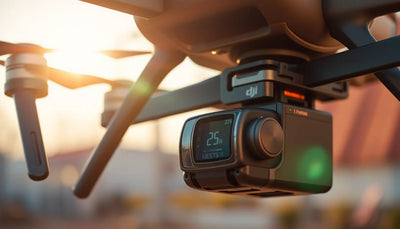
Detail shot: Switching DJI Drone from FCC to CE Mode: Legal Risks for Peruvian Operations

Q: Can Peruvian authorities actually detect if my drone is operating in FCC mode?

A: Yes, and the detection process is straightforward for equipped MTC enforcement teams. A portable spectrum analyzer — models like the Rohde & Schwarz FPH or Anritsu MS2090A, both in use by Latin American telecom regulators — can identify a drone's 5.8 GHz transmission at 26 dBm within seconds from up to 200 meters away. The CE-legal 14 dBm ceiling on 5.8 GHz means an FCC-mode drone broadcasts at roughly 16 times the permitted power on that band, creating an unmistakable spectral signature. MTC has conducted joint enforcement operations with INDECOPI at popular drone-flying locations including the Miraflores malecón and Parque de la Exposición since 2022. Inspectors also monitor online drone footage for telltale range capabilities inconsistent with CE-mode limitations — a video showing uninterrupted transmission across 8 km of Peruvian coastline strongly implies FCC operation.

Q: What DJI drone models are most commonly switched from CE to FCC mode in Peru?

A: The DJI Mini 4 Pro and DJI Air 3 account for the majority of unauthorized FCC switches in Peru, primarily because their sub-250-gram and sub-720-gram weights exempt them from certain MTC registration requirements — leading operators to mistakenly assume all regulations are lighter for these models. The DJI Mavic 3 Pro ranks third, particularly among commercial operators in mining and agriculture who face genuine range challenges in CE mode across large survey areas exceeding 500 hectares. The DJI Avata 2 sees fewer switches due to its FPV use case typically operating within visual line of sight at shorter ranges. Older models like the Mini 3 Pro and Air 2S still appear in modification forums, though DJI's firmware updates have progressively hardened region-lock enforcement on legacy hardware. Reboot Hub stocks all four current-generation models in CE-compliant configuration starting at $480 USD for Avata 2 and $650 USD for Mini 4 Pro.

Q: Does switching my drone to FCC mode void the DJI manufacturer warranty in Peru?

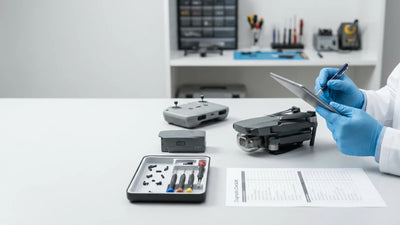
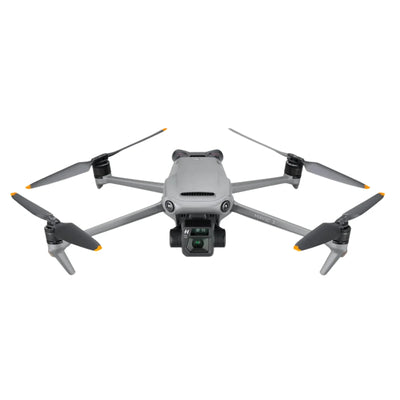
Technical view: Switching DJI Drone from FCC to CE Mode: Legal Risks for Peruvian Operations

A: Yes, absolutely. DJI's warranty terms — accessible via the DJI Fly app and the company's global support portal — explicitly exclude coverage for damage or malfunction resulting from unauthorized firmware modifications, region-lock bypasses, or transmission parameter alterations. A drone flagged in DJI's service system for non-standard radio configuration will be denied warranty repair globally, including at DJI's authorized service partner in Lima (DroneStore Perú, located in Miraflores). Out-of-warranty repairs for transmission module failures — the most common consequence of FCC-mode overheating — typically cost $180 to $350 USD at third-party shops with no guaranteed turnaround time. Reboot Hub's Shenzhen repair facility provides a cost-effective alternative at $85 to $210 USD for equivalent chip-level transmission repairs, completed in 3–5 days by MOHRSS Level 3 technicians using OEM-spec components. The 180-day Reboot Hub warranty remains valid regardless of prior modification history on units sent for repair, unlike DJI's factory policy.

Q: Are there any legitimate ways to get FCC-equivalent range in Peru without breaking the law?

A: Yes, through three fully legal approaches. First, directional antenna upgrades — aftermarket parabolic reflectors and amplified patch antennas that attach to the DJI RC or RC-N2 controller — can boost effective range in CE mode by 30%–50% without altering the drone's transmission power, remaining fully MTC-compliant since they amplify reception only. Quality kits from manufacturers like 4Hawks and ALIENTECH cost $40 to $120 USD. Second, operational positioning — launching from elevated terrain with unobstructed line-of-sight (common in Peru's Andean topography) — maximizes the legal CE power budget, often adding 2–4 km of practical range compared to ground-level urban launches. Third, 4G cellular dongle integration on models supporting DJI Cellular modules (Mavic 3 series, Air 3) extends control range virtually indefinitely over Peru's mobile networks — Entel, Claro, and Movistar all provide adequate coverage across populated corridors — for approximately $15–$25 USD monthly in data plan costs plus the one-time $120–$150 USD dongle purchase.

Q: What happens if I bring a drone purchased in the United States (in FCC mode) to Peru?

A: DJI drones sold in the US market ship with FCC mode as the default and primary transmission profile. When you power on a US-purchased drone in Peru, the DJI Fly app detects the GPS location and may prompt a region reset to CE mode — but this does not always occur automatically, and many units continue transmitting in FCC until manually switched or firmware-updated. Operating a US-sourced FCC drone in Peru without switching to CE violates MTC regulations from the first flight, carrying the same penalty exposure ($1,420 to $14,200+ USD) as a deliberately modified unit. Peruvian customs does not seize FCC-configured drones at entry — personal drones pass through without radio testing — but the liability begins the moment the aircraft powers on and transmits. The safest procedure is to connect the drone to the DJI Fly app after arrival, allow any region-based updates to install, and verify in the transmission settings that CE mode is active before the first takeoff. Reboot Hub ships drones pre-configured to the destination region, eliminating this risk entirely for international buyers.

Q: Can I switch my drone back to CE mode after using FCC mode, and will it erase the evidence?

A: Technically yes — you can revert to CE mode through the DJI Fly app or by performing a factory reset and allowing region detection to apply the correct profile. However, reversion does not erase flight logs. DJI drones store detailed telemetry including transmission power levels, frequency band usage, and GPS coordinates on internal storage and, if synced, on DJI's cloud servers. MTC investigators with lawful access to your flight records — obtained through a formal investigation triggered by a complaint or incident — can identify historical FCC-mode flights even after the drone has been switched back to CE. A single incident report involving property damage or airspace incursion where flight logs show non-compliant transmission power escalates the case from a minor infraction (1–3 UIT, $1,420–$4,260 USD) to a serious violation with intentionality findings (10–50 UIT, $14,200–$71,000 USD). The safest course is to never activate FCC mode on Peruvian soil in the first place.

Q: What should I do if I already own an FCC-modified drone in Peru?

A: Immediately revert to CE mode through the DJI Fly app's transmission settings menu, then perform a full firmware update via DJI Assistant 2 on a desktop computer — this overwrites any third-party modifications and restores the factory region-lock configuration. After reversion, conduct a test flight in an open area and check the transmission menu to confirm CE power levels (20 dBm on 2.4 GHz, 14 dBm on 5.8 GHz). If the drone exhibits unstable behavior post-reversion — intermittent video feed, GPS lock failures, or random RTH activations — the modification may have corrupted the flight controller firmware. In that case, a professional reflash is required. Reboot Hub's Shenzhen repair center handles firmware restoration for $85–$130 USD with a 3–5 day turnaround, shipping back DDP to Peru. For drones beyond economical repair, Reboot Hub offers trade-in credit toward a CE-compliant pre-owned replacement, with A-grade Mini 4 Pro units starting at $650 USD. Destroying or discarding the modified drone is unnecessary — proper firmware restoration fully resolves the compliance issue for future flights.

Előző bejegyzés
Következő bejegyzés

Hagyj megjegyzést

Felhívjuk figyelmét, hogy a megjegyzéseket jóvá kell hagyni a közzétételük előtt.

Köszönjük a feliratkozást!

Ezt az e-mailt regisztráltuk!

Vásárolja meg a megjelenést

Válasszon opciókat

Szerkesztési lehetőség
Back In Stock Notification
this is just a warning
Bejelentkezés
Bevásárlókocsi
0 tételeket
0%