Zum Inhalt springen

24/7 erreichbar: (852) 5537 6652

Moving from Consumer DJI to Enterprise Drones: First Steps for Operators in Thailand

von LauThomas 02 Jul 2026 0 Kommentare

Reboot Hub scenario guide

Buyer brief: seller and serial verification

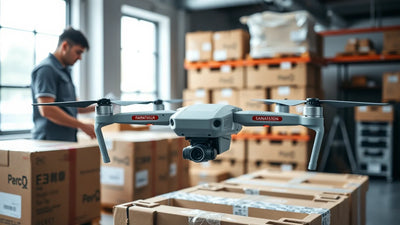
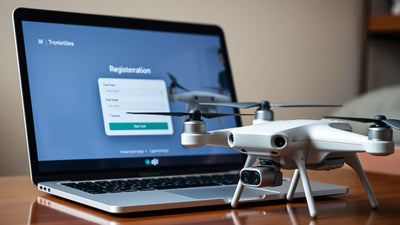
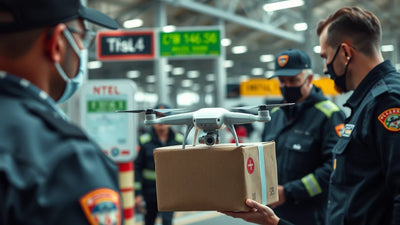
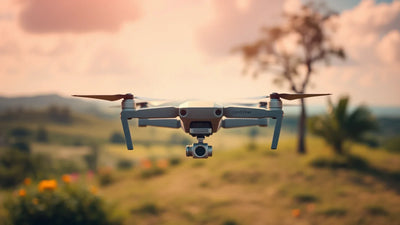
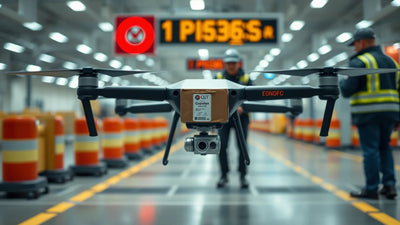
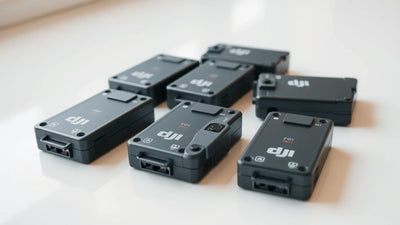
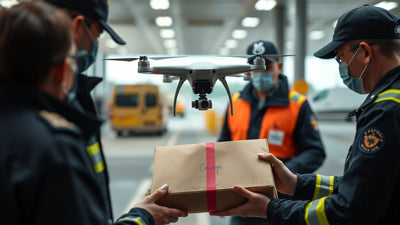
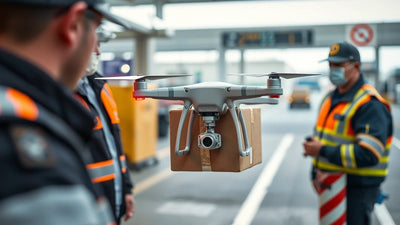
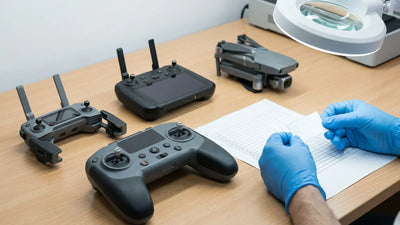
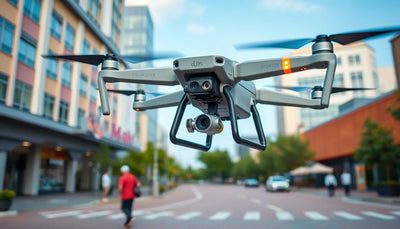
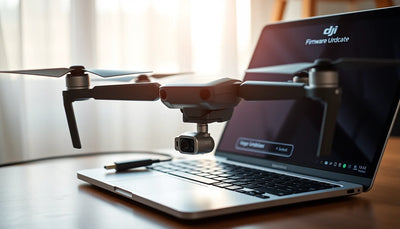
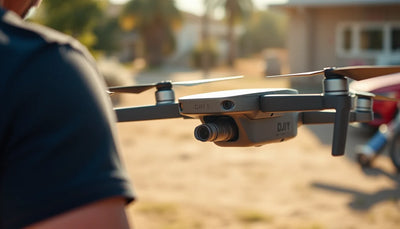
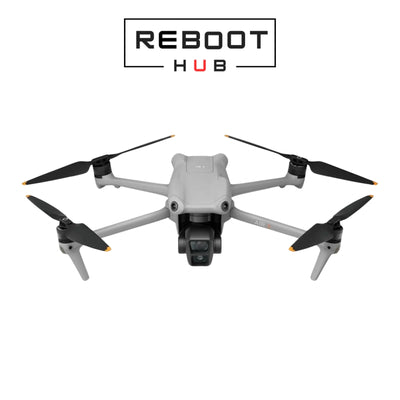
Moving from Consumer DJI to Enterprise Drones First Steps fo — close-up technical detail view

Situation: moving from consumer dji to enterprise drones first steps for operators in thailand. This guide answers the specific situation first, then connects the reader to Reboot Hub's verified pre-owned buying path.

Proof trail

Serial, invoice, seller identity, live test video, app screens, and payment record should line up before money moves.

Red flags

Avoid rushed payment, mismatched serials, no live test, vague warranty claims, or a seller who says issues can be fixed later.

Reboot path

Use this guide as a seller-risk node that points buyers back to verified pre-owned DJI buying checks.

Related Reboot Hub guides: Seller and serial checks Used buying risk hub The Reboot Hub Standard Pre-owned DJI inventory

Quick Answer

  • Start with the Mavic 3 Enterprise — the lowest-risk entry point at $2,450 pre-owned (vs. $3,599 new), with RTK module, mechanical shutter, and thermal options for Thai agriculture and infrastructure work.
  • Budget $3,200–$9,200 total for a mission-ready enterprise kit from Reboot Hub, including aircraft, batteries, charging hub, and the payload your sector actually needs — 30–45% less than new retail.
  • Matrice 30 delivers 41-minute flight time and IP55 weather resistance at $6,800 pre-owned — the practical workhorse for Thailand's monsoon-season mapping, solar farm inspection, and coastal survey jobs.
  • All Reboot Hub units ship DDP to Bangkok, Chiang Mai, or Phuket — duties, taxes, and customs clearance are fully handled, with delivery in 7–12 business days from Shenzhen/HK.
  • No CAAT penalty for buying pre-owned — the same registration process applies, and Reboot Hub provides serial-number documentation for your NBTC and CAAT filings.
  • Budget an additional $400–$1,800 for payload-specific cameras (H20T thermal, P1 photogrammetry, L1 LiDAR) depending on whether you're doing crop analysis, construction progress tracking, or power line inspection.

What's the Actual Difference Between a Consumer Mavic and an Enterprise Drone?

The gap is not just about price — it's about what the aircraft is engineered to do for 40-plus hours a week, week after week, in conditions that would ground a Mavic 3 Pro in under ten minutes. Consumer drones are built for single-operator recreational or prosumer use: one camera, one gimbal, one job per flight. Enterprise platforms like the Matrice 30, Matrice 350 RTK, and Mavic 3 Enterprise accept interchangeable payloads — thermal, LiDAR, multispectral, 48MP mechanical shutter — that you swap on-site in under 90 seconds. They carry RTK centimeter-level positioning as standard or as a modular accessory, which matters the moment a Thai construction firm asks for a .dxf overlay on a site plan or a rubber plantation owner wants repeatable biomass indices across 400 rai. The battery systems are entirely different too: the Matrice 30's TB30 batteries deliver 41 minutes of hover time with a full payload, and hot-swap capability means you land, swap, and are airborne again in under 30 seconds — critical when you are inspecting 12 kilometers of transmission line in Phitsanulok before the afternoon rains hit. Build quality jumps from "well-made consumer plastic" to IP55-rated sealed airframes that shrug off dust, light rain, and 12 m/s wind gusts. If your Thai operation bills clients by the hectare, the megawatt, or the kilometer-inspected, a consumer drone is a false economy by month three.

Related: Povolené drony pro nahazování nástrahy v Česku 2024: Legisla

How Much Does It Cost to Make the Switch in Thailand?

A new enterprise DJI kit from an authorized Thai dealer will set you back $3,600 to $15,000 before you add extra batteries, a charging station, or a spare payload. Reboot Hub's pre-owned inventory cuts that to $2,450–$9,200 for units that pass a multi-point inspection and ship with genuine OEM parts only. The savings — typically 30% to 45% versus new — are significant enough that a Thai drone service provider can add a second aircraft or a thermal camera within the same annual procurement budget. For a concrete example: a new Matrice 350 RTK base combo retails at roughly $14,500 with the RC Plus controller and one set of TB65 batteries. Reboot Hub lists the same kit in Pristine Pre-Owned (Grade A) condition at $9,200, DDP shipped to Bangkok with all duties and customs fees paid. The table below shows the landscape at a glance.

Related: pre-owned DJI Drone Warranty in the Philippines: What If I

Model New Retail (USD) Reboot Hub Pre-Owned (USD) Key Payload Option Best For
Mavic 3 Enterprise (RTK) $3,599 $2,450 Mechanical shutter / thermal Small-area mapping, crop scouting
Phantom 4 RTK $6,000 $3,200 Built-in RTK, 20MP sensor Land surveying, cadastral work
Matrice 30 $9,800 $6,800 H20T (zoom + thermal + wide) Infrastructure inspection, solar farms
Matrice 300 RTK $13,000 $7,500 H20T, P1, L1 (swappable) Power line, pipeline, large ag mapping
Matrice 350 RTK $14,500 $9,200 Same as M300 + night-vision FPV Heavy-lift, all-weather operations

DDP shipping from Shenzhen or Hong Kong to Thailand adds precisely zero extra cost at delivery — no surprise 7% VAT demand from the courier, no customs broker fee slipped into your inbox. Reboot Hub handles the Harmonized System classification, the import duty calculation, and the last-mile clearance. You receive a tracking number within 48 hours of payment and the aircraft at your door in 7 to 12 business days. For a Thai operator transitioning from a Mavic Air 2 or Mini 3 Pro, the Mavic 3 Enterprise at $2,450 is the natural first step: it uses the familiar DJI Pilot 2 interface but unlocks RTK accuracy and mechanical shutter capture, which are table stakes for any paid mapping or inspection contract.

Which Enterprise Model Actually Fits Thai Industry Needs?

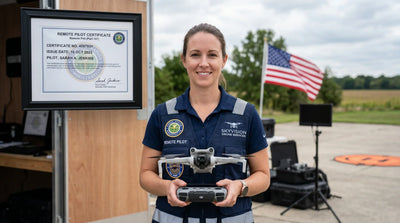
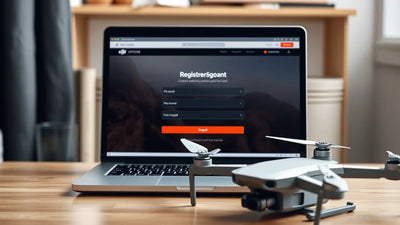
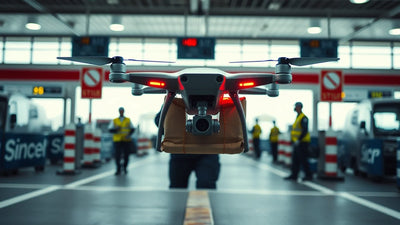
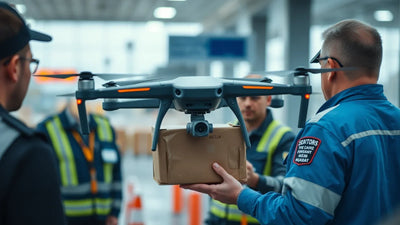
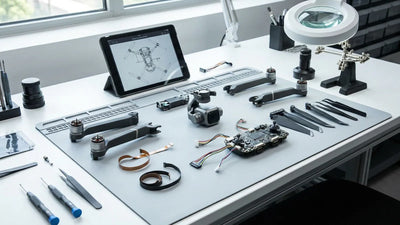
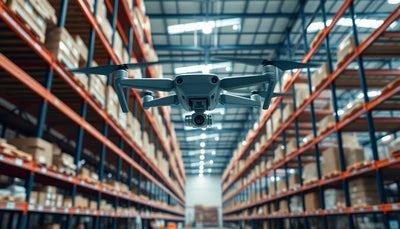
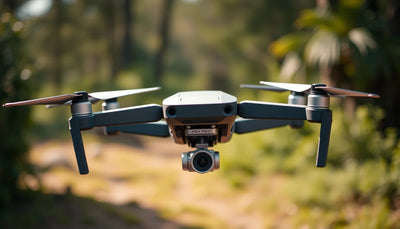
Moving from Consumer DJI to Enterprise Drones First Steps fo — workspace and equipment setup

Thailand's commercial drone market splits roughly into three tiers, and the model you pick should match the tier you bill in. Tier one is agriculture and small-site surveying: sugarcane, rubber, rice, durian orchards — operations where you fly 20 to 200 rai per mission and the deliverable is an orthomosaic, a vegetation index map, or a volumetric stockpile calculation. The Mavic 3 Enterprise with RTK module covers this at $2,450 pre-owned, producing 3–5 cm absolute accuracy when paired with a local NTRIP correction service or a D-RTK 2 base station. Tier two is linear infrastructure — power lines, pipelines, highway corridors, coastal erosion monitoring along the Gulf of Thailand. Here the Matrice 30 at $6,800 is the standout: its 48MP wide camera, 200x hybrid zoom, and integrated thermal sensor let you spot a loose insulator on a transmission tower from 40 meters away and document it in the same flight. The IP55 rating means a sudden squall off Chonburi won't kill a $6,800 asset. Tier three is heavy-lift, multi-sensor work: LiDAR scanning of factory complexes, photogrammetry of entire industrial estates, or agricultural spraying with the Agras series. The Matrice 350 RTK at $9,200 carries the full Zenmuse payload ecosystem and the TB65 battery system gives you 55 minutes unloaded or 40 minutes with an L1 LiDAR unit. One Thai surveying firm we work with runs a single M350 with a P1 camera six days a week across eastern economic corridor sites and bills 120,000 THB per month — the aircraft paid for itself in under eight weeks.

What About Thailand's Regulatory Requirements for Enterprise Drones?

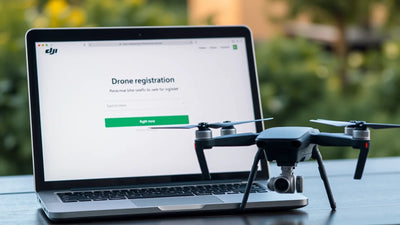
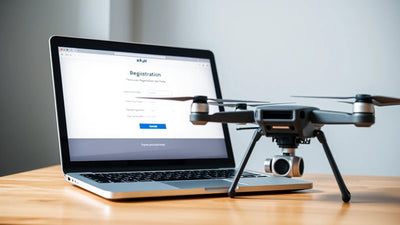
Moving from consumer to enterprise does not change the airframe's legal category under CAAT regulations — anything above 2 kg still requires operator registration, third-party liability insurance, and a certificate of registration for the aircraft itself. What changes is the frequency and type of flight authorizations you will request. Enterprise work often involves BVLOS waivers, controlled-airspace clearances near Suvarnabhumi or Don Mueang, or flights above 90 meters AGL — all of which CAAT processes through the National Drone Integration Platform. The good news: Reboot Hub provides every unit's serial number, original manufacture date, and a condition report that CAAT accepts for the aircraft registration step. NBTC transmitter compliance is handled by DJI's factory certification — all enterprise models sold through Reboot Hub carry the required NBTC markings. Budget $150–$400 for insurance premiums depending on your aircraft value and liability coverage, and allow 3–5 weeks for the full CAAT registration cycle if you are a first-time enterprise operator. The process is document-heavy but predictable — no different than registering a new unit from an authorized dealer, just with a significantly lower upfront cost.

Why Buy from Reboot Hub?

Reboot Hub occupies a specific niche that matters when you are spending $3,200 to $9,200 on a drone your business depends on: we sell Pristine Pre-Owned enterprise DJI aircraft, not pre-owned units with aftermarket parts and mystery service histories. Every drone passes a multi-point inspection at our Shenzhen facility, where MOHRSS Level 3-certified technicians verify each motor, ESC, gimbal axis, sensor calibration, and battery cycle count. Only genuine OEM parts are used for any component replacement — no third-party arms, no pattern-market landing gear, no clone batteries. If a unit does not meet Grade A (minimal use, zero visible marks) or Grade A+ (activation-only, never flown), we do not list it. Every sale includes a 180-day warranty that covers defects in materials and workmanship, with repair turnaround of 3–5 business days at our Shenzhen chip-level facility. Hong Kong operators can drop off in person; Thai customers use our DDP shipping lane, which means the price you see on the product page is the price you pay — duties, taxes, and customs clearance are fully covered, and delivery to Bangkok, Chiang Mai, Phuket, or anywhere else in Thailand takes 7–12 business days. We also stock payloads separately — if you buy a Matrice 30 and add an H20T camera, both ship together in one DDP consignment. For Thai operators making their first enterprise move, that predictability removes the two biggest headaches: hidden import costs and uncertain aircraft condition.

Scenario solution path

Keep this answer connected to the Reboot Hub scenario library

This article belongs to the Buying / seller check branch. Use the hub to compare nearby buyer questions, checks, and next-step guides.

Open the Buying / seller check scenario path

Frequently Asked Questions

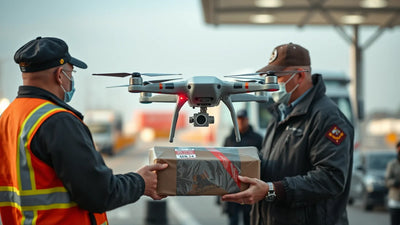
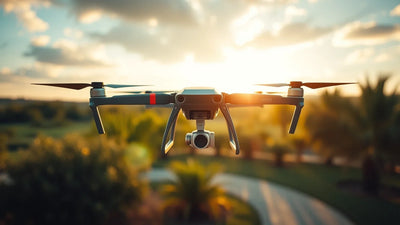
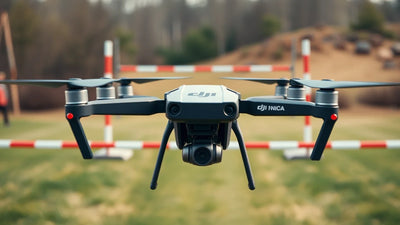
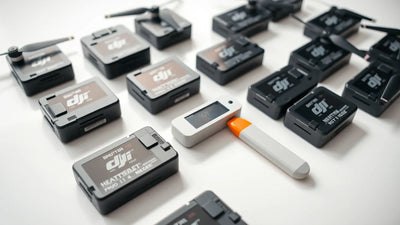
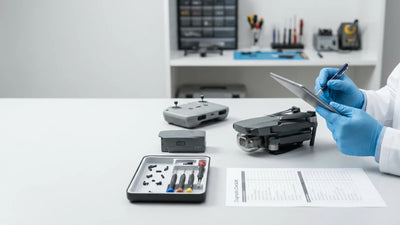
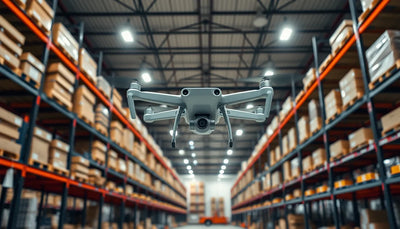
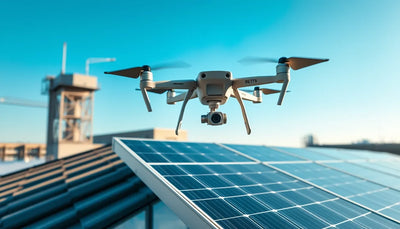
Moving from Consumer DJI to Enterprise Drones First Steps fo — professional inspection and process

Q: Can I register a pre-owned Reboot Hub drone with CAAT the same way as a new one?

A: Yes — CAAT does not differentiate between new and pre-owned aircraft for registration purposes as long as the serial number is genuine and the aircraft meets the technical specifications on file with the manufacturer. Reboot Hub provides a serial-number verification document, the original factory date, and a condition report with every unit. The NBTC wireless certification is covered by DJI's factory compliance, which applies regardless of how many times the drone has changed owners. The registration fee is the same (approximately 2,000 THB for the aircraft certificate) and the process follows the identical online filing path on the CAAT drone portal.

Q: What happens if my Matrice 30 or Mavic 3 Enterprise needs repair in Thailand?

A: Reboot Hub's 180-day warranty covers repair at our Shenzhen chip-level facility. If an issue arises, you ship the unit back to our Hong Kong drop-off point (we provide a prepaid label for warranty claims), and our MOHRSS Level 3 technicians complete the repair in 3–5 business days. The unit ships back to Thailand via DDP at our cost. For non-warranty repairs, the same process applies with transparent pricing quoted before any work begins — typical out-of-warranty repairs range from $120–$600 depending on the component, which is 40–60% less than DJI's official out-of-warranty rates.

Q: Are the batteries included, and what cycle count should I expect?
A: Yes — every Reboot Hub enterprise listing includes at minimum one full set of batteries and the corresponding charging hub. For Grade A (Pristine Pre-Owned) units, battery cycle counts are under 40 cycles, meaning you retain at minimum 85% of original flight endurance. Grade A+ (Flawless) units ship with batteries that have 0–5 cycles — essentially new. A pre-owned TB30 battery for the Matrice 30 costs $350 individually; getting a set with 30 cycles included in the $6,800 pre-owned price saves you roughly $700 in battery costs alone.
Q: Can I use the DJI Care Enterprise plan on a pre-owned unit?

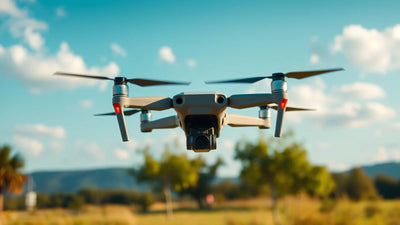
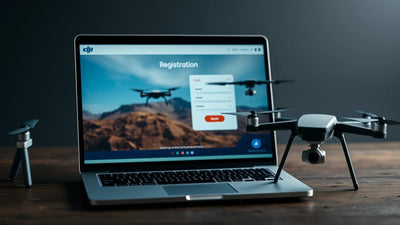
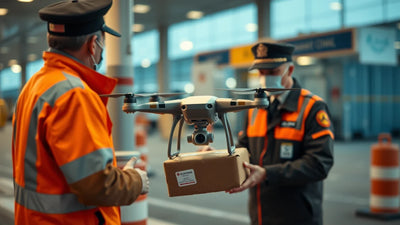
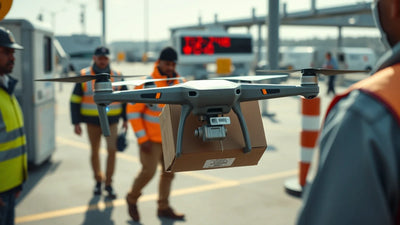
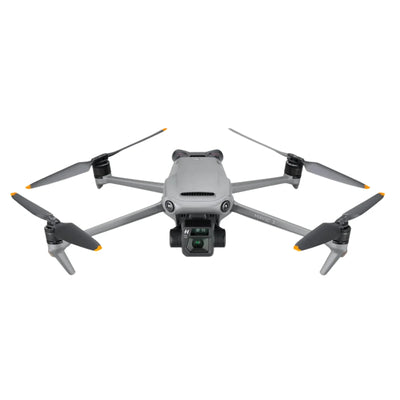
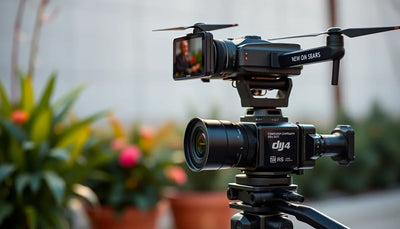
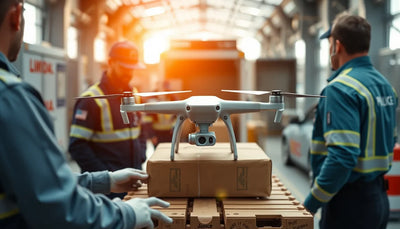
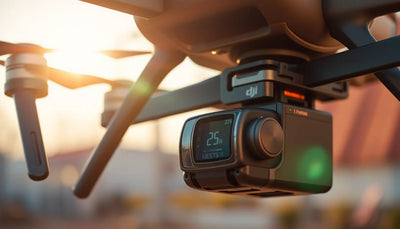
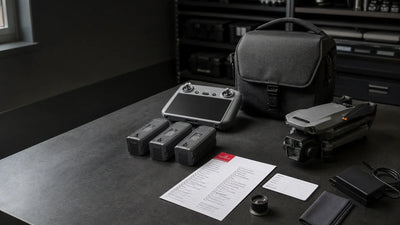
Moving from Consumer DJI to Enterprise Drones First Steps fo — results and comparison demonstration

A: DJI Care Enterprise is tied to the aircraft serial number and must be purchased within 48 hours of activating a new unit. For pre-owned aircraft, the original activation window has typically closed. Reboot Hub's 180-day warranty serves as the structural replacement for DJI Care — it covers the same types of manufacturing defects and component failures but does not cover crash damage or water immersion. For operators who want crash protection, we recommend a third-party drone insurance policy from a Thai provider, which typically costs $150–$400 annually depending on hull value and offers broader coverage than DJI Care.

Q: How does DDP shipping to Thailand actually work — will I really pay nothing at delivery?

A: Correct. DDP (Delivered Duty Paid) means Reboot Hub handles the export declaration from Shenzhen or Hong Kong, the Harmonized System tariff classification, the Thai import duty calculation, VAT at 7%, and the last-mile courier's customs brokerage fee. The price displayed at checkout is the final amount you pay. A Matrice 350 RTK listed at $9,200 arrives at your Bangkok address with no additional charges. This contrasts with DAP or FOB shipping, where a $9,200 drone can attract an unexpected $950–$1,200 in duties, VAT, and brokerage fees that the courier demands before release. DDP is standard on all Reboot Hub orders to Thailand, and the typical transit time is 7–12 business days from order confirmation.

Q: Which thermal payload should a Thai solar farm inspection business choose?

A: The H20T payload bundled with the Matrice 30 or available separately for the M300/M350 series is the standard answer. It integrates a 640×512 thermal sensor with 30Hz refresh, a 20MP wide camera, and a 1200-meter laser rangefinder in one gimbal housing. For solar farm inspection in Thailand — where you are scanning thousands of panels across sites in Lopburi or Nakhon Ratchasima — the 30Hz thermal feed prevents motion blur at inspection speeds of 8–10 m/s, and the rangefinder automatically tags hotspots with GPS coordinates for the maintenance crew's work order. A standalone H20T adds roughly $1,800 to a pre-owned M300 or M350 build at Reboot Hub.

Q: How quickly can a Reboot Hub enterprise drone be in my hands in Thailand?

A: From payment confirmation to delivery, the window is 7–12 business days. Payment clears (1–2 days), the inspection team re-verifies the specific unit, firmware is updated to the latest stable version, and the order is consolidated with its payloads and accessories at our Shenzhen facility (1–2 days). Export processing and courier handoff takes 24 hours, and the air-freight lane from Shenzhen/HK to Bangkok Suvarnabhumi averages 3–5 days. Customs clearance under DDP terms adds 1–2 days, and last-mile delivery to any Thai province takes 1–2 days. Express lanes for Bangkok metro can deliver in as few as 6 business days.

FAQ

What should I verify before acting on moving from consumer dji to enterprise drones first steps for operators in thailand?

Verify seller identity, serial evidence, invoice trail, live app screens, battery status, and payment protection before treating the listing as safe.

Is a screenshot enough proof from a China-based DJI seller?

No. Ask for a continuous live video showing the exact unit, serial, controller/app screens, and a basic function test.

Where should this buyer go next on Reboot Hub?

Use the seller and serial check guides, then compare the unit against Reboot Hub's grading standard and current pre-owned inventory.

Vorheriger Beitrag
Nächster Beitrag

Hinterlassen Sie einen Kommentar

Bitte beachten Sie, dass Kommentare vor der Veröffentlichung genehmigt werden müssen.

Danke fürs Abonnieren!

Diese E-Mail wurde registriert!

Kaufen Sie den Look

Wählen Sie Optionen

Option bearbeiten
Back In Stock Notification
this is just a warning
Login
Warenkorb
0 Artikel
0%