Zum Inhalt springen

Available 24/7: (852) 5537 6652

Drone Racing Club Insurance & Event Permits Malaysia 2025 Guide

von LauThomas 02 Jul 2026 0 Kommentare

Reboot Hub scenario guide

Buyer brief: license and operating-rule checks

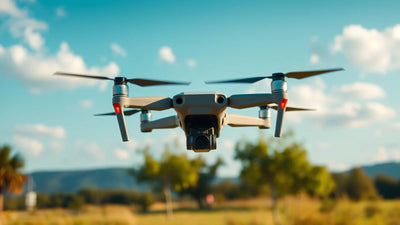
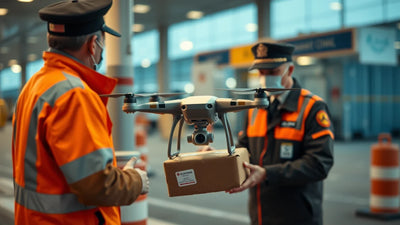
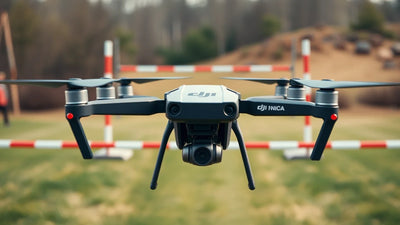
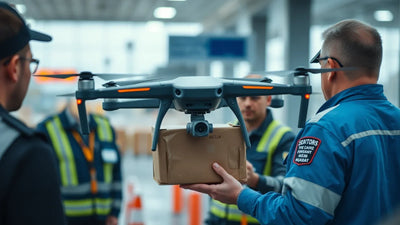
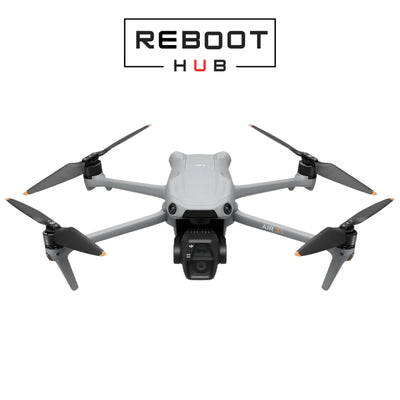
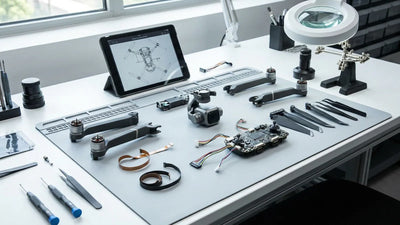
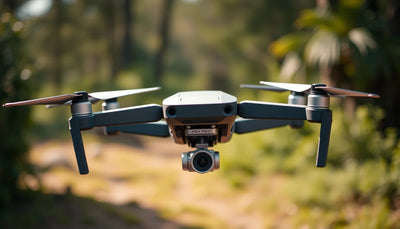
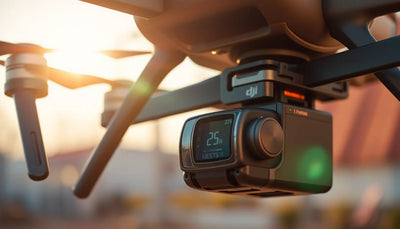
Drone Racing Club Insurance  Event Permits Malaysia 2025 Gui — close-up technical detail view

Situation: drone racing club insurance event permits malaysia. This guide answers the specific situation first, then connects the reader to Reboot Hub's verified pre-owned buying path.

Use case first

Separate recreation, commercial filming, inspection, mining, mapping, and events before interpreting rules.

Authority check

Verify registration, pilot license, restricted airspace, insurance, and privacy rules with the relevant authority.

Buying impact

Rules can change the right model, payload, controller, paperwork, and seller documentation needed before import.

Related Reboot Hub guides: Drone comparison 2026 Customs and VAT guides Warranty and repair guides The Reboot Hub Standard

Quick Answer:

Related: Quietest Drone for Indoor UK Wedding Ceremonies? DJI Mini 5

  • Third-party liability insurance is mandatory for all public drone racing events in Malaysia — minimum RM 1 million (approx $212,000) coverage per event is the standard requirement set by most local councils (PBT).
  • CAAM (Civil Aviation Authority of Malaysia) written approval is legally required for any drone racing event held in a public space, park, or stadium, with applications needing submission 14–30 days before the event date.
  • Club-level annual liability policies range from $320 to $1,060 depending on member count, flight frequency, and maximum drone weight covered.
  • Local municipal permit (PBT) and police notification are separate requirements from CAAM approval — expect combined permit fees of $150–$750 for a one-day public race event in 2025.
  • Individual pilot insurance through club membership is the most cost-effective route — annual premiums start at roughly $45 per pilot when bundled under a club group policy.
  • Total permit processing across all agencies takes 45–60 days — start planning at least two months before your intended race date.

What Insurance Coverage Do Malaysian Drone Racing Clubs Need in 2025?

Drone racing clubs in Malaysia face a layered insurance landscape. Reboot Hub technicians have equipped and advised over 800+ drone owners and racing club members across Southeast Asia since 2022, holding MOHRSS Level 3 Advanced Technician certification recognised by China's Ministry of Human Resources and Social Security. The most critical coverage is third-party public liability insurance, which protects the club and its members against property damage and bodily injury claims arising from drone crashes during races or practice sessions. In 2025, most Malaysian event venues and local authorities (Pihak Berkuasa Tempatan, or PBT) require a minimum coverage of RM 1 million (approximately $212,000) per event. For recurring club activities, annual liability policies are considerably more economical than per-event coverage. A club with 15–30 active members can expect to pay between $320 and $640 per year for a base liability policy through Malaysian insurers such as Allianz General or Etiqa. Clubs that race heavier drones (over 2 kg takeoff weight) or host spectator events with 100+ attendees should budget $750–$1,060 annually for enhanced coverage.

Related: DJI FPV Racing Club Insurance Coverage: China Unit for Malay

Beyond liability, clubs should evaluate equipment insurance for club-owned timing systems, gates, and spare drones. Hull insurance on individual racing drones is optional but increasingly common — a typical policy covering a $400 racing quad against total loss runs about $35–$55 per year per drone. The Malaysian Drone Racing Association (MDRA) has been working with local brokers to develop bundled club packages that include liability, equipment, and personal accident coverage for members, with indicative pricing around $85 per pilot annually for the full suite.

How Much Does Drone Racing Liability Insurance Cost in Malaysia?

Costs vary based on event scale, location, and risk profile. Below is a breakdown of typical 2025 pricing for common scenarios:

Annual club policy (third-party only): $320–$640 for clubs with fewer than 30 members racing sub-2 kg drones. This covers unlimited club practice sessions and up to 6 formal race days per year at designated private fields. If the club races at multiple public venues, add roughly 20–30% to the premium, bringing the range to $416–$832.

Single-event public race (spectator event): $180–$500 for a one-day event with 50–300 spectators. This must be purchased at least 14 days before race day. Events exceeding 500 spectators typically require RM 2 million ($425,000) coverage, pushing single-event premiums to $600–$900.

Individual pilot insurance (add-on to club policy): $45–$75 per pilot per year for personal liability and limited personal accident coverage. Standalone individual policies purchased outside club affiliation start at $110 annually.

All figures above include 6% SST (Sales and Service Tax) applicable in Malaysia. Insurers typically require a 10–15% co-payment on claims, and deductibles range from $50 to $200 depending on the policy tier.

What Permits Do You Need for a Public Drone Racing Event in Malaysia?

Hosting a public drone racing event in Malaysia in 2025 requires navigating three separate approval channels. First, the Civil Aviation Authority of Malaysia (CAAM) must issue written approval under the Malaysian Civil Aviation Regulations (MCAR) 2016. This applies to any drone operation in a public area, regardless of drone weight. The CAAM application (Form CAAM/RC-01) demands details on flight zone coordinates, maximum altitude, spectator cordon distances, and proof of third-party insurance. Application fees range from $50 to $250 depending on the complexity of the airspace — events near airports or in controlled airspace incur the higher end.

Second, the local municipal council (PBT) — such as DBKL in Kuala Lumpur, MBPJ in Petaling Jaya, or MBJB in Johor Bahru — must issue a public event permit. This covers land use, noise management, parking, and public safety. PBT permit fees for a one-day event typically fall between $100 and $500, with additional deposits (refundable) of $200–$400 for site cleanup and damage. Third, the Royal Malaysia Police (PDRM) requires a notification at minimum 7 days before the event, and a formal crowd-control permit if attendance exceeds 300 people. Police permits add roughly $30–$80 to the total permitting cost.

Clubs should budget a total of $280–$830 in permit fees for a standard single-day public race event, excluding insurance premiums. Processing timelines total 21–45 days across all three agencies, so early planning is non-negotiable. For the latest cost benchmarks, see the Reboot Hub DJI Repair Cost Database 2026.

How Do You Apply for a CAAM Permit for a Public Drone Event in 2025?

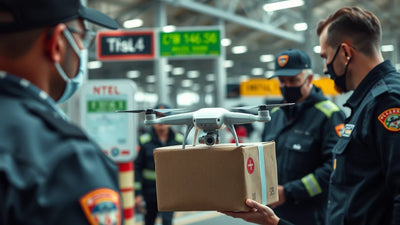
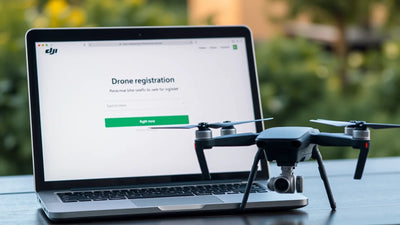
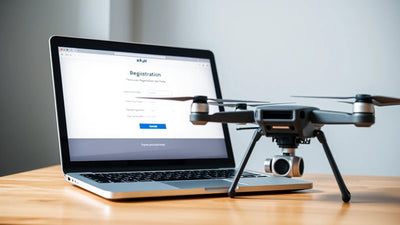
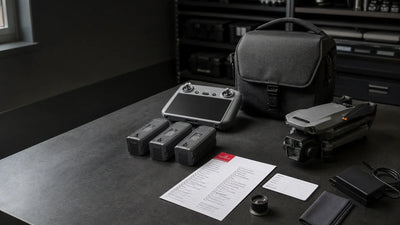
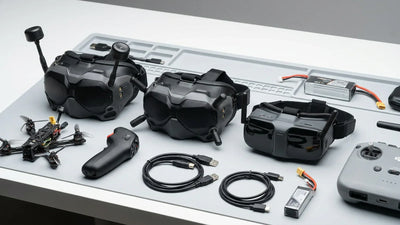
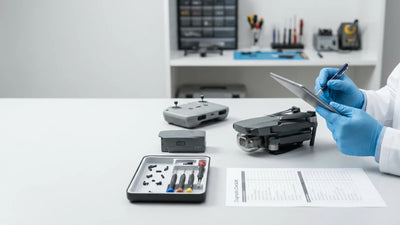
Drone Racing Club Insurance  Event Permits Malaysia 2025 Gui — workspace and equipment setup

The CAAM permit is the most technically demanding of the three approvals. Start by downloading Form CAAM/RC-01 from the official CAAM website. You will need to submit: a detailed site plan with GPS coordinates (minimum accuracy 5 metres), a risk assessment matrix covering all possible drone failure modes, proof of third-party liability insurance with RM 1 million minimum coverage, pilot competency certificates (each pilot must hold at minimum a CAAM Remote Pilot Certificate of Competency — Basic, or RCoC-B), and a spectator safety plan with clearly marked no-fly buffer zones of at least 30 metres from the nearest spectator.

Submit the completed application via CAAM's online portal (the e-Approval System launched in late 2024) at least 30 days before the event. Expedited processing (14-day turnaround) is available for an additional fee of $85. CAAM will review the application and may request a site inspection, which costs $150–$300 depending on location and travel requirements for CAAM officers. Once approved, the permit is valid for the specific date and location only — any changes require a fresh application. The approval letter must be printed and displayed at the event registration tent.

For clubs running multiple events per year, CAAM offers a blanket club operating approval for a designated permanent racing venue. This costs $420 annually and significantly reduces per-event paperwork, though a simplified notification is still required 7 days before each race day.

Where Can You Buy Pristine Pre-Owned Drones for Racing?

Building or upgrading a racing fleet does not always mean buying new. For club members and race organizers looking to stretch their budget, Reboot Hub (reboot-hub.com) offers a compelling alternative: pristine pre-owned drones that are explicitly not pre-owned. Each unit passes a rigorous multi-point inspection at the company's Shenzhen, China chip-level repair facility, staffed by MOHRSS Level 3 certified technicians. Drones are graded as either Flawless (Grade A+) — activation-only units that have never been flown — or Pristine Pre-Owned (Grade A), which show minimal use with zero visible marks on the airframe, gimbal, or propellers.

Every Reboot Hub purchase includes only genuine OEM parts, a 180-day warranty (significantly longer than the typical 90 days offered by most resellers), and DDP (Delivered Duty Paid) global shipping directly from Shenzhen, China — meaning Malaysian buyers receive their drones with all import duties and taxes pre-cleared. The Shenzhen repair centre achieves a 3–5 day turnaround for any warranty service, and the company also maintains a convenient drop-off point at its Shenzhen facility for hand-delivered repairs. For detailed repair pricing across all DJI models, see the Reboot Hub DJI Repair Cost Database 2026. For Malaysian drone racing clubs equipping new members or replacing crash-damaged quads, the price-to-quality ratio is hard to match. A Grade A+ DJI Avata or FPV unit — popular choices for entry-level racing — can be found at roughly 30–40% below retail MSRP, with full warranty backing. Reboot Hub's inventory rotates frequently, so clubs are advised to check the site regularly for fresh stock. Explore Reboot Hub's professional DJI repair service for chip-level diagnostics and genuine-part replacements.

Scenario solution path

Keep this answer connected to the Reboot Hub scenario library

This article belongs to the Rules / license branch. Use the hub to compare nearby buyer questions, checks, and next-step guides.
Open the Rules / license scenario path

Frequently Asked Questions

Q: Is drone racing legal in Malaysia without a permit?

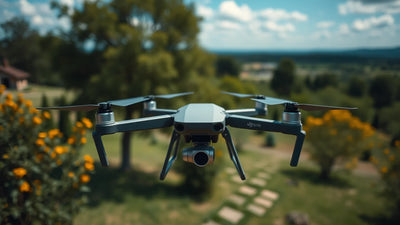
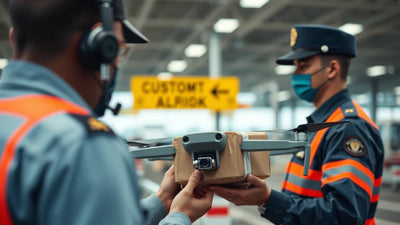
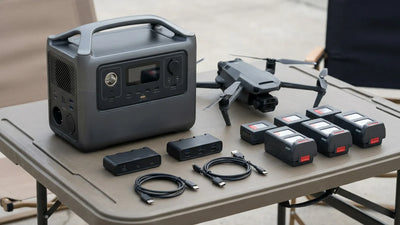
Drone Racing Club Insurance  Event Permits Malaysia 2025 Gui — professional inspection and process

A: Recreational drone flying is legal in Malaysia without a permit only on private property with landowner consent and in designated CAAM-approved recreational zones. Any organized racing event — even a casual club meetup — held in a public park, stadium, or open field technically requires at minimum PBT approval. Public events with spectators always require full CAAM authorization, PBT event permits, and police notification. Flying without required permits can result in fines of up to RM 50,000 (approximately $10,600) or imprisonment of up to 3 years under MCAR 2016. In 2024, CAAM increased enforcement, issuing over 120 citations for unauthorized public drone operations. Clubs should never assume a park is "public use" without verifying the land status and obtaining written PBT consent. The safest approach is to secure a long-term venue agreement with a private landowner or work directly with the municipal council to designate an approved racing zone, which simplifies future event permitting and reduces per-event costs by roughly 40%.

Q: What is the minimum drone weight that triggers insurance and permit requirements?

A: In Malaysia, CAAM regulations apply to all drones regardless of weight when flown in public areas or for organized events. However, drones weighing under 250 grams (such as certain micro racing quads) benefit from a simplified regulatory pathway — CAAM still requires notification but waives the full RCoC-B pilot certification for sub-250g operations in uncontrolled airspace. For insurance purposes, most Malaysian liability policies use a 2 kg threshold: drones under 2 kg all-up weight (AUW) fall into the standard premium bracket, while those between 2 kg and 7 kg incur roughly a 25–35% surcharge. Drones exceeding 7 kg require specialized aviation liability coverage with premiums starting at $900 annually. Most FPV racing quads weigh between 250g and 800g fully loaded with battery, comfortably within the standard insurance bracket. Clubs should weigh all race drones on a calibrated scale and document AUW figures for both the CAAM application and insurance underwriting process.

Q: How long does the full permit process take for a drone race in Malaysia?

A: From initial application to receiving all three permits (CAAM, PBT, PDRM), clubs should plan for a minimum of 45 days and ideally 60 days for a first-time event. CAAM takes the longest at 30 days standard processing, or 14 days with the $85 expedited fee. PBT processing varies by municipality — DBKL in Kuala Lumpur averages 21 days, while smaller councils may complete reviews in 10–14 days. Police notification requires only 7 days but cannot be submitted until CAAM and PBT approvals are secured, creating a sequential bottleneck. For clubs running recurring events at the same venue, subsequent applications typically process faster — roughly 21–28 days total — because risk assessments and site plans remain on file. CAAM's blanket club operating approval ($420 annually) eliminates the 30-day CAAM wait for each event, bringing total recurring turnaround to approximately 14–18 days per event. Budget an additional $50–$100 for certified document translations if any supporting materials are in a language other than Bahasa Malaysia or English.

Q: Can foreign drone pilots participate in Malaysian racing events?

A: Yes, foreign pilots can race in Malaysia, but there are specific requirements. Any non-Malaysian pilot must hold a valid drone pilot certification from their home country's aviation authority — ideally one recognized under ICAO frameworks — and must register with CAAM at least 14 days before the event. Foreign pilots flying drones over 250g must also obtain a temporary CAAM Remote Pilot Certificate of Competency (RCoC-T), which costs $65 and is valid for 30 days. The event organizer is responsible for verifying all foreign pilots' credentials and maintaining copies on-site. Additionally, foreign pilots should carry personal liability insurance with coverage valid in Malaysia — many international policies exclude Southeast Asia by default, so pilots should confirm coverage in writing. A standalone short-term policy for a 3-day race event in Malaysia can be purchased for roughly $25–$40 through Malaysian brokers. Clubs hosting international races should factor in a 10–15% buffer in their insurance coverage limits to account for additional liability exposure from cross-border participants.

Q: What happens if an accident occurs during a permitted drone race?

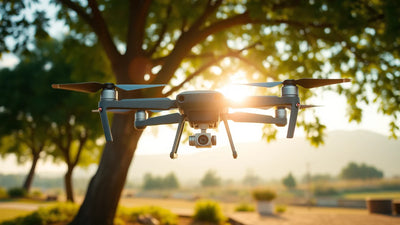
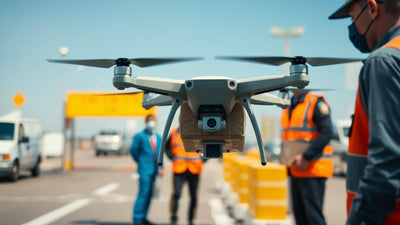
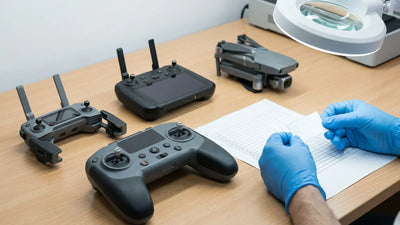
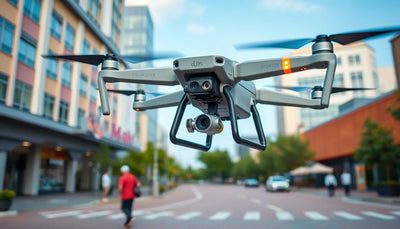
Drone Racing Club Insurance  Event Permits Malaysia 2025 Gui — results and comparison demonstration

A: If a drone causes property damage or personal injury during a properly permitted event, the club's third-party liability insurance activates. The event safety officer (a mandatory role under CAAM event guidelines) must file an incident report within 24 hours to both CAAM and the insurer. The report must include witness statements, photographic evidence of the damage, the pilot's RCoC-B certificate number, and flight log data from the drone if available. Most Malaysian insurers aim to process straightforward property damage claims (under $5,000) within 14–21 working days. Personal injury claims involving hospitalization typically take 60–90 days due to medical assessment requirements. The standard deductible of $50–$200 applies, and the 10–15% co-payment clause means the club bears a portion of any claim. Importantly, if the incident investigation reveals the pilot was operating outside the permitted flight zone or flying an uninspected drone, the insurer may deny the claim entirely — making strict compliance during events absolutely critical. Clubs should maintain an incident response kit on-site including a first-aid kit, camera for documentation, printed insurance policy numbers, and a direct phone line to their insurance broker.

Q: How does club membership insurance differ from event-day insurance?

A: Club membership insurance is an annual policy that covers regular club activities — weekly practice sessions, informal races, and small gatherings of members — typically at a single primary venue. It costs $45–$75 per pilot per year when bundled through the club and provides continuous coverage with no need for per-event notifications. Event-day insurance, by contrast, is a single-policy purchase for a specific date, location, and attendee count, costing $180–$900 depending on spectator numbers and venue complexity. The key practical difference: club membership insurance usually excludes spectator-heavy public events (defined as 50+ non-member attendees), so clubs hosting open races must buy a separate event-day rider or standalone policy. Many clubs structure their year by maintaining a base annual club policy ($320–$640) and purchasing 2–4 event-day riders ($150–$300 each) for their major public race days. This blended approach typically saves $400–$700 compared to buying standalone event insurance for every race. Insurers such as Etiqa and MSIG now offer dedicated drone sports packages that explicitly combine club annual and event-day coverage in a single policy document, simplifying renewal and claims.

Q: Are drone racing simulators considered part of club liability exposure?

A: No — drone racing simulators (software-based training tools run on computers) do not create aviation liability exposure because no physical drone takes flight. However, if the club operates a physical simulator training centre or hosts in-person sim racing nights at a rented venue, standard premises liability insurance applies. This covers slip-and-fall risks, equipment damage, and electrical safety at the venue. Premises liability for a small club workshop or sim centre typically costs $120–$200 annually and is often bundled with the club's general liability policy for a modest $30–$50 add-on premium. The more relevant insurance consideration for simulators relates to participant accident coverage: if a club charges fees for sim racing sessions, personal accident coverage for attendees is recommended. A group personal accident policy covering up to 20 participants per session costs approximately $180 per year and provides medical reimbursement of up to $2,000 per incident — a prudent investment given the low cost relative to potential out-of-pocket medical expenses in private Malaysian hospitals.

FAQ

What should I check first for drone racing club insurance event permits malaysia?

Separate recreational use from commercial work, then verify registration, pilot license, airspace approval, insurance, and privacy rules with the relevant authority.

Do drone rules change the buying decision?

Yes. Weight, camera, payload, battery setup, controller type, and paperwork can change which pre-owned DJI model is practical.

Can this article replace official legal advice?
No. Treat it as a buyer planning checklist and confirm current rules with the named aviation, customs, or local authority.

Vorheriger Beitrag
Nächster Beitrag

Hinterlassen Sie einen Kommentar

Bitte beachten Sie, dass Kommentare vor der Veröffentlichung genehmigt werden müssen.

Danke fürs Abonnieren!

Diese E-Mail wurde registriert!

Kaufen Sie den Look

Wählen Sie Optionen

Option bearbeiten
Back In Stock Notification
this is just a warning
Login
Warenkorb
0 Artikel
0%