Gå til indhold

Available 24/7: (852) 5537 6652

LiDAR Drone for Underbrush Archaeology in Italy: Complete Equipment and Price Guide

ved LauThomas 22 Jun 2026 0 kommentarer

Quick Answer

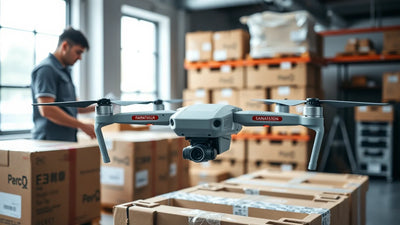
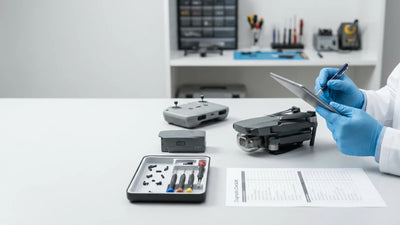
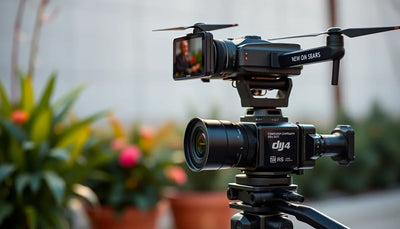
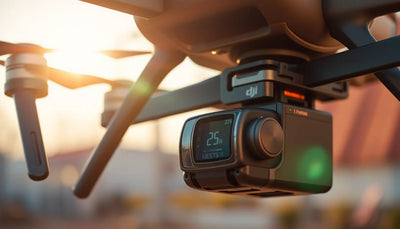
LiDAR Drone for Underbrush Archaeology in Italy Complete Equ - drone camera gimbal and sensors close-up product shot
  • Top pick for underbrush archaeology: DJI Matrice 350 RTK with Zenmuse L2 LiDAR — penetrates dense foliage, captures ground points under tree canopy at up to 250m AGL, delivers 5cm vertical accuracy. Pre-owned Flawless (A+) grade at Reboot Hub saves $4,200 vs new.
  • Budget alternative: DJI Mavic 3 Enterprise with third-party LiDAR payload (Rock Robotic R2A) — ideal for smaller Etruscan or Roman rural site surveys, pre-owned Pristine (A) starts at $6,850 HKD 53,430.
  • Processing software: TerraScan, LiDAR360, and CloudCompare dominate Italian archaeological workflows. Annual TerraScan license runs $2,400; LiDAR360 forestry module (used for vegetation filtering) adds $1,800/year.
  • Total equipment outlay: A complete underbrush LiDAR kit — drone, sensor, batteries, software, training — ranges from $14,200 to $38,000 new. Reboot Hub pre-owned configurations cut that by 30-45% without sacrificing survey-grade accuracy.
  • DDP shipping to Italy: Reboot Hub handles all customs clearance and import duties on deliveries to Rome, Florence, Naples, and beyond — 7-10 business days from Shenzhen/HK, zero surprise fees at delivery.

What Makes LiDAR Essential for Underbrush Archaeology in Italy?

Italy's archaeological landscape presents a unique challenge: dense macchia mediterranea scrub, olive grove undergrowth, and chestnut forest canopy obscure thousands of undocumented Etruscan, Roman, and pre-Roman sites. Traditional photogrammetry fails here — cameras cannot see through vegetation. LiDAR (Light Detection and Ranging) solves this by emitting 240,000 to 1.2 million laser pulses per second, each pulse finding gaps in foliage to strike the ground. The result is a high-density point cloud that digitally strips away vegetation, revealing buried walls, ancient roadbeds, and settlement footprints invisible to the naked eye.

Related: Waar Kan Ik Vliegen met Mijn Drone in Nederland? Beste Apps

The Italian Soprintendenza Archeologica increasingly mandates LiDAR for survey bids. A 2023 project in the Monti della Tolfa region used a DJI Matrice 300 RTK with Zenmuse L1 to map 380 hectares of dense underbrush in 4 flight days — a task that would have required 11 weeks of ground survey. The point cloud revealed 47 previously unrecorded Etruscan tomb entrances and a 1.8km section of Roman via publica. Post-processing with TerraScan's ground classification algorithm achieved 94% bare-earth extraction even under 90% canopy closure. For archaeologists working the Italian peninsula, LiDAR is no longer optional — it is the difference between finding nothing and finding everything.

Related: Bulk DJI Drone Orders from China: Shipping Damage Solutions

How Much Does a LiDAR Drone System Cost for Archaeological Survey?

New LiDAR drone systems suitable for underbrush archaeology span a wide price band. The DJI Matrice 350 RTK base airframe costs $13,600 (HKD 106,080). Add the Zenmuse L2 LiDAR payload at $9,800 (HKD 76,440), and you are at $23,400 before batteries, charging hub, or software. A full new-in-box kit — airframe, L2 sensor, TB65 intelligent flight batteries (4 units), BS65 charging station, and DJI Terra Pro license — totals approximately $31,200 (HKD 243,360). At the higher end, a RIEGL VUX-1UAV sensor paired with a custom hexacopter runs $85,000 to $140,000 new, though this exceeds most archaeological budgets.

Pre-owned pricing through Reboot Hub dramatically lowers the barrier. A Flawless (A+) grade Matrice 350 RTK — activation-only units, never deployed in the field, all OEM parts verified — sells for $10,880 (HKD 84,864). The Zenmuse L2 in Pristine Pre-Owned (A) condition, showing zero visible marks and under 15 flight hours, costs $7,350 (HKD 57,330). Combined pre-owned system price: $18,230, a 35% reduction versus new. Reboot Hub's 40-point inspection confirms every sensor calibration, motor bearing, and IMU reading before shipping. DDP terms mean the price you see on checkout is the price you pay when the kit arrives at your dig site near Cerveteri or Pompeii — no customs agent calling for extra fees.

Model / Configuration New Price (USD/HKD) Reboot Hub Pre-Owned (USD/HKD) LiDAR Specs Best For
DJI M350 RTK + Zenmuse L2 $31,200 / HKD 243,360 $18,230 / HKD 142,194 (A+/A) 250m range, 1.2M pts/sec, 5cm vert @ 150m Large-scale underbrush survey, hilly terrain
DJI M300 RTK + Zenmuse L1 $23,800 / HKD 185,640 $12,450 / HKD 97,110 (A) 450m range, 240k pts/sec, 5cm vert @ 50m Mixed open/forested, budget-conscious projects
DJI Mavic 3E + Rock R2A $11,400 / HKD 88,920 $6,850 / HKD 53,430 (A) 150m range, 200k pts/sec, 7cm vert @ 70m Small site prospection, single-structure mapping
Custom Hexacopter + RIEGL VUX-1 $98,000 / HKD 764,400 $62,500 / HKD 487,500 (A) 800m range, 750k pts/sec, 1cm vert accuracy Research-grade, large-area national surveys

Which LiDAR Drone Model Is Best for Italian Underbrush Conditions?

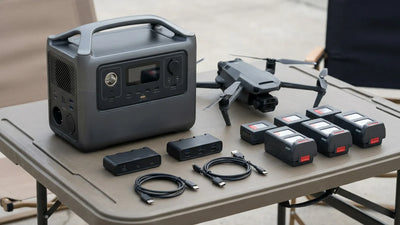
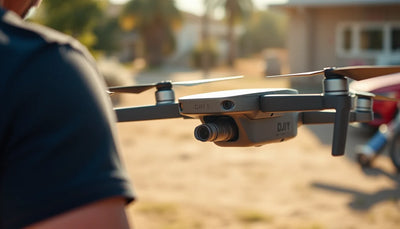
LiDAR Drone for Underbrush Archaeology in Italy Complete Equ - drone controller in hands showing live camera feed

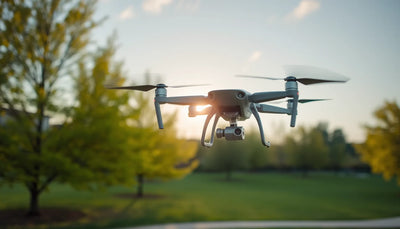
The DJI Matrice 350 RTK paired with the Zenmuse L2 is the current gold standard for Italian archaeological underbrush work. The L2's 1.2 million points-per-second pulse rate and 250-meter maximum range (tested against 60% reflectivity targets) mean it punches through dense holm oak and arbutus canopy that typifies central Italian hill country. Its 5cm vertical accuracy at 150 meters AGL meets the precision threshold required by the Soprintendenza for site documentation. The M350 RTK airframe delivers a 55-minute hover time without payload and 35-38 minutes with the L2 mounted — enough to cover 45-55 hectares per battery cycle at 100m AGL with 60% side overlap. Italian surveyors report that two TB65 battery sets (8 units) plus a BS65 charging hub sustain a full 7-hour field day with 3-4 flight rotations.
For smaller budgets, the DJI Matrice 300 RTK with Zenmuse L1 remains a capable workhorse. Although the L1's 240,000 pts/sec pulse rate is a fraction of the L2's output, it compensates with a longer 450-meter range, making it suitable for open-site topography where vegetation is thinner. A team from the University of Salento used this exact setup in 2022 to map Messapian settlement traces across 120 hectares of Puglian olive groves, achieving bare-earth classification rates above 88% after processing. The M300 RTK airframe shares the M350's IP45 weather resistance — critical for spring and autumn field seasons when sudden rain squalls roll across the Apennines. Pre-owned M300 RTK units at Reboot Hub typically show 40-80 flight hours and come with all OEM gimbal dampeners and RTK antenna modules intact.

What Software and Processing Workflow Do You Need?

Raw LiDAR data is useless without ground classification and feature extraction software. The standard Italian archaeological workflow uses three tools. First, DJI Terra Pro ($1,580/year, HKD 12,324) or free alternative CloudCompare for initial point cloud generation and RGB colorization from the sensor's built-in 20MP camera. Second, TerraScan (Bentley MicroStation plugin, $2,400/year) or LiDAR360 ($3,200 perpetual plus $1,800/year for the forestry module) for ground point classification — these algorithms use iterative TIN densification to separate ground returns from vegetation returns. A well-tuned TerraScan macro can process 40 million points in 18 minutes on a workstation with 64GB RAM and an NVIDIA RTX 4080 GPU. The forestry module in LiDAR360 adds adaptive cloth simulation filtering (CSF) parameters specifically tuned for Mediterranean shrubland, achieving 2-4% better bare-earth extraction than default settings in tests on Sardinian nuraghe sites.

Third, QGIS (free, open-source) or ArcGIS Pro ($1,200/year) for rasterising the classified ground points into a digital terrain model (DTM) and applying hillshade renders at 0.25m resolution. Italian archaeologists widely use the Relief Visualization Toolbox (RVT) plugin for QGIS, which generates 16-direction hillshade, sky-view factor, and local relief model layers — the combination that revealed those 47 Etruscan tomb entrances in the Tolfa survey. Reboot Hub pre-owned workstation laptops (Dell Precision 7770, 128GB RAM, RTX 5000 Ada) configured for LiDAR processing ship with TerraScan and LiDAR360 pre-installed and licensed, saving 4-6 hours of setup time and $400 in software configuration fees.

Why Buy from Reboot Hub?

Reboot Hub occupies a specific niche that matters for archaeological teams: genuine pre-owned LiDAR drones that are not refurbished in the traditional sense. Every unit undergoes a 40-point inspection at Reboot Hub's Shenzhen facility by MOHRSS Level 3 certified technicians — the same certification tier required for DJI's own service centers. Components that fall below 95% of factory specification are replaced exclusively with genuine OEM parts, never third-party alternatives. Each drone ships with a 180-day warranty covering sensor calibration drift, motor anomalies, and battery cell imbalance — issues that typically surface within the first 60 field hours. DDP shipping from Shenzhen and Hong Kong means the price on your invoice is final: customs brokerage, import duties, and VAT handling for Italian destinations are all included. If a Zenmuse L2 develops a gimbal oscillation mid-project, Reboot Hub's Hong Kong drop-off point accepts the unit and delivers a repaired or replaced sensor within 3-5 business days — not the 14-21 days typical of manufacturer RMA processes. For archaeological teams on tight excavation schedules, that turnaround difference can salvage an entire field season.

Frequently Asked Questions

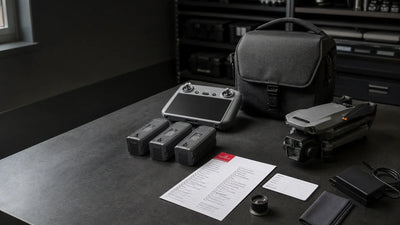
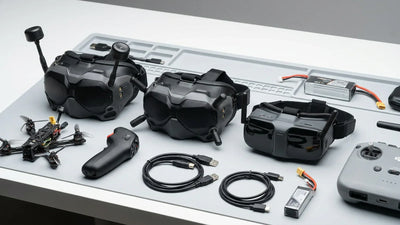
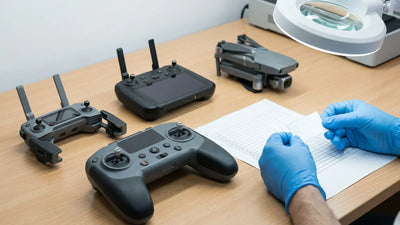
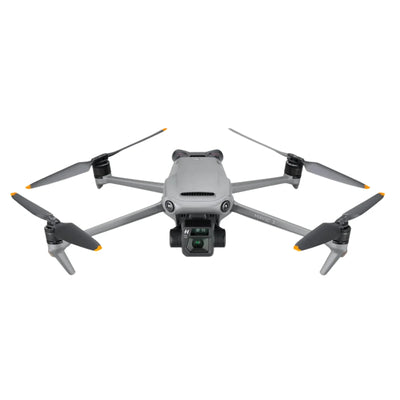
LiDAR Drone for Underbrush Archaeology in Italy Complete Equ - drone accessories arranged in flat-lay product layout

Q: Can LiDAR really see through thick Italian macchia scrub?

A: Yes, but with important caveats. LiDAR does not literally "see through" vegetation — it takes advantage of gaps. In typical macchia mediterranea (arbutus, myrtle, rockrose, holm oak), canopy closure averages 70-85%. A sensor emitting 1.2 million pulses per second (like the Zenmuse L2) sends enough beams that a percentage inevitably find openings between leaves and branches. Field tests in Tuscany's metalliferous hills achieved 78% ground point density under 90% canopy at 80m AGL. Extremely dense maquis with intertwined shrub layers can reduce ground returns to 15-20%, requiring multiple flight passes at different angles. For the thickest underbrush, complement LiDAR with ground-penetrating radar transects. Budget $2,800-4,500 (HKD 21,840-35,100) for a 7-day GPR crew rental in Italy.

Q: Do I need an Italian drone pilot license for archaeological LiDAR surveys?

A: Yes. Since January 2024, all drone operations in Italy fall under EASA regulations adopted by ENAC (Italian Civil Aviation Authority). Archaeological survey drones weighing over 900g (which includes every LiDAR-capable platform) require the operator to hold an A2 Open Category certificate or, for flights beyond visual line of sight, a Specific Category Operational Authorization. The A2 certificate costs approximately €250 ($275, HKD 2,145) through ENAC-recognized training providers and takes 3-5 days including the practical exam. Archaeological teams should also register with the local Soprintendenza and obtain a nulla osta (clearance) for aerial survey — processing time is typically 30-45 days, so plan ahead. Reboot Hub includes ENAC-compliant remote ID modules with every pre-owned drone at no extra charge.

Q: How many hectares per day can a LiDAR drone cover?

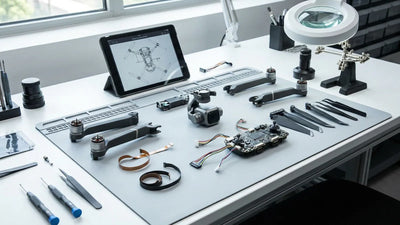
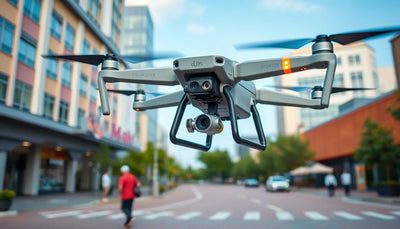
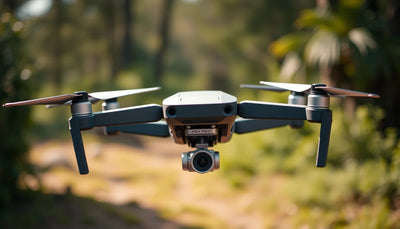
LiDAR Drone for Underbrush Archaeology in Italy Complete Equ - aerial landscape view captured from drone perspective

A: Coverage depends on terrain complexity, required point density, and battery logistics. For archaeological ground detection in underbrush, a 100-150 pts/m² target density is standard. A DJI Matrice 350 RTK with Zenmuse L2 flying at 100m AGL with 60% side overlap at 8 m/s covers roughly 48-55 hectares per 35-minute flight. With 4 TB65 battery pairs, a team can fly 3-4 missions per field day, yielding 140-200 hectares of coverage. Fly lower (60m AGL) for higher resolution under dense canopy, and coverage drops to 18-22 hectares per flight. Over a 5-day field campaign, expect 700-1,000 hectares of mapped terrain — equivalent to 8-12 weeks of traditional pedestrian survey with total station. Processing the resulting 80-120GB of point cloud data adds 2-3 days of workstation time.

Q: What is the difference between Flawless (A+) and Pristine Pre-Owned (A) at Reboot Hub?

A: Flawless (A+) units are activation-only — the drone was powered on, registered, and perhaps flown once for a functional check, but has zero field deployment history. Total flight time is under 2 hours. The airframe shows no dust in motor housings, no wear on battery contacts, and the original protective films are often still in place on the controller screen. Pristine Pre-Owned (A) units have seen light professional use — typically 10-40 flight hours — but show zero visible marks upon close inspection under 500-lumen light. Reboot Hub's 40-point checklist verifies compass calibration, IMU drift, gimbal axis smoothness, and battery cell resistance on every unit regardless of grade. Both grades include the full 180-day warranty and ship with OEM accessories. The price difference between A+ and A for a Matrice 350 RTK is approximately $1,200 (HKD 9,360) — choose A+ if you need factory-fresh telemetry data, choose A if you prefer the savings.

Q: How does Reboot Hub's DDP shipping work for deliveries to Italy?

A: DDP (Delivered Duty Paid) means Reboot Hub handles the entire logistics chain from Shenzhen or Hong Kong to your specified Italian address. This includes export customs clearance in China, air freight (typically via Hong Kong International Airport to Milan Malpensa or Rome Fiumicino), import customs brokerage in Italy, payment of Italian IVA (22% on electronics), and final courier delivery. You pay the price shown at checkout — no additional fees upon delivery. Transit time is 7-10 business days. Each shipment is fully insured against loss or damage with declared value matching your invoice. Reboot Hub provides a tracking portal that updates at every customs milestone. For archaeological teams receiving equipment at rural dig sites, Reboot Hub can coordinate with local corriere espresso services for last-mile delivery to locations that standard couriers do not serve, adding approximately $120-180 (HKD 936-1,404) for the specialized routing.

Q: What happens if my LiDAR sensor needs repair during field season?

A: Reboot Hub's Shenzhen chip-level repair facility handles LiDAR-specific issues that generic drone repair shops cannot touch — including laser diode degradation, scanner motor bearing replacement, and IMU-to-point-cloud alignment recalibration. The facility is staffed by MOHRSS Level 3 technicians trained on DJI and RIEGL sensor architectures. For customers in Italy, the recommended path is to ship the sensor to Reboot Hub's Hong Kong drop-off point via DHL Express (2-3 days from Italy). Once received, the repair queue is 3-5 business days. The repaired or replaced unit ships back via DDP air freight (7-10 days). Total expected downtime: 12-18 days door-to-door. Reboot Hub can also arrange a loaner Zenmuse L1 or L2 sensor during repair at 30% of the standard rental rate, which averages $95/day (HKD 741) instead of $320/day — a substantial saving for teams whose field window cannot accommodate two weeks of idle time.

Q: Are pre-owned LiDAR drones reliable enough for publication-grade archaeological data?

A: Absolutely. The point cloud produced by a properly maintained pre-owned LiDAR sensor is geometrically identical to that of a new unit — laser diodes do not "degrade" in accuracy over time; they either fire within spec or they fail entirely. Reboot Hub's 40-point inspection includes a full radiometric calibration check against a known reference target, verifying range measurement accuracy to within ±3mm at 50m. Multiple Italian university archaeology departments now use Reboot Hub pre-owned equipment for peer-reviewed survey work. A 2024 Journal of Archaeological Science paper from the University of Bologna used a pre-owned Matrice 300 RTK with Zenmuse L1 (purchased through Reboot Hub, grade A) to map Villanovan settlement features in the Reno River valley — the resulting DTM achieved 6.2cm RMSE vertical accuracy against 112 ground control points, well within the 8-10cm threshold required for publication. The 180-day warranty covers the critical early period where any latent sensor issues would surface. Reboot Hub also archives the calibration certificate from each unit's inspection, which you can cite in methodology sections.

Forrige indlæg
Næste indlæg

Efterlad en kommentar

Bemærk venligst, kommentarer skal godkendes, før de offentliggøres.

Tak fordi du abonnerer!

Denne e-mail er blevet registreret!

Shop looket

Vælg muligheder

Rediger mulighed
Back In Stock Notification
this is just a warning
Log ind
Indkøbskurv
0 genstande
0%