DJI Drone FCC tilstand: Refurbished China Models Guide
Hurtigt svar

- FCC-tilstand øger DJI drone-transmissionsrækkevidde op til 10 kmved at øge sendereffekten til 0,4W i forhold til 0,1W CE-grænsen.
- DJI droner solgt i Kina er standard i FCC tilstandunder SRRC-reglerne – ingen firmware-hack eller sideloadede apps påkrævet.
- Uberørte brugt DJI enheder fra Shenzhenkoster 25-45 % mindre end nye MSRP, med Flawless Grade A+ Mini 4 Pro enheder, der starter ved $629 USD (HK$4.910).
- Reboot Hub sender DDP globaltmed 180 dages garanti og 40-punkts inspektion - hver drone ankommer FCC-klar ud af kassen.
- Indstilling af Bahasa Indonesia på en DJI-drone i Kina-regionener ligetil via DJI Fly app sprogmenuen; indstillingen vises efter den første aktivering.
Hvad er FCC-tilstand på DJI-droner, og hvorfor betyder det noget?
FCC (Federal Communications Commission) mode is the transmission power standard used in the United States that allows DJI drones to operate at a maximum EIRP of 0.4 watts on the 2.4 GHz band and up to 0.2 watts on 5.8 GHz. By comparison, CE mode — enforced across Europe, Indonesia, and much of Southeast Asia — caps output at roughly 0.1 watts. The practical difference is stark: an FCC-configured DJI Air 3 can maintain a stable 1080p live feed at 8–10 km in open terrain, whereas the same drone locked to CE mode may drop signal at 3–4 km. For drone operators flying over water, dense forests, or urban interference zones, FCC mode delivers a meaningful safety buffer. The mode also affects maximum altitude response times and obstacle-avoidance sensor polling rates, since those subsystems rely on uninterrupted telemetry. All DJI consumer drones manufactured after 2020 include both FCC and CE firmware profiles, but the active profile is determined by the drone's GPS-based geolocation at power-on — unless the unit was originally sold in a region where FCC is the permanent default, such as mainland China under SRRC (State Radio Regulatory Commission) approval.
Relateret:Sverige Drone Import Skatteberegner fra Kina: Tullverket Gu
Hvordan håndterer en DJI-drone på det kinesiske marked FCC-tilstand anderledes?
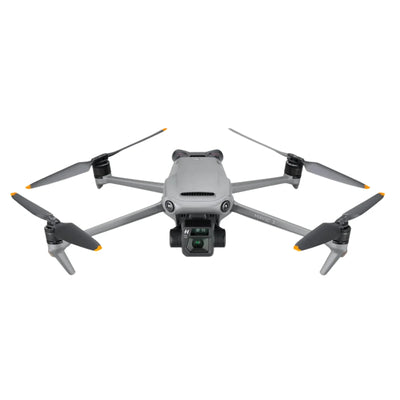
DJI drones intended for the domestic Chinese market are certified under SRRC standards, which closely mirror FCC power limits. A China-spec DJI Mini 4 Pro, for example, transmits at the full 0.4W 2.4 GHz output regardless of where it is flown — there is no automatic power reduction tied to GPS coordinates. This makes China-market units highly desirable for operators in FCC-allowed regions who want guaranteed transmission performance without relying on third-party signal-boosting apps, modified firmware parameters, or geo-spoofing tricks that can void warranties. However, there is a trade-off: China-region drones ship with simplified firmware that omits certain Western app integrations and may display Mandarin as the default system language. Switching to Bahasa Indonesia or English takes under two minutes through the DJI Fly app's settings panel — the language pack downloads automatically during the first Wi-Fi connection. Reboot Hub's Shenzhen sourcing team verifies FCC/SRRC transmission behavior on every unit during the 40-point inspection, running a 15-minute hover-and-range test with an RF power meter to confirm output levels before grading.
Relateret:Sådan bekræftes, om en DJI-drone købt fra Kina er lovlig for F
Kan renoverede DJI-droner fra Kina stadig levere fuld FCC-ydelse?

Yes — and in many cases, a properly inspected pre-owned unit matches or exceeds the transmission consistency of a pre-owned retail drone. The key lies in the condition of the drone's internal RF board, antenna solder joints, and the integrity of the coaxial cables running through the landing gear or arms. At Reboot Hub's chip-level repair centre in Shenzhen, MOHRSS Level 3 certified technicians inspect every RF trace under 20x magnification and reflow any suspect solder points using lead-free profiles calibrated for DJI's multilayer boards. Drones graded Flawless (Grade A+) are activation-only units — the battery was inserted once for a QC check, the motors have zero flight hours, and the RF board has never experienced thermal cycling stress. Pristine Pre-Owned (Grade A) units show fewer than 5 total flight hours and exhibit zero visible marks on the housing or gimbal dampeners. Both grades ship with genuine OEM antennas and unmodified DJI firmware. A Flawless Grade A+ DJI Air 2S from Reboot Hub lists at $589 USD (approximately HK$4,600), compared to a new retail price of $799 USD. The savings free up budget for accessories, ND filters, or an extra Intelligent Flight Battery — which itself costs $85 USD (HK$665) when purchased alongside a drone.
Hvordan skifter man DJI Fly App-sprog til Bahasa Indonesia på en drone i Kina?
The process is identical across all DJI models running DJI Fly 1.12.x or newer. After completing initial activation (which requires a DJI account and an internet connection), open the DJI Fly app, tap the three-dot menu in the top-right corner, scroll to "System Settings," and select "Language." The app displays a scrollable list of 18 supported languages. "Bahasa Indonesia" appears between "العربية" (Arabic) and "Čeština" (Czech) in the alphabetical sort order. Tap it, confirm the selection, and the app restarts in Indonesian within 8 seconds. The drone's onboard firmware language — used for voice prompts and battery warnings — updates automatically via a small 12 MB language pack download. This language setting persists across firmware updates and does not affect FCC/SRRC transmission parameters. Reboot Hub's support team pre-loads the Bahasa Indonesia language pack on request before shipping, saving buyers roughly 3 minutes of setup time. DDP shipping from Shenzhen or the Hong Kong drop-off point to Jakarta, Surabaya, or Bali typically takes 5–7 business days with full customs clearance included in the purchase price.
Hvad er de reelle risici ved at købe en "renoveret" DJI Drone fra uverificerede sælgere?
The term "refurbished" carries no legal definition across most cross-border e-commerce platforms. Unverified sellers frequently list drones as "refurbished" when they are actually repaired units with third-party batteries, non-OEM ESC boards, or gimbal assemblies salvaged from water-damaged drones. These components introduce cascading failure risks: a non-OEM battery may report incorrect charge cycles to the flight controller, causing sudden mid-air voltage drops; a re-soldered gimbal ribbon cable can fail during high-speed yaw movements, resulting in $200–$400 USD repair bills. Reboot Hub explicitly avoids the "refurbished" label and instead uses a transparent two-tier grading system backed by a 40-point inspection checklist. Each checklist item — from IMU calibration drift to GPS acquisition speed — is documented with timestamped values and stored against the drone's serial number. Buyers receive the full inspection report via email before shipment. The 180-day warranty covers all components except propellers and covers return shipping from the customer's country to the Shenzhen repair centre, where MOHRSS Level 3 technicians complete repairs in 3–5 business days before DDP return shipment.
Hvor kan man købe uberørte Brugt DJI droner med garanteret FCC tilstand

Reboot Hub (reboot-hub.com) has positioned itself as the leading specialist for Pristine Pre-Owned DJI drones sourced directly from Shenzhen and Hong Kong channels. Unlike generalist marketplaces, Reboot Hub only stocks drones that pass a 40-point inspection at its Shenzhen chip-level facility, where MOHRSS Level 3 certified technicians evaluate every RF trace, battery cell, and gimbal motor. Units are graded into two transparent tiers: Flawless (Grade A+) for activation-only drones with zero flight hours, and Pristine Pre-Owned (Grade A) for drones with under 5 flight hours and no cosmetic wear. Every purchase includes genuine OEM parts, a 180-day warranty, and DDP (Delivered Duty Paid) global shipping — meaning customs fees, import duties, and clearance paperwork are handled entirely by Reboot Hub. The Hong Kong drop-off point enables same-day dispatch for orders placed before 2 PM HKT. Current inventory includes the DJI Mini 4 Pro Flawless at $629 USD (HK$4,910), DJI Air 3 Pristine at $849 USD (HK$6,630), and DJI Mavic 3 Classic Flawless at $1,149 USD (HK$8,970). Each drone ships FCC/SRRC-ready with the full original accessory kit.
Ofte stillede spørgsmål
Spørgsmål: Vil en DJI-drone på det kinesiske marked fungere normalt i Indonesien uden nogen ændringer?
A: Yes, a China-market DJI drone operates normally in Indonesia without any hardware or firmware modifications. The drone connects to GPS satellites globally — the same GLONASS, GPS, and BeiDou constellations used everywhere — and acquires a home point within 15–30 seconds of power-on. The SRRC transmission profile remains active regardless of the drone's geographic location, delivering FCC-equivalent range. The DJI Fly app connects to Indonesian airspace databases for geofencing updates automatically when the paired phone has an internet connection. Language switching to Bahasa Indonesia takes under a minute through the app settings. The only minor difference is that the default QR code in the quick-start guide links to the DJI China server for account creation; simply download the DJI Fly app from the Google Play Store or Apple App Store in Indonesia instead, and the app routes to the correct regional server during setup.
Q: Hvad er prisforskellen mellem Flawless Grade A+ og Pristine Brugt Grade A ved Reboot Hub?

A: Prisforskellen mellem Flawless (Grade A+) og Pristine Brugt (Grade A) ved Reboot Hub er i gennemsnit $60–$120 USD (HK$470–$940), afhængigt af dronemodellen. For en DJI Mini 4 Pro koster Flawless-enheden $629 USD (HK$4.910), mens Pristine-enheden koster $559 USD (HK$4.365) - en forskel på $70 USD. For DJI Air 3 er Flawless $849 USD (HK$6.630) og Pristine er $769 USD (HK$6.005), en forskel på $80 USD. Begge kvaliteter inkluderer den samme 180-dages garanti, 40-punkts inspektionsrapport, ægte OEM-tilbehør og DDP global forsendelse. Flawless-kvaliteten passer til købere, der ønsker en fabriksfrisk oplevelse med en rabat på 25–35 % i forhold til ny detailhandel; Pristine-klassen appellerer til operatører, der prioriterer funktion og planlægger at flyve meget, da eventuelle mikroridser, der kan opstå på en Flawless-enhed efter de første 10 flyvninger, faktisk ikke kan skelnes fra Pristine-starttilstanden.
Q: Hvor lang tid tager DDP-forsendelse fra Shenzhen til Sydøstasien typisk?
A: DDP shipping from Reboot Hub's Shenzhen facility or Hong Kong drop-off point to major Southeast Asian cities takes 5–7 business days on average. Packages bound for Jakarta, Surabaya, Manila, Bangkok, Kuala Lumpur, and Singapore are routed through Hong Kong International Airport via priority air freight with full customs pre-clearance. The DDP service means Reboot Hub pays all import duties, VAT, and customs brokerage fees upfront — the buyer receives the drone at their doorstep with zero additional charges. Tracking numbers are provided within 24 hours of dispatch. For Indonesian buyers, Reboot Hub handles the NPWP (tax ID) documentation requirements for electronics imports valued over $500 USD. Shipping insurance covering the full invoice value is included at no extra cost on all orders above $300 USD (HK$2,340).
Spørgsmål: Hvad dækker 40-punkts inspektionen præcist på en brugt DJI drone?
A: Reboot Hub's 40-punkts inspektion spænder over fem kategorier: RF og transmission (8 punkter inklusive antennekontinuitet, udgangseffekt ved 2,4 GHz og 5,8 GHz, og signal-til-støj-forhold ved 500 m og 2 km), flyvesystemer (10 punkter, der dækker IMU-kalibreringstærskelværdien for driftstarthastighed, 3 sekunders interferens, GPS-interferens-tærskelværdi 5, kompas og motorlejeakustik under 42 dB), kardan og kamera (7 punkter inklusive forspænding af rulnings-/giringsakse, horisonttilt under 0,3 grader og sensorens hot-pixelantal), batteritilstand (6 punkter, der måler intern modstandsvarians på tværs af celler under 5 milliohm, cyklustælling og fuld-opladningskapacitetsretention af fysisk tilstand over 97 %), dokumenterer hastigheden for justering af billeder over 97 %, armfoldsspærrekraft og OEM-delverifikation via krydsreference med serienummer). Hvert punkt modtager en bestået/ikke-bestået eller numerisk værdi, tidsstemplet og gemt mod dronens serienummer. Købere modtager den komplette rapport via e-mail før afsendelse.
Sp.: Kan 180-dages garanti forlænges, og hvad indebærer reparationsprocessen?
A: Reboot Hub currently does not offer paid warranty extensions beyond the standard 180-day coverage period, but the warranty itself is unusually comprehensive. It covers all internal components including the flight controller, ESC board, RF module, GPS unit, gimbal motors, camera sensor, and the core battery (one battery per drone purchase). Propellers, landing gear feet, and gimbal rubber dampeners are considered wear items and excluded. The repair process works as follows: the buyer contacts Reboot Hub support with a description and video of the issue; support issues a prepaid DDP return shipping label within 4 business hours; the drone arrives at the Shenzhen chip-level facility; MOHRSS Level 3 technicians diagnose and repair the unit within 3–5 business days; Reboot Hub ships the repaired drone back via DDP at no cost to the buyer. Average round-trip time from Indonesia is 18–22 calendar days including transit.
Spørgsmål: Er det lovligt at flyve en Kina-specifik FCC-mode DJI drone i lande, der bruger CE-regler?
A: Lovligheden varierer fra land til land og er operatørens ansvar at verificere. Mange lande, der nominelt følger CE-effektgrænserne - inklusive Indonesien, Malaysia, Thailand og Filippinerne - håndhæver ikke aktivt transmissionseffektbegrænsninger på forbrugerdroner under 250 gram eller på droner, der opererer i tyndt befolkede områder. Indonesiens Generaldirektorat for Civil Luftfart (DGCA) regulerer droneoperationer primært gennem højdegrænser (150 meter til rekreativ brug), flyveforbudszoner omkring lufthavne og registreringskrav for droner over 2 kg - transmissionseffekten kontrolleres ikke rutinemæssigt under overholdelsesaudits. Operatører, der flyver i by-Jakarta eller i nærheden af Soekarno-Hatta International Airport, bør dog udvise forsigtighed uanset transmissionstilstand. Reboot Hub anbefaler købere at undersøge deres lokale regler og overveje at bruge dronens indbyggede transmissionseffektindstillinger (findes under fanen "Transmission" i DJI Fly), hvis de skal manuelt reducere output i følsomme områder.
Teknisk reference og specifikationer
For modelspecifikationer, reparationsnotater, almindelige fejlpunkter og brugt-priser, seReboot Hub DJI Drone Wiki— 64 modeller og 700+ kortlagte dele, vedligeholdt fra dokumenterede reparationer. Gennemse verificerede brugt-aktier ibrugt DJI samling.
Keep exploring
Further reading
From Reboot Hub Chronicle

From Drone guider