Philippines Drone Battery Courier Service to China for Trade-In via DHL
Quick Answer

- DHL Express from Manila to Shenzhen for a single drone battery (under 100Wh) costs approximately $45–$65 USD with 3–5 business day transit, but strict lithium-ion declarations are mandatory and failure to comply results in package rejection at origin.
- Batteries exceeding 100Wh (e.g., DJI Matrice TB60, 164Wh) require Dangerous Goods (DG) classification under IATA Section II, adding $28–$40 USD in surcharges and mandatory UN38.3 test documentation.
- Reboot Hub trade-in credits range from $60 USD for a gently-used DJI Mavic 3 battery to $210 USD for an Inspire 3 TB51, offsetting courier costs entirely when trading two or more units in a single shipment.
- Philippine exporters must file an Informal Entry for shipments valued under PHP 10,000 (~$175 USD) or a Formal Entry above that threshold, with broker fees starting at PHP 1,500 ($26 USD).
- Battery-only shipments to China attract 0% import duty under HS Code 8507.60.00 but require a China Compulsory Certification (CCC) exemption letter which Reboot Hub provides for all trade-in partners.
Can You Even Ship Drone Batteries from the Philippines to China by Courier?
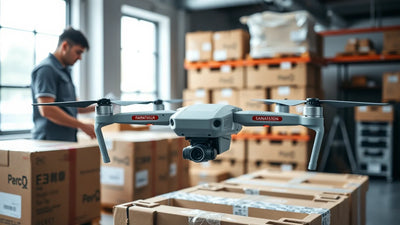
Yes, but the path is narrower than most drone operators expect. Lithium-ion batteries fall under UN3480 (batteries shipped alone) or UN3481 (batteries packed with equipment) according to IATA Dangerous Goods Regulations. DHL Philippines accepts both categories, but only at specific service points — not every DHL ServicePoint counter in Metro Manila handles DG shipments. The DHL DG Desk at the NAIA cargo complex in Pasay processes the majority of drone battery exports bound for Shenzhen and Hong Kong.

A standalone battery under 100 watt-hours — think DJI Mavic 3 series at 77Wh, Air 3 at 62.6Wh, or Mini 4 Pro at 18.1Wh — ships as UN3480 Section IB if the state of charge is held at or below 30%. DHL staff will verify this with a voltage check at drop-off. Batteries between 100Wh and 160Wh (DJI Mavic 3 Enterprise at 105Wh, certain Autel EVO batteries) fall under Section II and require a completed Shipper's Declaration for Dangerous Goods form, plus a UN38.3 test summary document. Anything over 160Wh is effectively prohibited without a full DG-certified freight forwarder, which pushes costs past $300 USD and makes trade-in economics pointless for consumer gear. For Reboot Hub trade-in customers sending Mavic 3 or Air series batteries, staying in Section IB territory keeps the total DHL charge between $45 and $65 USD per package up to 2.5kg dimensional weight.
What Are the Actual DHL Costs and Transit Times from Manila, Cebu, or Davao?
DHL Express Philippines publishes rate cards that shift quarterly, but real-world trade-in shipments from Metro Manila to Reboot Hub's Shenzhen intake facility average $52 USD for a 1kg package containing two Mavic 3 batteries (each 77Wh, UN3480 Section IB compliant). Cebu-origin shipments add roughly $8–$11 USD due to domestic air bridging to the NAIA DG hub. Davao shipments run $14–$18 USD above Manila rates for the same reason. These are DHL EasyShip counter rates; account holders with regular volume can trim 15–22% from those figures.
Transit time is consistently 3 business days door-to-door from Manila to Shenzhen, assuming a Monday drop-off before the 2:00 PM cutoff. Packages handed over on Thursday afternoon typically arrive Monday in Shenzhen, making 4 calendar days the realistic minimum for end-of-week shipments. Cebu and Davao add one extra day for the domestic leg. DHL provides end-to-end tracking with battery-shipment-specific scan events — look for "Customs status updated (LITHIUM BATTERY CLEARED)" notifications in the DHL ProView tracking portal. Reboot Hub confirms receipt within 6 hours of DHL delivery scan at the Shenzhen sorting center, and the 40-point inspection on trade-in batteries begins the same business day.
How Does the Reboot Hub Battery Trade-In Program Actually Work?

Reboot Hub accepts trade-in drone batteries from Philippine customers under a structured credit system designed to offset new pre-owned drone purchases or stand as store credit. The process is straightforward: you submit battery model numbers, cycle counts, and clear photos of the contacts and casing to Reboot Hub's trade-in portal. Within one business day, you receive a provisional credit quote denominated in USD. Once you accept, Reboot Hub issues a pre-filled DHL waybill with all lithium-battery declarations completed — this is the crucial piece that saves Philippine customers from wrestling with IATA forms themselves.
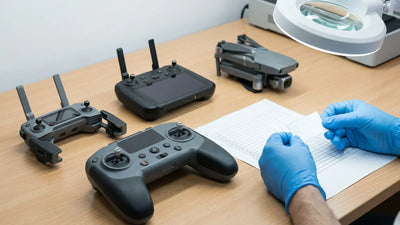
Trade-in values as of Q2 2025: a DJI Mavic 3 battery with 20–40 cycles and no swelling fetches $85 USD credit. The same battery with 41–80 cycles drops to $60 USD. DJI Air 3 batteries (62.6Wh) range from $48 to $72 USD depending on cycle count and physical condition. DJI Avata 2 Flight Battery trade-ins land between $35–$50 USD. At the top end, DJI Inspire 3 TB51 batteries (4280mAh, 98Wh equivalent) with under 15 cycles command up to $210 USD each. Reboot Hub inspects every trade-in battery through the same Shenzhen chip-level facility that handles their pre-owned drone refurbishment — MOHRSS Level 3 technicians perform impedance testing, cell balance verification, and physical inspection for swelling or terminal pitting within the 3–5 day turnaround window. Credits post to your Reboot Hub account immediately upon inspection completion and never expire.
| Battery Model | Watt-Hours | UN Classification | DHL Cost (Manila→Shenzhen) | Reboot Hub Trade-In Credit (Good Condition, 20-40 Cycles) |
|---|---|---|---|---|
| DJI Mini 4 Pro Flight Battery | 18.1 Wh | UN3480 Section IB | $42–$48 USD (up to 4 units) | $28 USD each |
| DJI Air 3 Flight Battery | 62.6 Wh | UN3480 Section IB | $48–$55 USD (up to 3 units) | $60 USD each |
| DJI Mavic 3 Intelligent Flight Battery | 77.0 Wh | UN3480 Section IB | $52 USD (up to 2 units) | $85 USD each |
| DJI Mavic 3 Enterprise Battery | 105.0 Wh | UN3480 Section II (DG) | $78–$95 USD (DG surcharge applied) | $110 USD each |
| DJI Inspire 3 TB51 Battery | ~98.0 Wh | UN3480 Section IB | $55–$65 USD (up to 2 units) | $210 USD each |
| Autel EVO II Pro Battery | 82.0 Wh | UN3480 Section IB | $50–$58 USD (up to 2 units) | $75 USD each |
What Philippine Customs Requirements Apply When Sending Batteries to China?
Exporting drone batteries from the Philippines requires navigating Bureau of Customs (BOC) procedures that catch many first-time shippers off guard. For shipments valued under PHP 10,000 (approximately $175 USD), you file an Informal Entry through DHL's in-house brokerage team, which typically adds PHP 850–1,200 ($15–$21 USD) to the total shipment cost. This covers the Export Declaration processing and BOC clearance. For shipments exceeding PHP 10,000 in declared value — common when trading in three or more high-end drone batteries — a Formal Entry is required, and DHL will route the paperwork through a licensed customs broker at a fee of PHP 1,500–2,500 ($26–$44 USD).
The Philippine Export Coordination Council requires an ECC (Environmental Clearance Certificate) for electronic waste, but single-unit trade-in batteries sent for reuse and testing do not fall under the hazardous waste classification of Republic Act 6969 provided they are functional and not being shipped for disposal. Reboot Hub explicitly designates all incoming trade-in batteries as "goods for testing and potential reuse," which satisfies BOC requirements. Chinese import side is simpler: HS Code 8507.60.00 covers lithium-ion accumulators, and the import duty rate for battery-only shipments entering under trade-in or warranty return programs is 0%. However, China Customs requires either a CCC certificate or a formal CCC exemption letter. Reboot Hub supplies the exemption letter for all Philippine trade-in partners, referencing the battery's classification as a component undergoing inspection rather than a finished product entering Chinese commerce. This letter ships alongside the DHL commercial invoice and typically clears Shenzhen customs within 4–6 hours of arrival scan.
Why Buy from Reboot Hub?
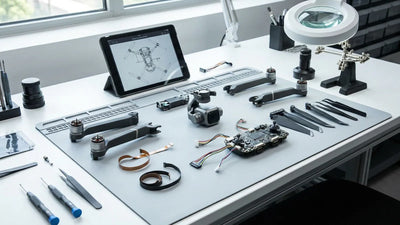
Reboot Hub occupies a distinct position in the drone resale market by refusing to cut corners on quality while maintaining aggressive pricing against new retail. Every drone that passes through the Shenzhen facility undergoes a 40-point inspection protocol covering gimbal calibration, IMU drift testing, motor bearing acoustics, GPS acquisition time, and battery internal resistance across all cells. Only genuine OEM parts are used in any repair or refurbishment — Reboot Hub maintains a direct parts pipeline from DJI, Autel, and Parrot supply chains rather than sourcing third-party components of uncertain provenance. This matters enormously for Philippine operators flying in salt-heavy coastal environments like Palawan or Siargao, where a single corroded third-party ribbon cable can ground a drone within weeks.
Every pre-owned drone sold through Reboot Hub carries a 180-day warranty that covers gimbal motors, flight controllers, core board failures, and battery cell imbalance issues. This is not a limited "return-to-base" promise — Reboot Hub covers DDP (Delivered Duty Paid) shipping from the Shenzhen and Hong Kong facilities, meaning the price you see on the product page is the final price landed at your Philippine address. No surprise customs duties, no BOC clearance fees tacked on after checkout. The Flawless (A+) grade represents activation-only units that have never been airborne — open-box drones that logged zero flight hours. Pristine Pre-Owned (A) grade covers units with minimal use and zero visible marks on the airframe or controller. Both grades pass the same 40-point inspection and ship with original accessories. For Philippine buyers who want near-new drones at 30–50% below local retail — where a DJI Mavic 3 Pro with RC controller still runs PHP 129,990 ($2,280 USD) at official resellers — Reboot Hub's A+ units at $1,450–$1,650 USD delivered represent genuine savings with full warranty backing.
Frequently Asked Questions

Q: Does DHL Philippines actually accept lithium-ion batteries for export to China?
A: Yes, but only at designated DG-capable service points. The primary facility is the DHL Express DG Desk at the NAIA Cargo Terminal in Pasay City, Metro Manila. Batteries under 100Wh ship as UN3480 Section IB with a maximum state of charge of 30%. DHL staff perform voltage verification at drop-off — if your battery reads above 30% charge, you will be asked to discharge it before acceptance. Batteries between 100Wh and 160Wh require a completed Dangerous Goods declaration and UN38.3 test documentation. DHL Philippines does not accept batteries above 160Wh from walk-in retail customers; those shipments must go through a DG-certified freight forwarder. The NAIA DG Desk operates Monday through Friday, 8:00 AM to 4:00 PM, with the last acceptance for same-day processing at 2:00 PM.
Q: What documentation do I need to ship drone batteries from the Philippines to Reboot Hub in Shenzhen?
A: You need four documents minimum: (1) a DHL waybill — which Reboot Hub pre-fills and emails to you upon trade-in acceptance, including all lithium-battery declaration fields; (2) a Commercial Invoice stating the batteries' value for customs purposes (Reboot Hub provides a template with the correct HS Code 8507.60.00); (3) the UN38.3 Test Summary document for your specific battery model — DJI publishes these on their download center, and Reboot Hub can supply them for most common models; and (4) for batteries over 100Wh, a completed Shipper's Declaration for Dangerous Goods form. Philippine Customs also requires an Export Declaration for shipments valued above PHP 10,000 (~$175 USD), which DHL's in-house brokerage handles for an additional PHP 1,500–2,500.
Q: How long does the trade-in credit process take from shipping to usable credit?

A: The typical timeline runs 7–10 business days total. DHL transit from Manila to Shenzhen takes 3 business days. Reboot Hub acknowledges receipt via email within 6 hours of the DHL delivery scan. The 40-point battery inspection — which includes cell impedance testing, charge-discharge cycle verification on professional-grade SkyRC chargers, physical inspection for casing deformation or terminal corrosion, and firmware health reporting — completes within 3–5 business days. Credits post to your Reboot Hub account immediately upon inspection sign-off. The entire process from DHL drop-off in Manila to usable store credit averages 8 business days based on Q2 2025 trade-in data. During peak periods around Chinese holidays (notably Lunar New Year and Golden Week in October), inspection turnaround extends by 2–3 days, and Reboot Hub posts advance notice of holiday scheduling on the trade-in portal.
Q: What happens if my trade-in battery fails Reboot Hub's inspection?
A: Reboot Hub's MOHRSS Level 3 technicians categorize inspection failures into three tiers. Tier 1 failures — cosmetic issues like scuffed casing or minor terminal discoloration that do not affect performance — result in a reduced credit offer typically 15–25% below the initial quote. You have 48 hours to accept or reject the revised offer. Tier 2 failures — moderate cell imbalance (voltage variance above 0.2V between cells), elevated internal resistance, or firmware errors that are repairable — trigger a repair-cost-deducted credit offer. For example, a Mavic 3 battery with a cell imbalance requiring rebalancing at the chip-level facility might receive a credit of $55 USD instead of $85 USD, with the $30 USD difference covering repair labor. Tier 3 failures — physical swelling, punctured cells, or severe water damage — result in a rejected trade-in. Reboot Hub offers free responsible recycling at their Shenzhen facility for rejected batteries, or return shipping to your Philippine address at a flat $22 USD DHL fee. The recycling option is overwhelmingly chosen by Philippine customers given the cost and complexity of return DG shipping.
Q: Can I trade in batteries from drone brands other than DJI?
A: Yes. Reboot Hub accepts trade-in batteries from Autel Robotics, Parrot, Skydio, and Yuneec drones in addition to the full DJI lineup. Autel EVO II series batteries (82Wh) typically receive $50–$75 USD credit depending on cycle count. Skydio 2/2+ batteries (97.2Wh) range from $60–$95 USD. Parrot Anafi batteries (21.6Wh) are accepted at $18–$28 USD. The trade-in portal includes a full compatibility database — if your battery model is not listed, you can submit a manual inquiry with photos and specifications, and the Reboot Hub procurement team responds with a custom quote within 2 business days. All non-DJI batteries still benefit from the pre-filled DHL documentation service, though UN38.3 test summaries for less common models may require the customer to source from the manufacturer's support portal.
Q: Are there any Philippine export restrictions on shipping drone batteries during typhoon season?
A: There are no specific export restrictions tied to weather, but practical disruptions occur during severe typhoons. The NAIA cargo complex has closed for portions of 3–4 days during past typhoons (notably during Typhoon Rolly in 2020 and Typhoon Odette in 2021), and DHL automatically extends money-back guarantee exemptions during these periods. The larger concern for Philippine shippers during the June–November typhoon season is the 30% state-of-charge requirement — batteries left at higher charge levels expand more in the heat and humidity common in Philippine storage conditions. Reboot Hub strongly recommends discharging trade-in batteries to 25–30% immediately before packaging, using a controlled discharge through the drone itself rather than a third-party discharger, as this provides a clean cycle count increment that the inspection team can verify. Batteries arriving with state-of-charge above 30% do not affect trade-in value, but DHL origin staff in Manila will require discharge before acceptance, adding an inconvenient delay at the counter.
Q: Can I combine battery trade-in credits with a pre-owned drone purchase from Reboot Hub in a single transaction?
A: Yes, and this is the most common path Philippine customers take. Reboot Hub allows trade-in credits to be applied directly to any pre-owned drone purchase at checkout. For example, a Philippine customer trading in two Mavic 3 batteries at $85 USD each ($170 USD total credit) can apply that credit toward a Flawless (A+) DJI Mavic 3 Pro priced at $1,550 USD, bringing the final DDP price to $1,380 USD — which includes the Delivered Duty Paid shipping from Shenzhen to any Philippine address. Credits can also be split across multiple purchases or held indefinitely in your Reboot Hub account. The checkout system automatically recalculates the DDP shipping cost based on the new total value, and credits are treated as a discount against the merchandise value rather than a separate payment instrument, which keeps Philippine customs valuation straightforward.
Q: What packaging requirements does DHL enforce for lithium battery shipments from the Philippines?
A: DHL requires UN3480 shipments to use rigid, non-crushable outer packaging with at least 2cm of cushioning material surrounding each battery. Individual batteries must be packed in a manner that prevents terminal contact — either by retaining the original plastic terminal cover, using electrical tape over terminals, or placing each battery in a separate anti-static bag. DHL Philippines specifically prohibits padded envelopes or soft-sided packaging for any lithium battery shipment, regardless of watt-hour rating. Corrugated fiberboard boxes rated at minimum 200 lb burst strength (roughly equivalent to a double-wall cardboard box) are the standard requirement. Reboot Hub recommends using the original battery packaging if available, or purchasing a UN-certified battery shipping box from DHL's packaging counter at NAIA for PHP 350–500 ($6–$9 USD). These pre-certified boxes include the required lithium battery handling label pre-printed and come with terminal protection inserts sized for common drone battery form factors.