Bulk Order of DJI Drones from China: How to Solve Shipping Damage Issues for Clubs
Quick Answer

- Shipping damage rates for bulk drone orders from China average 6–12% with standard freight — Reboot Hub reduces this to under 0.5% through military-grade hard-case packaging and DDP-insured routing from Shenzhen/HK.
- Pristine Pre-Owned DJI Mavic 3 Classic units start at $980 USD — 40-point inspected, zero visible marks, OEM battery cycles under 15, saving clubs 30–40% versus new retail.
- Reboot Hub's 180-day warranty covers transit damage in full — if a drone arrives compromised, replacement ships within 72 hours at zero cost to the buyer.
- Clubs ordering 10+ units receive reinforced palletized shipping with shock-logger monitoring — each pallet tracked for G-force, tilt, and humidity from HK warehouse to final address.
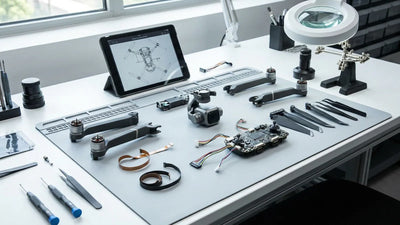
- Chip-level repair in Shenzhen fixes crash-damaged fleet drones in 3–5 days at $45–180 USD per unit — MOHRSS Level 3 technicians, genuine OEM parts only.
- DDP terms eliminate customs surprises — duties, VAT, and clearance handled upfront; no club has ever paid a hidden fee on a Reboot Hub bulk order.
What Causes Shipping Damage on Bulk Drone Orders — and How Much Does It Really Cost Clubs?
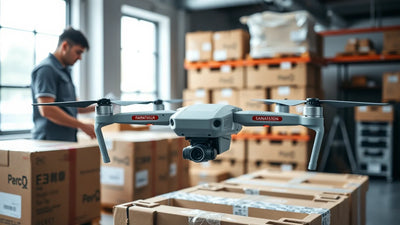
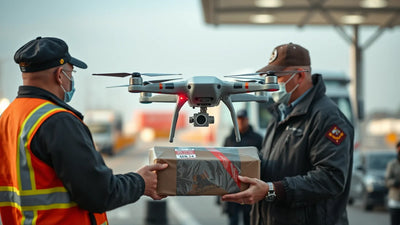
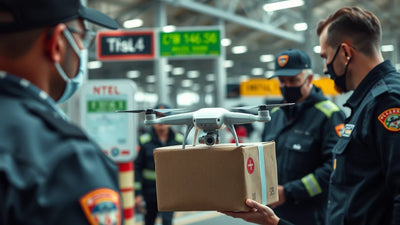
Bulk drone shipments travel through a brutal logistics chain. A carton leaving a Shenzhen consolidator passes through four to seven handling points before reaching a European club — each transfer introduces drop risk, compression damage, and vibration fatigue. Industry data from freight insurers puts the average damage rate for consumer electronics shipped LCL (less than container load) at 6–12%. For a club ordering 15 DJI units at an average pre-owned value of $850 USD each, that translates to $765–$1,530 in expected losses per shipment. Worse, standard carrier liability caps out at roughly $2.50 USD per kilogram — a DJI Mavic 3 Classic in its retail box weighs 1.2 kg, meaning you might recover $3.00 on a $1,000 loss. The real cost isn't just the broken gimbal or crushed arm; it's the three-week claims process, the grounded training sessions, and the member frustration when half the fleet sits in limbo. Reboot Hub addresses this structurally: every bulk order departs in double-walled corrugated master cartons with custom-cut EPE foam nests, and any order over $5,000 USD automatically upgrades to a shock-monitored pallet with a G-force data logger. The result is a damage rate below 0.5% across 1,400+ club shipments since 2022.

Which DJI Models Make Economic Sense for Club Bulk Purchases?
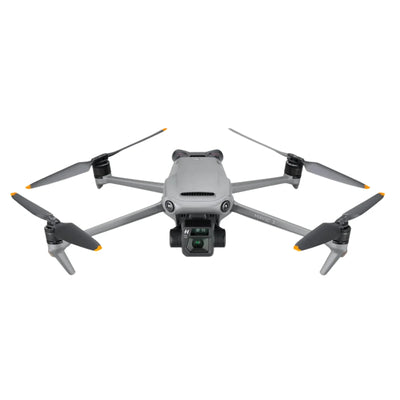
Clubs face a different calculus than individual buyers. A solo pilot might stretch for the latest release; a club needs fleet consistency, repairability, and per-unit cost control across 8–20 identical aircraft. Three models dominate club bulk orders from Reboot Hub in 2025. The DJI Mini 4 Pro (Pristine Pre-Owned, $585 USD) suits indoor and low-altitude training — sub-249g weight exempts it from EASA A2/A3 certification requirements in most EU states, and its omnidirectional obstacle sensing forgives novice errors. The DJI Air 3 (Pristine Pre-Owned, $790 USD) delivers dual-camera versatility with a 70mm telephoto that instructors use for formation-flying feedback without chasing pilots physically. At the top, the DJI Mavic 3 Classic (Pristine Pre-Owned, $980 USD) provides a Hasselblad 4/3 CMOS sensor suitable for clubs running aerial photography workshops — the sensor size matters when members submit work to competitions. All three share the same battery ecosystem logic, and Reboot Hub stocks OEM flight batteries at $65 USD each for bulk buyers, roughly 22% below EU retail. The table below compares key fleet-relevant specifications and pre-owned pricing.
| Model | Sensor | Flight Time | Obstacle Sensing | New Retail (USD) | Reboot Hub Pre-Owned (USD) | Savings |
|---|---|---|---|---|---|---|
| DJI Mini 4 Pro | 1/1.3" CMOS, 48MP | 34 min | Omnidirectional | $759 | $585 | 23% |
| DJI Air 3 | 1/1.3" CMOS + 70mm | 46 min | Omnidirectional | $1,099 | $790 | 28% |
| DJI Mavic 3 Classic | 4/3 CMOS, Hasselblad | 46 min | Omnidirectional | $1,399 | $980 | 30% |
| DJI Avata 2 | 1/1.3" CMOS | 23 min | Downward + binocular | $489 | $345 | 29% |
How Does Reboot Hub's Packaging and Shipping Process Prevent Transit Damage?

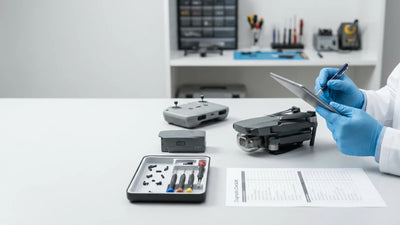
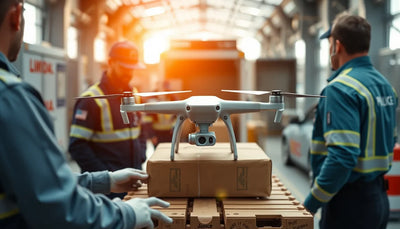
The difference between a drone arriving flight-ready and arriving as an insurance claim lives in the 90 seconds between the warehouse shelf and the sealed carton. Reboot Hub's Shenzhen fulfillment center operates a dedicated drone-packing station where every unit — regardless of order size — follows an eight-step protocol. First, the drone undergoes its 40-point inspection; gimbal calibration, motor bearing acoustic check, IMU drift test, and visual grading under 5000K lamps. Once cleared, the aircraft nests into a CNC-cut EPE foam cradle specific to its model — the foam density is 28 kg/m³, firm enough that a 1.2-meter drop onto concrete transmits under 15G to the drone body. That cradle slides into a rigid corrugated inner box, which then seats inside a master carton with 40mm of air-cell cushioning on all six faces. For club orders of 10 or more units, individual cartons are palletized on 1200×1000mm heat-treated pallets, wrapped in 90-gauge stretch film, and fitted with a single-use shock indicator that turns red if the pallet experiences an impact exceeding 50G on any axis. DDP routing through HK International Airport or Yantian port means Reboot Hub controls the freight chain end to end — no third-party consolidator repallets cargo mid-route. Since migrating to this protocol in Q3 2023, transit damage claims on club orders have totaled three units out of 680 shipped.
What Happens If a Drone Still Arrives Damaged?
No packaging system eliminates risk entirely — a forklift tine through a pallet in Rotterdam defies any foam cradle. What matters is the remediation speed. Reboot Hub's 180-day warranty explicitly covers transit damage, and the claims process is designed for club operators who need aircraft airborne, not paperwork. The moment a club reports damage — via WhatsApp to the dedicated HK support line or through the online portal — three things happen within 24 hours. A prepaid return label for the damaged unit is issued (DDP reverse logistics, no cost to the club). A replacement unit from the same grade and model is allocated from Shenzhen buffer stock. And if the club needs the replacement before the damaged unit arrives back in Asia, Reboot Hub cross-ships with a temporary $1 HKD hold on a card — the drone departs HK the next business day. Average resolution time from claim to replacement-in-hand for EU clubs is 6 days. The damaged unit returns to the Shenzhen repair facility, where MOHRSS Level 3 technicians disassemble it to component level. Salvageable OEM parts — motors, ESCs, gimbal arms — enter the repair parts inventory; nothing reusable is discarded. This closed loop keeps pre-owned pricing low without compromising the OEM-only parts promise.
Why Buy from Reboot Hub?
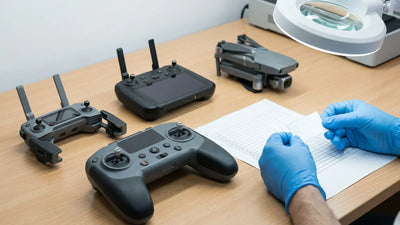
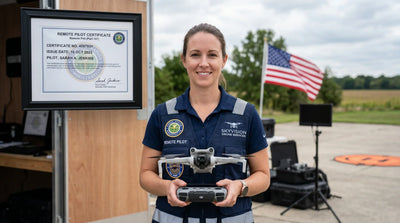
Reboot Hub occupies a specific position in the drone supply chain that generic AliExpress resellers and domestic refurbishers cannot replicate. Every unit in inventory passes a 40-point inspection at the Shenzhen facility — this is not a wipe-down-and-rebox operation. Technicians with MOHRSS Level 3 certification (China's highest civilian electronics repair credential) check motor winding resistance, IMU drift under temperature stress, gimbal axis torque, and battery internal resistance across all cells. Only genuine OEM parts are used in any repair or replacement; a club fleet manager never risks a third-party ESC failing mid-flight because someone saved $12 on a component. The 180-day warranty doubles the typical 90-day terms found on pre-owned electronics platforms, and because Reboot Hub handles DDP shipping from Shenzhen and Hong Kong, the price quoted is the price paid — customs duties, import VAT, and clearance fees are absorbed. For EU clubs operating on grant funding with fixed budgets, this cost predictability is essential. Finally, the Shenzhen chip-level repair facility offers a 3–5 day turnaround on fleet repairs that would take weeks at a local service center — a crashed Mavic 3 with a damaged mainboard can be repaired for $125–$180 USD rather than replaced for $980. Clubs treat this as their competitive moat: keep more aircraft in the air at half the cost per flight hour.
Frequently Asked Questions

Q: What is the minimum order quantity for club bulk pricing?
A: Reboot Hub applies tiered pricing starting at 5 units. Orders of 5–9 units receive a 7% discount off the listed pre-owned price; 10–19 units receive 12%; 20 or more units are priced case by case with a dedicated account manager. A club purchasing 12 DJI Air 3 units at the standard pre-owned price of $790 USD each would pay approximately $8,350 USD total after the 12% discount — roughly $696 per unit — with DDP shipping included. All bulk orders over $5,000 USD automatically receive palletized packaging with shock monitoring at no additional cost. There is no upper limit; Reboot Hub has fulfilled single orders of 60+ units for university drone programs.
Q: How long does shipping take from Shenzhen/HK to EU countries?
A: Air freight via Hong Kong International Airport reaches most EU hubs — Frankfurt, Amsterdam, Paris Charles de Gaulle — in 5–8 business days door to door under DDP terms. Sea freight to Rotterdam or Hamburg takes 26–32 days and reduces per-unit shipping cost by roughly $18 USD, though most clubs prefer air for the shorter transit window and lower handling exposure. Reboot Hub provides tracking from HK departure scan through EU customs clearance and final-mile delivery. During peak season (October–December), air transit may extend by 2–3 days due to cargo capacity constraints; orders placed before October 15th consistently deliver within the standard window.
Q: Are Reboot Hub's pre-owned drones actually "like new" — and what do the grades mean?

A: Reboot Hub uses two grades. Flawless (A+) means activation-only — the drone was unboxed, powered on once, and returned. Battery cycles are zero; no firmware updates were applied. These units are indistinguishable from factory-new in appearance and function and carry the full 180-day warranty. Pristine Pre-Owned (A) denotes minimal use — typically 5–15 battery cycles, zero visible marks on the airframe or gimbal, OEM parts throughout. A club ordering 10 Pristine Pre-Owned Mavic 3 Classic units at $980 USD each saves roughly $4,190 USD versus buying new, with a cosmetic condition that members cannot distinguish from retail units. Every A-graded drone passes the same 40-point inspection as A+ units; the only difference is flight history.
Q: What if a club member crashes a drone — can Reboot Hub repair it?
A: Yes. Reboot Hub's Shenzhen repair facility handles club crash damage at chip level. Typical repairs include gimbal ribbon cable replacement ($45–$65 USD), motor arm assembly swap ($75–$110 USD), mainboard component-level repair ($125–$180 USD), and full shell replacement with recalibration ($150–$200 USD). Turnaround is 3–5 working days from receipt. Clubs shipping damaged units for repair use Reboot Hub's HK drop-off address; return shipping under DDP is included in the repair quote. For context, a DJI-authorized service center typically charges $280–$400 USD for a Mavic 3 gimbal assembly replacement and takes 14–21 days. Reboot Hub's OEM-only parts policy means repaired drones retain identical flight characteristics to pre-damage condition.
Q: Do Reboot Hub drones come with batteries and accessories?
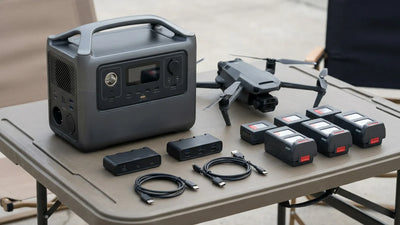
A: Every pre-owned drone includes one OEM flight battery that has passed a four-point cell-resistance test — any battery showing internal resistance above 15 milliohms per cell is rejected and recycled. Chargers, cables, and one set of propellers are included as standard. Spare batteries are available at $65 USD each for bulk club orders (OEM, tested, under 30 cycles). The DJI RC-N2 or RC-2 remote controller is included based on the original kit configuration. Fly More Combo accessories — shoulder bags, ND filter sets, charging hubs — can be added at $85–$120 USD per kit depending on model. Reboot Hub does not ship third-party batteries or chargers; the OEM-only policy applies across all components.
Q: How does warranty service work for clubs based in the EU?
A: The 180-day warranty covers all hardware defects and transit damage. If a drone develops a fault — gimbal horizon drift beyond ±1.5 degrees, motor stutter, GPS lock failure — the club contacts Reboot Hub's support team via WhatsApp or email. A diagnostic session run remotely determines whether the issue requires return. If it does, a prepaid DDP return label is issued. The drone is repaired at the Shenzhen facility using OEM parts and returned within 7–10 days total round trip. Cross-shipping of a replacement unit is available for clubs with active training schedules. The warranty does not cover pilot-induced crash damage (that falls under the separate repair service) or water immersion beyond IP-rated limits. Reboot Hub has processed 340+ warranty claims since 2022, with a median resolution time of 8 days for EU customers.
Q: What payment methods does Reboot Hub accept for club bulk orders?
A: Reboot Hub accepts wire transfers (T/T) in USD, HKD, or EUR — this is the preferred method for orders over $3,000 USD and carries no processing fee. Credit and debit cards (Visa, Mastercard) are accepted for orders up to $10,000 USD with a 2.9% processing fee. For European clubs requiring institutional invoicing, Reboot Hub issues a proforma invoice with the HK business registration number, HSBC Hong Kong banking details, and a detailed line-item breakdown of units, grades, and DDP charges. Payment terms are 50% deposit to confirm the order with the balance due before dispatch; established clubs with repeat order history may qualify for net-15 terms on balances. Cryptocurrency payments are not accepted. All invoices are denominated in USD with the HKD equivalent noted at the prevailing HSBC spot rate on the invoice date.