Skip to content

Available 24/7: (852) 5537 6652

Is a Ghana GCAA Drone License Valid in South Africa for Mining Surveys in 2024?

by LauThomas 03 Jul 2026 0 comments

Reboot Hub scenario guide

Buyer brief: license and operating-rule checks

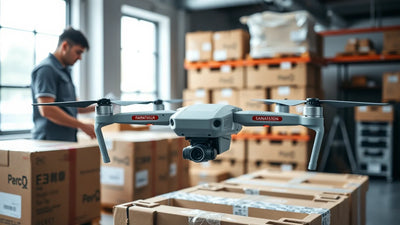
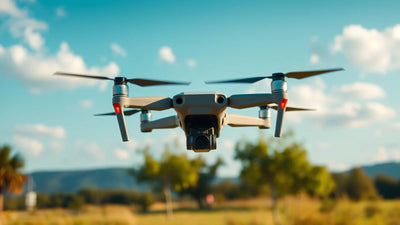
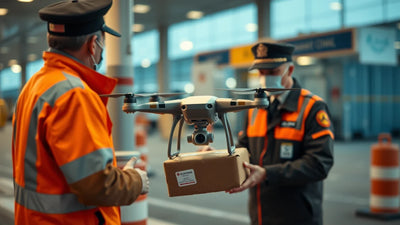
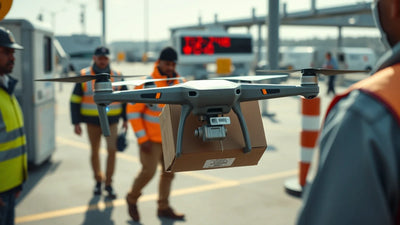
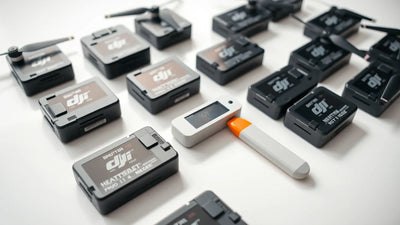
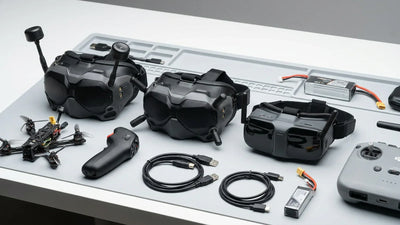
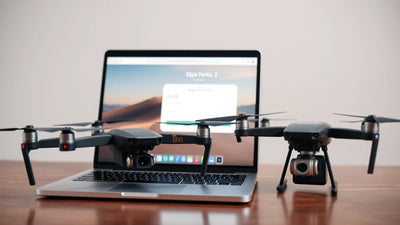
Is a Ghana GCAA Drone License Valid in South Africa for Mini — close-up technical detail view

Situation: is a ghana gcaa drone license valid in south africa for mining surveys. This guide answers the specific situation first, then connects the reader to Reboot Hub's verified pre-owned buying path.

Use case first

Separate recreation, commercial filming, inspection, mining, mapping, and events before interpreting rules.

Authority check

Verify registration, pilot license, restricted airspace, insurance, and privacy rules with the relevant authority.

Buying impact

Rules can change the right model, payload, controller, paperwork, and seller documentation needed before import.

Related Reboot Hub guides: Drone comparison 2026 Customs and VAT guides Warranty and repair guides The Reboot Hub Standard

Quick Answer

  • A Ghana GCAA-issued drone license is NOT directly valid for commercial mining surveys in South Africa. South Africa's SACAA requires a Part 101 Remote Pilot License (RPL) issued domestically, or a formal foreign validation that costs approximately $1,850–$2,400 USD and takes 4–8 weeks to process.
  • Ghana's GCAA RPAS Operator Certificate holds zero reciprocity with SACAA as of 2024. No bilateral agreement exists between the two civil aviation authorities for mutual recognition of drone credentials. You must apply from scratch or seek a temporary Special Flight Permit at $340–$680 USD per operation.
  • Mining survey operators face additional SACAA requirements beyond the license: an ROC (Remote Operator Certificate) at $2,100–$3,400 USD, airband radio certification, and site-specific approvals that add 6–10 weeks to your compliance timeline.
  • Pre-owned enterprise drones slash entry costs by 35–55%. A DJI Matrice 350 RTK with P1 photogrammetry payload runs $9,200–$11,800 USD pre-owned versus $16,500+ new — critical when your budget is already stretched by dual licensing fees across two jurisdictions.

What Does SACAA Require for a Foreign Drone Pilot to Conduct Mining Surveys in South Africa?

South Africa's civil aviation framework, governed by SACAA under Part 101 of the Civil Aviation Regulations, treats all foreign drone licenses as non-equivalent unless a formal validation process is completed. This applies regardless of whether you hold a Ghana GCAA RPAS certificate, an FAA Part 107 from the United States, or an EASA A2 certificate from Europe. The SACAA Remote Pilot License (RPL) is the only standalone credential recognized for commercial operations within South African airspace, and mining surveys — involving BVLOS flights, terrain-following LiDAR runs, and payloads exceeding 7 kg — fall squarely into the commercial category.

Related: Can a Surveyor Legally Use DJI Mini 3 Pro for Shoreline Mapp

The foreign validation pathway exists under SACAA Technical Standard SA-CATS 101, but it is neither automatic nor inexpensive. You must submit your Ghana GCAA license, logbook showing a minimum of 50 logged commercial flight hours, a valid Class 3 aviation medical certificate (obtainable in Johannesburg or Cape Town for roughly $210–$290 USD), and proof of English proficiency. SACAA then requires you to sit a South African air law examination — pass mark 75% — and complete a practical flight assessment with a SACAA-designated examiner at a cost of $520–$740 USD. Total timeline from application to approval: 4 to 8 weeks, assuming no documentation gaps. Mining companies accustomed to Ghanaian regulatory timelines of 2–3 weeks often underestimate this bottleneck, leading to project delays that cost $1,200–$3,000 USD per day in idle equipment and crew.

Related: DJI Drone for Crop Monitoring in Kenya: KCAA License Require

An alternative is the Special Flight Permit (SFP), issued under Part 94 of the regulations. This permit authorizes a specific operation — say, a 14-day tailings dam survey at a platinum mine near Rustenburg — for a single fee of $340–$680 USD. You cannot use an SFP for ongoing or recurring work. Each new survey site demands a fresh application. For a mining consultancy running five sites across Mpumalanga and Limpopo, SFP fees alone can reach $2,000–$3,400 USD within a quarter. The smarter long-term move is the full RPL plus ROC, which totals roughly $3,950–$5,800 USD but remains valid for 24 months.

How Long Does the License Conversion Process Take and What Are the Exact Costs in 2024?

The SACAA foreign license validation process runs on a fixed timeline, but the number of moving parts surprises most first-time applicants. Here is the exact breakdown as of Q3 2024, based on actual filings through SACAA's Midrand headquarters.

Step one: document preparation and submission. You must courier certified copies of your GCAA license, logbook, and medical certificate to SACAA. Courier fees from Accra to Johannesburg via DHL cost $65–$95 USD and take 3–4 business days. SACAA's document review window is 10–15 business days, during which they may request additional evidence — particularly around your RPAS type ratings for multi-rotor aircraft above 7 kg MTOW. The application fee itself is $420–$550 USD, payable by international wire transfer. Step two: the air law examination. SACAA schedules these at their Midrand facility or occasionally at Cape Town International Airport. The exam covers 120 questions on South African airspace classifications, NOTAM procedures, and Part 101 operational limits. The exam fee is $180 USD. Step three: the practical flight assessment. You must bring your own drone — SACAA does not provide one — and demonstrate proficiency in BVLOS procedures, emergency recovery, and payload management. Examiner fees range from $520 to $740 USD depending on the complexity of the RPAS category. Step four: issuance. Once all elements are satisfied, SACAA issues a validation certificate within 5–7 business days. The validation is valid for 12 months and is non-renewable; after that, you must hold a full South African RPL.

Total cost for a Ghanaian operator: $1,850–$2,400 USD. Total timeline: 4 to 8 weeks. Operators who plan around this window — submitting documents 60 days before their first South African mine survey — avoid the costly downtime that has derailed several West African drone service providers expanding into the Southern African Development Community region.

License Pathway Cost (USD) Processing Time Validity Best For
SACAA Foreign Validation (Ghana GCAA → SA) $1,850–$2,400 4–8 weeks 12 months (non-renewable) Pilots with 50+ hours moving to SA for 1–4 projects
Special Flight Permit (Part 94) $340–$680 per site 5–10 business days Single operation One-off emergency surveys, short-term contracts
Full SACAA RPL + ROC (from scratch) $3,950–$5,800 10–14 weeks 24 months Permanent SA-based mining survey operations
Ghana GCAA License Only (no SA recognition) $0 additional N/A Not valid in SA Ghana-only operations; no cross-border utility

Which Drones Are Best for Mining Surveys Under SACAA Compliance in 2024?

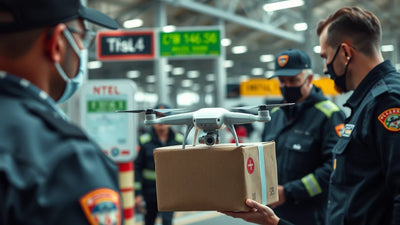
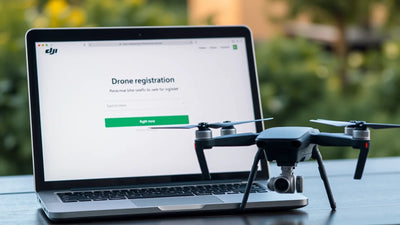
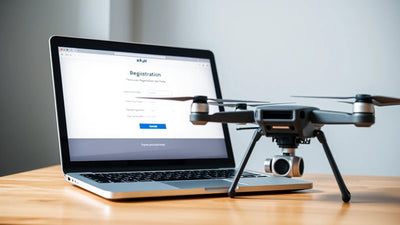
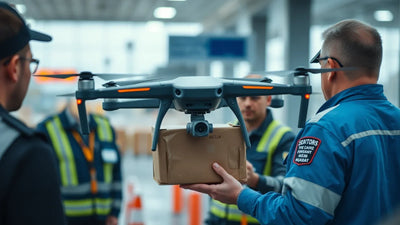
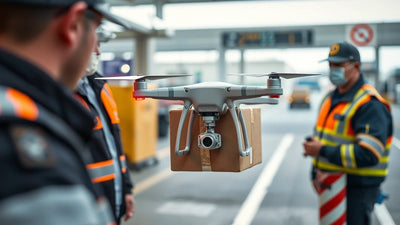
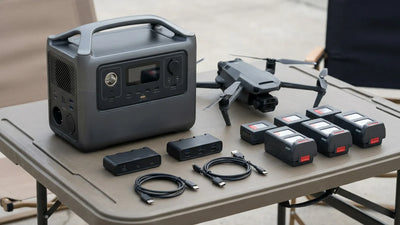
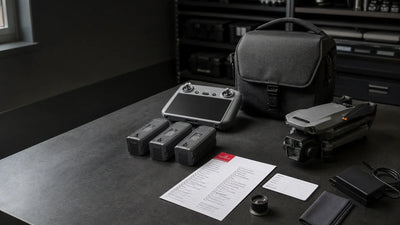
Is a Ghana GCAA Drone License Valid in South Africa for Mini — workspace and equipment setup

Mining surveys demand specific hardware capabilities: RTK positioning accuracy within 2 cm, payload capacity for LiDAR or multispectral sensors, and flight endurance exceeding 35 minutes to cover open-pit benches and tailings facilities efficiently. SACAA's Part 101 also imposes a 7 kg MTOW threshold — aircraft above this weight face additional airworthiness scrutiny, so choosing a sub-7 kg platform where possible accelerates ROC approval.

The DJI Matrice 350 RTK dominates South African mining survey operations in 2024, and for good reason. Its 55-minute hover time, IP55 weather resistance (critical for Highveld summer thunderstorms), and native RTK module eliminate the need for ground control points across a 2 km² survey block. A new M350 RTK with DJI P1 45 MP full-frame photogrammetry sensor retails at $16,500–$18,200 USD. However, a Pristine Pre-Owned unit from Reboot Hub — activation-only, never deployed on a worksite — runs $9,800–$11,200 USD with the same payload bundle. That $6,700–$7,000 USD saving covers the entire SACAA foreign validation process plus a Special Flight Permit for your first mine site.

The DJI Mavic 3 Enterprise with RTK module ($3,850 new, $2,200–$2,600 pre-owned) suits smaller survey blocks under 0.5 km² — think borrow pit audits, stockpile volumetrics, and rehabilitation monitoring. Its 56× mechanical shutter and 45-minute flight time deliver GSD of 1.2 cm at 80 m AGL, perfectly adequate for monthly reconciliation surveys. For operators running LiDAR corridors along conveyor belts or highwalls, the DJI Matrice 300 RTK loaded with a Zenmuse L2 sensor ($23,400 new, $14,100–$15,800 pre-owned) remains the industry benchmark in 2024, with point cloud density exceeding 1,200 pts/m² at 60 m flight altitude.

SACAA inspectors are familiar with these DJI enterprise platforms and their CE/FCC certification documents. Submitting a well-organized ROC application with OEM specification sheets and a multi-point mechanical inspection report from a Shenzhen-based facility accelerates approval by 2–3 weeks compared to applications using uncertified or modified aircraft.

Drone Model New Price (USD) Pre-Owned Price (USD) Max Flight Time Payload Capacity Best Mining Application
DJI Matrice 350 RTK + P1 $16,500–$18,200 $9,800–$11,200 55 min 2.7 kg Open-pit photogrammetry, DTM generation
DJI Mavic 3 Enterprise RTK $3,850 $2,200–$2,600 45 min 0.5 kg Stockpile volumetrics, borrow pit surveys
DJI Matrice 300 RTK + L2 LiDAR $23,400 $14,100–$15,800 43 min 2.7 kg Highwall LiDAR corridors, tailings dam deformation
DJI Phantom 4 RTK $6,200 $3,400–$4,100 30 min 0.3 kg Rehabilitation monitoring, small site topo

What Are the Insurance and Liability Implications of Flying a GCAA-Licensed Drone in South African Mines?

Insurance is the most overlooked variable when Ghanaian drone operators cross into South Africa for mining work. South African mine operators — including Anglo American, Sibanye-Stillwater, and Impala Platinum — mandate a minimum of ZAR 20 million (approximately $1,050,000 USD) in third-party liability coverage for any aerial survey contractor. Ghanaian insurance policies issued in Accra or Kumasi and denominated in Ghanaian cedis are almost universally rejected by South African mine procurement departments, regardless of the coverage amount. You need a policy underwritten by a South African Financial Sector Conduct Authority (FSCA)-registered insurer, with the certificate of insurance explicitly naming the mine operator and the specific survey dates.

The cost for a 30-day mining survey policy with ZAR 20 million liability and hull coverage for a M350 RTK runs $890–$1,350 USD through South African brokers like Hollard or Santam Aviation. If you arrive on-site with a GCAA license, a Ghanaian insurance certificate, and no SACAA validation, three things happen: the mine's safety officer immediately grounds your operation, your access credentials are revoked, and you may be blacklisted from future tenders. Several West African drone firms learned this the hard way in 2022–2023, losing contracts worth $18,000–$45,000 USD per survey campaign. Factor the insurance line item into your project budget at the proposal stage — it represents roughly 4–7% of a typical $22,000 USD mining survey contract and is non-negotiable.

Why Buy from Reboot Hub?

Reboot Hub (https://reboot-hub.com) supplies Pristine Pre-Owned enterprise drones — not pre-owned, not repaired, not reconditioned — backed by a multi-point mechanical and electronic inspection conducted at our Shenzhen facility by MOHRSS Level 3 certified technicians. Every aircraft ships with genuine OEM components sourced directly from DJI-authorized supply chains. Our grading system is transparent: Flawless units carry an A+ designation (activation-only, zero flight hours, original packaging), while Pristine units carry an A designation (minimal use, zero visible marks on airframe or gimbal, battery cycle count under 15). Every purchase includes a 180-day comprehensive warranty covering propulsion systems, gimbal assemblies, RTK modules, and flight controllers. We handle DDP (Delivered Duty Paid) shipping from our Shenzhen and Hong Kong hubs, meaning import duties, VAT, and customs brokerage are fully absorbed into the listed price — no surprise fees at South African or Ghanaian ports of entry. For mining survey operators straddling West African and Southern African jurisdictions, acquiring a M350 RTK or Mavic 3 Enterprise RTK through Reboot Hub at 40–55% below MSRP frees capital for the SACAA licensing, insurance, and ROC compliance costs that make the difference between a project that breaks even and one that loses money.

Scenario solution path

Keep this answer connected to the Reboot Hub scenario library

This article belongs to the Rules / license branch. Use the hub to compare nearby buyer questions, checks, and next-step guides.
Open the Rules / license scenario path

Frequently Asked Questions

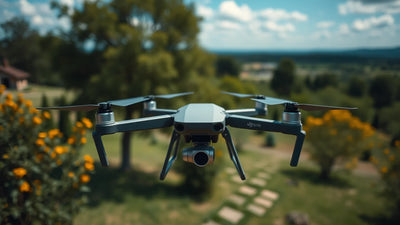
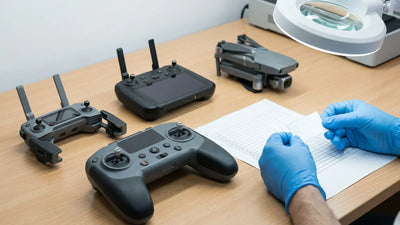
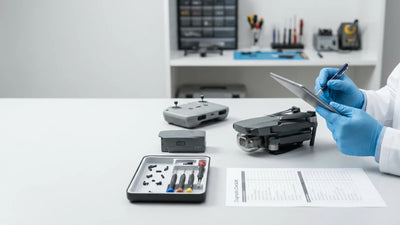
Is a Ghana GCAA Drone License Valid in South Africa for Mini — professional inspection and process

Q: Can I fly a drone commercially in South Africa with only my Ghana GCAA RPAS license if the client is a Ghanaian mining company with operations in SA?

A: No. The jurisdiction is determined by the airspace, not the client's nationality. If your drone takes off from South African soil and flies in South African airspace — even if the mine is owned by a Ghanaian-registered entity — SACAA Part 101 applies in full. The client's corporate registration in Accra carries zero weight with SACAA inspectors. You must hold either a validated foreign license or a full South African RPL. Mining companies with cross-border operations typically contract separate drone service providers in each country for this exact reason. Attempting to bypass this by labeling the flight as a "demonstration" or "training exercise" risks a fine of up to ZAR 50,000 (approximately $2,650 USD) and potential impoundment of your aircraft under South African aviation enforcement protocols.

Q: How much does a full SACAA Remote Pilot License cost if I start from zero in South Africa?

A: A complete SACAA RPL, obtained through an approved training organization (ATO) such as UAV Industries or Cranfield Aviation, costs $2,800–$3,900 USD. This covers the theoretical course (air law, meteorology, navigation, RPAS principles), flight training with a minimum of 20 logged hours, the practical examination, and the SACAA licensing fee. If you add an ROC for commercial mining operations — which requires an operations manual, safety management system, and site-specific risk assessments — the total climbs to $3,950–$5,800 USD. Timeline: 10 to 14 weeks from enrollment to holding both credentials. Some ATOs offer accelerated 6-week programs at a 25–35% premium. For Ghanaian operators who already possess a GCAA license and 50+ hours, the foreign validation route at $1,850–$2,400 USD is significantly more cost-effective and faster.

Q: What specific SACAA airspace restrictions impact mining survey flights near active blasting zones?

A: SACAA mandates a 500-meter horizontal separation from active blasting areas during scheduled detonation windows, per Part 101.05(4). Mining surveyors must coordinate with the mine's blasting officer to obtain the daily blast schedule — typically 12:00–14:00 SAST for most open-pit operations — and file a NOTAM through the Central Airspace Management Unit at least 24 hours in advance if survey flights occur within a 5 km radius of any registered aerodrome. Violations trigger a mandatory incident report to SACAA within 48 hours. Penalties for unauthorized incursion into active blasting exclusion zones start at ZAR 25,000 ($1,325 USD) for a first offense. The ROC application for a mine survey must include a blasting coordination procedure signed by both the RPAS operator and the mine's safety manager.

Q: Does the Ghana–South Africa Bilateral Air Services Agreement cover RPAS operations?

A: It does not. The existing bilateral air services agreement between Ghana and South Africa, last amended in 2015, governs manned commercial aviation — passenger and cargo flights between Kotoka International Airport and OR Tambo International Airport — and contains zero provisions for remotely piloted aircraft systems. The International Civil Aviation Organization's RPAS framework (ICAO Annex 6, Part IV) encourages member states to pursue bilateral recognition of RPAS licenses, but neither Ghana nor South Africa has tabled such an arrangement as of October 2024. SACAA has indicated in industry consultations that bilateral RPAS recognition agreements with SADC and ECOWAS states are under preliminary discussion, but no draft memoranda have been circulated. The earliest realistic timeline for any GCAA–SACAA mutual recognition is Q3 2026.

Q: Can I use a pre-owned DJI Matrice 350 RTK for SACAA flight assessments and ROC demonstrations?

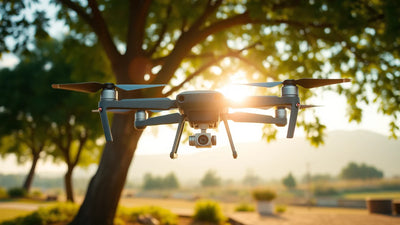
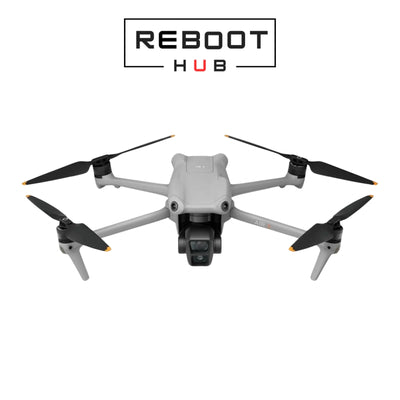
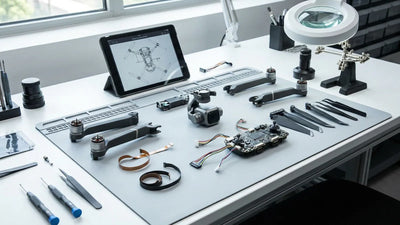
Is a Ghana GCAA Drone License Valid in South Africa for Mini — results and comparison demonstration

A: Yes — provided the aircraft holds a valid OEM airworthiness certificate and passes a physical inspection by an SACAA-approved person. Pre-owned enterprise drones from Reboot Hub ship with full OEM documentation, factory calibration certificates, and a multi-point inspection report that SACAA examiners accept as evidence of airworthiness. The practical flight assessment requires you to demonstrate BVLOS procedures, RTH failsafe activation, and precision landing within a 1-meter radius. A M350 RTK with P1 payload purchased pre-owned at $9,800–$11,200 USD versus $16,500+ new delivers identical examination performance. The examiner assesses pilot competency, not the aircraft's retail provenance. Several Accra-based operators have successfully completed SACAA validation using Reboot Hub-supplied aircraft in 2024.

Q: What are the data sovereignty rules for mining survey data collected by drone in South Africa?

A: South Africa's Protection of Personal Information Act and the Mine Health and Safety Act impose strict controls on geospatial data collected within mining tenements. Survey data — orthomosaics, point clouds, DTM files — that captures mine infrastructure, pit geometries, or resource delineations may not be exported to a foreign server or processed outside South Africa without a data transfer agreement explicitly approved by the mine operator. If you plan to fly the survey with a Ghanaian team and process the data in Accra, you must specify this in your ROC operations manual and obtain written consent from the mine's information officer. Non-compliance with POPIA data export provisions can result in administrative fines of up to ZAR 10 million ($530,000 USD). Many multinational mining consultancies keep processing entirely within South Africa — using local Pix4D or DJI Terra workstations — to eliminate this risk. Budget $80–$160 USD per day for a Johannesburg-based cloud processing instance if you cannot process on-site.

Q: How does Reboot Hub's DDP shipping work for drones delivered to South Africa or Ghana?

A: Reboot Hub ships all enterprise drones via DDP (Delivered Duty Paid) from our Shenzhen and Hong Kong logistics hubs. This means the price you see on our website — whether $9,800 for a Flawless M350 RTK or $2,200 for a Pristine Mavic 3 Enterprise RTK — includes all export customs clearance from China, international air freight (typically UPS or DHL Express, 5–8 business days), South African or Ghanaian import duties (roughly 15–20% of declared value in both jurisdictions), and local VAT. There are zero additional charges upon delivery. For comparison, a drone shipped DAP (Delivered At Place) often incurs $380–$720 USD in surprise import fees that delay clearance by 4–7 days. Our 180-day warranty remains active from the delivery date, and our Shenzhen repair center — staffed by MOHRSS Level 3 technicians — offers 3–5 day turnaround on warranty claims with a Hong Kong drop-off option for African operators who prefer not to ship back to mainland China.

Q: Is BVLOS flight for mining corridor surveys legal in South Africa under a validated foreign license?

A: BVLOS operations are permitted under a validated SACAA RPL only if the associated ROC explicitly authorizes them. Standard RPL privileges — whether domestic or validated from a foreign license — limit operations to VLOS (visual line of sight), typically a 500-meter radius from the pilot. Mining surveys covering conveyor belt corridors, tailings pipelines, or extended highwall benches routinely require BVLOS distances of 2–8 km. To secure BVLOS approval, your ROC must include a detect-and-avoid mitigation strategy (ground-based radar, ADS-B receiver, or visual observer chain), a SATCOM or 4G LTE command link redundancy plan, and a site-specific risk assessment for each corridor segment. SACAA processes BVLOS amendments to ROCs in 6–12 weeks, and the additional application fee is $740–$1,100 USD. Approximately 60% of mining-related ROC applications in South Africa include at least one BVLOS provision, so this is a well-trodden regulatory pathway rather than an exotic request.

FAQ

What should I check first for is a ghana gcaa drone license valid in south africa for mining surveys?

Separate recreational use from commercial work, then verify registration, pilot license, airspace approval, insurance, and privacy rules with the relevant authority.

Do drone rules change the buying decision?

Yes. Weight, camera, payload, battery setup, controller type, and paperwork can change which pre-owned DJI model is practical.

Can this article replace official legal advice?
No. Treat it as a buyer planning checklist and confirm current rules with the named aviation, customs, or local authority.

Prev post
Next post

Leave a comment

Please note, comments need to be approved before they are published.

Thanks for subscribing!

This email has been registered!

Shop the look

Choose options

Edit option
Back In Stock Notification
this is just a warning
Login
Shopping cart
0 items
0%