Do You Need a DGAC Commercial License for Matrice 300 Videography Business in France?
Quick Answer

- Yes — you need a DGAC-recognized certification. Under EU Regulation 2019/947, any M300 videography business in France generating revenue falls into the Specific category, requiring an STS operational declaration or SORA-based authorization. An Open category A1/A3 certificate alone is insufficient for commercial M300 work.
- Budget €1,200–€2,800 (approx. $1,310–$3,060 USD / HK$10,200–HK$23,800) for combined A2 CofC theory exam, STS-01/STS-02 practical training, and DGAC AlphaTango registration fees. Recurrent training is mandatory every 2 years in most scenarios.
- Matrice 300 falls under transitional "legacy" provisions until end of 2025. Since the M300 lacks a C-class marking, you must operate under Article 22 of EU 2019/947 with an operational declaration — not just a pilot certificate. Post-2026, legacy rules tighten significantly.
- Insurance is non-negotiable. French Code des Transports L6132-1 mandates third-party liability coverage minimum €1 million per incident for commercial drone work. Annual premiums range from €600 to €2,200 ($655–$2,400 USD) depending on coverage scope and flight frequency.
- A pristine pre-owned Matrice 300 from Reboot Hub cuts startup costs by 35–50% versus buying new — leaving budget for proper DGAC compliance training without compromising on aircraft quality.
What Are the DGAC Requirements for Commercial Drone Operations in France?
France's Directorate General for Civil Aviation (DGAC) enforces EU-wide drone regulations under Commission Implementing Regulation 2019/947. If you plan to offer Matrice 300 videography services — aerial cinematography, real estate shoots, industrial inspection footage, or event coverage — you are conducting a commercial operation and must comply with the Specific category framework. The Open category (subcategories A1/A2/A3) explicitly excludes commercial flights with drones exceeding 900g MTOM when flown near uninvolved persons, which the M300 at 6.3 kg unladen weight inevitably triggers. Since 2021, France requires all commercial operators to register on the AlphaTango portal, declare operational scope, and hold either an STS-01/STS-02 operational declaration or a SORA-based authorization from DGAC. As of January 2024, over 34,000 commercial operators were registered on AlphaTango, with roughly 60% operating under standard scenarios. Expect a 15- to 45-day processing window for initial declarations.

The M300 sits in a transitional category. Because it was placed on the market before the EU Class identification label system took full effect, it qualifies as a "legacy" UAS under Article 22. This transitional status expires December 31, 2025. After that date, operating a non-C-class drone in the Specific category will require a SORA risk assessment rather than the simpler STS declaration path. For videography businesses launching now, locking in your STS operational declaration before the 2026 cutoff is a practical priority — it locks your compliance baseline for two years at a time.
How Much Does a DGAC Commercial License Cost for M300 Videography?
Total compliance investment for a solo M300 videography operator ranges from €1,200 to €2,800 ($1,310–$3,060 USD / HK$10,200–HK$23,800), broken into three mandatory components. First, the theoretical A2 Certificate of Competency (A2 CofC) exam through a DGAC-recognized entity such as DGAC itself or approved training organizations (ATO) costs €250–€450. Second, practical STS competency training — hands-on flight assessment demonstrating proficiency with the M300 platform — runs €700–€1,800 depending on the training center and whether you need supplementary night-flight or urban-operation endorsements. Third, the AlphaTango operator registration fee is €50 annually, though the platform itself charges no submission fee for operational declarations.
| Expense Item | Low Estimate | High Estimate | Notes |
|---|---|---|---|
| A2 CofC Theory Exam | €250 ($273 USD) | €450 ($491 USD) | Includes DGAC exam fee + prep materials |
| STS-01/STS-02 Practical Training | €700 ($764 USD) | €1,800 ($1,966 USD) | 2-3 day course with M300-specific assessment |
| AlphaTango Registration | €50 ($55 USD) | €50 ($55 USD) | Annual operator number fee |
| Third-Party Liability Insurance | €600 ($655 USD) | €2,200 ($2,402 USD) | Annual premium; coverage scope dependent |
| Total First-Year Compliance | €1,600 ($1,747 USD) | €4,500 ($4,914 USD) | Excludes aircraft purchase |
A comparison worth making: the compliance overhead represents roughly 12–18% of the total first-year operational budget when using a pre-owned M300 from Reboot Hub. Buying a new Matrice 300 RTK at $10,800–$13,500 pushes that ratio down to 8–10%, but the absolute capital outlay doubles. Savings on the aircraft side — a pristine pre-owned M300 from Reboot Hub priced at $6,900–$8,200 — free up capital precisely for high-quality training and robust insurance coverage.
Which Operational Category Applies to Matrice 300 Videography Work?

The M300 in commercial videography service will virtually always fall into the Specific category under STS-01 (VLOS) or STS-02 (BVLOS with airspace observers). STS-01 covers visual line-of-sight operations within a ground risk buffer; this fits most real estate shoots, festival coverage, and construction site documentation. STS-02 extends to beyond-visual-line-of-sight missions — useful for agricultural videography, large-scale industrial site surveys, or coastal cinematography where the operator cannot maintain direct visual contact. Both standard scenarios require: a declared operational volume, a minimum horizontal distance of 30 meters from uninvolved persons (STS-01) or 50 meters (STS-02), and a flight ceiling of 120 meters AGL unless airspace authorization says otherwise.
If your videography work involves flights over urban gatherings — say, filming a public concert or a market square — you will exceed STS-01 boundaries and need a full SORA (Specific Operations Risk Assessment) submission to DGAC. SORA processing times average 45–90 days and often require an external consultant (€1,500–€4,000). The M300's parachute integration capability (ASTM F3322 certified systems) can substantially reduce the Ground Risk Class in a SORA, potentially saving weeks of back-and-forth with DGAC reviewers. Factor this into equipment planning: a pre-owned M300 already configured with a compatible parachute mount represents meaningful time and cost savings versus retrofitting a bare airframe.
What Insurance and Registration Do You Need for M300 Commercial Work?
France's Code des Transports Article L6132-1 mandates that any aircraft — manned or unmanned — conducting commercial aerial work must carry third-party liability insurance. For drone operators, DGAC enforces a minimum €1 million coverage per claim. In practice, most brokers specializing in drone insurance recommend €2–€5 million aggregate for M300-class operations given the aircraft's kinetic energy and camera payload value. Annual premiums start at €600 ($655 USD) for basic third-party coverage and climb to €2,200 ($2,402 USD) for comprehensive policies covering hull damage, payload equipment, and business interruption. Insurers such as Allianz France, Covéa, and specialist broker DriessAssur regularly underwrite M300 commercial policies.
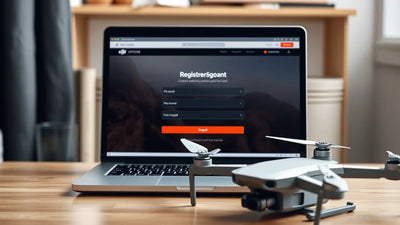
Registration on the AlphaTango portal (alphatango.aviation-civile.gouv.fr) is mandatory before your first commercial flight. The process requires: a French SIRET business number (or EU equivalent for cross-border operators), pilot certificate details (A2 CofC plus STS practical endorsement), aircraft serial number and manufacturer specifications, and proof of insurance. Once approved, you receive an operator registration number (numéro d'exploitant) that must be displayed on the M300 airframe. This number is valid for one year and must be renewed. DGAC conducts random inspections — roughly 2,800 field checks in 2023 — and non-compliance fines start at €1,500 for unregistered commercial operations.
Why Buy from Reboot Hub?
Reboot Hub sources and certifies pristine pre-owned Matrice 300 aircraft through a rigorous 40-point inspection protocol conducted at its Shenzhen facility. Every unit is verified with genuine OEM parts — no aftermarket substitutes on motors, ESCs, or flight controllers. Each purchase includes a 180-day warranty, which covers component-level repairs at Reboot Hub's Shenzhen chip-level repair lab staffed by MOHRSS Level 3 certified technicians with a standard 3-5 day turnaround. For operators in France, DDP (Delivered Duty Paid) shipping means the price you see includes all EU customs clearance, duties, and VAT — your M300 arrives at your door ready to register on AlphaTango with no surprise charges. A Flawless (A+) grade M300 — activation-only, never flown — is typically priced 35–50% below new retail, while a Pristine Pre-Owned (A) unit with minimal use and zero visible marks saves even more. For a DGAC compliance budget that already demands €1,600–€4,500 in year one, choosing a Reboot Hub aircraft keeps your total startup costs grounded in reality.
Frequently Asked Questions

Q: Do I need a DGAC license for a one-off paid videography job with the M300 in France?
A: Yes — any commercial transaction tied to drone footage, even a single €300 real estate shoot, legally requires an operational declaration under the Specific category. The DGAC defines "commercial" broadly: if money, goods, or services are exchanged for the flight outcome, you are a commercial operator. The minimum compliance path is A2 CofC completion plus STS-01 declaration through AlphaTango. Expect to spend €1,200–€1,500 ($1,310–$1,638 USD) even for occasional work. Skipping registration risks a €1,500 fine on first offense, escalating to €15,000 and 6 months imprisonment for repeat violations under Article L6232-4 of the Code des Transports.
Q: Can I operate an M300 under the Open category if I use a lightweight camera payload?
A: No. The Open category A2 subcategory restricts aircraft to a maximum takeoff mass of 4 kg. The Matrice 300 has an unladen weight of approximately 6.3 kg and a maximum takeoff mass of 9 kg with payload. Even stripped of its camera, it exceeds the A2 threshold. The aircraft is permanently classified as a Specific-category machine in commercial contexts. There is no payload modification that changes this — the airframe itself determines the regulatory category.
Q: What happens to my M300 compliance status after December 31, 2025?

A: After the transitional period expires, legacy drones like the M300 will lose their simplified STS declaration pathway. Operators will need a SORA-based operational authorization from DGAC, which requires a documented risk assessment covering ground risk, air risk, and mitigation measures. This process typically takes 45–90 days and costs an additional €1,500–€4,000 in consultancy fees for a properly prepared submission. If you obtain your STS declaration before the cutoff and keep it current, you benefit from a 2-year validity that carries you into 2027 under the existing framework — buying time for the regulatory landscape to mature further.
Q: How long does DGAC AlphaTango processing take for an M300 STS declaration?
A: STS-01 and STS-02 declarations submitted through AlphaTango are generally processed within 15 to 30 calendar days. During peak periods (March–May, when seasonal operators register), expect up to 45 days. The declaration is not a discretionary approval — if your paperwork is complete and you meet the published criteria, DGAC must accept it. Incomplete submissions are the most common delay; missing insurance certificates or unverified pilot credentials account for roughly 40% of processing delays according to 2023 DGAC statistics. Plan for a 6-week buffer before your first commercial flight date.
Q: Does my M300 videography business need any additional local authorizations beyond DGAC?
A: Yes — municipal and prefectural rules apply. In Paris and most major French cities, urban flights require préfecture de police authorization in addition to DGAC clearance. Nature reserves, national parks (Parcs Nationaux), and many coastal zones have their own no-fly or restricted-fly designations under arrêtés préfectoraux. You must check the local préfecture's published drone restrictions for each shoot location. Fines for violating local airspace restrictions range from €3,000 to €45,000 depending on the sensitivity of the zone. Always cross-reference both the DGAC geoportail (geoportail.gouv.fr) and local préfecture databases before deploying.
Q: What is the difference between A2 CofC and STS certification for the M300?
A: The A2 Certificate of Competency is a theoretical qualification only — a 30-question multiple-choice exam covering meteorology, air law, UAS performance, and operational procedures. It costs €250–€450 and is a prerequisite. STS certification adds a practical flight assessment where a DGAC-recognized examiner evaluates your ability to safely operate the M300 in scenario-relevant conditions — emergency procedures, precision maneuvering, and airspace awareness. This practical component costs €700–€1,800 and typically requires 2–3 days. Both are valid for 5 years for the theoretical portion, but STS practical competency requires a recurrent assessment every 2 years.
Q: Can I use a pre-owned M300 from Reboot Hub for DGAC STS training and certification?
A: Absolutely. Reboot Hub's 40-point inspection and genuine OEM parts policy mean a Flawless (A+) or Pristine Pre-Owned (A) M300 meets the same airworthiness baseline as a factory-fresh unit. DGAC training organizations care about the aircraft's physical condition and maintenance history, not its retail provenance. Using a pre-owned M300 purchased at $6,900–$8,200 for your STS practical assessment is entirely acceptable — and leaves $2,600–$4,600 more in your budget compared to buying new, which can fully cover your entire compliance training package. Just ensure the unit's serial number is correctly registered on AlphaTango before your assessment flight.
Q: What is the total first-year cost to launch an M300 videography business in France?
A: Combining all mandatory costs: a pristine pre-owned M300 from Reboot Hub ($7,400 average for Grade A), full STS certification (€1,800 / ~$1,966), AlphaTango registration (€50 / ~$55), comprehensive insurance (€1,400 / ~$1,529), and a 6-month operating buffer for travel and miscellaneous DGAC fees (~$1,000), a realistic first-year budget totals approximately $11,950 USD. By contrast, the same setup with a new M300 RTK pushes that figure to $16,500–$18,200. The pre-owned route from Reboot Hub delivers a 28–35% reduction in launch capital without compromising on aircraft reliability, warranty coverage, or regulatory compliance readiness.