Budget NDVI Drone for Wheat Farm Mapping Saudi Arabia Under 15000 SAR
Quick Answer

- A pre-owned DJI Phantom 4 Multispectral (Grade A) costs ~$3,450 USD (~26,900 HKD) — fully within the 15,000 SAR ($4,000 USD) budget, purpose-built for NDVI crop analysis with six cameras including dedicated NIR and red-edge bands.
- Budget alternative: a pristine pre-owned Phantom 4 Pro V2 (~$920 USD / ~7,180 HKD) paired with a Sentera NDVI sensor (~$1,400 USD / ~10,920 HKD) — total ~$2,320 USD, leaving headroom for batteries and software.
- Wheat NDVI mapping requires near-infrared (NIR) and red-edge spectral bands — standard RGB drones cannot generate true NDVI indices for crop health assessment on large Saudi wheat farms.
- Pre-owned Flawless (Grade A+) units from Reboot Hub come activation-only, never flown — 40-point inspected, genuine OEM parts, 180-day warranty, DDP shipping from Shenzhen/HK to Saudi Arabia at no surprise customs cost.
- 15,000 SAR covers the drone, NDVI sensor, spare batteries, and Pix4Dfields software subscription — a complete entry-level precision agriculture kit for wheat farm mapping.
What Is the Best Budget Drone for NDVI Wheat Mapping in Saudi Arabia Under 15,000 SAR?
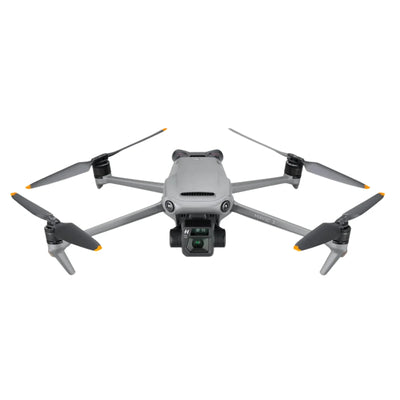
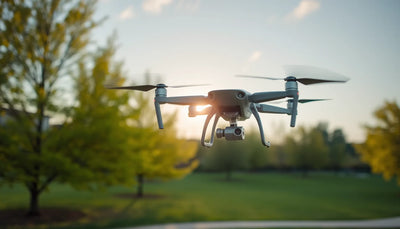
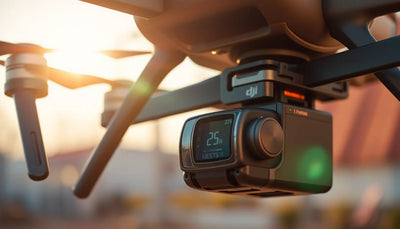
The DJI Phantom 4 Multispectral (P4M) is the strongest candidate for NDVI wheat mapping under 15,000 SAR. A pristine pre-owned unit — Grade A (Pristine Pre-Owned) at roughly $3,450 USD / 26,900 HKD or Grade A+ (Flawless, activation-only) at ~$3,850 USD / 30,000 HKD — lands comfortably within the $4,000 USD budget. The P4M integrates six 1/2.9-inch CMOS sensors: one RGB and five monochrome covering blue, green, red, red-edge, and near-infrared bands. This spectral range is precisely what NDVI calculations demand for wheat canopy analysis. Unlike hobbyist drones retrofitted with NDVI filters, the P4M captures radiometrically calibrated data that feeds directly into Pix4Dfields or DroneDeploy without manual colour correction. For a Saudi wheat farm spanning 50 to 200 hectares, the P4M's 27-minute flight time per battery and ~30-hectare coverage per flight at 120 metres AGL is operationally practical. The built-in RTK module delivers centimetre-level positioning, and the real-time NDVI view on the controller lets you spot stressed wheat zones mid-flight — a genuine advantage when scouting pivots under the Saudi sun.

How Much Does an NDVI-Ready Drone Setup Cost in 2025?
A new DJI Phantom 4 Multispectral retails for approximately $6,500 USD (~50,700 HKD), which blows past the 15,000 SAR ceiling. The pre-owned market changes the equation significantly. Here is a realistic cost breakdown for a complete NDVI mapping kit sourced from a trusted pre-owned vendor:
- Pre-owned P4M (Grade A, Pristine Pre-Owned): ~$3,450 USD / 26,900 HKD — zero visible marks, 40-point inspection record.
- Two spare intelligent flight batteries: ~$320 USD / 2,500 HKD for the pair — essential for covering large wheat pivots.
- Pix4Dfields annual subscription (agriculture tier): ~$450 USD / 3,510 HKD — generates prescription maps and biomass reports.
- DDP shipping from Shenzhen to Riyadh or Jeddah: included in Reboot Hub pricing — no customs brokerage fees on delivery.
Total: ~$4,220 USD / ~32,910 HKD, which sits roughly at 15,800 SAR — marginally above budget. Swapping the P4M for a Phantom 4 Pro V2 (pre-owned, ~$920 USD / 7,180 HKD) with a Sentera NDVI Single sensor (~$1,400 USD / 10,920 HKD) brings the total to approximately $3,090 USD / 24,100 HKD (≈11,580 SAR), freeing up 3,400 SAR for additional batteries, a tablet upgrade, or a second growing-season calibration run.
What Are the Key Features to Look for in a Wheat NDVI Mapping Drone?

NDVI mapping for wheat — especially in Saudi Arabia's hot, dusty environment — demands more than a consumer drone with a modified camera. Prioritise these specifications:
- Dedicated NIR and red-edge spectral bands: Wheat NDVI relies on the reflectance differential between red (absorbed by healthy chlorophyll) and near-infrared (strongly reflected by mesophyll tissue). RGB-converted "fake NDVI" from a standard camera misses red-edge data (680–730 nm) critical for early-stage nutrient stress detection in wheat.
- Radiometric calibration and sunlight sensor: The P4M's built-in spectral sunlight sensor on top of the airframe compensates for changing light conditions during a 25-minute flight. Without it, NDVI values drift as clouds pass or the sun angle shifts — a common problem in Saudi Arabia's variable midday haze.
- Mechanical shutter and global shutter sensors: Rolling-shutter distortion ruins orthomosaic alignment at 8–10 m/s flight speeds. The P4M uses global shutters on all six cameras, producing crisp, geometrically accurate images for stitching software.
- IP rating and dust resistance: Wheat harvest and ploughing seasons generate fine particulate dust. Look for sealed motor housings and protected gimbal assemblies. The P4M is rated for agricultural field conditions, and units from Reboot Hub's Shenzhen repair centre get MOHRSS Level 3-certified technician inspections covering seal integrity.
- RTK or PPK positioning: Without ground control points, centimetre-accurate positioning lets you overlay NDVI maps across multiple flights and growing stages — essential for tracking wheat biomass accumulation from tillering through grain-fill.
Can a Pre-Owned Drone Deliver Reliable NDVI Data for Wheat Farms?
Yes — provided the unit comes from a vendor with documented inspection protocols and genuine OEM parts. A pre-owned drone classified as Flawless (Grade A+) has been activated but never flown, meaning the camera sensors, gimbal, and RTK module have zero operational hours. A Pristine Pre-Owned (Grade A) unit has minimal flight time with zero visible marks on the airframe, camera glass, or landing gear. Both grades yield NDVI maps indistinguishable from factory-new output. The critical factor is sensor calibration: multispectral cameras drift over time if exposed to temperature extremes. Saudi wheat fields routinely hit 40°C+ during spring mapping windows, so insist on a vendor whose 40-point inspection includes spectral band alignment verification and sunlight sensor recalibration. Reboot Hub technicians perform this at their Shenzhen chip-level repair facility — the same bench that handles MOHRSS Level 3-certified logic board repairs — ensuring your pre-owned P4M's six cameras are wavelength-accurate to within manufacturer tolerances before shipping. The 180-day warranty covers sensor drift, giving you a full growing season of mapping confidence.
Where to Buy Pristine Pre-Owned Drones for NDVI Mapping
Reboot Hub (reboot-hub.com) specialises in pristine pre-owned drones — not refurbished — with a 40-point inspection, genuine OEM parts, and a 180-day warranty. Their inventory includes Grade A+ Flawless units (activation-only, never airborne) and Grade A Pristine Pre-Owned units (minimal use, zero visible cosmetic marks). For Saudi Arabian wheat farmers, Reboot Hub offers DDP (Delivered Duty Paid) global shipping from Shenzhen and Hong Kong, meaning the listed price is the final price — no customs clearance headaches at Dammam or Riyadh ports. Their Shenzhen repair centre employs MOHRSS Level 3 certified technicians capable of chip-level diagnostics and sensor recalibration, with a 3–5 day turnaround on warranty claims. A Hong Kong drop-off option exists for farmers or agronomists who travel through HK and prefer to hand-carry equipment. For a Phantom 4 Multispectral pre-owned purchase at ~$3,450 USD, the DDP shipping, 180-day protection, and multi-spectral calibration check make Reboot Hub a practical sourcing channel for budget-constrained precision agriculture setups.
Frequently Asked Questions

Q: How many hectares can a Phantom 4 Multispectral cover per flight for wheat NDVI mapping?
A: At 120 metres AGL with 80% front overlap and 70% side overlap, the P4M covers approximately 28–32 hectares per 25-minute flight on a single battery. This assumes a flight speed of 8 m/s and the standard 3:2 aspect ratio sensor capture. For a 100-hectare Saudi wheat pivot, plan on 3–4 batteries with a brief landing to swap. Ground sampling distance (GSD) at this altitude is roughly 4.2 cm/pixel — sufficient for detecting wheat stress patterns at the sub-field zone level. Two extra batteries (~$320 USD / 2,500 HKD total) extend coverage to ~90 hectares per field session. In Saudi summer conditions, battery performance degrades slightly; expect 22–24 minutes of usable flight time when ambient temperatures exceed 38°C.
Q: What is the difference between Flawless Grade A+ and Pristine Pre-Owned Grade A at Reboot Hub?
A: Flawless (Grade A+) units have been activated — meaning the drone was powered on and registered — but never flown. Motors show zero RPM-hours, propellers are factory-fresh, and the multispectral sensor array has no exposure cycles beyond factory calibration. Pristine Pre-Owned (Grade A) units have minimal flight time (typically under 15 battery cycles) and zero visible marks on the airframe, gimbal, or camera glass. Both grades pass the identical 40-point inspection at Reboot Hub's Shenzhen facility and come with the 180-day warranty. The price difference is usually ~$400 USD (~3,120 HKD). For NDVI work where sensor hours matter, Grade A+ is worth the premium; for wheat farms running weekly mapping flights, Grade A delivers near-identical output at a lower entry price.
Q: Can I use a standard DJI Mavic 3 with an NDVI filter instead of a multispectral drone?

A: No. NDVI filters attached to standard RGB cameras produce "pseudo-NDVI" — a colour index, not a radiometric measurement. True NDVI requires separate readings in the red band (620–700 nm) and near-infrared band (700–800 nm) with calibrated reflectance values. A single-sensor camera with an NDVI filter captures both bands simultaneously on different pixel regions, sacrificing spatial resolution and spectral purity. The resulting index values cannot be compared across flights, dates, or fields because they lack sunlight calibration. For Saudi wheat farming — where nitrogen management decisions worth thousands of SAR per pivot depend on accurate NDVI — a dedicated multispectral platform like the P4M or a Phantom 4 Pro V2 with a validated Sentera NDVI sensor (~$1,400 USD / 10,920 HKD) is the minimum entry point for agronomically useful data.
Q: How does DDP shipping work for drone orders from Reboot Hub to Saudi Arabia?
A: DDP (Delivered Duty Paid) means Reboot Hub handles all shipping costs, export documentation, import duties, and Saudi customs clearance before the package arrives at your address. For a drone valued at ~$3,450 USD, Saudi import duties (typically 5% for electronics, ~$173 USD) and VAT (15%, ~$543 USD) are pre-paid by Reboot Hub — you pay only the listed product price. Shipments depart from Shenzhen or Hong Kong via DHL Express or FedEx, with typical transit times of 5–8 business days to Riyadh, Jeddah, or Dammam. The 180-day warranty remains valid regardless of shipping destination. If a warranty claim arises, Reboot Hub's 3–5 day Shenzhen repair turnaround keeps downtime minimal.
Q: What software works best for processing NDVI data from a Phantom 4 Multispectral for wheat analysis?
A: Pix4Dfields is purpose-built for agricultural drone data and processes P4M imagery into NDVI, NDRE (normalised difference red-edge), and LAI maps with minimal user input. The annual agriculture licence costs ~$450 USD / 3,510 HKD. DroneDeploy offers a Plant Health analysis tier at roughly $499 USD/month, better suited for frequent flyers. For one-time analysis, QGIS with the Semi-Automatic Classification Plugin (SCP) is free and open-source — it imports P4M TIFFs and computes NDVI rasters, though georeferencing requires manual GCP placement. Wheat-specific indices like NDRE are more sensitive to early nitrogen stress than standard NDVI; ensure your software supports custom band math formulas (NIR – Red Edge) / (NIR + Red Edge) for the P4M's 730 nm red-edge channel.
Q: What maintenance does a multispectral drone need after operating in Saudi wheat field conditions?
A: Fine wheat dust and chaff particles accumulate in motor bearings, gimbal joints, and cooling vents. After each field day, blow out motors with compressed air (low pressure, 30–40 PSI) and wipe the multispectral camera lenses with a microfiber cloth and lens cleaning solution — residue on the NIR or red-edge sensor windows skews reflectance readings by 2–5%. Inspect propeller hubs for hairline cracks every 20 flight hours; Saudi heat accelerates plastic fatigue. The sunlight sensor on the P4M's top shell must stay scratch-free — even minor abrasions alter incident light readings. Reboot Hub's 180-day warranty covers sensor drift and calibration issues; their MOHRSS Level 3 technicians in Shenzhen can recalibrate the spectral array in 3–5 days if field data shows unexplained NDVI shifts. Budget ~$120 USD (~935 HKD) annually for a preventative calibration service to maintain wheat-mapping accuracy across growing seasons.
Q: Is 15,000 SAR enough for a complete NDVI drone kit including accessories?
A: At the current SAR-to-USD rate (~3.75 SAR per 1 USD), 15,000 SAR equals roughly $4,000 USD. A pre-owned Phantom 4 Multispectral Grade A from a vendor like Reboot Hub at ~$3,450 USD leaves ~$550 USD for accessories — enough for two spare batteries (~$320 USD / 2,500 HKD), a 128 GB microSD card (~$25 USD), and a Pix4Dfields annual licence (~$450 USD). The total of ~$4,245 USD sits at roughly 15,920 SAR — just over budget by about 920 SAR. Opting for the Phantom 4 Pro V2 + Sentera NDVI path at ~$2,320 USD total leaves ample room for batteries, software, a rugged tablet, and a hard case, bringing the complete kit to approximately 11,000–12,000 SAR — comfortably within the 15,000 SAR limit with 3,000 SAR remaining for calibration services or additional training data subscriptions.