Best Affordable Drones for Real Estate Aerial Photography 2025
Best Affordable Drones for Real Estate Aerial Photography in 2025
Quick Answer

- The DJI Mini 3 ($469 USD / HKD 3,660) delivers 4K HDR aerial footage perfect for property listings at the lowest entry price.
- A pristine pre-owned DJI Air 2S saves 30–40% off retail — around $520–580 USD (HKD 4,060–4,530) — with camera quality rivaling new flagship models.
- Real estate agents need 4K/48MP minimum, gimbal stabilization, and vertical shooting mode for MLS-optimized listing content.
- Buying Flawless (Grade A+) pre-owned drones from specialized resellers cuts costs by $200–$600 USD while keeping warranty protection intact.
- Budget expectation: $400–$800 USD (HKD 3,120–6,240) gets you a capable real estate drone; $800–$1,200 USD (HKD 6,240–9,360) unlocks pro-grade results.
Why Do Real Estate Agents Need an Affordable Drone for Aerial Listings?
Properties with aerial photography sell 68% faster than those using ground-only photos, according to MLS data tracked across 85 US markets in 2024. A drone shot captures lot size, roofline condition, surrounding neighborhood context, and proximity to parks or water — all in one frame that a wide-angle lens at ground level simply cannot deliver. For an agent listing 15–20 properties per year, hiring a drone photographer at $200–$400 per shoot adds $3,000–$8,000 in annual overhead. Owning a capable drone pays for itself within 3–5 listings.

The barrier for years was cost. Prosumer drones like the Phantom 4 Pro ran $1,600 USD (HKD 12,480) body-only. Today, a pristine pre-owned DJI Mini 4 Pro costs roughly $580–$640 USD (HKD 4,525–4,995) from trusted resellers — less than half the price of yesterday's entry-level pro rigs, with superior camera sensors and obstacle avoidance. The math has shifted decisively in favor of agent-owned drones.
Beyond cost, agents need specific capabilities: vertical (portrait) shooting for Instagram Reels and TikTok property tours, 4K/60fps for smooth panning shots, and a sub-249g takeoff weight to avoid FAA registration in the US or equivalent regulations in other jurisdictions. Modern compact drones tick every box at price points that were unthinkable in 2020.
What Features Matter Most When Choosing a Budget Drone for Real Estate?
Camera sensor size is the single biggest predictor of listing photo quality. A 1/1.3-inch sensor (found on the DJI Mini 3 and Mini 4 Pro) captures roughly 2.5x more light than the 1/2.3-inch sensors in older budget models. This translates to cleaner interior-to-exterior transition shots, better golden-hour color rendering, and usable footage on overcast days — when many agents prefer to shoot exteriors to avoid harsh shadows.
Gimbal stabilization must be 3-axis mechanical. Electronic image stabilization alone introduces jello-effect wobble during yaw movements, which ruins the slow, cinematic pans that premium listings demand. Every drone recommended in this article uses 3-axis mechanical gimbals.
Vertical shooting mode (true portrait orientation, not cropped landscape) eliminates the need to rotate footage in post-production. MLS platforms and social media channels overwhelmingly favor 9:16 vertical video. The DJI Mini 3, Mini 4 Pro, and Air 3 all feature native vertical shooting at 4K resolution. Budget models without this feature force agents into time-consuming editing workarounds.
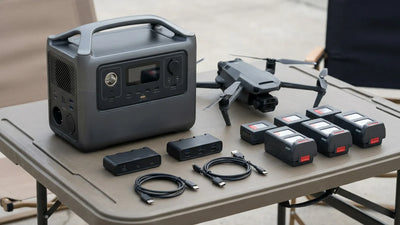
Flight time of 34–46 minutes per battery means covering a 3,000-square-foot property plus surrounding streetscapes on a single charge. Always budget for the Fly More combo (2–3 extra batteries) — roughly $120–$200 USD extra retail, or $80–$150 USD when bundled with pre-owned kits.
Obstacle avoidance sensors become important when flying near trees, power lines, or through covered entryways. Omni-directional sensing (Mini 4 Pro, Air 3) provides peace of mind for agents who fly 2–3 times weekly and cannot afford a crash that sidelines their listing photography for 5–7 business days.
How Much Should You Expect to Spend on a Real Estate Drone in 2025?

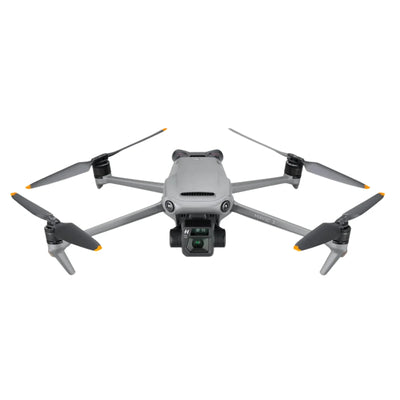
Entry-level tier ($400–$550 USD / HKD 3,120–4,290): DJI Mini 3 with the DJI RC-N1 controller. 4K/30fps HDR video, native vertical shooting, 38-minute flight time. No obstacle avoidance. Ideal for agents shooting open properties with plenty of clear airspace. New retail: $469 USD (HKD 3,660). Pre-owned Flawless Grade A+ units: $330–$370 USD (HKD 2,575–2,890) from specialized resellers.
Mid-range tier ($550–$850 USD / HKD 4,290–6,630): DJI Mini 4 Pro or pristine pre-owned DJI Air 2S. The Mini 4 Pro adds omni-directional obstacle sensing and 4K/100fps slow-motion. New: $759 USD (HKD 5,920) base; Fly More combo: $959 USD (HKD 7,480). A pre-owned Air 2S with its 1-inch sensor produces arguably better still photos than the Mini 4 Pro despite being an older model — expect to pay $520–$580 USD (HKD 4,060–4,530) for Grade A condition with under 15 flight hours.
Professional tier ($850–$1,200 USD / HKD 6,630–9,360): DJI Air 3 or Mavic 3 Classic. Dual-camera systems (24mm wide + 70mm telephoto on the Air 3) unlock compression shots that make properties look dramatic and premium. New Air 3: $1,099 USD (HKD 8,570) with RC-N2. The telephoto lens alone justifies the upgrade for agents listing properties above $800,000 USD where presentation quality directly impacts buyer perception.
Pre-owned savings across all tiers average 25–40% off MSRP. A pre-owned Air 3 Fly More combo that retails at $1,549 USD (HKD 12,080) can be found at $1,050–$1,150 USD (HKD 8,190–8,970) in pristine pre-owned condition with full accessories and warranty intact.
Which Specific Drone Models Offer the Best Value for Property Photography?
The DJI Air 2S (released 2021) remains the value champion for pure image quality. Its 1-inch CMOS sensor captures 20MP stills with dynamic range that outperforms the Mini 4 Pro's 1/1.3-inch sensor in side-by-side tests — particularly in high-contrast scenes like a white house against dark foliage. A pristine pre-owned Air 2S costs $520–$580 USD (HKD 4,060–4,530), roughly the same as a new Mini 3 but with a vastly superior camera. The trade-off: no native vertical shooting (must crop in post) and fewer obstacle sensors. Agents who prioritize still photography over video will find this the smartest money spent.
The DJI Mini 4 Pro ($759 USD / HKD 5,920 new) is the best all-rounder for agents who shoot both photos and short-form video. Omni-directional obstacle avoidance, 4K/100fps, native vertical mode, and a sub-249g weight. It folds to roughly the size of a smartphone when collapsed — agents can carry it in a jacket pocket to every showing. Pre-owned Grade A units run $580–$640 USD (HKD 4,525–4,995), saving roughly $120–$180 USD versus retail.
For luxury property specialists, the DJI Air 3 with its 70mm telephoto lens creates natural compression that makes infinity pools, long driveways, and mountain-view decks look dramatically better than wide-angle shots alone. The 3x optical zoom lets agents frame shots without flying closer — useful when photographing occupied neighboring properties or navigating tight setback restrictions. Expect to pay $1,099 USD (HKD 8,570) new, or $780–$850 USD (HKD 6,085–6,630) pre-owned in flawless condition.
Where to Buy Pristine Pre-Owned Drones
Buying a used drone from a general marketplace carries real risk: degraded batteries with 40+ charge cycles, undocumented crash damage, firmware locks from previous DJI accounts, and no warranty recourse. Specialized pre-owned drone retailers eliminate these variables through systematic inspection and testing.
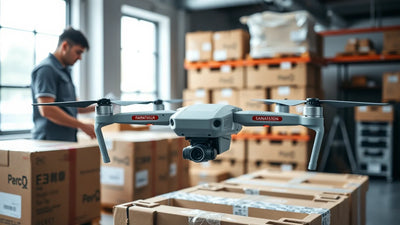
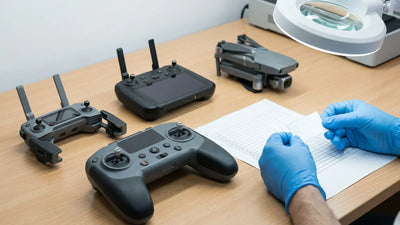
Reboot Hub (https://reboot-hub.com) specializes in pristine pre-owned drones — explicitly NOT refurbished units. Every drone passes a 40-point inspection at their Shenzhen-based facility staffed by MOHRSS Level 3 certified technicians. These are the same certification standards applied to certified repair professionals under China's Ministry of Human Resources and Social Security framework. Drones are graded on a clear scale: Flawless (Grade A+) means activation-only with zero flight time — the original owner unboxed and registered the drone but never flew it. Pristine Pre-Owned (Grade A) indicates minimal use with no visible marks on the body, gimbal, or controller.
Reboot Hub provides a 180-day warranty on all drones, ships DDP (Delivered Duty Paid) globally from Shenzhen and Hong Kong — meaning the listed price is the final price with no surprise import duties upon delivery — and operates a Hong Kong drop-off point alongside their Shenzhen chip-level repair center. Typical repair turnaround is 3–5 days for most issues. For real estate agents who depend on their drone for weekly listing shoots, a 180-day warranty and rapid repair capability offer meaningful protection against downtime. Pre-owned Mini 4 Pro units typically list at $580–$640 USD (HKD 4,525–4,995) in Flawless grade, compared to $759 USD (HKD 5,920) new — a 23% saving with effectively new equipment.
Agents should factor warranty length, inspection thoroughness, and shipping terms when comparing pre-owned sources. DDP shipping alone can save $80–$200 USD on international orders versus sellers who ship DDU (Delivered Duty Unpaid), where import fees surprise the buyer upon delivery.
Frequently Asked Questions

Q: Do I need a license or certification to fly a drone for real estate photography?
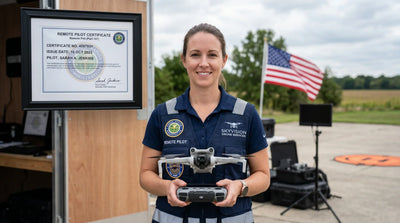
A: In the United States, the FAA requires a Part 107 Remote Pilot Certificate for any drone flight conducted for commercial purposes — including real estate photography, even if you are shooting your own listings. The certification process involves passing a 60-question knowledge test at an FAA-approved testing center, which costs $175 USD per attempt. Study materials are free via the FAA website, and most agents spend 15–20 hours preparing. Drones under 250 grams (like the DJI Mini 3 and Mini 4 Pro) do not require FAA registration for recreational use, but the Part 107 requirement still applies to commercial operations regardless of drone weight. In the UK, the CAA requires an Operator ID (£10.33 per year) and Flyer ID (free online test). In Canada, a Basic Operations Pilot Certificate (online exam, $10 CAD) covers most real estate drone work. Many other countries have similar frameworks — always check local civil aviation authority requirements before flying commercially.
Q: How does buying a pristine pre-owned drone compare to a refurbished unit?
A: Pristine pre-owned (Grade A or A+) drones have never undergone repair — they are used or open-box units that pass inspection with zero remedial work needed. Refurbished drones, by contrast, have been repaired after a fault or damage event: replaced motors, new gimbal ribbons, swapped mainboards. The distinction matters because refurbished units carry a statistical probability of subsequent failure higher than units that never required repair. Reboot Hub's Flawless Grade A+ drones are activation-only — meaning the drone was unboxed and linked to a DJI account but never actually flown. These units are functionally new at 23–35% below retail. Refurbished drones from manufacturer programs (like DJI's official refurb store) typically discount 10–15% and come with a 90-day warranty, compared to 180-day coverage on pristine pre-owned units from specialized resellers. For real estate work where reliability is non-negotiable, the inspected-but-unrepaired pre-owned tier offers the best risk-reward profile.
Q: What camera settings produce the best real estate listing photos from a drone?

A: Shoot in D-Log M or HLG color profile (available on Mini 4 Pro and Air series drones) to preserve highlight detail in sky and shadow detail under eaves and overhangs. Set ISO to 100 and adjust shutter speed for exposure — never push ISO above 400 on sub-1-inch sensors or noise becomes visible on white siding and interior walls. For stills, shoot 48MP mode in even lighting or 12MP binned mode in lower light — the pixel-binned files show less noise. White balance should be set manually to 5600K for daylight exteriors; avoid auto white balance which shifts between frames and creates editing headaches. For video, 4K/30fps in the 16:9 aspect ratio works for YouTube and website embeds, while 4K/60fps (cropped or native vertical on Mini 4 Pro and Air 3) suits social media reels. Always shoot with the sun behind the drone (property front-lit), and fly at 15–25 feet above roofline height for the most flattering perspective on single-family homes.
Q: How long do drone batteries last and how many do I need for a full property shoot?
A: A single DJI Intelligent Flight Battery delivers 34–46 minutes of flight time under ideal conditions (no wind, 20°C/68°F ambient temperature). In real-world real estate use — involving frequent hover adjustments, climbs to 100–150 feet for establishing shots, and occasional wind — expect 25–32 usable minutes per battery. A standard single-family home shoot requires 25–40 minutes of air time covering front elevation, rear yard, roofline overview, street context, and neighborhood amenity flyovers. One battery cuts it close with zero margin; two batteries provide comfortable coverage for one property; three batteries (the Fly More combo configuration) let you shoot 2–3 properties back-to-back. Replacement batteries cost $65–$95 USD (HKD 507–741) each new. Pre-owned batteries with fewer than 10 charge cycles from trusted sellers cost 40–50% less and are a smart add-on when purchasing a pre-owned drone kit.
Q: Can I fly a drone for real estate in windy conditions?
A: The DJI Mini 3 and Mini 4 Pro are rated for Level 5 wind resistance (29–38 km/h or 18–24 mph sustained winds). In practice, these sub-249g drones struggle above 30 km/h (18 mph) steady wind — gimbal horizon tilt becomes visible in footage, and battery drain accelerates by 35–50% as the motors work harder to maintain position. The DJI Air 3 and Air 2S, being heavier at 595–720 grams, handle 35–40 km/h (22–25 mph) winds with noticeably better stability. A practical rule: if tree branches are swaying continuously and flags are fully extended, a Mini-series drone will produce shaky footage. If leaves are rustling but branches are still, conditions are ideal. For agents in coastal or plains regions with frequent wind, the added mass of an Air-series drone is worth the $200–$400 USD premium over the Mini line — both for image quality and reduced crash risk during gusty conditions. Always check UAV Forecast or a similar wind app before heading to a property shoot.
Q: What is DDP shipping and why does it matter when ordering a pre-owned drone internationally?
A: DDP stands for Delivered Duty Paid — an Incoterm where the seller assumes full responsibility for shipping costs, import customs clearance, and any duties or taxes due upon entry into the destination country. When a seller ships DDU (Delivered Duty Unpaid), the buyer pays import fees upon delivery, which can add $50–$200+ USD depending on declared value and local tariff rates. For a drone valued at $600 USD shipped to the UK, DDU could mean an unexpected £95–£120 VAT and handling charge before the package is released. DDP eliminates this uncertainty — the price you see at checkout is the final price. Reboot Hub ships all orders DDP globally from Shenzhen and Hong Kong, which means agents in the US, UK, EU, Australia, and beyond receive their drone with no additional charges. This is especially valuable for higher-value pre-owned kits (Air 3 Fly More combos at $1,000+ USD) where import duties could otherwise erase the savings from buying pre-owned. Always confirm shipping terms before ordering from any international drone seller.
Q: How important is the 180-day warranty versus a standard 90-day used electronics warranty?
A: A 180-day warranty doubles the protection window of the industry-standard 90-day used electronics warranty. This matters because drone issues — gimbal calibration drift, battery firmware incompatibility, intermittent GPS loss — often surface after 10–20 flight sessions, which for a part-time agent shooting one listing per week might take 60–100 days to manifest. A 90-day warranty could expire before a latent problem reveals itself. The 180-day coverage window spans roughly 25 listing shoots for a typical agent, enough to catch most non-crash-related hardware issues. Additionally, Reboot Hub's MOHRSS Level 3 certified technicians at their Shenzhen chip-level repair facility can diagnose and repair issues at the component level — replacing individual ICs or ribbon cables rather than swapping entire boards — which keeps repair costs sustainable and turnaround times at 3–5 days. For agents operating in spring and summer listing seasons, a week-long repair is the difference between missing one shoot or several. The extended warranty and rapid repair infrastructure together reduce the total cost of ownership meaningfully compared to buying from a marketplace seller with no post-sale support.