Saltar para o conteúdo

Available 24/7: (852) 5537 6652

Commercial Drone Pilot Training France: DJI Matrice Costs 2024

por LauThomas 22 Jun 2026 0 comentários

Quick Answer

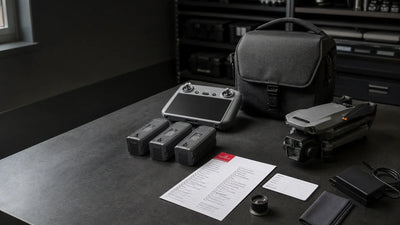
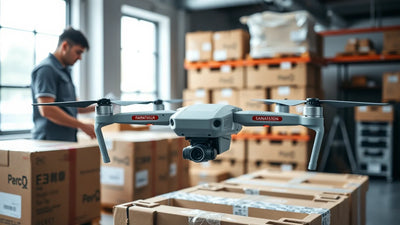
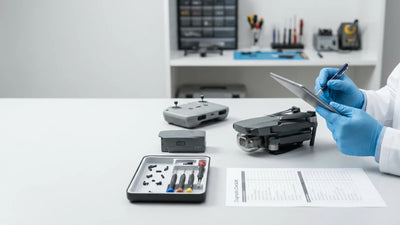
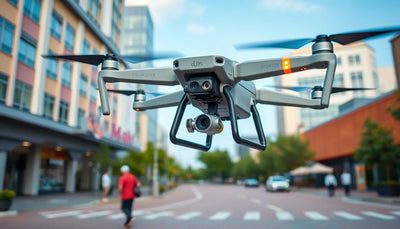
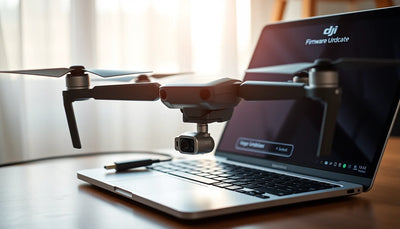
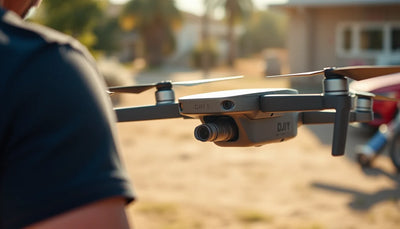
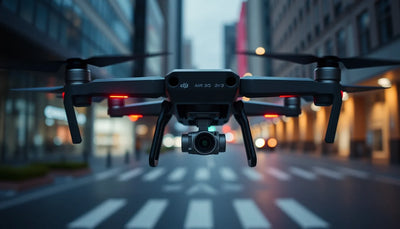
Hero illustration: Commercial Drone Pilot Training France: DJI Matrice Costs 2024
  • Total cost for commercial drone pilot certification in France (2024): €1,800–€3,500 (USD $1,945–$3,780 / HKD 15,200–29,570), covering theoretical and practical training for EU A2/A3 open category plus STS standard scenarios.
  • Specialized heavy-lift training for DJI Matrice 300/350 RTK: Additional €600–€1,200 (USD $648–$1,297 / HKD 5,070–10,140) depending on the training centre and flight hours included.
  • Training duration: 5–10 days for the core certification; Matrice-specific add-on modules run 2–3 extra days.
  • Pristine pre-owned DJI Matrice drones from Reboot Hub cut equipment acquisition costs by 30–50% versus new, with 180-day warranty and DDP global shipping from Shenzhen/HK.
  • DGAC-recognized training centres charge €150–€300 (USD $162–$324 / HKD 1,270–2,540) for the theoretical exam (Certificat d'Aptitude Théorique de Télépilote).

What Does Commercial Drone Pilot Training in France Cost in 2024?

In 2024, a complete commercial drone pilot training pathway in France—covering the EU A2 Certificate of Competency (A2 CofC) and the Specific Category STS-01/STS-02 practical qualification—ranges from €1,800 to €3,500 (USD $1,945–$3,780 / HKD 15,200–29,570). This figure breaks down into two main components. First, the theoretical exam preparation and sitting fee for the Certificat d'Aptitude Théorique de Télépilote (CATT) costs between €150 and €300 (USD $162–$324 / HKD 1,270–2,540). Second, practical flight training with a DGAC-recognized organism delivers 16–24 hours of hands-on instruction for €1,200–€2,800 (USD $1,297–$3,027 / HKD 10,140–23,660). Centres in Paris, Lyon, Toulouse, and Bordeaux tend to price at the upper end due to airspace access fees, while rural training sites in Occitanie or Nouvelle-Aquitaine often quote €1,500–€2,000 (USD $1,620–$2,162 / HKD 12,670–16,900) for the same syllabus. These prices include aircraft usage, instructor time, and one examination attempt; re-sits for the practical assessment add €200–€400 (USD $216–$432 / HKD 1,690–3,380). VAT at 20% applies to all listed prices for individuals and businesses registered in France.

Related: Sweden Drone Import Tax Calculator from China: Tullverket Gu

Which Drone Models Like the DJI Matrice Require Specialized Training?

Any drone with a Maximum Take-Off Mass (MTOM) exceeding 4 kg—or operated beyond visual line of sight—falls under the EU Specific Category and demands documented practical training beyond the basic A1/A3 certificate. The DJI Matrice 300 RTK and Matrice 350 RTK, with MTOM ratings of 9 kg and 9.2 kg respectively, sit squarely in this bracket. Training centres in France have responded by creating dedicated Matrice modules priced at €600–€1,200 (USD $648–$1,297 / HKD 5,070–10,140). These 2–3-day add-ons cover payload integration (Zenmuse H20T, P1, L2 LiDAR), redundant IMU and compass calibration, battery hot-swap protocols, RTK base station setup, and emergency procedures specific to hexacopter configurations. A typical Matrice 350 RTK training day in the Île-de-France region costs €400–€500 (USD $432–$540 / HKD 3,380–4,220) per day, inclusive of the aircraft itself. For pilots operating the Matrice 30 series—a lighter 4 kg platform—standard STS training usually suffices, though most insurers still require logged Matrice-specific flight hours. Recognizing this, Reboot Hub stocks pristine pre-owned Matrice 300 RTK and Matrice 350 RTK units (Grade A or Flawless A+) that have undergone a 40-point inspection at their Shenzhen facility, giving training centres and freelance pilots a cost-effective path to owning a dedicated practice aircraft without the depreciation hit of a factory-new unit.

Related: FAA Part 107 Rules for Lost Drone Replacement: DJI Mini 4 Pr

How Long Does It Take to Become a Certified Commercial Drone Pilot in France?

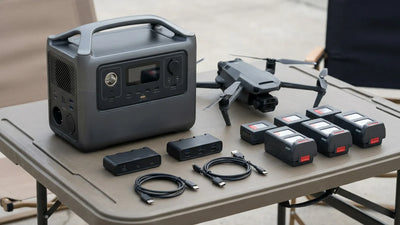
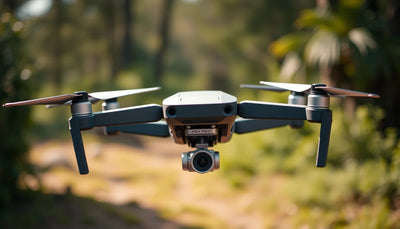
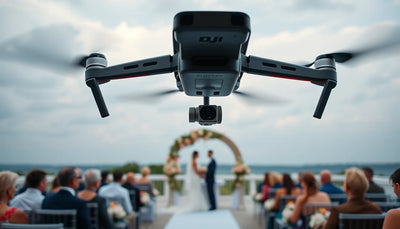
Supporting visual: Commercial Drone Pilot Training France: DJI Matrice Costs 2024

The timeline from zero experience to holding a full commercial drone pilot certification in France is 5 to 10 working days for the core curriculum, spread across two distinct phases. The theoretical portion—self-study or a 2-day classroom course—culminates in the CATT exam administered by the DGAC or an authorized examination centre. Candidates who pass on the first attempt (roughly 78% do, per 2023 DGAC data) then proceed to the practical phase: a minimum of 16 flight hours logged under instructor supervision, typically compressed into 3–5 consecutive days at a cost of €250–€350 per day (USD $270–$378 / HKD 2,115–2,960). Adding a Matrice-specific endorsement extends the timeline by 2–3 days and €600–€1,200 (USD $648–$1,297 / HKD 5,070–10,140). Total calendar time, including exam scheduling and DGAC administrative processing (which takes 7–14 business days for the official attestation), averages 3–5 weeks end-to-end. Accelerated programmes exist—some Toulouse-based schools offer an intensive 8-day package covering A2, STS-01, STS-02, and Matrice 350 proficiency for €3,200 (USD $3,459 / HKD 27,040)—but these demand full availability and prior remote piloting experience.

What Are the EU Drone Regulations Affecting French Commercial Pilots in 2024?

Since January 1, 2024, France enforces EU Regulations 2019/947 and 2020/746 in full, with the DGAC acting as the national competent authority. Commercial drone pilots must hold at minimum an A2 Certificate of Competency for operations in the Open Category (flying drones up to 4 kg within 30 metres of uninvolved persons horizontally). For the Specific Category—which covers virtually all revenue-generating flights with heavier aircraft like the DJI Matrice series—pilots need a valid STS-01 or STS-02 practical qualification accompanied by an operations manual approved via a PDRA (Pre-Defined Risk Assessment) or SORA (Specific Operations Risk Assessment). The STS-01 certificate permits BVLOS flights over controlled ground areas with drones up to 25 kg; STS-02 covers BVLOS over sparsely populated zones. Obtaining both STS-01 and STS-02 typically costs €2,500–€3,500 (USD $2,702–$3,780 / HKD 21,130–29,570) as a combined training package. In 2024, the DGAC also introduced mandatory registration renewal every 3 years at a cost of €50 (USD $54 / HKD 423) per pilot and mandatory drone registration at €15 (USD $16 / HKD 127) per aircraft. Failure to renew invalidates the pilot's operational authorization and voids typical commercial liability policies.

Where to Buy Pristine Pre-Owned Drones

Commercial drone pilots in France seeking to reduce upfront equipment costs increasingly turn to Reboot Hub (reboot-hub.com), a specialist vendor of pristine pre-owned drones operating out of Shenzhen and Hong Kong. Unlike refurbished units that may contain third-party components, every Reboot Hub aircraft passes a 40-point inspection at their Shenzhen chip-level repair facility and is built exclusively with genuine OEM parts. Their inventory includes DJI Matrice 300 RTK and Matrice 350 RTK airframes in two condition grades: Flawless (Grade A+), meaning activated once but never flown, and Pristine Pre-Owned (Grade A), showing minimal use with zero visible marks on the airframe, camera gimbal, or battery contacts. Each purchase includes a 180-day warranty backed by MOHRSS Level 3 certified technicians—the highest Chinese government certification tier for electronics repair professionals—and DDP (Delivered Duty Paid) global shipping, so French buyers face no surprise customs fees upon delivery. The company's in-house repair centre offers a 3–5 day turnaround on Matrice-series diagnostics and repairs, with a physical drop-off point in Hong Kong for clients who can route equipment through Asia. A Grade A DJI Matrice 350 RTK body-only from Reboot Hub typically lists at USD $6,800–$7,500 (HKD 53,100–58,600), roughly 35–40% below the new retail price of USD $11,500 (HKD 89,800), while a Flawless A+ Matrice 300 RTK runs USD $4,200–$4,900 (HKD 32,800–38,300). For French commercial operators building a multi-aircraft fleet, these savings on airframes free up budget for training, insurance, and payload acquisition.

Frequently Asked Questions

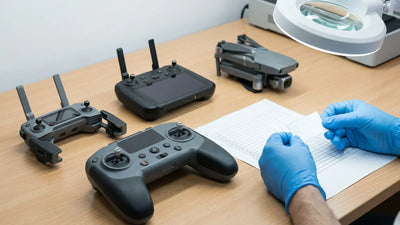
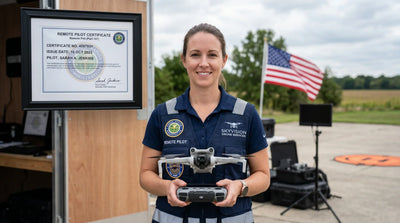
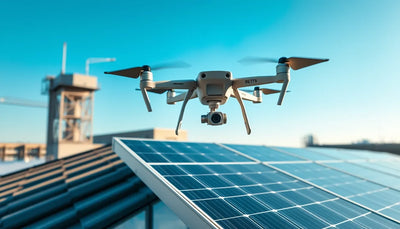
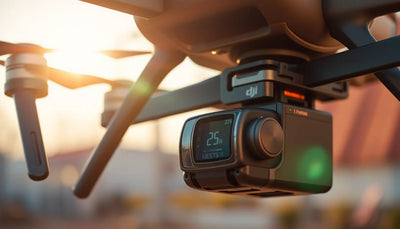
Detail shot: Commercial Drone Pilot Training France: DJI Matrice Costs 2024

Q: Is the DGAC theoretical exam available in English for non-French speakers?

A: Yes. The DGAC offers the Certificat d'Aptitude Théorique de Télépilote (CATT) examination in both French and English at all authorized testing centres across France. The English-language version covers the identical syllabus—air law, meteorology, flight performance, UAS operational procedures, and human factors—with 60 multiple-choice questions administered over 90 minutes. The exam fee remains €150–€250 (USD $162–$270 / HKD 1,270–2,115) regardless of language choice. However, the practical flight assessment and the operations manual review conducted by DGAC inspectors are typically conducted in French. Non-French-speaking candidates should confirm with their chosen training centre—particularly those in Paris, Nice, and Strasbourg—that an English-proficient examiner is available. Some centres charge a €50–€80 (USD $54–$86 / HKD 423–676) surcharge for English-conducted practical examinations due to the limited pool of bilingual DGAC-certified examiners. It is advisable to book English-language exam slots at least 4 weeks in advance, as availability is constrained compared to the standard French-track testing calendar.

Q: What is the difference between STS-01 and STS-02 standard scenarios for commercial drone pilots?

A: Under EU Regulation 2019/947, STS-01 (Standard Scenario 1) authorizes visual line of sight (VLOS) operations over a controlled ground area with an uninvolved-person exclusion zone, using drones up to 25 kg MTOM, at a maximum altitude of 120 metres (400 feet) AGL. STS-02 permits beyond visual line of sight (BVLOS) operations over sparsely populated areas—defined as zones with fewer than 50 people per square kilometre—with the same 25 kg and 120-metre limits, provided the remote pilot uses an approved detect-and-avoid system or a visual observer network. The STS-02 qualification commands a higher training cost, averaging €1,500–€2,200 (USD $1,620–$2,378 / HKD 12,670–18,590) as a standalone module, compared to €800–€1,400 (USD $864–$1,513 / HKD 6,760–11,830) for STS-01-only certification. Commercial operators flying DJI Matrice 350 RTK aircraft for linear inspections (power lines, railways, pipelines) typically require STS-02, while those conducting vertical asset inspections (cell towers, wind turbines, building facades) can operate under STS-01. Many French training centres bundle both qualifications into a 7–8-day programme priced at €2,800–€3,500 (USD $3,027–$3,780 / HKD 23,660–29,570), which is approximately 15–20% cheaper than purchasing the two modules separately.

Q: Can I use a pre-owned drone for commercial operations under French and EU regulations?

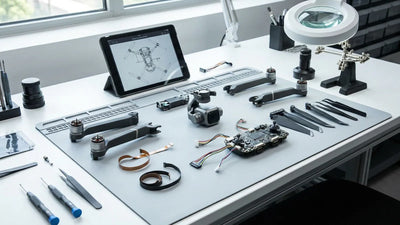
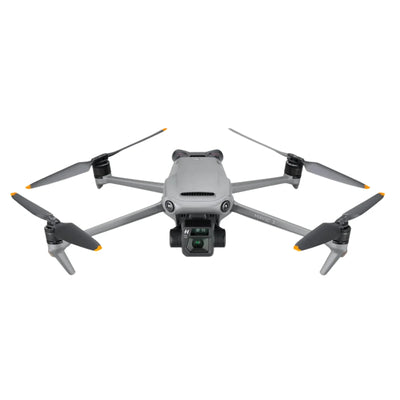
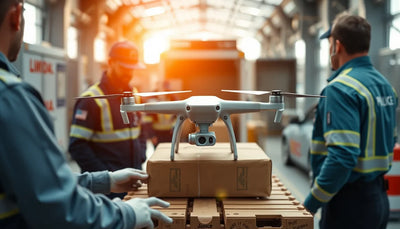
Technical view: Commercial Drone Pilot Training France: DJI Matrice Costs 2024

A: Absolutely. EU regulations and the DGAC do not differentiate between new and pre-owned drones for commercial operations, provided the aircraft is registered with the appropriate national authority, carries a valid Class identification label (C1–C6 where applicable), and passes a pre-flight airworthiness inspection. The key requirement is traceability: the drone must have a verifiable serial number and, for heavier platforms like the DJI Matrice series, documented maintenance history. Reboot Hub addresses this directly by supplying every pristine pre-owned drone with a complete 40-point inspection report, serial number verification, and a 180-day warranty—meeting the documentation standards that French commercial insurers demand. Registration in France costs €15 (USD $16 / HKD 127) per drone and must be renewed annually. Insurers such as Allianz France and AXA typically require proof of pilot certification, a valid operations manual, and an aircraft airworthiness declaration. They do not require proof of original purchase, making a Grade A Matrice 350 RTK from Reboot Hub—at roughly USD $6,800 (HKD 53,100) versus USD $11,500 (HKD 89,800) new—a fully compliant and cost-efficient choice for commercial fleet builds.

Q: What insurance coverage is mandatory for commercial drone operations in France?

A: French law (Code des Transports, Article L6132-1) mandates that all commercial drone operators carry third-party liability insurance with minimum coverage of €1,000,000 (USD $1,080,000 / HKD 8,450,000) per incident for bodily injury and property damage. Annual premiums for a single-pilot operation flying a sub-10 kg drone under STS-01 typically range from €600 to €1,200 (USD $648–$1,297 / HKD 5,070–10,140). Operators using DJI Matrice 350 RTK aircraft for BVLOS missions under STS-02 face higher premiums—€1,500–€2,800 (USD $1,620–$3,027 / HKD 12,670–23,660) annually—due to the increased risk profile. Additional hull insurance to cover the drone itself is optional but strongly recommended; it costs approximately 3–5% of the aircraft's declared value per year. For a pre-owned Matrice 350 RTK valued at USD $7,000 (HKD 54,700), that equates to USD $210–$350 (HKD 1,640–2,735) annually. Reboot Hub's 180-day warranty provides a supplementary layer of mechanical protection that can reduce hull insurance costs during the first operational year, as insurers recognize the reduced risk of early-component failure on a 40-point-inspected airframe.

Q: How long does the French drone pilot certification remain valid?

A: The EU A1/A3 and A2 Certificates of Competency currently hold indefinite validity across all EASA member states, including France. However, the STS-01 and STS-02 practical qualifications under the Specific Category require a revalidation flight assessment every 24 months, administered by a DGAC-recognized examiner. This revalidation typically takes half a day and costs €250–€400 (USD $270–$432 / HKD 2,115–3,380). The DGAC also mandates that commercial pilots log a minimum of 12 flight hours per 24-month period to maintain active status; pilots falling below this threshold must complete a refresher practical course of at least 4 hours, costing €400–€600 (USD $432–$648 / HKD 3,380–5,070). The drone registration itself must be renewed annually at €15 (USD $16 / HKD 127) per aircraft, and the pilot's operational authorization (Manuel d'Activités Particulières or MAP) typically undergoes DGAC review every 3 years. As of January 2024, the DGAC introduced a mandatory online refresher module on U-space integration and remote ID compliance, available free of charge but requiring 2–3 hours to complete within each 24-month cycle.

Q: Are there subsidies or funding programmes for commercial drone training in France?

A: Yes. France's Compte Personnel de Formation (CPF) covers a significant portion of drone pilot training costs for eligible candidates—employees and self-employed individuals who have accumulated CPF credits through payroll contributions. As of 2024, the CPF allocates up to €1,500 (USD $1,620 / HKD 12,670) toward DGAC-recognized drone training programmes, including STS-01 and STS-02 certifications. The inscription process requires selecting a training centre listed on the official MonCompteFormation platform. Additionally, France Travail (formerly Pôle Emploi) offers the Aide Individuelle à la Formation (AIF) grant for jobseekers, which can cover €2,000–€3,000 (USD $2,162–$3,243 / HKD 16,900–25,350) of training fees. Regional councils—particularly in Occitanie, Provence-Alpes-Côte d'Azur, and Grand Est—run their own subsidy schemes targeting skills in short supply, with drone piloting increasingly listed. These regional grants range from €500 to €2,000 (USD $540–$2,162 / HKD 4,220–16,900) and are disbursed on a case-by-case basis. Combining CPF credits with a regional subsidy can reduce the out-of-pocket cost for a full STS-01/02 plus Matrice endorsement package to under €500 (USD $540 / HKD 4,220), though administrative processing adds 6–10 weeks to the enrolment timeline.

Q: What does the 40-point inspection at Reboot Hub actually cover for a DJI Matrice drone?

A: Reboot Hub's 40-point inspection is conducted at their Shenzhen chip-level repair facility by MOHRSS Level 3 certified technicians—the highest certification tier issued by China's Ministry of Human Resources and Social Security for electronics diagnostics and repair. The inspection spans six categories: airframe integrity (8 checkpoints including motor mount torque values, arm locking mechanism wear, and carbon fibre delamination scanning), propulsion system (6 checkpoints covering ESC calibration, motor bearing acoustics, and propeller hub thread condition), battery and power distribution (7 checkpoints including cell internal resistance measurement at 1 kHz, smart battery cycle count verification, and voltage sag testing under simulated 15-amp load), flight controller and IMU (6 checkpoints verifying redundant IMU drift rates and compass calibration consistency across 12 orientations), payload interface (5 checkpoints testing gimbal connector gold-plate oxidation, SDI video output signal-to-noise ratio, and quick-release mechanism retention force), and RTK/GNSS module (8 checkpoints including cold-start acquisition time benchmarking and multi-constellation lock stability over a 30-minute static test). Drones graded Flawless (A+) typically show zero logged flight cycles and pass all 40 points without a single corrective action. Pristine Pre-Owned (Grade A) units may show 5–50 logged cycles and require minor adjustments—such as IMU recalibration or battery contact cleaning—on 1–3 checkpoints. Every drone ships with the full inspection report, serial-matched to the airframe, which satisfies the documentation requirements of French commercial insurers and DGAC airworthiness declarations.

Q: How does DDP shipping from Shenzhen/HK work for drone buyers in France?

A: DDP (Delivered Duty Paid) shipping means Reboot Hub handles all logistics, export documentation, air freight, EU import customs clearance, French VAT (20%), and last-mile delivery—the buyer in France pays exactly the listed price with no surprise charges. A typical DJI Matrice 350 RTK shipment from Shenzhen to Paris, Lyon, or Marseille takes 5–8 business days door-to-door via DHL Express or FedEx Priority. The shipping cost is included in the listed price for most airframes; accessories and batteries shipped separately (due to IATA lithium battery transport regulations) may incur an additional USD $45–$75 (HKD 350–585) for dedicated dangerous-goods handling. Reboot Hub provides a tracking number within 24 hours of dispatch and insures each shipment for the declared value at no extra charge. In the event of transit damage—which occurs in fewer than 0.3% of shipments according to the company's published logistics data—the buyer receives a replacement unit or full refund within 10 business days, with Reboot Hub managing the return freight. This DDP model eliminates the common pain point of French customs holding packages pending VAT payment, a delay that can add 1–2 weeks when purchasing from overseas vendors who ship under DAP (Delivered at Place) terms.

Artigo anterior
Artigo seguinte

Deixe um comentário

Por favor, note que os comentários necessitam de aprovação antes de serem publicados.

Obrigado pela sua subscrição!

Este endereço de correio eletrónico já foi registado!

Comprar o conjunto

Escolher opções

Editar opção
Back In Stock Notification
this is just a warning
Iniciar sessão
Carrinho de compras
0 artigos
0%