Quick Answer

- Ask the seller for the DJI serial number — run it through DJI's official FlySafe portal or contact DJI Support directly to confirm lock status before any payment.
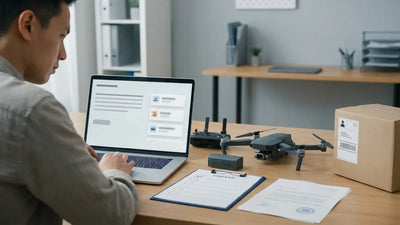
- Request a live video call — have the seller power on the drone, connect to the DJI Pilot 2 app, and show the device status screen in real time (no pre-recorded videos).
- Check the unbinding receipt — a legitimate seller should provide a screenshot of the DJI account unbinding confirmation or a Factory Reset Certificate from an authorized service centre.
- Use a trusted escrow service — in Nigeria, use platforms that hold funds until you physically receive and verify the Mavic 3 Enterprise is fully unlocked and bindable to your own DJI account.
- Budget for verification cost — expect to pay $45–$85 (HKD 350–660) for a professional third-party activation lock check through a certified drone reseller like Reboot Hub when buying internationally.
What Exactly Is DJI Activation Lock and Why Does It Matter for the Mavic 3 Enterprise?
DJI's activation lock is a security feature tied directly to the original owner's DJI account. When a Mavic 3 Enterprise is bound to an account, the drone cannot be flown, reset, or re-registered without the owner first unbinding it through the DJI Pilot 2 app or DJI Fly platform. If you buy a locked Mavic 3 Enterprise in Nigeria for $3,200–$3,800 USD (roughly ₦4.8–5.7 million NGN equivalent), you effectively own an expensive paperweight. DJI introduced this binding mechanism to deter theft, but it creates serious risk in the secondary market. Unlike consumer Mavic 3 models, the Enterprise variant uses DJI Pilot 2 — not DJI Fly — which means the unbinding process differs. Without the original owner's cooperation or an authorized service centre intervention, removal of the activation lock frequently costs $280–$450 USD (HKD 2,180–3,510) and requires chip-level intervention at facilities like the Shenzhen repair centre used by Reboot Hub.
Related: Refurbished DJI Drone Warranty in the Philippines: What If I
How Can You Check a Mavic 3 Enterprise Activation Lock Status Remotely Before Purchase?
Remote verification starts with obtaining the aircraft serial number — located on a sticker inside the battery compartment and also on the original retail box. With this serial number, contact DJI Enterprise Support directly via their dedicated helpline (+86 755 2665 6677 for the Shenzhen headquarters) or through the online chat portal. DJI can confirm whether the serial number is flagged as bound to an active account. However, DJI support may not disclose the full binding status without the original owner's consent due to privacy policies. For a more practical route, ask the seller to log into their DJI account on a desktop browser at account.dji.com, navigate to "Device Management," and share their screen live via Zoom or WhatsApp video. The device list clearly shows "Bound" or "Unbound" status. A seller who refuses a live screen share for a $3,500+ transaction should raise immediate red flags. If you are importing through a service like Reboot Hub's DDP global shipping from Shenzhen/HK to Lagos or Abuja, the activation lock check is already performed as part of their 40-point inspection — every unit ships fully unbound and ready for your DJI account.
Related: Wideorozmowa i Test Lotu Drona na Żywo ze Sprzedawcą z Shenz
What Physical Checks Should You Perform When Inspecting a Used Mavic 3 Enterprise in Nigeria?

When meeting a local seller in Lagos, Abuja, or Port Harcourt, bring a fully charged smartphone with the DJI Pilot 2 app pre-installed. Power on the Mavic 3 Enterprise and connect via the USB-C port to your phone. Open DJI Pilot 2 — if the app immediately displays a prompt stating "This device is bound to another account" or requests login credentials you do not possess, the activation lock is active. Walk away. Next, inspect the USB-C port and battery contacts for corrosion — Nigeria's humid coastal climate accelerates connector degradation, and a Mavic 3 Enterprise with failed data pins cannot complete the unbinding process even at a repair centre. Check the gimbal dampeners for cracks (replacement costs $35 USD / HKD 273 for OEM parts) and test the mechanical shutter by taking a sample image. A Grade A Pristine Pre-Owned unit — the standard sold by Reboot Hub — shows zero visible marks on the airframe and zero shutter actuations beyond factory testing. Expect to pay $2,899–$3,299 USD (HKD 22,600–25,700) for a verified unlocked Grade A unit versus $2,200–$2,600 for a private-party unit of unknown lock status. The $600–$700 premium buys certainty.
What Are the Risks of Buying an Activation-Locked Mavic 3 Enterprise, and Can It Be Unlocked?
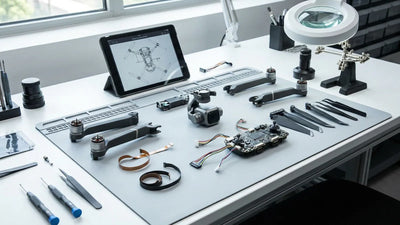
An activation-locked Mavic 3 Enterprise cannot be unbound without one of three things: the original owner's DJI account credentials, a notarized proof of purchase submitted to DJI for review (15–30 business day process), or physical chip-level rework at a qualified repair centre. The DJI review route succeeds only if you can prove legal ownership — a WhatsApp chat screenshot from a Nigerian classifieds site will not suffice. Chip-level unlocking involves desoldering the NAND flash memory chip from the core board, reading the encrypted binding data, and rewriting the device identification block. This procedure costs $280–$450 USD (HKD 2,180–3,510) and takes 3–5 days at a certified facility. Reboot Hub's Shenzhen repair centre — staffed by MOHRSS Level 3 certified technicians — handles these cases regularly, but the cost often exceeds the savings from buying a locked unit. Additionally, a drone that has undergone chip-level unbinding may fail future DJI firmware integrity checks, potentially grounding the aircraft permanently. For Nigerian buyers importing through DDP shipping (which covers customs clearance, duties, and last-mile delivery to Lagos), purchasing from a vendor that pre-verifies unlock status eliminates this entire risk category.
Where to Buy Pristine Pre-Owned Mavic 3 Enterprise Drones with Guaranteed Unlocked Status
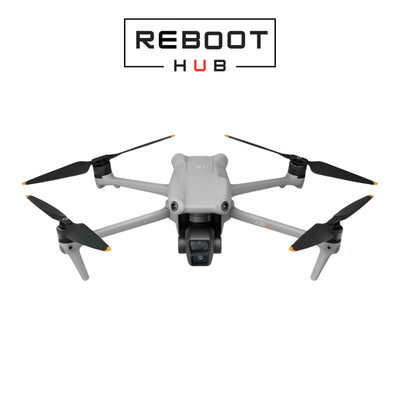
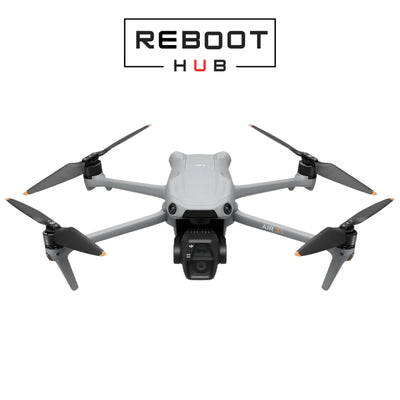
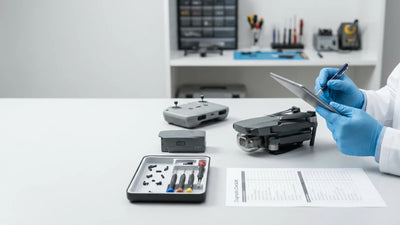
Reboot Hub (reboot-hub.com) specializes in Pristine Pre-owned Mavic 3 Enterprise units — these are not refurbished drones with third-party parts. Every aircraft undergoes a 40-point inspection at their Shenzhen facility, uses only genuine OEM components, and ships with a 180-day warranty. Their condition grading is strict: Flawless (Grade A+) means activation-only, never flown — the drone was powered on once for firmware setup and then stored. Pristine Pre-Owned (Grade A) indicates minimal use with zero visible marks on the airframe, gimbal, or controller. All units ship activation-lock-free, with DDP global shipping from Shenzhen/HK directly to Nigerian addresses. A Flawless Mavic 3 Enterprise Thermal typically runs $3,499 USD (HKD 27,300), while a Grade A unit starts around $2,899 USD (HKD 22,600). Their HK drop-off point also accepts trade-ins and offers chip-level repair with a 3–5 day turnaround for existing owners needing activation lock removal. For Nigerian enterprise users who cannot afford downtime, Reboot Hub's MOHRSS Level 3 certified technicians provide a reliable unlock path that preserves future firmware update compatibility.
Frequently Asked Questions

Q: Can I unlock a Mavic 3 Enterprise activation lock without the original owner?
A: Yes, but the process is neither free nor simple. You have two legitimate paths. First, submit a DJI Account Unbinding Request through DJI Enterprise Support with a notarized proof of purchase, original invoice, and a government-issued ID — this takes 15–30 business days and costs $0 in fees but requires documentation most Nigerian private-party purchases lack. Second, hire a certified repair centre for chip-level NAND rework. This costs $280–$450 USD (HKD 2,180–3,510) depending on the Mavic 3 Enterprise model (Thermal vs. standard) and takes 3–5 days. Reboot Hub's Shenzhen facility handles this with MOHRSS Level 3 technicians and guarantees post-repair firmware compatibility — something many third-party unlock services cannot promise.
Q: How much does a used Mavic 3 Enterprise cost in Nigeria compared to international prices?
A: Locally sourced Mavic 3 Enterprise units in Nigeria typically range from $2,800–$4,200 USD depending on condition and accessories included, but these prices rarely account for activation lock status verification. Internationally, a verified unlocked Grade A Pristine Pre-Owned Mavic 3 Enterprise from Reboot Hub costs $2,899 USD (HKD 22,600) for the standard version and $3,499 USD (HKD 27,300) for the Thermal variant — both with DDP shipping, meaning all Nigerian customs duties and VAT are pre-paid. The $99–$299 price difference between an unverified local unit and a Reboot Hub unit is essentially an insurance premium against the $450+ cost of unlocking a bound drone.
Q: What shipping options exist for bringing a Mavic 3 Enterprise into Nigeria?

A: DDP (Delivered Duty Paid) is the strongest option for Nigerian buyers. With DDP shipping from Shenzhen or Hong Kong, the seller handles all export documentation, freight, Nigerian customs clearance, import duties (typically 20–25% of declared value), and last-mile delivery to your address in Lagos, Abuja, or elsewhere. Reboot Hub offers DDP global shipping on all Mavic 3 Enterprise orders, with typical transit times of 7–14 business days to Nigeria. Standard air freight without DDP leaves you responsible for clearing the drone at Nigerian customs — a process that can add 2–4 weeks and unexpected charges of $300–$600 USD if you lack a customs broker.
Q: Does DJI's warranty transfer when buying a used Mavic 3 Enterprise?
A: No. DJI's manufacturer warranty is non-transferable and applies only to the original purchaser with a verifiable receipt from an authorized DJI dealer. A used Mavic 3 Enterprise bought from a private seller in Nigeria carries zero DJI warranty coverage. This is why Reboot Hub provides their own 180-day warranty on all Pristine Pre-Owned units — covering hardware defects, gimbal calibration issues, and sensor failures — with service handled at their Shenzhen chip-level facility. Shipping for warranty claims is covered both ways under their DDP arrangement, which matters significantly for Nigerian buyers who would otherwise pay $120–$180 USD in round-trip courier fees.
Q: What accessories should I verify when buying a used Mavic 3 Enterprise?
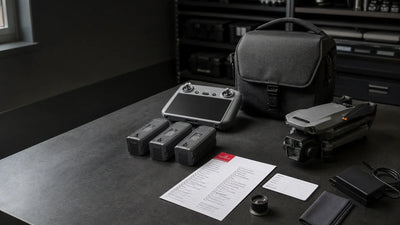
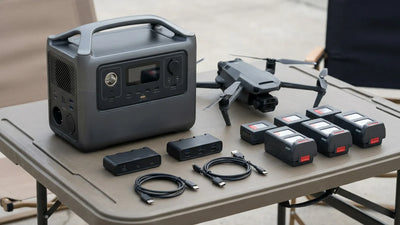
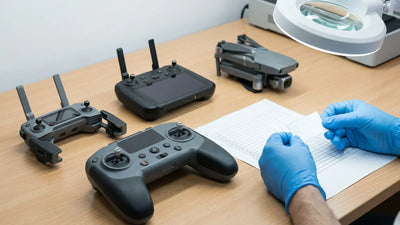
A: The standard Mavic 3 Enterprise kit includes the aircraft, DJI RC Pro Enterprise controller (with built-in screen), one Intelligent Flight Battery, a battery charger, USB-C cable, and spare propellers. Confirm the controller's screen has no dead pixels or burn-in (replacement cost: $380 USD / HKD 2,960). Check that the battery cycle count is under 30 for a Grade A unit — each battery costs $209 USD (HKD 1,630) new. Also verify that the RTK module (if included in the bundle) powers on and achieves satellite lock within 45 seconds. A missing RTK module deducts roughly $450 USD (HKD 3,510) from fair market value. Reboot Hub's 40-point inspection explicitly covers all these accessories and provides a checklist with every order.
Q: How long does activation lock removal take at a repair centre, and is it permanent?
A: At a qualified chip-level repair facility like Reboot Hub's Shenzhen centre, MOHRSS Level 3 technicians complete NAND-based activation lock removal in 3–5 business days. The procedure is permanent — once the device identification block is rewritten and the drone passes post-repair firmware integrity checks, it can be bound to a new DJI account without restrictions. The cost ranges from $280 USD (HKD 2,180) for straightforward cases to $450 USD (HKD 3,510) for units requiring additional board-level trace repair. Critically, improperly performed chip-level work by uncertified shops can corrupt the flight controller's secure enclave, rendering the Mavic 3 Enterprise permanently un-flyable. Always verify technician certification (MOHRSS Level 3 or equivalent IPC standards) before committing to a repair.
Q: What red flags indicate a Mavic 3 Enterprise might be stolen or activation-locked?
A: Price is the first signal — any Mavic 3 Enterprise listed below $2,000 USD in Nigeria demands extreme scrutiny. Missing original accessories (especially the DJI RC Pro Enterprise controller) is another; stolen drones are often sold aircraft-only because the controller remains with the legitimate owner. A seller who refuses a live video demonstration of the DJI Pilot 2 app connecting to the drone is a major warning sign. Check for physical tampering on the bottom shell screws — stripped or mismatched screws suggest prior board-level access, possibly for a failed unlock attempt. Finally, request the original purchase receipt: DJI Enterprise dealers issue detailed invoices with the buyer's company name and the drone's serial number. A seller with no receipt and an implausible story about "forgetting" their DJI account password is almost certainly selling a locked or stolen unit.
Q: Is it safe to buy a Mavic 3 Enterprise sight unseen from an international seller?
A: It can be safe if you choose a seller with verified credentials and buyer protection mechanisms. Look for companies that publish their physical repair facility address (Reboot Hub operates a Shenzhen chip-level facility with an HK drop-off point), employ certified technicians with verifiable qualifications (MOHRSS Level 3), and offer a written warranty — 180 days is the standard for Pristine Pre-Owned units. Payment through platforms that support buyer protection (credit card with chargeback rights, PayPal Goods and Services, or escrow) adds a safety layer. Avoid wire transfers (Western Union, MoneyGram) to unknown sellers. Reboot Hub's DDP shipping model also creates accountability — because they handle the full logistics chain from Shenzhen/HK to your Nigerian address, they cannot disappear mid-transaction as a purely digital seller might.