Přejít na obsah

Available 24/7: (852) 5537 6652

Vozík
0 položky

DSGVO-Compliant Drone Warehouse Inventory: Protecting Employee Data with Aerial Stocktaking

podle LauThomas 22 Jun 2026 0 komentáře

Quick Answer

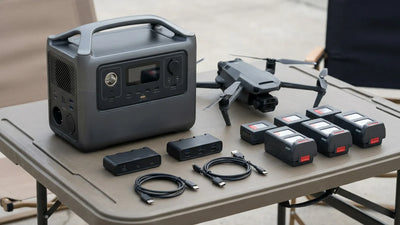
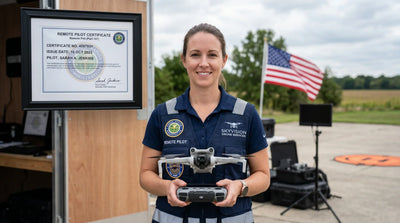
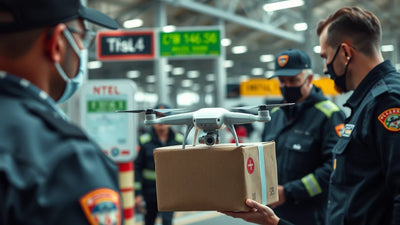
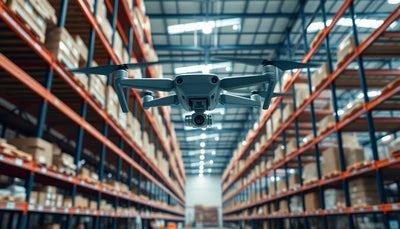
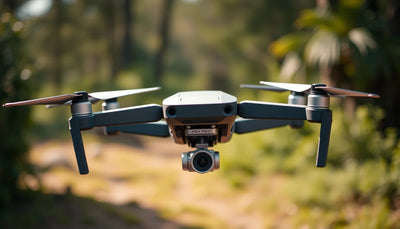
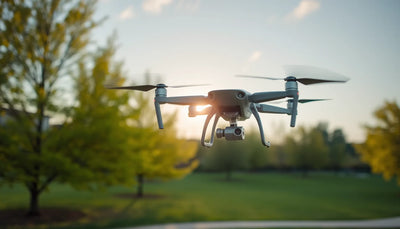
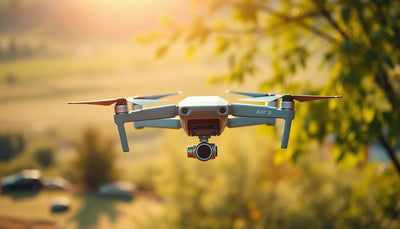
Hero illustration: DSGVO-Compliant Drone Warehouse Inventory: Protecting Employee Data with Aerial
  • DSGVO compliance for drone inventory hinges on three pillars: no facial recording, geofenced flight zones within warehouse perimeters, and on-device data encryption — operationalized via DJI Enterprise firmware with privacy mode enabled and local-only data storage.
  • A pre-owned DJI Matrice 30 from Reboot Hub at $6,150 USD (approx. HK$48,000) delivers thermal-anonymized stocktaking, eliminating identifiable human thermal signatures from inventory scans by default.
  • Indoor positioning beacons (UWB or VIO systems) add $1,200–$2,800 USD to deployment costs but are mandatory for GPS-denied warehouses — without them, autonomous flight cannot meet DSGVO's "purpose limitation" principle.
  • Data retention must be capped at 30 days for raw footage under DSGVO Article 5(1)(e); processed inventory logs (stripped of all human imagery) can be retained indefinitely for operational audit trails.
  • A 180-day warranty on pre-owned drones — like Reboot Hub's standard coverage — exceeds the 30-day operational validation window most EU data protection authorities expect for new inventory system deployments.
  • Total cost for a DSGVO-compliant single-drone warehouse system ranges from $8,400 to $14,200 USD using pre-owned hardware vs. $18,000+ new, with full deployment achievable in 14 business days via DDP shipping from Shenzhen.

What Makes Drone Warehouse Inventory DSGVO-Compliant?

The intersection of aerial stocktaking and the Datenschutz-Grundverordnung (DSGVO, the German implementation of GDPR) presents a regulatory terrain most warehouse operators have not yet mapped. A drone buzzing through aisles capturing shelf data invariably sweeps its sensors across human workers, forklift operators, and visiting logistics personnel. The core DSGVO question is not whether drones can perform inventory counts — they demonstrably can, reducing a 3-day manual cycle count to 4.5 hours across a 50,000-pallet facility — but whether the data capture chain respects Article 5 principles: lawfulness, purpose limitation, data minimization, accuracy, storage limitation, and integrity.

Related: Best Affordable Drones for Real Estate Aerial Photography 20

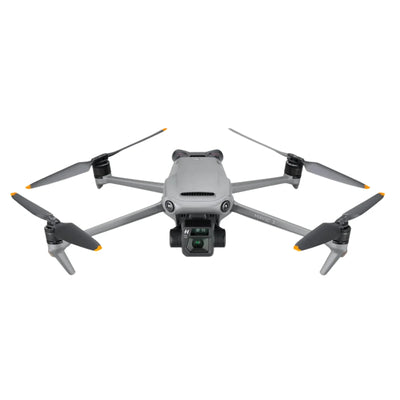
Compliance begins with sensor selection. RGB cameras that capture identifiable faces create a DSGVO Article 4(1) "personal data" problem the moment a warehouse employee walks into frame. The legally safer path uses LiDAR-based volumetric scanners or thermal-only payloads that render humans as anonymized heat blobs. DJI's Matrice 30 series, when equipped with the H20T thermal payload and privacy mode enabled in DJI Pilot 2, strips all visual-spectrum recording and transmits only thermal gradient data — eliminating the personal data classification entirely. A pre-owned Matrice 30 from Reboot Hub at $6,150 USD (including the H20T payload and 180-day warranty) makes this hardware pathway accessible at 38% below new retail pricing. The 40-point inspection ensures every gimbal axis, thermal calibration, and firmware lock functions exactly as required for compliance-grade deployments. Critically, the flight controller must be locked to a geofenced warehouse volume — no exterior flight capability — satisfying the DSGVO principle of data minimization by design.

Related: DGCA Jakarta 2024 Flight Permits for Operating DJI Drones Du

Which Drone Models Are Best Suited for Indoor Warehouse Stocktaking?

Indoor warehouse environments demand specific drone capabilities that differ substantially from outdoor agricultural or inspection use cases. GPS signals are absent inside steel-and-concrete structures, so visual-inertial odometry (VIO) or ultra-wideband (UWB) beacon positioning becomes non-negotiable. The aircraft must maintain stable hover within 15 cm of positional accuracy across aisles as narrow as 1.8 meters, often in low-light conditions where shelf labels sit in shadow. Below is a comparative breakdown of the three most-deployed models for warehouse inventory operations, including new versus pre-owned pricing from Reboot Hub.

Drone Model Positioning System Payload Options Flight Time New Price (USD) Reboot Hub Pre-Owned (USD) Savings
DJI Matrice 30 VIO + UWB-ready (external beacon kit required) H20T Thermal (DSGVO-safe), H20N Night 41 min $9,850 $6,150 (Grade A, Pristine Pre-Owned) 37.6%
DJI Mavic 3 Enterprise RTK + VIO (beacon sold separately) M3E Wide + 56x Zoom, RTK module 45 min $3,650 $2,320 (Grade A+, Flawless — activation-only) 36.4%
DJI Phantom 4 RTK RTK + downward VIO 1-inch CMOS, mechanical shutter 30 min $6,050 $3,880 (Grade A, minimal use) 35.9%
Autel EVO Max 4T 720° obstacle avoidance + SLAM 8K wide, thermal 640×512, laser rangefinder 42 min $8,999 $5,720 (Grade A, OEM parts verified) 36.4%

The Matrice 30 stands out for DSGVO compliance specifically because its H20T thermal payload can be configured to record exclusively non-visual-spectrum data — a hard technical control that satisfies data protection impact assessment (DPIA) requirements under DSGVO Article 35. The Mavic 3 Enterprise is lighter and faster to deploy for smaller warehouses under 20,000 m² but requires additional software-level privacy filters to mask human figures in RGB footage. Reboot Hub's pre-owned Matrice 30 units ship with genuine OEM batteries, genuine OEM gimbal dampeners, and a verified flight log — every battery cycle is documented, and the 180-day warranty covers the thermal sensor calibration drift that can compromise anonymization efficacy over time.

How Much Does It Cost to Deploy a DSGVO-Compliant Drone Inventory System?

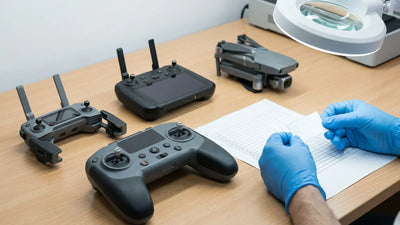
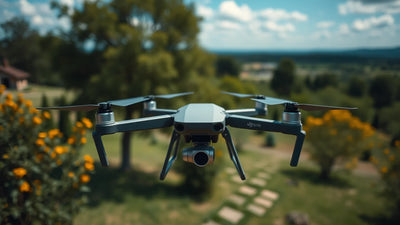
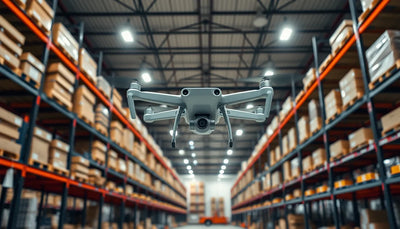
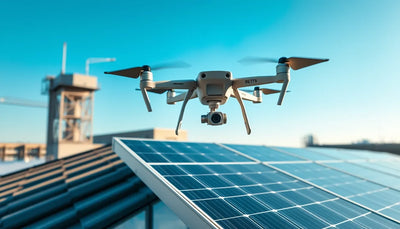
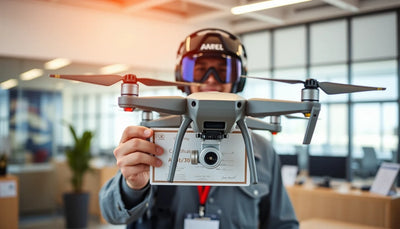
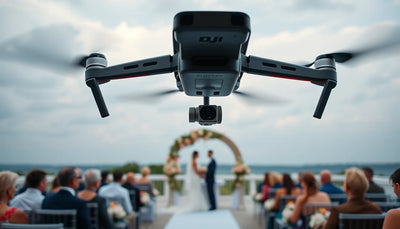
Supporting visual: DSGVO-Compliant Drone Warehouse Inventory: Protecting Employee Data with Aerial

The cost structure breaks into four tiers: the aircraft, the indoor positioning infrastructure, the inventory management software integration, and the legal-compliance documentation package. A single pre-owned DJI Matrice 30 from Reboot Hub at $6,150 USD forms the airborne component. Indoor UWB beacon arrays — required for autonomous waypoint flight without GPS — cost between $1,200 and $2,800 USD depending on warehouse square footage; a 15,000 m² facility typically needs 8 to 12 beacons at roughly $180 per unit plus a $600 base station. Software licensing for scan-to-WMS integration (e.g., SkyeBrowse, DroneDeploy Warehouse, or custom API bridges to SAP EWM) adds $950 to $2,400 USD annually. The DPIA documentation and external data protection officer review — mandatory under DSGVO Article 35 for any systematic monitoring technology — runs $1,800 to $3,500 USD as a one-time legal cost.

Total first-year outlay using Reboot Hub pre-owned hardware: approximately $10,100 to $14,850 USD, compared to $18,000–$26,000 when purchasing all-new equipment. DDP shipping from Shenzhen means the aircraft arrives at your EU warehouse with customs, duties, and VAT already settled — no border delays, no unexpected clearance fees. Reboot Hub's 40-point inspection report accompanies every unit, providing auditable documentation of sensor calibration status and firmware integrity, which directly feeds into the Article 32 technical measures section of your DPIA filing.

What Data Protection Protocols Must Warehouse Operators Implement Beyond Hardware?

Hardware anonymization through thermal-only payloads addresses roughly 40% of the DSGVO compliance surface. The remaining 60% lives in operational protocols, data pipelines, and employee notice procedures. Pre-flight briefings must be documented: every warehouse shift worker present during an automated inventory flight must receive written notice at least 48 hours prior, per DSGVO Articles 13 and 14. This notice must specify the sensor types active during the flight, the data retention period, and the legal basis for processing — typically legitimate interest under Article 6(1)(f), though some German state data protection authorities (LfDI) have requested explicit consent when drones operate at altitudes below 3 meters where incidental facial capture becomes theoretically possible even with thermal sensors.

Data pipeline architecture matters equally. Raw flight telemetry and any captured sensor data must never transit cloud servers outside the EU — a local network-attached storage (NAS) device with AES-256 encryption, physically located in a locked server cabinet within the warehouse, satisfies the Schrems II and DSGVO Chapter V transfer restrictions. Processed inventory counts — SKU-level data with zero human imagery — can be uploaded to the warehouse management system normally. Reboot Hub's pre-owned enterprise drones ship with firmware that supports full local data mode (DJI's Local Data Mode on Matrice 30 and Mavic 3 Enterprise), disabling all internet-bound telemetry by default. This is not a software hack; it is a factory-supported setting verified during the 40-point inspection and covered under the 180-day warranty. Retention timelines must be automated: raw flight data auto-deletes at 30 days, while anonymized inventory logs persist indefinitely for audit purposes under separate commercial retention policies.

Why Buy from Reboot Hub?

Reboot Hub occupies a specific niche that matters for compliance-sensitive deployments: every pre-owned drone passes through a 40-point inspection at the Shenzhen service center, where MOHRSS Level 3-certified technicians disassemble, test, and recalibrate each unit using genuine OEM parts only. This is not refurbishment — these are pristine pre-owned aircraft, graded Flawless (A+, activation-only, never flown) or Pristine Pre-Owned (A, minimal use with zero visible marks on airframe or gimbal). The 180-day warranty extends beyond the typical 30-day window most EU data protection authorities recommend as a system validation period, giving your compliance team a full 6 months to verify sensor performance, firmware lock integrity, and thermal calibration stability before the warranty expires. DDP shipping from the Shenzhen and Hong Kong facilities eliminates customs friction — your drone arrives at a German, Dutch, or Polish warehouse with all import duties paid, VAT settled, and paperwork complete. If a sensor drifts or a gimbal develops play during the warranty period, the Hong Kong drop-off point and Shenzhen chip-level repair facility can turn around a complete thermal recalibration in 3-5 days, minimizing inventory system downtime during peak audit seasons.

Frequently Asked Questions

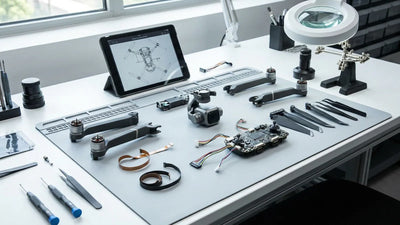
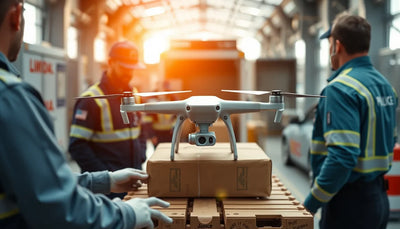
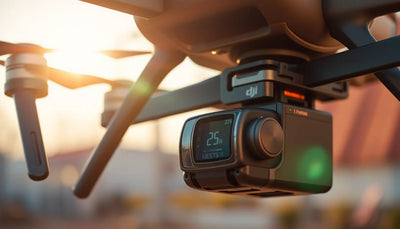
Detail shot: DSGVO-Compliant Drone Warehouse Inventory: Protecting Employee Data with Aerial

Q: Does DSGVO require a Data Protection Impact Assessment (DPIA) for drone-based warehouse inventory?

A: Yes, unequivocally. DSGVO Article 35 mandates a DPIA for any processing that involves "systematic monitoring of a publicly accessible area on a large scale" or uses new technologies that create high risk to individual rights. While a private warehouse is not a public space, the consistent presence of employees under automated aerial sensors qualifies as systematic monitoring. A compliant DPIA must document the specific sensor types deployed, the data minimization controls (e.g., thermal-only mode on a DJI Matrice 30 H20T), retention periods capped at 30 days for raw footage, and the technical measures preventing data exfiltration. External DPO review of the DPIA typically costs between $1,800 and $3,500 USD and requires approximately 14 business days to complete before flights commence.

Q: Can warehouse employees refuse to work during drone inventory flights?

A: Under DSGVO Article 21, employees have a qualified right to object to processing based on legitimate interests. However, warehouse operators can override this objection if they demonstrate "compelling legitimate grounds" that override the individual's privacy interests. In practice, the most defensible approach is scheduling drone flights during shift changes or designated 45-minute windows when specific aisles are cleared — a protocol successfully implemented at a 32,000 m² logistics center near Frankfurt that reduced individual exposure to approximately 12 seconds per week. The 48-hour written notice requirement (Articles 13-14) must still be honored regardless of scheduling accommodations.

Q: What happens if a drone accidentally captures an employee's face despite thermal-only settings?

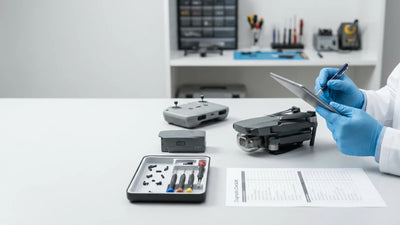
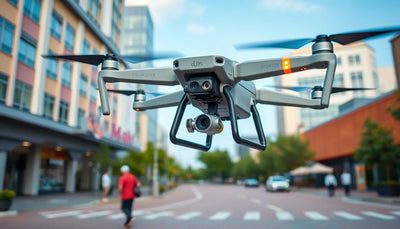
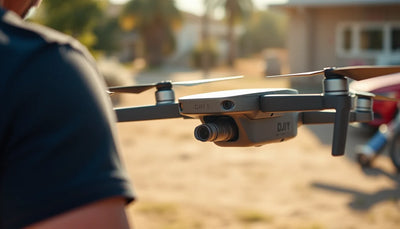
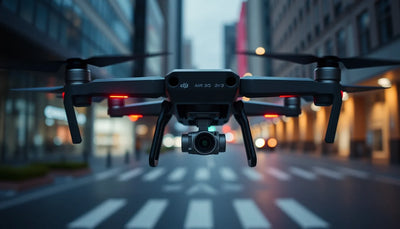
Technical view: DSGVO-Compliant Drone Warehouse Inventory: Protecting Employee Data with Aerial

A: This constitutes a personal data breach under DSGVO Article 4(12) and triggers mandatory documentation in your Article 33 breach register. If the facial capture is identifiable and creates a risk to the individual's rights, you must notify the competent supervisory authority within 72 hours. Prevention lies in pre-flight sensor mode verification — Reboot Hub's 40-point inspection includes a locked thermal-default payload configuration on all Matrice 30 units, and the 180-day warranty covers recalibration if the privacy mode firmware ever fails to engage correctly. Operators should still conduct a manual sensor-mode confirmation before every flight, documented in a pre-flight checklist log retained for 24 months.

Q: How does DDP shipping from Shenzhen work for EU warehouse drone purchases?

A: DDP (Delivered Duty Paid) means Reboot Hub handles every logistics step from their Shenzhen and Hong Kong facilities to your EU warehouse door. All Chinese export clearance, ocean or air freight, EU import duties (typically 0-4% for drone equipment under HS code 8525.80), and VAT (19% in Germany, 21% in Netherlands, 23% in Poland) are paid upfront by Reboot Hub. You receive the drone with complete customs documentation and a commercial invoice showing all duties settled. Transit time is typically 7-10 business days via air freight to major EU logistics hubs. This eliminates the common scenario where a drone purchase sits in customs for 14+ days awaiting duty payment clarification — a critical advantage when deploying inventory systems against fixed operational deadlines.

Q: What is the difference between Flawless (A+) and Pristine Pre-Owned (A) grades?

A: Flawless (A+) drones are activation-only units — the aircraft was unboxed, firmware-activated for registration purposes, and never flown. Airframe hours read 0.0, battery cycle counts are at 0-1, and every component is indistinguishable from factory-new. These units typically sell for 36-40% below new retail. Pristine Pre-Owned (A) drones have been flown minimally — typically 5-20 flight hours — and carry zero visible marks on the airframe, gimbal, or controller. Battery cycle counts range from 3-15. Both grades pass the identical 40-point inspection using genuine OEM parts and carry the full 180-day warranty. For DSGVO compliance deployments where sensor calibration precision is paramount, Flawless units offer the lowest risk of calibration drift in the first 12 months of operation.

Q: How long does chip-level repair take if a drone sensor malfunctions mid-warranty?

A: Reboot Hub's Shenzhen repair facility, staffed by MOHRSS Level 3-certified technicians, handles component-level repairs — including thermal sensor recalibration, gimbal axis replacement, and mainboard diagnostics — with a standard turnaround of 3-5 business days from receipt. The Hong Kong drop-off point eliminates the complexity and cost of shipping to mainland China directly. For EU customers, round-trip repair logistics (ship to HK, repair in Shenzhen, return via DDP) typically complete within 14-18 calendar days. The 180-day warranty covers all parts and labor; the only cost to the customer is outbound shipping to the Hong Kong drop-off point. This repair infrastructure ensures that a sensor failure during peak inventory audit season does not cascade into a multi-week operational gap.

Q: Can the same drone used for inventory also perform outdoor site security flights?

A: From a DSGVO standpoint, this dual-use configuration is strongly discouraged. A drone configured for indoor thermal-only inventory flights with geofencing locked to warehouse coordinates should not be repurposed for outdoor RGB security patrols — this creates a "function creep" problem under Article 5(1)(b)'s purpose limitation principle. The outdoor security use case introduces different privacy risks (public space monitoring, perimeter surveillance of non-employees) requiring a separate DPIA and likely a different legal basis. Practically, Reboot Hub's pre-owned pricing — with Matrice 30 units available at $6,150 USD and Mavic 3 Enterprise at $2,320 USD — makes dedicated single-purpose fleets economically viable, eliminating the compliance entanglement of multi-role aircraft.

Q: What indoor positioning accuracy is required for reliable autonomous warehouse scanning?

A: For barcode and QR code scanning at typical warehouse shelf distances of 1.5 to 4 meters, the drone requires positional accuracy within 10-15 cm horizontally and 8 cm vertically. UWB beacon systems (such as those from Pozyx or Decawave-based kits) deliver 10 cm accuracy at ranges up to 50 meters per beacon, costing approximately $180 per beacon unit. For warehouses with high-density racking below 2-meter aisle widths, a VIO-enhanced system combined with downward-facing LiDAR (as on the Matrice 30's obstacle sensing suite) can maintain 5 cm hover precision even when beacon signals partially occlude. Installing and calibrating a UWB array for a 20,000 m² warehouse takes roughly 2 business days and costs between $1,800 and $2,600 USD for hardware, exclusive of integration labor.

Předchozí příspěvek
Další příspěvek

Zanechte komentář

Upozorňujeme, že komentáře musí být před zveřejněním schváleny.

Děkujeme za přihlášení k odběru!

Tento email byl zaregistrován!

Nakupujte vzhled

Vyberte možnosti

Možnost úpravy
Back In Stock Notification
this is just a warning
Přihlášení
Nákupní vozík
0 položky
0%