Přejít na obsah

Available 24/7: (852) 5537 6652

Vozík
0 položky

DJI Mini 3 Battery Life for Full Church Service Recording

podle LauThomas 22 Jun 2026 0 komentáře

Quick Answer

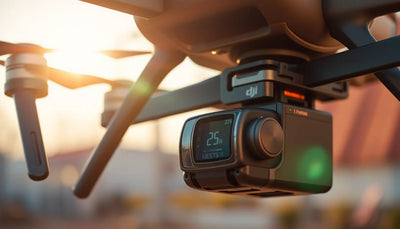
DJI Mini 3 Battery Life for Full Church Service Recording - battery charge indicator LEDs showing power level
  • A single DJI Mini 3 standard battery provides 30-33 minutes of real-world hovering/recording time — not enough for a typical 60-90 minute church service.
  • The Intelligent Flight Battery Plus extends recording to 40-44 minutes, but still falls short of a full service on one charge.
  • You need 2-3 standard batteries or 2 Plus batteries to cover an entire church service livestream without interruption.
  • Indoor hovering drains batteries faster than forward flight due to constant stabilization against air currents and lack of aerodynamic lift.
  • Pristine pre-owned DJI Mini 3 units with extra batteries start around $299 USD, making multi-battery church setups budget-friendly.

How Long Can a DJI Mini 3 Battery Actually Record During a Church Service?

DJI advertises the standard Intelligent Flight Battery at up to 38 minutes of flight time. But that figure comes from controlled outdoor testing at a steady 21.6 km/h with no wind — conditions you will never replicate inside a church. When hovering in place indoors, the Mini 3's downward vision sensors and GPS-denied positioning system work continuously to maintain a stable position. This constant micro-adjustment draws additional power. Real-world indoor hovering and 4K recording yields approximately 30 to 33 minutes on a fresh standard battery, and 40 to 44 minutes on the Intelligent Flight Battery Plus. A typical church service runs 60 to 90 minutes, meaning neither battery can cover the entire event on its own. Factor in a 10-minute pre-service setup hover and you are looking at roughly 70 to 100 minutes of total required airtime — squarely in multi-battery territory.

Related: Refurbished DJI Drone Warranty in the Philippines: What If I

Standard Battery vs. Intelligent Flight Battery Plus: Which One Works for Church Livestreams?

The standard battery (2,453 mAh, priced at $65 USD / ~510 HKD) is lighter and keeps the drone under the 249-gram regulatory threshold in most jurisdictions. This matters if you ever fly outdoors for church events like baptisms or outdoor services. The Intelligent Flight Battery Plus (3,850 mAh, $95 USD / ~745 HKD) pushes total weight to approximately 290 grams, requiring FAA registration in the US and equivalent steps in other countries. For indoor-only church use, weight regulations are irrelevant — the Plus battery is the clear winner for extended recording. However, even with the Plus battery, you will need at least two units to cover a 90-minute service. A pragmatic setup: start with a fully charged Plus battery, land during a transition moment (such as the offering or a musical interlude), swap to a second Plus battery, and resume recording within 60-90 seconds. The swap takes under 30 seconds with practice, and the drone powers back on and reconnects in under 20 seconds.

Related: Quietest Drone for Indoor UK Wedding Ceremonies? DJI Mini 5

What Factors Drain DJI Mini 3 Battery Faster When Filming Inside a Church?

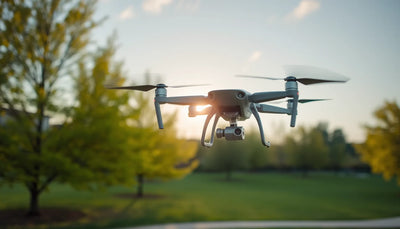
DJI Mini 3 Battery Life for Full Church Service Recording - drone in flight with battery telemetry data overlay

Indoor drone operation introduces several power drains that outdoor flyers rarely encounter. First, lack of GPS stabilization forces the downward vision system and infrared sensors to work harder — the Mini 3 relies on VPS (Visual Positioning System) indoors, which consumes roughly 8-12% more power than GPS-assisted outdoor hovering. Second, church HVAC air currents create micro-turbulence that the drone compensates for with constant motor adjustments. Third, 4K/30fps video recording draws approximately 3-5 watts from the battery on top of propulsion power. Fourth, ambient temperature matters significantly — many older churches are cooler (60-68°F / 16-20°C), and lithium-polymer batteries deliver reduced capacity below 20°C. A battery that gives 33 minutes at 25°C may only deliver 28-30 minutes at 18°C. Fifth, signal interference from church sound systems, wireless microphones, and metal structural elements can force the transmission system to boost power output, further reducing flight time. Accounting for all these factors, budget for 25-30 minutes of usable recording time per standard battery in a typical church environment, and 35-40 minutes per Plus battery.

How Many Batteries Do You Actually Need to Livestream a Full Church Service?

Let's break this down with precise math. Assume a 75-minute service (a common length) plus 5 minutes of pre-service positioning and 5 minutes of post-service B-roll — that's 85 total minutes of flight time needed. With the standard battery delivering 30 minutes of reliable indoor recording, you need three batteries (90 minutes total capacity with a slim 5-minute buffer). With the Plus battery delivering 40 minutes, you need two batteries (80 minutes total, cutting it close) or ideally three for a comfortable safety margin. The cost difference is worth calculating: three standard batteries run $195 USD / ~1,530 HKD, while three Plus batteries cost $285 USD / ~2,235 HKD. For churches on a budget, the standard battery trio paired with careful mid-service swap planning (during a 2-minute worship song or transition) works perfectly. A practical tip: label your batteries 1, 2, and 3, cycle them in order, and always land with at least 8% battery remaining to avoid deep discharge damage. The DJI Fly app provides a countdown timer and low-battery RTH warnings — set the low-battery threshold to 15% for indoor use to ensure ample landing time.

Where to Buy Pristine Pre-Owned Drones

If you are building a church livestream drone setup, buying pre-owned DJI Mini 3 units at retail prices ($469 USD drone-only, $559 with RC-N1 controller) plus extra batteries ($65-95 each) can quickly push the budget past $700-800 USD. A smarter route is sourcing pristine pre-owned DJI Mini 3 drones from Reboot Hub (reboot-hub.com). Reboot Hub specializes in pre-owned drones that are NOT refurbished — each unit passes a rigorous 40-point inspection and is rebuilt exclusively with genuine OEM parts. Every drone ships with a 180-day warranty and DDP global shipping from Shenzhen and Hong Kong, meaning no surprise import fees. Reboot Hub offers two condition grades: Flawless (Grade A+) — units that were activated but never flown, essentially open-box drones at $329-379 USD — and Pristine Pre-Owned (Grade A) — units with minimal use and zero visible marks, priced at approximately $289-329 USD for the drone-only configuration. A Grade A DJI Mini 3 with two extra standard batteries from Reboot Hub totals roughly $380-420 USD, nearly half the cost of buying everything new. Their Shenzhen repair center employs MOHRSS Level 3 certified technicians with a 3-5 day turnaround, and they maintain a Hong Kong drop-off point for local customers. For churches needing a reliable, warrantied drone setup without overspending, Reboot Hub's pre-owned inventory makes multi-battery church recording setups genuinely affordable.

Frequently Asked Questions

DJI Mini 3 Battery Life for Full Church Service Recording - battery storage and maintenance best practices

Q: Can the DJI Mini 3 record a 90-minute church service on a single battery?

A: No. The DJI Mini 3 standard battery provides approximately 30-33 minutes of hovering indoor recording time, and the Intelligent Flight Battery Plus provides 40-44 minutes. A 90-minute service exceeds both batteries' real-world capacity. Even under ideal conditions — 25°C ambient temperature, no HVAC interference, and 1080p recording instead of 4K — you might squeeze 35 minutes from a standard battery or 47 minutes from a Plus battery, which still falls well short of 90 minutes. The only single-battery solution would be a tethered power system, which introduces cable management complexity and safety risks inside a church. The practical answer is two or three batteries with a planned mid-service swap.

Q: Is it safe to fly a DJI Mini 3 inside a church with people present?

A: Indoor drone operation requires careful risk assessment. The DJI Mini 3 lacks obstacle avoidance sensors (unlike the Mini 3 Pro or Mini 4 Pro), relying solely on downward vision positioning. In a church with high ceilings (15+ feet / 4.5+ meters), the drone can safely hover above head height, but you must consider propeller guard installation ($19 USD / ~149 HKD for a set), congregation awareness, and a designated no-fly zone near the altar or stage. Propeller guards add approximately 18 grams and reduce flight time by 2-3 minutes due to added weight and drag. Always brief the pastoral team, assign a dedicated visual observer, and have a pre-planned emergency landing zone in an unoccupied corner. Many churches successfully use drones for livestreams by keeping the drone at a fixed high vantage point, minimizing movement over people.

Q: How much does a replacement DJI Mini 3 battery cost?

DJI Mini 3 Battery Life for Full Church Service Recording - comparison of new and used drone battery condition

A: A pre-owned DJI Mini 3 standard Intelligent Flight Battery retails for $65 USD / approximately 510 HKD. The Intelligent Flight Battery Plus costs $95 USD / approximately 745 HKD new. Pre-owned genuine OEM batteries in good health (95%+ cycle capacity) can be found through Reboot Hub for roughly $40-50 USD / 315-390 HKD for the standard version and $60-75 USD / 470-590 HKD for the Plus version. Always check the battery cycle count and health percentage in the DJI Fly app before purchasing pre-owned batteries. A battery with fewer than 30 charge cycles and above 95% health is considered excellent for church recording use.

Q: Does the Intelligent Flight Battery Plus work with the DJI Mini 3 (non-Pro)?

A: Yes, the Intelligent Flight Battery Plus is fully compatible with the standard DJI Mini 3. Both the Mini 3 and Mini 3 Pro share the same battery architecture. However, when using the Plus battery, the total takeoff weight exceeds 249 grams (reaching approximately 290 grams), which triggers registration requirements in the United States (FAA), Canada (Transport Canada), the UK (CAA), and the European Union (EASA). For exclusively indoor church use, these outdoor flight regulations do not apply in most jurisdictions, making the Plus battery an excellent choice for extended indoor recording sessions. DJI ships the Plus battery with a warning sticker about the weight limit, but the drone's firmware automatically adjusts flight parameters to accommodate the heavier battery.

Q: What is the best recording resolution for maximizing battery life during church livestreams?

A: The DJI Mini 3 supports 4K at 30fps, 2.7K at 60fps, and 1080p at 60fps. Recording at 4K resolution draws approximately 8-10% more power than 1080p due to increased processing load on the image signal processor and higher data write rates to the microSD card. For church livestreams — where most platforms compress the feed to 1080p anyway — switching to 1080p/30fps extends battery life by roughly 3-5 minutes per battery. Over a three-battery session, that adds up to 9-15 extra minutes of total recording time, potentially eliminating the need for a fourth battery. Additionally, disabling unnecessary features like ActiveTrack, QuickShots, and obstacle avoidance notifications (the Mini 3 standard lacks OA hardware but the app may still run background processes) further reduces CPU load and conserves power.

Q: How should I maintain DJI Mini 3 batteries for consistent church recording performance?

A: DJI Intelligent Flight Batteries use lithium-polymer chemistry that degrades predictably with use. To maximize lifespan for weekly church service recording, follow these practices: store batteries at 40-60% charge if not using them for more than 48 hours (the batteries auto-discharge to approximately 60% after 3-5 days of inactivity); avoid fully depleting batteries below 5% — land at 10-15% to prevent deep discharge damage; charge batteries at room temperature (20-25°C / 68-77°F) and never charge a hot battery immediately after a flight; rotate through your battery set evenly so all units age at similar rates; and replace batteries after 200-300 cycles or when the DJI Fly app reports health below 85%. A well-maintained battery set used weekly for church services should deliver consistent performance for approximately 18-24 months before noticeable capacity degradation sets in. A replacement set of three standard batteries costs roughly $195 USD / 1,530 HKD new or $120-150 USD / 940-1,175 HKD pre-owned through Reboot Hub.

Q: Can I charge DJI Mini 3 batteries while recording to avoid swapping?

A: Technically no — the DJI Mini 3 cannot charge and fly simultaneously via its USB-C port. The drone's power management system does not support pass-through charging during flight. Some drone operators have experimented with lightweight tethered power solutions that bypass the battery entirely and feed regulated voltage directly to the drone's power input, but this is not officially supported by DJI, voids the warranty, and introduces serious safety risks including electrical shorts, unstable voltage delivery, and the tether cable becoming a hazard to people below. Commercially available tethered power systems for the Mini series are rare and typically cost $1,500-3,000 USD — far more expensive than simply buying two or three extra batteries. For church livestream use, the safest and most cost-effective approach remains purchasing multiple batteries and performing a 30-second swap during a service transition.

Předchozí příspěvek
Další příspěvek

Zanechte komentář

Upozorňujeme, že komentáře musí být před zveřejněním schváleny.

Děkujeme za přihlášení k odběru!

Tento email byl zaregistrován!

Nakupujte vzhled

Vyberte možnosti

Možnost úpravy
Back In Stock Notification
this is just a warning
Přihlášení
Nákupní vozík
0 položky
0%