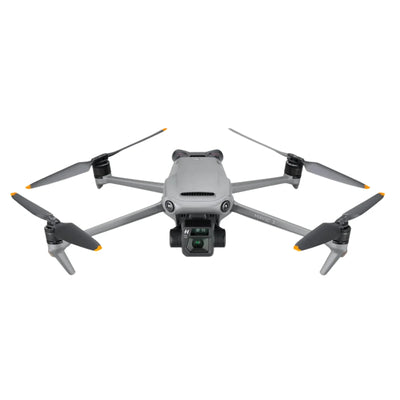
Mechanical vs Rolling Shutter for Drone Mapping: DJI Matrice 4E Explained
Updated 1 October 2026. Source-based editorial analysis using the Matrice 4 Series manual v1.2 (April 2025) and maintenance guidance v1.0 (January 2025), where relevant. Calculations are illustrative, not flight-test results. Document editions are identified so readers can check their installed configuration.
Read the DJI Matrice 4E technical mapping guide

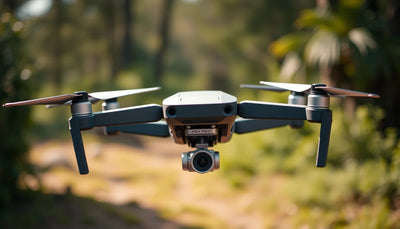
A suitable mechanical shutter helps a mapping camera control exposure timing across the image, reducing motion-related geometric distortion. Rolling shutter distortion arises when different image rows represent different moments as the camera or subject moves. This is distinct from motion blur. The DJI Matrice 4E wide camera includes a mechanical shutter, but that feature alone does not guarantee accurate maps.
Separate exposure duration from row timing
Exposure duration describes how long a part of the sensor gathers light. With a rolling shutter, rows begin and end exposure at different times. A short exposure for each row does not necessarily mean that the first and last rows record the same camera position. Basler's electronic shutter documentation explains this timing distinction and the distortion that motion can produce.
Imagine photographing a straight roof edge while flying forward. Each row might contain crisp detail, yet the rows can collectively describe slightly different viewpoints. The assembled image can consequently have skewed geometry. In contrast, motion blur spreads a feature during its exposure, making its edge appear smeared.
| Effect | Timing issue | Possible appearance | Practical response |
|---|---|---|---|
| Motion blur | Movement during exposure | Soft or smeared detail | Balance exposure duration, light and motion. |
| Rolling shutter distortion | Different rows capture different moments | Skewed or stretched geometry | Check camera timing and supported processing assumptions. |
Mechanical does not automatically mean global
A mechanical shutter controls light physically; an electronic shutter controls exposure through sensor operation. These labels alone do not fully describe whether all image regions share the same exposure interval. Electronic global shutters exist, while mechanical focal-plane mechanisms can expose different regions sequentially. Canon's overview of shutter modes provides useful background on the mechanisms.
For drone mapping, evaluate the actual camera and capture mode. DJI explains why mechanical shutters are useful on its mapping platforms in its mechanical shutter guide. That application-specific benefit should not be expanded into a claim that every mechanical shutter, in every camera and mode, produces a perfect simultaneous exposure.
What is different about the Matrice 4E wide camera?
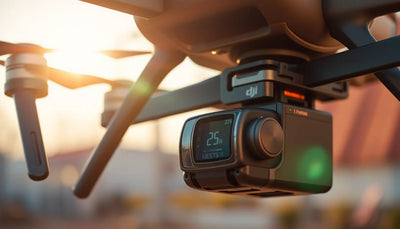
DJI specifies a 4/3-inch, 20-megapixel wide camera for the Matrice 4E, with both electronic and mechanical shutter ranges. Its listed mechanical range is 2–1/2000 second. The Matrice 4T has a different wide-camera specification and does not provide the same mechanical-shutter mapping camera. Check the official Matrice 4 specifications for the exact camera rather than transferring a feature across the series name.
This distinction also applies within one aircraft. A feature listed for the wide camera does not automatically apply to its medium tele or telephoto camera. When preparing an acquisition plan, write down the camera and imaging mode that will produce the mapping photographs. A product-level checklist saying only “Matrice 4” leaves too much ambiguity.
Why photogrammetry needs more than sharp detail
Photogrammetry uses corresponding features in overlapping photographs to reconstruct scene geometry. Consistent observations help the software reconcile viewing directions and camera parameters. USGS discusses image quality, alignment and geometric errors in its structure-from-motion photogrammetry workflow. That publication addresses historical aerial imagery, so its broader quality principles should not be mistaken for a Matrice-specific flight prescription.
RTK positioning and image timing solve different problems
RTK can improve the positioning information associated with capture. It does not physically alter the timing of image rows or remove a smeared edge. Good position information and suitable image geometry are complementary inputs. A positioning status indicator is therefore insufficient evidence that a final orthomosaic or elevation model meets the project's acceptance criteria.
Correction software is useful, but needs validation
Some processing workflows account for rolling shutter behavior. DJI's July 2026 Terra update describes rolling shutter correction. Check the applicable version, camera support and processing conditions. The presence of a correction option is a capability to evaluate, not proof that any source dataset will become accurate.
From shutter specification to a traceable mapping decision
The reference manual used here is the archived DJI Matrice 4 Series User Manual v1.2, dated April 2025. Its file-field descriptions provide a useful way to investigate a dataset, but they are not evidence that every field is present in every export. Retain the original photographs and inspect the metadata actually delivered by your camera and software. The online manual link may later serve a revised document, so record the version alongside the project.
Check the capture identity before comparing results
DJI's camera specifications list the Matrice 4E wide camera's mechanical shutter range as 2–1/2000 second. The manual identifies ImageSource as the camera-type field on PDF p.90, while UTCAtExposure, ShutterType and ShutterCount appear on PDF p.92. These provide separate questions: which camera captured the image, when it was exposed, and what shutter information was recorded?
A timestamp is not a measurement of the interval between the first and last sensor rows. Similarly, a shutter count is not a published remaining-life estimate. Do not derive either conclusion from these field names. Preserve the raw values with the original file and interpret them using the documentation applicable to the capture mode.
Worked example: translating motion into pixels
Illustrative assumptions, not a Matrice performance test: consider a nadir view of stationary, approximately level ground, constant horizontal speed of 12 metres per second, ground sampling distance of 0.02 metre per pixel, and negligible rotational movement. The first-order displacement during exposure is speed multiplied by exposure duration. Dividing by ground sampling distance expresses that displacement in pixels.
At 1/1000 second, the aircraft travels 12 × 0.001 = 0.012 metre, or 1.2 centimetres. That corresponds to 0.012 ÷ 0.02 = 0.6 pixel. At 1/500 second the estimate becomes 1.2 pixels; at 1/2000 second it becomes 0.3 pixel. These are simplified translational blur estimates, not measured blur, map error or a prediction of rolling-shutter skew.
If a team provisionally chose 0.5 pixel as its own translational blur budget, the same assumptions would give an exposure duration no longer than 0.5 × 0.02 ÷ 12 = 0.000833 second, approximately 1/1200 second. That is an example of working backward from a requirement, not a DJI recommendation. Rotation, vibration, focus, uneven terrain and exposure constraints still require image review. Row-timing distortion needs different information and is not calculated here.
A decision table for the original dataset
| Question | Evidence to retain | Decision |
|---|---|---|
| Was the intended camera used? | ImageSource, aircraft model and original dimensions | Resolve unexpected camera changes before comparing photographs. |
| Was the intended shutter mode used? | Recorded ShutterType plus capture settings | Investigate missing or inconsistent information rather than guessing. |
| Is positional information usable? | RTK status, correction age and reported position deviations | Assess separately from image sharpness. |
| Can the image support matching? | Representative original crops across the scene | Check blur, texture, exposure and geometry before processing the full mission. |
| Does the deliverable meet the contract? | Independent checkpoints and the agreed report | Accept against the project specification, not a hardware label. |
The archived manual lists RtkFlag, RtkDiffAge, RTK deviation fields, SurveyingMode and DewarpFlag on PDF p.91. Treat these as diagnostic inputs. Even a favorable mapping-mode indicator does not replace independent verification of your particular output. Also distinguish lens dewarping metadata from a validated correction for movement during sequential exposure.
Reboot Hub's interpretation for a repeatable operation
Our recommendation is to retain a small evidence packet for every mission: original sample images, camera and firmware identity, shutter settings, the planning assumptions behind speed and exposure, and the final acceptance results. This makes a future comparison meaningful. Without that packet, a change in image quality may be attributed to the shutter when the actual difference was another camera, lighting, motion or processing.
The manual recommends checking settings and taking test images before important capture on PDF p.30. Turn that into a documented checkpoint before the large mission. For purchasing, ask how the proposed Matrice 4E configuration fits this evidence workflow, rather than asking only whether it includes a mechanical shutter.

Sources and further reading
- Matrice 4 Series specifications
- Electronic Shutter Types
- A Look at the Shutter Modes in Canon EOS Cameras
- Mechanical Shutters: A Guide for Drone Pilots
- Creating 3D point clouds, digital elevation models, and orthomosaics from historical aerial imagery through structure from motion aided photogrammetry
- DJI Terra Latest Update: Thermal 2D Reconstruction, Rolling Shutter Correction, and Video-Based 3D Modeling
Read the DJI Matrice 4E technical mapping guide
Frequently asked questions
Does the 0.6-pixel example predict my mapping accuracy?
No. It estimates translational displacement during one exposure using assumed speed, ground sampling distance and viewing geometry. It excludes rotation, row timing, focus, lens effects and reconstruction error. Final positional accuracy needs its own assessment.
Can I use 1/2000 second as a universal mapping setting?
No. It is the upper mechanical shutter-speed limit listed for the Matrice 4E wide camera, not a universal prescription. Available light, aperture, image noise, motion and the required detail must be evaluated together using representative captures.
Which original-image fields help verify the camera and shutter?
The archived April 2025 manual documents ImageSource on PDF p.90 and ShutterType, UTCAtExposure and ShutterCount on PDF p.92. Check which fields actually exist in your originals. Do not assume an exported or recompressed image preserves them.
Does an RTK fixed solution remove rolling shutter distortion?
No. Positioning status describes a positioning solution, while rolling distortion concerns time differences across the image. Retain both the position evidence and image-quality evidence; one cannot stand in for the other.
Does dewarping mean rolling shutter has been corrected?
Not by itself. The documented dewarping fields describe camera distortion parameters and processing state. Establish separately whether your processing software models rolling shutter for the actual camera and mode, and verify the result against your project requirements.
What should we require from a mapping-camera supplier?
Request original sample images, exact camera and capture settings, relevant firmware and processing versions, and a documented method for validating the deliverable. A mechanical shutter is useful evidence of a feature; it is not a substitute for project-level acceptance.
Keep exploring
Further reading
From Kronika Reboot Hub





From Průvodci drony