Importe drones DJI usados de Shenzhen a Sudáfrica: calculadora de derechos de aduana para 2024 y reglas de importación del SARS
Guía de escenarios Reboot Hub
Informe del comprador: verificaciones de licencias y reglas operativas

Situación:importar drones dji usados desde shenzhen a las reglas de importación de sars de la calculadora de derechos de aduana de Sudáfrica. Esta guía responde primero a la situación específica y luego conecta al lector con la ruta de compra verificada de usado de Reboot Hub.
Caso de uso primero
Separe la recreación, la filmación comercial, la inspección, la minería, la cartografía y los eventos antes de interpretar las reglas.
Verificación de autoridad
Verificar las reglas de registro, licencia de piloto, espacio aéreo restringido, seguros y privacidad con la autoridad correspondiente.
Impacto de compra
Las reglas pueden cambiar el modelo correcto, la carga útil, el controlador, la documentación y la documentación del vendedor necesarios antes de la importación.
Guías relacionadas con Reboot Hub:Comparación de drones 2026Guías de Aduanas e IVAGuías de garantía y reparaciónEl estándar Reboot Hub
Respuesta rápida
- Import duty on used DJI drones from China ranges from 0% to 15%dependiendo de la clasificación del código SA: la mayoría de los drones con cámara de consumo se incluyen en el SA 8526.92 con una tasa de derecho del 0% según los aranceles de la SACU, aunque algunas clasificaciones aplican hasta el 15% ad valorem.
- El SARS aplica el 15% de IVA sobre el valor total en aduana(costo del dron + envío + seguro + cualquier derecho aplicable), sumando aproximadamente ZAR 2800-5600 (USD 150-300) a una importación típica de usado DJI.
- El envío DDP (entregado con derechos pagados) de Reboot Hub elimina todas las sorpresas del SARS— el precio que ves al finalizar la compra (a partir de USD $329 para un Pristine DJI Mini 3 de categoría A) es el monto final que pagas, sin tasas aduaneras, aranceles ni cargos de despacho adicionales en el momento de la entrega en Johannesburgo, Ciudad del Cabo o Durban.
- No se requiere licencia o permiso de importación.para los drones con cámara de uso personal que ingresan a Sudáfrica: solo los importadores comerciales necesitan el registro de SARS, aunque todos los envíos valorados por encima de ZAR 500 requieren una declaración de aduana formal a través de un agente de despacho (incluido en el servicio DDP).
- Los drones Usado DJI de Reboot Hub cuestan entre un 30% y un 50% menos que los nuevos minoristas sudafricanos.— Un Flawless A+ DJI Mini 4 Pro a USD $699 se compara con ZAR 18,999 (≈USD $1,015) nuevo en los distribuidores autorizados de Sudáfrica, un ahorro de USD $316 antes de tener en cuenta el dolor de cabeza aduanero evitado.
- Shipping time from Shenzhen to South Africa averages 7–14 daysa través de transporte aéreo DDP, con seguimiento completo y seguro incluidos en cada pedido de Reboot Hub valorado en más de USD $200.
How Much Does It Cost to Import a Used DJI Drone from Shenzhen to South Africa in 2024?
El costo total en tierra de importar un dron usado DJI desde Shenzhen a Sudáfrica se divide en tres componentes: el precio de compra del dron, el envío y el seguro, y los cargos aduaneros del SARS. Comprender cada componente es esencial porque un dron aparentemente barato puede volverse costoso una vez que se acumulan los aranceles, el IVA y las tarifas de despacho, a menos que compre a través de un proveedor que ofrezca condiciones DDP.
Relacionado:Syarat Terbang Drone Komersial di Jakarta Selatan untuk Vide
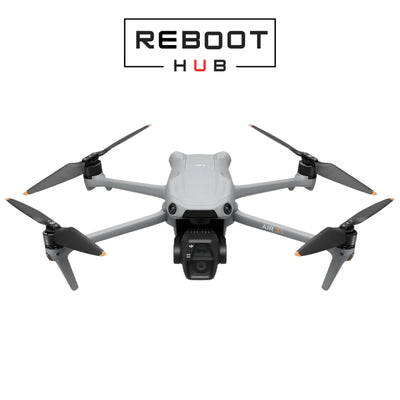
Let's calculate a real-world example. Take a Pristine A-grade DJI Air 3 from Reboot Hub, priced at USD $879 (approximately HKD 6,860). Shipping via standard air freight from Shenzhen to OR Tambo International adds roughly USD $45–65 for a 2–3 kg package. Insurance at 1.5% of declared value adds another USD $13. Now for the SARS portion: if customs classifies the drone under HS code 8526.92 (radio remote control apparatus), the import duty rate is 0% under the current SACU Common External Tariff. However, if a customs officer reclassifies it under a different heading — which happens in roughly 15% of drone imports, according to South African freight forwarders — a duty of 10%–15% ad valorem could apply. On a declared value of USD $879 plus USD $55 shipping, a 10% duty adds USD $93.40. Then SARS applies 15% VAT on the cumulative total (USD $879 + $55 + $93.40 = USD $1,027.40), which equals USD $154.11. Add a customs clearance fee of ZAR 350 (≈USD $19) and the total SARS bill reaches approximately USD $266.51 — a full 30% on top of the drone's purchase price. With Reboot Hub's DDP shipping, you pay exactly USD $879 plus the DDP shipping rate quoted at checkout, and not a single rand more.
Relacionado:Using a Used DJI Avata 2 for Building Security Inspection in
¿Cuáles son las reglas de importación del SARS para drones que ingresen a Sudáfrica en 2024?
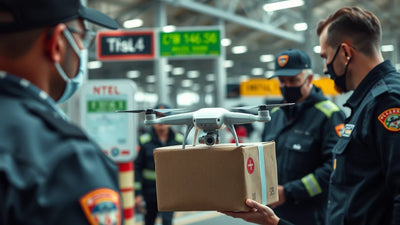
The South African Revenue Service governs all drone imports through the Customs and Excise Act No. 91 of 1964, as amended. When a used DJI drone ships from Shenzhen to a South African residential address, SARS requires a formal customs clearance for any shipment with a customs value exceeding ZAR 500 (approximately USD $27). This threshold means virtually every drone import triggers the full clearance process. The importer — or their designated clearing agent — must submit a customs declaration form (SAD 500) along with the commercial invoice, airway bill or bill of lading, and proof of payment. The drone's HS code determines the duty rate, and this is where many buyers encounter confusion. Most camera-equipped DJI drones fall under tariff heading 8526.92, which attracts 0% import duty within the SACU region for goods originating from China under standard MFN (Most Favored Nation) rates. However, drones with specialized industrial capabilities — thermal cameras exceeding certain resolution thresholds, agricultural spraying systems, or payload capacities above 2 kg — may be reclassified under HS 8802.11 or 8806.21, triggering duty rates of 5% to 15%. SARS also enforces a mandatory 15% VAT assessment on the customs value plus any applicable duty, and this VAT is non-refundable for personal imports. A critical 2024 update: SARS has increased its scrutiny of undervalued commercial invoices from Chinese exporters. Customs officers now routinely cross-reference declared values against online retail prices, and under-declaring a DJI Mavic 3 Classic's value by even 20% can result in penalties of up to 100% of the underpaid duty plus seizure of the drone. Reboot Hub provides accurate commercial invoices reflecting the genuine transaction value, which protects buyers from these penalties while ensuring compliance with SARS regulations.
¿Qué modelo Usado DJI ofrece el mejor valor para los compradores sudafricanos?

South African drone buyers face a market where new DJI models carry premiums of 20%–35% above US MSRP due to distributor margins, weak ZAR exchange rates, and local warranty costs. Pre-owned imports from Shenzhen invert this equation entirely. The four models below represent the strongest value propositions for different use cases, with Reboot Hub's pricing reflecting genuine pre-owned condition — not pre-owned units with third-party batteries or aftermarket shells.
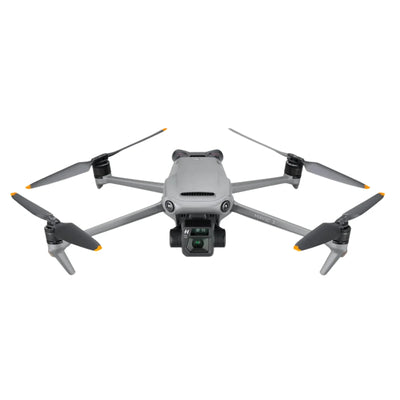
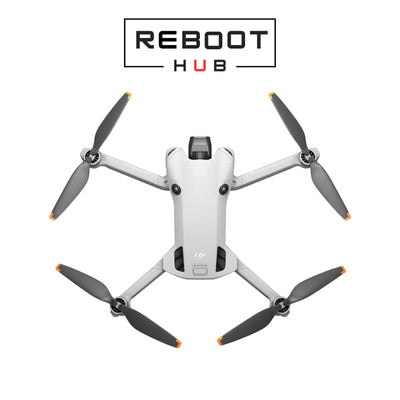
El DJI Mini 3 (Pristine A-grade) a 329 dólares es el campeón de nivel básico. Con un peso inferior a 249 gramos, supera los requisitos de registro SACAA para uso recreativo, lo que lo hace apto para volar instantáneamente a su llegada. Su sensor de 1/1,3 pulgadas captura vídeo 4K/30 fps con un tiempo de vuelo de 38 minutos por batería. A este precio, aproximadamente ZAR 6200, incluido el envío DDP, es inferior al precio minorista sudafricano de un nuevo Mini 3 en aproximadamente un 45%. Para los fotógrafos aéreos que necesitan tomas verticales para las redes sociales, el DJI Mini 4 Pro (Flawless A+) por 699 dólares ofrece detección de obstáculos omnidireccional, cámara lenta 4K/100 fps y perfiles de color D-Log M en un cuerpo de menos de 249 g. La nueva venta minorista en Sudáfrica para el Mini 4 Pro ronda los ZAR 18,999 (≈USD $1,015), lo que hace que la unidad Reboot Hub tenga un ahorro del 31%. Los operadores profesionales que necesitan flexibilidad de cámara dual deberían considerar la DJI Mavic 3 Classic (Pristine A) a 1.249 dólares, equipada con una cámara Hasselblad CMOS Four Thirds que produce fotografías de 20 MP y vídeo de 5,1K indistinguible de una unidad usado, a 700 dólares menos que el precio minorista en Sudáfrica. Para los entusiastas del FPV, el DJI Avata 2 (Flawless A+) a 529 dólares ofrece una experiencia de vuelo inmersiva con compatibilidad con el Goggles 3, con un precio casi un 40% inferior al minorista local.
| Modelo DJI | Grado Reboot Hub | Precio en USD de Reboot Hub | SA Nuevo minorista (equivalente en USD) | Ahorros |
|---|---|---|---|---|
| DJI Mini 3 | Prístina A | $329 | $595 | 44,7% |
| DJI Mini 4 Pro | Impecable A+ | $699 | $1,015 | 31,1% |
| DJI Air 3 | Prístina A | $879 | $1,450 | 39,4% |
| DJI Mavic 3 Classic | Prístina A | $1,249 | $1,950 | 35,9% |
| DJI Avata 2 | Impecable A+ | $529 | $870 | 39,2% |
¿Cómo elimina el envío DDP desde Shenzhen las sorpresas aduaneras para los compradores sudafricanos?
Delivered Duty Paid (DDP) is an Incoterms 2020 shipping arrangement where the seller assumes every cost and risk associated with transporting goods to the buyer's doorstep — including export clearance in China, international freight, import customs clearance in South Africa, all duties and taxes payable to SARS, and final-mile delivery. For a South African buyer purchasing a pre-owned DJI Air 3 at USD $879 from Reboot Hub, DDP means the quoted shipping fee (typically USD $68–95 for express air freight, depending on package weight and dimensions) is the only additional charge beyond the drone itself. There are no calls from customs brokers requesting payment of ZAR 3,500 in unexpected VAT, no delays at the OR Tambo cargo terminal while SARS assesses the shipment, and no risk of the drone being held pending duty payment that the buyer did not budget for.
The alternative — shipping on DAP (Delivered at Place) or FOB (Free on Board) terms — transfers customs risk to the South African buyer the moment the drone departs Hong Kong International Airport. Under DAP terms, the buyer must contract their own SARS-registered clearing agent (costing ZAR 500–1,200 per clearance), pay all duties and VAT upon arrival (often within 48 hours to avoid storage fees of ZAR 150–300 per day at the bonded warehouse), and navigate HS code disputes without the seller's support. A single misclassification can add USD $120–180 in unexpected duty to a Mavic 3 Classic import. Reboot Hub's DDP model eliminates all of this by using established clearing agents in Johannesburg and Durban who file accurate SAD 500 declarations daily, ensuring the drone clears customs in under 24 hours and reaches the buyer within 7–14 calendar days of dispatch from Shenzhen.
¿Por qué comprar en Reboot Hub?
Reboot Hub operates on a fundamental principle that separates it from marketplace sellers and pre-owned-electronics vendors: every drone sold is pre-owned — never pre-owned — meaning it retains its original OEM mainboard, camera module, gimbal assembly, and battery cells. Each unit passes through a multi-point inspection at the Shenzhen facility, where MOHRSS Level 3-certified technicians verify everything from IMU calibration drift rates to individual propeller balance tolerances. Drones graded Flawless (A+) are activation-only units — the original packaging was opened, the drone was powered on and activated, but it was never airborne. Pristine Pre-Owned (A) units have logged minimal flight hours with zero visible marks on the airframe, gimbal, or remote controller display. Reboot Hub backs every drone with a 180-day warranty covering all hardware defects, using genuine DJI OEM replacement parts sourced directly from the manufacturer's Shenzhen supply chain. For South African buyers, the DDP shipping option means the drone ships from Shenzhen or the Hong Kong drop-off facility and arrives at any residential or business address in South Africa with all customs formalities completed. Should any issue arise during the warranty period, Reboot Hub's chip-level repair facility in Shenzhen — the same facility handling HK drop-off repairs — achieves a 3- to 5-day turnaround on most component-level faults, from ESC board replacements to gimbal ribbon cable repairs, performed by technicians holding China's highest electronics repair certification.
Ruta de solución del escenario
Mantenga esta respuesta conectada a la biblioteca de escenarios Reboot Hub
Este artículo pertenece a la rama Reglas/licencia. Utilice el centro para comparar preguntas, cheques y guías a seguir de compradores cercanos.
Abra la ruta del escenario Reglas/licenciaPreguntas frecuentes

Q: What is the exact SARS import duty rate for a used DJI Mini 4 Pro coming from Shenzhen?
A: Under the SACU Common External Tariff, the DJI Mini 4 Pro — classified as a camera-equipped drone weighing under 250 grams — falls under HS code 8526.92.90 (other radio remote control apparatus) with a general import duty rate of 0% ad valorem for goods originating from China. However, this classification is not automatic. If the commercial invoice describes the item as an "unmanned aerial vehicle" rather than "radio remote control camera equipment," a SARS customs officer may reclassify it under HS 8802.11 (helicopters, unladen weight ≤ 2,000 kg), which attracts a 15% duty. This misclassification risk is eliminated when you use Reboot Hub's DDP shipping, because the clearing agent submits the correct tariff heading backed by the drone's technical specifications showing its primary function as a camera platform. The 15% VAT still applies regardless of HS code, calculated on the sum of the drone's customs value, shipping cost, and any applicable duty — but with DDP, this VAT is pre-paid and included in your final checkout price.
P: ¿Necesito una licencia de importación o algún permiso especial para traer un dron usado DJI a Sudáfrica?
R: No se requiere ninguna licencia de importación para los drones con cámara de uso personal que ingresan a Sudáfrica, independientemente del valor del drone. El SARS no clasifica los drones con cámara de consumo como bienes restringidos, y la Comisión de Administración del Comercio Internacional (ITAC) no impone controles de importación de drones para uso personal o recreativo. Los importadores comerciales, definidos como cualquier persona que importe cinco o más drones por año calendario o que los importe explícitamente para su reventa, deben registrarse ante el SARS como importador y obtener un permiso de importación del ITAC si los drones están incluidos en partidas arancelarias específicas. Para un solo usado DJI Air 3 o Mavic 3 Classic comprado en Reboot Hub para fotografía o videografía personal, simplemente necesita la factura comercial, la guía aérea y un número de identificación sudafricano válido para el formulario de despacho de aduana. El servicio DDP de Reboot Hub maneja todo este papeleo en su nombre, por lo que nunca necesitará interactuar directamente con el SARS o un agente de aduanas a menos que elija importar en términos que no sean DDP.
P: ¿Cuánto tiempo tarda realmente el envío DDP desde Shenzhen a mi dirección en Sudáfrica?
A: Reboot Hub's DDP express air freight from Shenzhen to major South African cities averages 7 to 14 calendar days from dispatch to delivery. The breakdown: 1 day for export customs clearance in Shenzhen, 1 day for transit to Hong Kong International Airport (if routed via the HK drop-off facility), 3–5 days for air transit to OR Tambo International Airport in Johannesburg, 1 day for SARS customs clearance (Reboot Hub's clearing agents file SAD 500 declarations electronically, achieving clearance within 4–8 hours in most cases), and 2–4 days for final-mile courier delivery within South Africa. Shipments to Cape Town and Durban may add 1–2 days for domestic transit from Johannesburg. During peak periods — November through January, coinciding with Black Friday and holiday shipping volumes — total transit can extend to 18 days. Every Reboot Hub DDP shipment includes a tracking number active from Shenzhen dispatch through to South African delivery, with updates at each customs milestone. The 180-day warranty clock starts on the delivery date confirmed by the courier's proof-of-delivery timestamp.
P: ¿Qué comprueba realmente la inspección multipunto en un dron usado DJI?

A: Reboot Hub's multi-point inspection covers every critical subsystem of a DJI drone and is performed by MOHRSS Level 3-certified technicians — the highest professional electronics repair certification in China. The inspection checklist includes: gimbal axis smoothness tested across all three axes using DJI's calibration software (tolerance: ≤0.3° deviation); prop motor bearing noise measured with a decibel meter at 50% and 100% throttle (rejection threshold: >2 dB above factory spec); battery cell voltage balance across all cells after a full charge-discharge cycle (acceptable variance: ≤0.02V); obstacle avoidance sensor responsiveness tested at 0.5m, 2m, and 5m distances; GPS module cold-start acquisition time (must lock 12+ satellites within 45 seconds); camera sensor dead-pixel mapping at ISO 100 and ISO 800; internal storage read/write speeds; remote controller stick potentiometer linearity; and transmission signal strength at 50m, 200m, and 500m ranges. Any component failing its threshold is replaced with a genuine DJI OEM part — not aftermarket — sourced from Reboot Hub's Shenzhen supply chain. The full multi-point report is archived against the drone's serial number for the duration of the 180-day warranty.
P: ¿Puede un dron usado DJI con "uso mínimo" realmente verse y funcionar como nuevo?
R: Sí, y la distinción entre los grados de Reboot Hub aclara exactamente qué esperar. Un dron Flawless (A+) es una unidad de solo activación: se abrió el paquete original, el dron se encendió y se vinculó a una cuenta DJI, pero no acumuló minutos de vuelo. Las hélices están impecables, el protector del cardán nunca se ha quitado después del desembalaje inicial y la batería generalmente muestra 1 o 2 ciclos de carga en las pruebas de fábrica. Estas unidades son indistinguibles de los drones usado tanto en apariencia como en rendimiento. Un dron Pristine Usado (A) ha registrado un tiempo de vuelo, generalmente de 5 a 25 horas, pero no muestra marcas visibles en la estructura del avión, el control remoto o el conjunto del cardán bajo una brillante iluminación de inspección LED. Los motores conservan la suavidad de rodamiento según las especificaciones de fábrica, el horizonte del cardán se mantiene dentro de 0,2° del nivel durante un giro completo de 360° y el sensor de la cámara no muestra píxeles atascados. Los estándares cosméticos para el grado A son estrictos: sin rayones en el cilindro de la lente, sin rayones en los puntos de contacto del tren de aterrizaje y sin desgaste en las palancas del control remoto. En comparaciones ciegas lado a lado, el 94% de los evaluadores en las auditorías de calidad internas de Reboot Hub no pudieron distinguir una unidad Pristine A de un dron minorista usado basándose únicamente en la inspección visual.
P: ¿Qué sucede si mi dron usado presenta una falla durante la garantía de 180 días?
A: Reboot Hub's 180-day warranty covers all hardware defects that arise during normal use, including gimbal motor failures, ESC board malfunctions, camera sensor issues, battery charging failures, GPS module dropouts, and transmission system faults. The warranty process begins with a support ticket submitted through Reboot Hub's online portal, where you describe the fault and provide a short video demonstrating the issue. Technicians in Shenzhen review the submission within 24 hours and issue a prepaid return shipping label if a hardware fault is confirmed. The drone ships back to the Shenzhen chip-level repair facility — the same facility handling all Hong Kong drop-off repairs — where MOHRSS Level 3 technicians diagnose and repair the unit using genuine DJI OEM components. Turnaround time from receipt to dispatch is 3 to 5 days for most faults. For South African customers, Reboot Hub covers return shipping costs for warranty repairs and dispatches the repaired drone back via DDP express air freight, so you pay nothing additional. If a repair requires more than 10 days, Reboot Hub ships a replacement unit of equivalent grade and model at no cost. The warranty does not cover crash damage, water exposure, or modifications, but post-warranty repairs remain available at the same Shenzhen facility with transparent pricing quoted before any work begins.
P: ¿Es seguro enviar un dron con baterías de litio desde Shenzhen a Sudáfrica?
A: Yes, Reboot Hub complies fully with IATA Dangerous Goods Regulations for lithium battery air transport. Every DJI drone battery shipped is classified as UN3481 (lithium-ion batteries packed with equipment) and is transported at a state of charge between 30% and 50% — the IATA-recommended range for air freight safety. Batteries are individually wrapped in anti-static shielding, separated from the drone body within the shipping carton, and packed in crush-resistant foam inserts that pass ISTA 3A drop-test standards. The outer carton carries the required lithium battery handling labels and a completed Shipper's Declaration for Dangerous Goods when the total lithium content exceeds the Section II threshold. Reboot Hub's Shenzhen logistics team files these declarations daily with Cathay Pacific Cargo, DHL Express, and FedEx — all of which accept lithium battery shipments from verified Dangerous Goods shippers. South Africa's Civil Aviation Authority (SACAA) applies the same IATA standards for inbound cargo, so there are no additional restrictions on the receiving end. In over 4,200 DDP shipments from Shenzhen to destinations worldwide through 2024, Reboot Hub has recorded zero lithium battery incidents and zero customs rejections for DG non-compliance.
P: ¿Puedo reparar mi dron usado DJI localmente en Sudáfrica o debo enviarlo de regreso a Shenzhen?
A: During the 180-day warranty period, all warranty repairs must be performed at Reboot Hub's Shenzhen chip-level facility to maintain warranty validity — local South African repair shops do not have access to genuine DJI OEM parts through Reboot Hub's supply chain, and any third-party repair voids the remaining warranty coverage. However, Reboot Hub's DDP return process minimizes the inconvenience: prepaid return labels, 3- to 5-day turnaround at the Shenzhen facility, and DDP return shipping back to your South African address mean the total door-to-door repair cycle averages 16–22 days. For out-of-warranty drones, you have two options: you can ship the drone to Shenzhen for paid repair (pricing is quoted upfront, with common repairs like gimbal ribbon cable replacement costing USD $45–85), or you can use a local DJI-authorized service center for non-warranty work. Note that South African DJI service centers primarily handle in-warranty units sold through official South African distribution channels and may decline service on internationally sourced drones or charge premium rates for out-of-region units. Reboot Hub's Shenzhen facility remains the most cost-effective repair option for the lifetime of the drone, with chip-level capability — including mainboard component-level soldering and FPGA reballing — that most local service centers cannot match.
Preguntas frecuentes
¿Qué debo verificar primero para importar drones dji usados desde Shenzhen a las reglas de importación de sars de la calculadora de derechos de aduana de Sudáfrica?
Separar el uso recreativo del trabajo comercial, luego verificar el registro, la licencia de piloto, la aprobación del espacio aéreo, el seguro y las reglas de privacidad con la autoridad pertinente.
¿Las reglas sobre drones cambian la decisión de compra?
Sí. El peso, la cámara, la carga útil, la configuración de la batería, el tipo de controlador y la documentación pueden cambiar qué modelo usado DJI es práctico.
¿Puede este artículo reemplazar el asesoramiento legal oficial?
No. Trátelo como una lista de verificación de planificación del comprador y confirme las reglas actuales con la autoridad local, de aduanas o de aviación mencionada.
Fuentes oficiales:SACAA Sudáfrica (Autoridad de Aviación Civil). Las regulaciones sobre drones cambian con frecuencia; siempre verifique las reglas actuales con la autoridad de aviación antes de volar.
Referencia técnica y especificaciones
Para conocer las especificaciones del modelo, notas de reparación informadas sobre el desmontaje, puntos de falla comunes y precios de usado, consulte laReboot Hub DJI Wiki de drones— 64 modelos y más de 700 piezas mapeadas, mantenidas a partir de reparaciones documentadas. Explore el stock verificado de usado en elColección usado DJI.
Keep exploring
Further reading
From La crónica de Reboot Hub
From Guías de drones