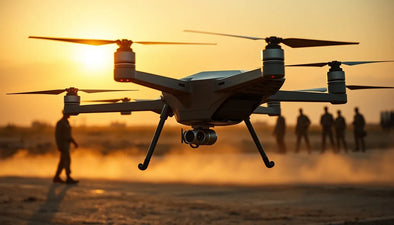
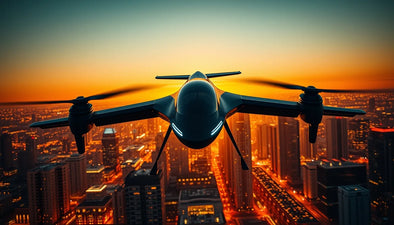
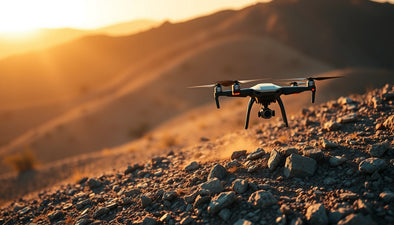
When Surgery Takes Flight: SS Innovations Brings Robotic Arms to the Battlefield
SS Innovations breaks new ground by integrating surgical robotics with aerial platforms for frontline trauma care. But challenges in BVLOS autonomy, stabilizing RTK-level precision under fire, and DoD certification could reshape the entire commercial drone sector overnight. Discover what this means for operators flying under Part 107 and the exploding used drone market.

On June 5, 2026, Reboot Hub analyzes the breakthrough and bottlenecks of SS Innovations' quest to deploy surgical robots in active war zones. The company’s ambition—to deliver trauma surgery where no hospital exists—mirrors the autonomy challenges that have defined the commercial UAV industry for a decade. As battlefield medics call for robotic arms that can operate under fire, the drone sector is watching closely: the solutions to stabilization, latency, and precision under extreme conditions could leapfrog into everyday commercial operations.
From Operating Room to Drop Zone: The Core Challenge
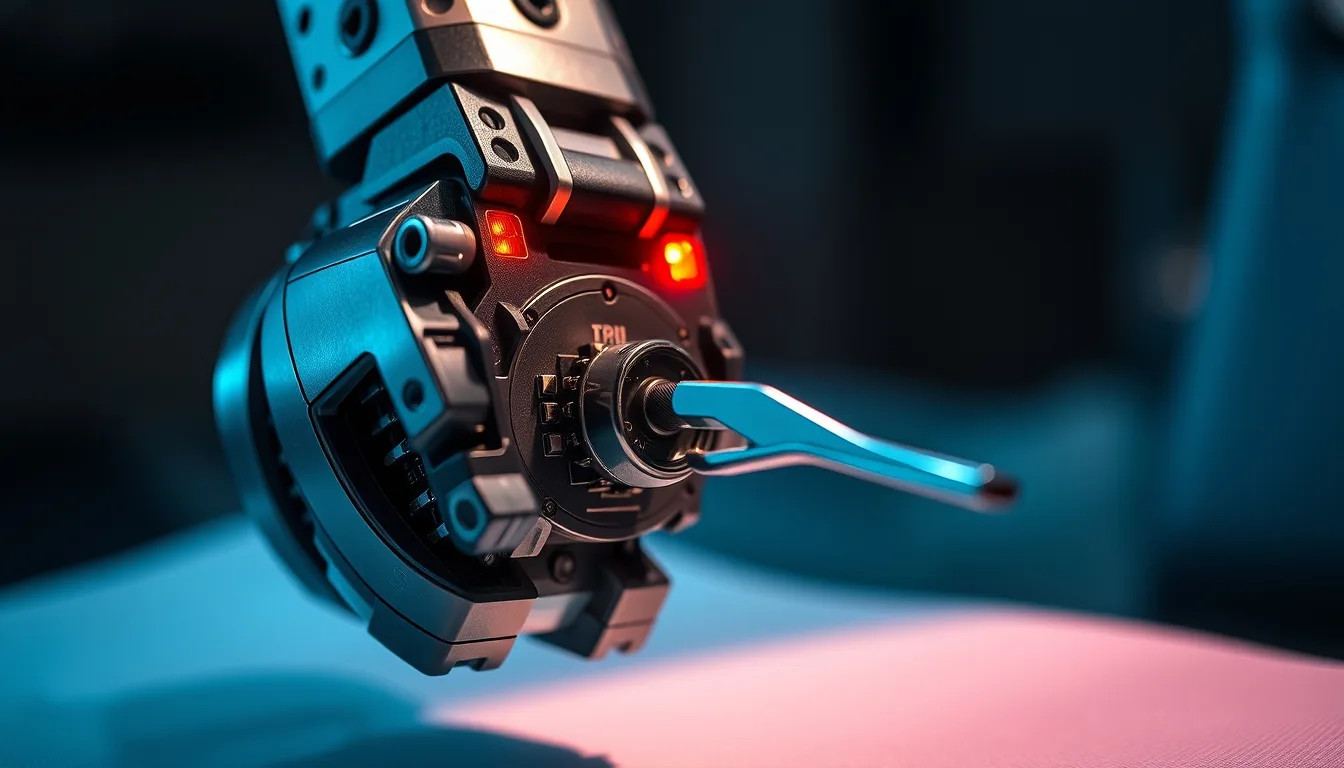
The question “Can surgical robots fly?” is more than a headline. For SS Innovations, it represents a systems integration problem that pushes the boundaries of motion compensation and remote operation. A surgical robot designed for a fixed, vibration-dampened operating theater must be re-engineered to function aboard a moving aircraft—whether a tiltrotor, a heavy-lift drone, or a forward-deployed VTOL. The primary obstacle is maintaining sub-millimeter precision while the platform pitches, yaws, and encounters turbulence.
SS Innovations Chief Technology Officer revealed in a recent interview that the company is tackling this through a combination of real-time sensor fusion and predictive algorithms resembling flight stabilization systems found in advanced UAV autopilots. “We are borrowing from the drone playbook,” he said. “Kalman filters, GPS-denied positioning, and adaptive PID controllers. The surgical arm must cancel out the aircraft’s motion faster than the human eye can perceive.”
This is where the drone industry’s hard-won experience with gimbals, RTK-level position hold, and BVLOS flight control becomes directly relevant. The same techniques used to keep a DJI Matrice 300 RTK’s payload steady during a surveillance mission are now being scaled up to keep a robotic scalpel on target.
Resilience Under Fire: Autonomy and Bandwidth Constraints
War zones are communications nightmares. Latency spikes, jamming, and bandwidth scarcity threaten any remotely operated system. SS Innovations is developing edge autonomy protocols that allow the surgical robot to execute pre-loaded procedures if the link to a remote surgeon is lost. This is identical to the concept of “hand-off” in BVLOS drone operations, where the vehicle switches to autonomous waypoint navigation when command signals degrade.
Ready to Upgrade Your Fleet?
Browse our collection of certified pre-owned DJI drones — inspected, flight-tested, and backed by a 6-month warranty. Save up to 40% versus retail.
The implications for commercial drone operators are significant. The same autonomous “lane-keeping” and “lost link” behaviors now being certified for battlefield surgical robots are likely to trickle down to civilian Part 107 operations. The FAA has long required flight termination or return-to-home upon lost link, but SS Innovations’ approach suggests a future where drones can continue a critical mission—like dropping a defibrillator or delivering blood—even when the pilot is temporarily disconnected. This could accelerate approval for BVLOS waivers for emergency medical services.
What Does This Mean for the Drone Pilot Community?
For everyday drone pilots and commercial operators, the SS Innovations project signals a shift in how the aviation and robotics industries perceive reliability. If a surgical robot can be trusted to operate autonomously in a combat zone, then a mapping drone running a pre-planned RTK survey under Part 107 should be considered low-risk.
The growing demand for rugged, stabilized platforms also benefits the certified refurbished DJI drones market. Operators seeking to experiment with heavy payloads—whether thermal cameras or experimental robotic grippers—are increasingly turning to pre-owned enterprise models like the DJI Matrice 350 RTK or the M600 Pro. These platforms offer the power and modularity needed for prototype testing without the new-equipment price tag.
Moreover, the SS Innovations project highlights the value of used drone market transparency. As military-derived autonomy becomes commercially viable, operators will need assured supply chains for components and airframes that have been certified for upgraded flight controllers or payload integration. Reboot Hub’s inspection protocols ensure that second-hand drones meet the rigorous standards increasingly demanded by high-stakes missions.
Regulatory Hurdles: From FCC to DoD
The timeline for fielding a flying surgical robot goes beyond technology. SS Innovations must navigate a labyrinth of military certification, export controls, and potentially FAA waivers if the system operates in contested airspace over allied territory. The FCC must sign off on the communication links, which likely operate in the same spectrum bands used by drone telemetry.
For operators flying under Part 107 today, the regulatory framework being built for surgical drones may serve as a template for future waiver processes. The FAA’s current Beyond Visual Line of Sight (BVLOS) Aviation Rulemaking Committee has already proposed performance-based standards for autonomous operations. SS Innovations’ work will provide real-world data on reliability and safety that could cement those rules.
FAQ: The Flying Surgical Robot and Your Drone Business
How does SS Innovations’ stabilization technology compare to drone gimbal systems?
Both rely on inertial measurement units (IMUs) and motor-driven compensation. However, surgical robots demand multi-axis precision ten times tighter than even the best camera gimbals. The spillover effect will be more robust gimbal designs for industrial drones, potentially lowering cost and improving reliability for surveying and inspection operators.
Will these developments affect the resale value of used drone fleets?
Yes. As autonomous capabilities become standard, older drones lacking advanced redundancy and sensor fusion will depreciate faster. However, platforms that can be upgraded—like the DJI Matrice 200 series or M300—will retain value if proper maintenance records exist. Reboot Hub’s professional DJI repair services ensure that used drones can meet evolving performance standards.
Should Part 107 pilots start training for autonomous medical delivery?
Not immediately, but learning to manage autonomous systems under emergency conditions will become a competitive advantage. The SS Innovations project underscores a future where pilots oversee multiple aircraft—or robotic surgery units—simultaneously. Understanding payload limits, lost-link procedures, and risk assessment will be essential.
As the sun sets on June 5, 2026, the intersection of robotic surgery and UAV technology is no longer a thought experiment. SS Innovations is pushing the envelope, and the ripple effects will be felt in every hangar, repair shop, and marketplace where drones are bought, sold, and flown.
— Reboot Hub Editorial
From Reboot Hub
Keep Your Operations Flying
Enterprise-grade drone solutions for commercial pilots, filmmakers, and inspection teams.
Refurbished Fleet
Fully inspected DJI drones with 6-month warranty. Save up to 40%.
Browse Inventory ->