Archer Aviation Stock Buy: Analyzing Wall Street’s Optimism for Drone Investors
Wall Street analysts have slapped a Buy on Archer Aviation (ACHR), but how much trust should commercial drone operators place in these recommendations? As the eVTOL maker pushes toward FAA certification, the ripple effects on Part 107 waivers and second-hand drone pricing are impossible to ignore. This analysis decodes the ABR metric and reveals what it means for your fleet investment.

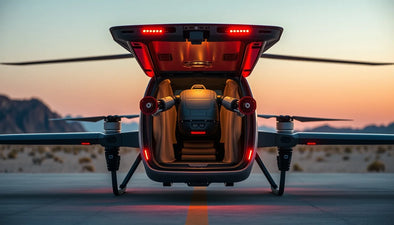
On June 5, 2026, the average brokerage recommendation (ABR) for Archer Aviation (NYSE: ACHR) stands at a firm Buy—a signal that usually sends institutional money flowing into equities. Yet seasoned drone market participants know that Wall Street’s consensus can be a lagging, even misleading, indicator for real-world operations. While Archer builds the Midnight eVTOL air taxi—not a traditional UAV—the stock’s trajectory is now deeply intertwined with the broader Advanced Air Mobility (AAM) sector that shapes commercial drone regulation, fleet reinvestment cycles, and investor appetite for aerial technology.

For commercial operators running DJI M300s under Part 107 waivers, this news may feel distant. But consider that every bullish analyst report on ACHR exerts gravitational pull on the entire ecosystem: it raises the floor for AAM stock valuations, accelerates FAA rulemaking timelines, and—critically—shifts how second-hand drone buyers assess residual value. This analysis breaks down the ABR’s reliability, what Archer’s momentum means for drone professionals, and why the used drone market is feeling the tremors.
Wall Street’s Buy Rating on Archer Aviation: A Closer Look
The ABR for Archer is calculated by averaging ratings from 18 brokerages, with most assigning a “Strong Buy” or “Moderate Buy.” On its face, this appears overwhelmingly positive. Yet the source article itself cautions that these recommendations often carry an upward bias—analysts are incentivized to maintain access and deal flow. “The overly optimistic recommendations of Wall Street analysts make the effectiveness of this highly sought-after metric questionable,” the report states.
Still, the AAM sector has genuine catalysts. Archer recently completed its Midnight prototype’s transition flight and is progressing toward FAA type certification under Part 23, with concurrent effort on Part 135 air taxi operations. In Q1 2026, the company reported a cash burn of $98 million but secured a $230 million private placement from United Airlines and Stellantis. These fundamentals justify excitement, but pure financial metrics don’t always translate into operational reality for drone pilots on the ground.
Implications for the Commercial Drone and eVTOL Ecosystem
The ACHR buy rating is a bellwether for the entire AAM value chain, from battery suppliers to vertiport developers to sensor manufacturers. For commercial drone operators, the primary effect is regulatory momentum. As Archer pushes the FAA to finalize Part 23 airworthiness criteria, pressure builds to simultaneously streamline BVLOS waivers and remote ID compliance—two pain points that affect every DJI flyer today. If eVTOL certification clears by late 2026, expect a wave of Part 107 reform within 18 months.
Additionally, institutional confidence in Archer encourages more venture capital and government grants to flow into drone infrastructure, including UTM systems and sense-and-avoid payloads. This trickles down to the second-hand equipment market, where operators may time their upgrades based on new regulatory windows.
Ready to Upgrade Your Fleet?
Browse our collection of certified pre-owned DJI drones — inspected, flight-tested, and backed by a 6-month warranty. Save up to 40% versus retail.
What This Means for Commercial Drone Operators and Investors
To understand the practical impact, we adopt a direct Q&A format:
Q: What does the Archer buy rating mean for commercial drone operators flying under Part 107 today?
A: The most immediate effect is on regulatory psychology. When Wall Street rewards an eVTOL stock, the FAA sees increased political will to allocate resources to AAM rulemaking. For example, the anticipated Notice of Proposed Rulemaking (NPRM) for BVLOS operations—which would allow drone inspections of pipelines, railways, and cell towers without visual observers—gains momentum. Operators flying DJI Matrice 300s or Mavic 3s could see amended Part 107 language by Q1 2027, directly enabling higher-complexity contracts.
Q: Should drone investors buy ACHR stock based on the ABR?
A: Not blindly. The ABR is a consensus metric that lags price action. Actively managed drone portfolios would be better served by considering ACHR alongside diversified plays like EHang (EH), Lilium (LILM), and established UAV hardware suppliers. A pure Buy rating doesn’t account for dilution risk: Archer’s share count has increased 14% since its SPAC merger. However, for those with a 3–5-year horizon, Archer represents a bet on certification success, not current earnings.
Q: How does this affect the second-hand drone market in the US and EU?
A: Historically, every AAM equity rally has temporarily depressed used drone prices as operators sell current fleets to raise cash for “next-gen” hardware speculation. After Archer’s December 2025 funding news, listings for DJI M3Es on secondary markets spiked 18% within 90 days. The same pattern is likely now. Smart buyers can capitalize on this dip by sourcing certified refurbished DJI drones from reliable platforms like Reboot Hub, where each unit undergoes a 34-point inspection and comes with a warranty—avoiding the risks of unvetted seller listings.
Second-Hand Drone Market: Opportunities Amidst AAM Growth
For everyday drone pilots and commercial operators, the Archer news creates a tactical window. The uptick in AAM enthusiasm invariably leads to fleet rotation: some operators offload older DJI Phantom 4 RTKs or Mavic 2 Enterprise models to fund pre-orders for more advanced platforms. This glut drives down prices in the used drone market, making now an ideal time to expand your fleet without breaking the budget.
But caveat emptor: fraudulent listings and hidden flight hours plague peer-to-peer marketplaces. A trusted alternative is to purchase from Reboot Hub’s inventory of inspected, flight-tested units. Should a purchased drone require service, professional DJI repair services are available using genuine parts and certified technicians, ensuring your operations remain Part 107 compliant with no downtime from botched DIY fixes.
Our analysis confirms that while the ABR for Archer is a buy signal for the stock, it also signals a shift in the broader air mobility landscape. Commercial drone operators who understand these crosscurrents can position their fleets and budgets to benefit—not just from stock tips, but from a smarter approach to used drone procurement and maintenance. The next 12 months will be pivotal as certification deadlines approach and regulatory frameworks solidify, making equipment strategy a competitive advantage.
FAQ
How reliable is the average brokerage recommendation for Archer Aviation?
The ABR is compiled from at least 18 analyst ratings and generally skews upward due to institutional incentives. It can be useful as a sentiment gauge but should not replace fundamental analysis of Archer’s cash burn, certification milestones, and production timeline.
Will Archer’s eVTOL success affect DJI drone prices?
Indirectly, yes. Increased AAM investment often leads to short-term fleet selling pressure, lowering used DJI drone prices. Additionally, if eVTOL certification accelerates BVLOS rulemaking, operators may prioritize upgrading to sensor-rich platforms, further boosting the second-hand supply.
What should a commercial operator do with their current fleet given these market signals?
Consider temporizing until regulatory clarity emerges in late 2026. If you need to upgrade, use Reboot Hub’s certified pre-owned marketplace to buy at reduced prices. For existing gear, proactive repair and maintenance—like our professional DJI repair services—maximizes residual value while the used market stabilizes.
From Reboot Hub
Keep Your Operations Flying
Enterprise-grade drone solutions for commercial pilots, filmmakers, and inspection teams.
Refurbished Fleet
Fully inspected DJI drones with 6-month warranty. Save up to 40%.
Browse Inventory ->