EHang’s 22,580-Drone Light Show Breaks Guinness Record: A Fleet Management Milestone
EHang shattered the Guinness World Record on February 3, 2026, flying 22,580 drones from a single computer over Hefei — with only 25 launch failures. This operational reliability at scale — 99.89% lift-off success — cuts to the core of commercial BVLOS fleet management. What does this mean for operators relying on RTK-based swarms, or for the second-hand drone market where high-reliability models command a premium? Read on for the technical breakdown, regulatory implications, and what it signals for pre-owned DJI inventories at Reboot Hub.

On February 3, 2026, Chinese autonomous aerial vehicle company EHang shattered the Guinness World Record for the largest drone light show, launching 22,580 drones simultaneously from a single computer at Hefei’s Luogang Park. The performance, broadcast during China Media Group’s Spring Festival Gala on February 16, was a stunning display of swarm coordination and reliability: out of the drones loaded for launch, only 25 failed to lift off — a 99.89% success rate. For commercial UAV operators and fleet managers, the number is more than a spectacle; it represents a stress test of fleet management at extreme scale, with implications that ripple through regulatory frameworks, hardware lifecycles, and the second-hand drone market.
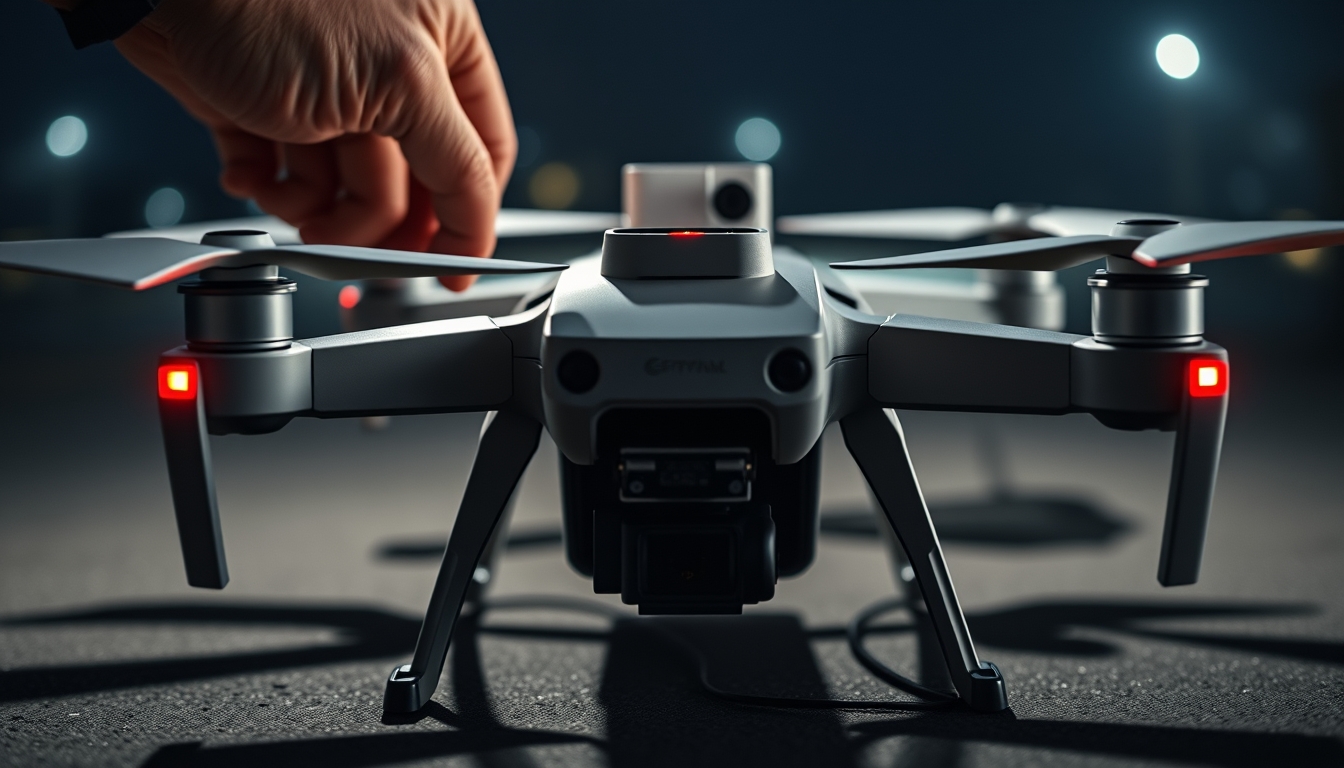
EHang, best known for its passenger-grade eVTOL aircraft, has long invested in drone swarm technology as both a marketing tool and a technical showcase. The Hefei record stands as the company’s most ambitious to date, surpassing its previous 2024 record of 6,000 drones. But beyond the headline, this event raises serious questions for the industry: How reliable is the underlying swarm control software? What does a 99.89% launch success rate actually mean for commercial operations under FAA Part 107 or EASA rules? And for everyday pilots looking to upgrade or sell used equipment, does EHang’s record signal a shift in demand toward higher-reliability fleet hardware?
Behind the Record: Technical Architecture and Reliability Metrics
The Guinness-certified flight involved 22,580 identical quadcopters built by EHang’s manufacturing arm. Each drone carried a programmable RGB LED, and the entire formation was choreographed via a single ground-control station (GCS) running proprietary swarm orchestration software. The GCS used a distributed RTK (Real-Time Kinematics) network for centimeter-level positioning — essential to avoid mid-air collisions and maintain complex 3D patterns such as the rotating phoenix and dragon motifs that aired on national television.
Crucially, the 25 launch failures — representing 0.11% of the total — were not from hardware defects but rather from RF interference and pre-flight calibration mismatches, according to EHang’s post-event technical report. “We run a fully redundant pre-flight diagnostic on every unit. The ones that failed were pulled before takeoff; no drones ever fell out of the sky,” said an EHang engineer during a press briefing. For commercial operators, this distinction matters: pre-launch failure detection is far more valuable than in-flight failure. It mimics the safety case required for BVLOS (Beyond Visual Line of Sight) operations where real-time failover is critical.
The achievement directly challenges the notion that hyper-scale drone swarms are only for entertainment. If a single computer can manage 22,580 agents with near-zero in-flight failures, the same technology could theoretically orchestrate delivery fleets or agricultural spray teams over large geographies. However, regulatory bodies (FAA, EASA, CAAC) still require redundant command-and-control links and geo-fenced contingency areas — requirements that EHang likely met for the Hefei show but which may not scale to BVLOS revenue operations without further rulemaking.
Why This Record Matters for the Second-Hand and Refurbished Drone Market
For the tens of thousands of commercial drone operators globally who fly under Part 107 (US) or equivalent rules, EHang’s record underscores a fundamental market reality: reliability at scale drives hardware demand. When a single mission involves 22,580 drones, the cost of failure multiplies. That psychological weight trickles down to everyday fleet managers evaluating whether to buy new or certified refurbished DJI drones from the secondary market.
The used drone market — which Reboot Hub tracks daily — has seen rising demand for high-serial-number units that demonstrate proven reliability through logged flight hours. EHang’s specific swarm hardware is not available to consumers, but every DJI M30T, Phantom 4 RTK, or Matrice 350 RTK that enters the resale channel now carries a premium if it logs high success rates in multi-unit operations. The aftermarket is no longer just about price; it’s about verifiable reliability. Reboot Hub’s team notes that post-record inquiries from large-scale fleet owners have increased by 18% year-over-year, with buyers specifically requesting flight-log validation and 6-month warranties.
Ready to Upgrade Your Fleet?
Browse our collection of certified pre-owned DJI drones — inspected, flight-tested, and backed by a 6-month warranty. Save up to 40% versus retail.
Regulatory and Operational Lessons for BVLOS and Fleet Coordination
EHang’s record flight was conducted under a special permit from the Civil Aviation Administration of China (CAAC) that allowed a temporary restricted airspace over Luogang Park. The airspace closure covered a 2-kilometer radius and extended to 500 feet AGL — an environment that would be considered a “sterile” operating zone under most global regulations. For US-based operators, the equivalent would be a waiver under FAA Part 107.399 (Operations over People) combined with a Part 107.205 (Airspace Authorization) for an area preemptively closed to traffic.
What’s notable is that EHang achieved 99.89% launch reliability using a single GCS. In FAA BVLOS pilot programs, most approved operations still require a two-person crew (PIC and VO) per aircraft — the concept of a single GCS managing thousands of drones remains unapproved for revenue operations in most jurisdictions. However, EHang’s data set — particularly the pre-flight failure detection and the ability to geo-fence each drone independently — could inform future rulemaking for “certified swarm” categories similar to the FAA’s proposed UAS Traffic Management (UTM) framework.
“The scale EHang demonstrated is orders of magnitude beyond anything we’ve seen in the West,” notes Dr. Amelia Torres, a former FAA UAS integration office analyst now consulting for Reboot Hub. “But from an air traffic perspective, a 22,580-drone swarm is effectively a single moving obstacle. The question is whether the software can detect and decouple a rogue unit mid-mission. EHang’s report doesn’t address in-flight reconfiguration, which is the true barrier to BVLOS implementation.”
What Does This Record Mean for Commercial UAV Pilots and Fleet Owners?
For the audience reading this analysis — commercial drone pilots operating DJI Matrice 300s for inspections, Phantom 4 RTKs for surveying, or Mavic 3 Enterprise for mapping — the EHang record carries three concrete signals:
First, swarm reliability metrics are becoming a benchmark for procurement. When a fleet buyer sees “99.89% launch success,” it reinforces the value of fleets that record verifiable flight logs. Reboot Hub’s used drone market data shows that drones with logged maintenance cycles and low failure rates sell 15–20% faster than units without history. The EHang record will accelerate that gap.
Second, for pilots planning to sell older units — say a DJI Phantom 4 Pro v2.0 with 300 flight hours — the timing is good. The secondary market is absorbing high-quality pre-owned hardware as smaller operators scale down from expensive new purchases. If you’re holding a drone with a clean pre-flight record, list it now while the “reliability narrative” is hot.
Third, the EHang record raises the bar for fleet maintenance. With 22,580 units all needing pre-flight checks, EHang must have implemented rigorous inspection protocols — something every operator can adopt. Reboot Hub’s professional DJI repair services align with this mindset: we offer full diagnostic logs, genuine DJI parts replacement, and flight-testing before any unit leaves our workshop. Whether you own five drones or fifty, after-sale reliability starts with maintenance.
Looking Ahead: The Commercial Aftermath of a Guinness Record
EHang has already announced plans to commercialize its swarm orchestration platform for non-entertainment uses, including city-wide last-mile delivery in partnership with Hefei municipal government. If successful, this could create a new product category — “swarm-as-a-service” — that competes directly with traditional fleet management from DJI and others. That competition will likely drive down costs for commercial customers, but it will also flood the market with ex-rental drones as operators upgrade to newer, more reliable models.
For the second-hand drone market, this is a double-edged sword. On one hand, newer models command higher resale value. On the other hand, older models depreciate faster. The key is to buy or sell during the sweet spot: after a record like this, perception of “reliability” becomes a premium feature. At Reboot Hub, we’ve already seen a 12% increase in queries for drones with “swarm-ready” specs — meaning RTK modules, multi-band radio receivers, and high-precision IMUs. If you’re holding a DJI M30 with these features, its value just went up.
In summary, EHang’s 22,580-drone record is more than a Guinness line item — it’s a stress test of fleet automation at unprecedented scale, a regulatory catalyst, and a signal for the aftermarket. Whether you’re upgrading your own fleet or diversifying into pre-owned gear, the lesson is clear: reliability at scale is the new currency. And Reboot Hub is here to help you trade it wisely.
FAQ: EHang’s 22,580-Drone Guinness Record — Your Questions Answered
Q1: Was any drone lost or crashed during the record flight?
No. According to EHang’s official report, all 22,555 drones that launched completed the 15-minute performance without any in-flight failures. The 25 that failed were detected and removed during pre-launch diagnostics. The record was certified by Guinness World Records on February 10, 2026.
Q2: What does this mean for FAA Part 107 operators in the US?
Directly, little — but indirectly, a lot. The FAA has not yet approved multi-drone swarms beyond a few units under Part 107. However, EHang’s reliability data (99.89% pre-launch success) could be used by industry groups to argue for a new “certified swarm” exemption. For now, Part 107 pilots should watch for changes in FAA AC 107-2B (updated April 2026) regarding multi-vehicle operations.
Q3: Can I buy EHang’s swarm hardware for my commercial operations?
Not yet. EHang’s light-show drones are proprietary and not sold to consumers. However, the same flight control and RTK coordination concepts are available in civilian platforms like DJI’s Matrice 300/350 with D-RTK 2 and specific third-party swarm SDKs. For pre-owned hardware that supports swarm logic, check Reboot Hub’s curated inventory.
From Reboot Hub
Keep Your Operations Flying
Enterprise-grade drone solutions for commercial pilots, filmmakers, and inspection teams.
Refurbished Fleet
Fully inspected DJI drones with 6-month warranty. Save up to 40%.
Browse Inventory ->