Amazon’s Robots Learn Human Talk: 4 Harsh Lessons for Modern Drone Operators
Amazon’s Proteus warehouse robot now accepts plain-English commands, eliminating specialist coding. As Amazon scales STARK and Vulcan across Europe, every commercial drone pilot faces a stark reality: voice-controlled BVLOS logistics are now the benchmark. Failure to adopt intuitive human-machine interfaces will cost operators Part 107 waivers, delivery contracts, and competitive edge. Reboot Hub analyzes the instant industry shift.

On June 5, 2026, Amazon announced a paradigm shift in industrial robotics: its Proteus autonomous mobile robot (AMR) now responds to natural-language commands, eliminating the need for specialized programming languages or technical interfaces. The move, coupled with plans to deploy Proteus, STARK, and Vulcan robots across European fulfillment centers, signals a broader transformation in automated logistics that directly impacts the commercial drone industry. For UAV operators accustomed to command-line ground control stations and proprietary flight-planning software, Amazon’s leap toward intuitive human-robot interaction is both a warning and a roadmap.
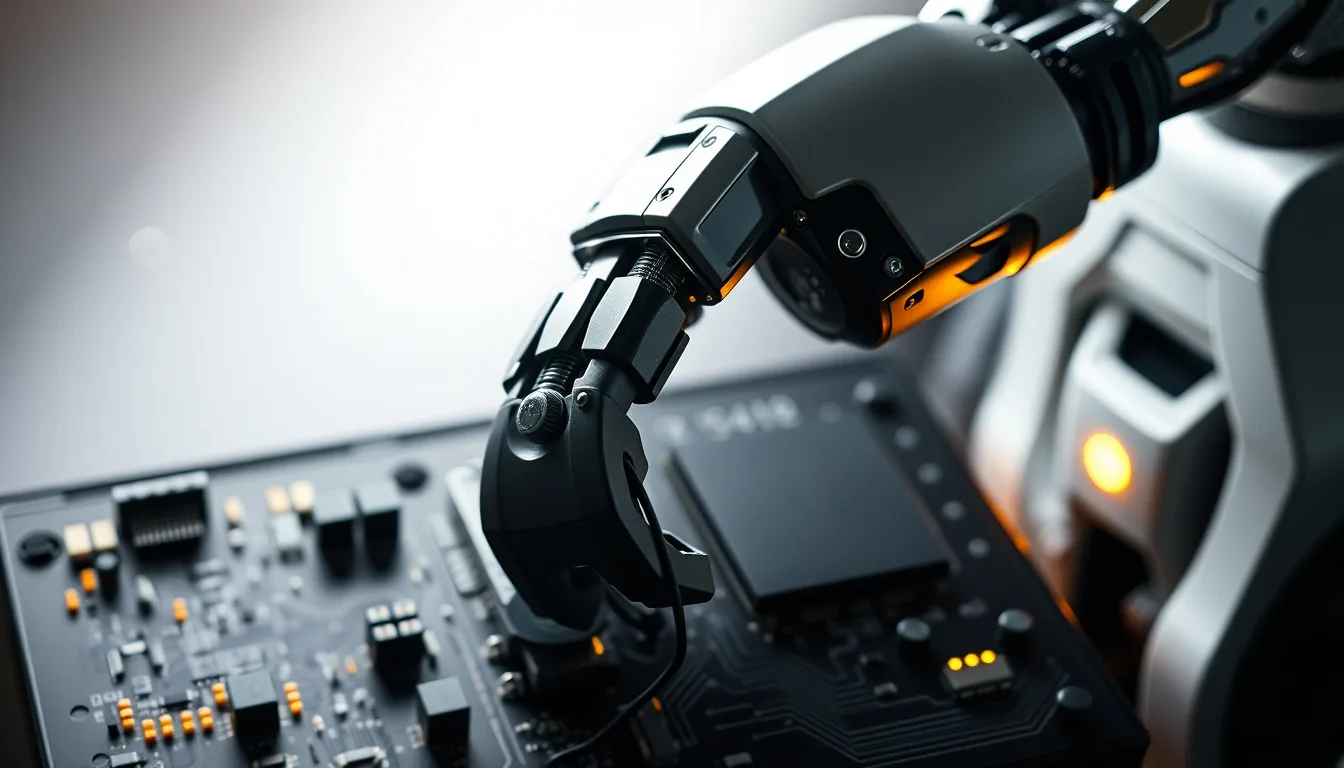
The robotics giant revealed that Proteus can interpret contextual spoken requests such as “move pallet 47 to the overflow zone” without requiring a technician to input coordinate transforms or trigger scripts. This capability, achieved through a combination of large language model (LLM) integration and edge AI inferencing, effectively makes the robot usable by any warehouse employee with minimal training. While Amazon frames this as an internal efficiency gain, the implications for the broader autonomous vehicle ecosystem—including unmanned aerial systems (UAS)—are profound.
As the editor of Reboot Hub, a leading marketplace for certified pre-owned drones, I see this development as a critical inflection point. The second-hand drone market, which already faces valuation pressure from rapid technological obsolescence, must now account for a new baseline: interfaces that speak human. Let’s dissect what Amazon’s natural-language robotics really means for UAV professionals, fleet managers, and the refurbished drone economy.
Amazon's Natural-Language Robotics: What It Means for the UAV Industry
At first glance, a warehouse robot that understands English might seem unrelated to a drone surveying a construction site. But the core technology stack—LLM-driven voice control, real-time sensor fusion, and autonomous decision-making—is directly transferable to UAS operations. Amazon already operates Prime Air delivery drones; integrating natural-language commands into its drone fleet is the logical next step. For commercial drone pilots, this precipitates a competitive necessity: if warehouse workers can command a robot without a manual, why should a surveyor need a tablet-based flight app?
Consider the current state of drone control. Most enterprise UAVs (Matrice 350 RTK, Mavic 3E, etc.) rely on DJI Pilot 2, DroneLink, or third-party flight decks that require touch-input sequences. BVLOS (beyond visual line of sight) operations often demand redundant ground control stations staffed by trained pilots. Amazon’s Protestant approach suggests a future where a warehouse supervisor or a construction foreman can verbally initiate a stock-counting drone mission, request an orthomosaic map, or reroute a delivery drone mid-flight—all without a specialist pilot.
This represents a direct challenge to the current drone service provider (DSP) model. Pilots who cannot offer natural-language interface support may find themselves losing contracts to operators who adopt voice-enabled platforms. Already, startups like FlytBase and AirMatrix are experimenting with LLM-powered drone orchestrators. Amazon’s sheer scale will accelerate this market shift, forcing legacy hardware makers to integrate similar capabilities in their next-generation autopilots.
The European Robotics Expansion – A Blueprint for Drone Logistics?
Amazon’s deployment of Proteus, STARK (a heavy-pallet mobile robot), and Vulcan (a sortation system) across European hubs—covering Germany, the UK, France, and Italy—carries explicit geographic and regulatory signals. Europe’s drone regulatory framework, governed by EASA’s U-space and national aviation authorities, has been slower than the FAA to approve large-scale drone delivery. However, Amazon’s ground-robot rollout demonstrates its willingness to navigate multi-jurisdictional compliance. The company’s success in unifying robot control across different countries’ safety standards could foreshadow a similar playbook for its drone fleet.
From a commercial UAV perspective, the most important takeaway is the infrastructure layer. Amazon’s robots operate within a mesh network of cameras, lidar, and RFID readers that create a digital twin of the warehouse. This same infrastructure—but oriented skyward—is the foundation of drone-in-a-box systems (e.g., DJI Dock, Hextronics). As Amazon refines its edge computing for ground robots, it will inevitably apply those innovations to airborne systems. Drone operators who manage fleet deployments across European warehouses should prepare for a world where their UAS must communicate with Amazon’s terrestrial robots as teammates, not rivals.
Ready to Upgrade Your Fleet?
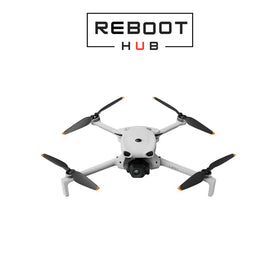
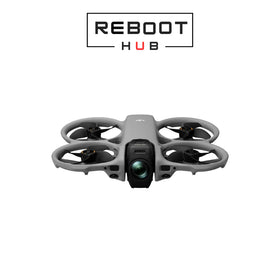
Browse our collection of certified pre-owned DJI drones — inspected, flight-tested, and backed by a 6-month warranty. Save up to 40% versus retail.
Implications for Drone Operators and the Second-Hand Market
For the thousands of independent drone pilots and small-to-medium enterprises (SMEs) that form the backbone of the commercial aerial services industry, Amazon’s announcement carries three immediate consequences. First, the expectation of interface simplicity will trickle down to end clients. A real estate developer who sees a warehouse worker command a robot with their voice will demand similar ease from their drone mapping provider. This means operators must either invest in voice-control capable software or risk losing bids to tech-forward competitors.
Second, the second-hand drone market—currently a robust ecosystem for cost-conscious operators—will need to re-evaluate asset valuations. Older drones without the processing power to run on-device LLMs or support natural-language SDKs will depreciate faster. For example, a DJI Phantom 4 RTK that was worth $2,000 in 2025 could see its resale value halve within 12 months if it cannot integrate with the emerging voice-control ecosystem. Conversely, newer models like the DJI Matrice 350 RTK or Autel Dragonfish, which feature open SDKs and onboard NPUs (neural processing units), will retain higher residual values.
Third, the repair and maintenance sector will face a skills gap. Natural-language interfaces demand not just hardware expertise but knowledge of AI model deployment, edge inference optimization, and LLM fine-tuning. Professional DJI repair services at Reboot Hub are already seeing increased demand for logic-board replacements and sensor recalibration after software updates. As robots gain language ability, the line between a repair shop and an AI-tuning center will blur. Operators who seek certified refurbished DJI drones from Reboot Hub can ensure they are buying units that have been updated to support the latest SDK drivers—critical for future-proofing against interface disruptions like Amazon’s natural-language breakthrough.
What This Means for Your Drone Fleet Investment
The used drone market is about to undergo a bifurcation. On one side, “legacy” drones—even those in pristine condition—will become more difficult to resell as the industry gravitates toward voice-controlled, AI-native platforms. On the other, units with open architectures and high-performance computing capabilities will command premium prices. Amazon’s robotics expansion acts as a leading indicator: the same force that makes warehouse robots human-friendly will make drone fleets obsolete unless they can listen and learn.
At Reboot Hub, we advise every fleet manager to conduct an immediate audit of their aircraft’s SDK compatibility and on-board processing power. If your current drones cannot run a lightweight LLM (e.g., Llama 3x or Phi-3 on a Raspberry Pi-level edge device), they are at risk of becoming stranded assets within 18 months. The good news is that the secondary market currently offers bargains for sellers looking to unload interface-limited equipment. But the window is closing fast.
FAQ
1. Will Amazon’s natural-language robots directly compete with delivery drones?
Not immediately. Amazon’s Proteus operates indoors; delivery drones handle last-mile logistics. However, the underlying AI—voice-controlled command and sensor fusion—will likely be ported to Amazon’s airborne fleet within two to three years. Drone operators should track Amazon’s patent filings and prototyping activity in this domain.
2. How does this affect Part 107 and EASA compliance?
Natural-language interfaces do not change airspace regulations, but they may simplify compliance documentation. If a pilot can verbally command a drone to execute a pre-approved BVLOS route without manual overrides, regulators could view that as a safety enhancement. However, any voice-control system must still pass certification for reliability and failure modes. The FAA and EASA have not yet published guidance on LLM-integrated ground control stations.
3. Should I sell my older DJI drone now before values drop further?
If you are flying a drone without an open SDK (e.g., Phantom 4 Pro v2.0, Mavic 2 Enterprise), the resale value will continue to decline as the industry pivots to voice-enabled platforms. Listing on Reboot Hub’s marketplace now, while demand for budget units is still stable, would maximize your return. For newer models (M30T, M350, Avata 2), hold until you determine whether the manufacturer will release a natural-language firmware update.
This analysis was prepared by the Reboot Hub Editorial Team on June 5, 2026. Data sourced from Amazon’s official robotics press release and industry intelligence reports.
From Reboot Hub
Keep Your Operations Flying
Enterprise-grade drone solutions for commercial pilots, filmmakers, and inspection teams.
Refurbished Fleet
Fully inspected DJI drones with 6-month warranty. Save up to 40%.
Browse Inventory ->