Fiber-Optic Drones: The New Nightmare for Israel – Lessons from Ukraine
Hezbollah's fiber-optic FPV drones are killing Israeli soldiers using a playbook from Ukraine. Electronic jamming is useless. This shifts the entire counter-drone paradigm — and it signals a massive opportunity for drone operators and the used drone market to rethink BVLOS security, RTK resilience, and NextGen countermeasures. The $40B drone industry just got a new threat vector.

A new and deeply unsettling chapter in drone warfare has opened on Israel’s northern border. Since April 2026, fiber-optic tethered FPV drones — the same technology that rewrote the rules of engagement in Ukraine — have killed at least ten Israeli soldiers and one civilian in southern Lebanon, according to verified military casualty figures. The drones, deployed by Hezbollah, are guided not by radio frequencies but by thin optical cables that pay out from the airframe during flight. This single design choice renders Israel’s multi-billion-dollar electronic jamming arsenal completely impotent.
For the global drone industry — from military procurement officers to commercial surveyors flying DJI Mavic 3 Enterprise units over construction sites — this is not a distant geopolitical footnote. It is a stark, real-world stress test of every assumption we hold about drone resilience, countermeasures, and the secondary market for used UAV equipment. If a $500 FPV drone with a spool of fiber can defeat a $200 million Iron Dome-backed air defense network, what does that mean for the commercial drones you fly under FAA Part 107 or EASA regulations tomorrow?
The Fiber-Optic Playbook: From Ukraine to Lebanon
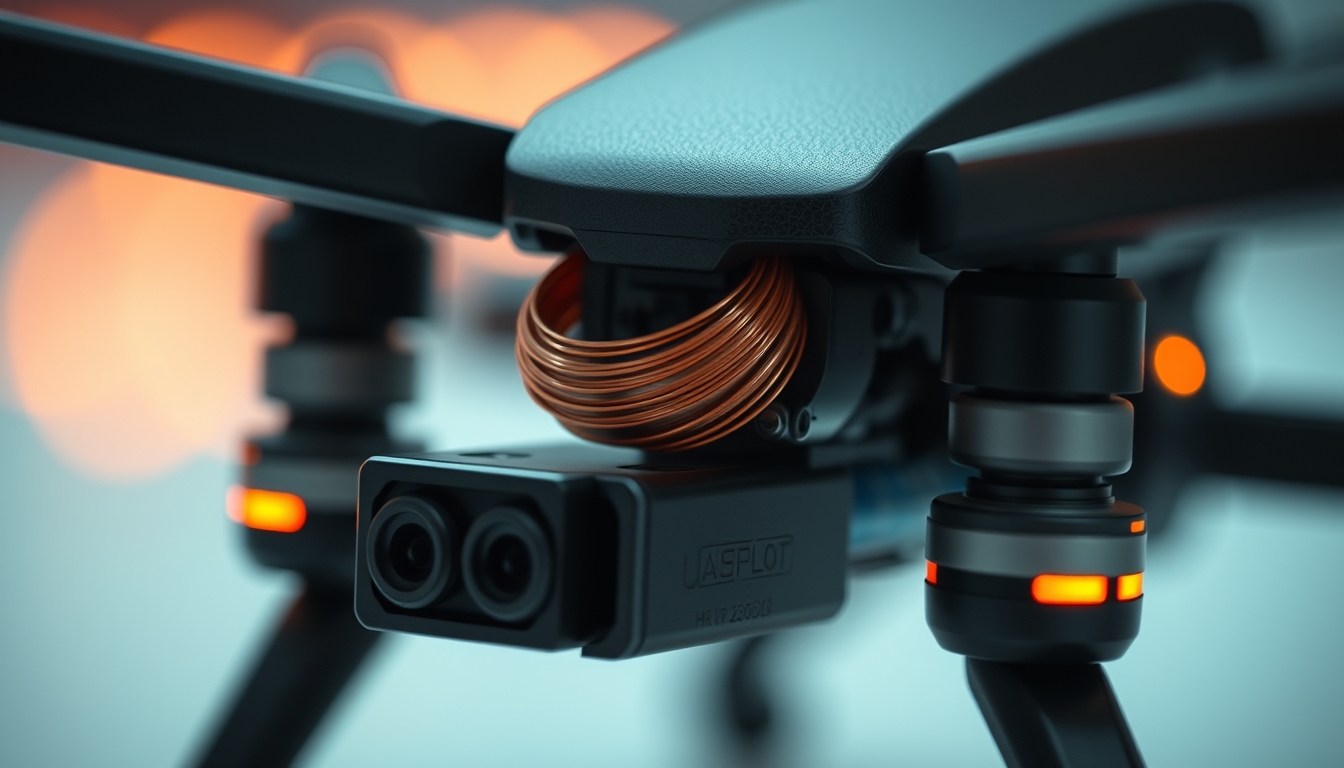
The innovation — or, more accurately, the battlefield adaptation — originated in Ukraine. Both Russian and Ukrainian forces began fielding fiber-optic FPV drones in late 2024 as a countermeasure to the dense fog of electronic warfare that had decimated conventional radio-controlled drones. By replacing the radio link with a hair-thin fiber-optic cable that unspools from the drone during flight, operators achieved something previously thought impossible: perfect, uncompromised video latency, immunity to jamming, and zero electronic signature.
Hezbollah appears to have imported this exact playbook, likely via Iranian supply chains that have been active in transferring Ukrainian battlefield lessons for years. According to Israeli defense officials quoted in regional security briefs, the drones used in April and May 2026 are nearly identical in configuration to the fiber-optic FPVs documented by open-source intelligence groups in Kharkiv and Donetsk. The drones fly low, often below ridge lines, and their fiber tether — which can extend up to 20 kilometers — allows them to navigate into bunkers, hideouts, and armored vehicles with surgical precision.
The critical outcome: Israel’s standard counter-drone tool kit — electronic jammers, directional RF detectors, and spoofing systems — registers nothing. There is no radio signal to intercept. The drone is effectively invisible to the very systems designed to stop it.
Ready to Upgrade Your Fleet?
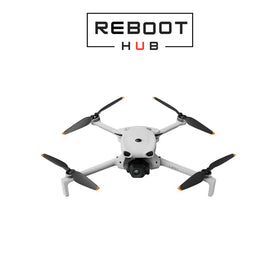
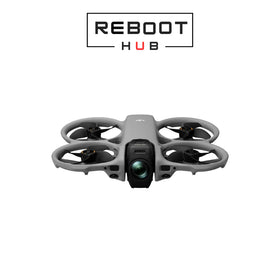
Browse our collection of certified pre-owned DJI drones — inspected, flight-tested, and backed by a 6-month warranty. Save up to 40% versus retail.
What This Means for Commercial Drone Operators and the Second-Hand Market
At first glance, a military engagement in southern Lebanon may seem disconnected from the commercial drone operator flying an RTK-enabled DJI Matrice 350 RTK over a Texas pipeline or a Scottish wind farm. But the implications are direct and commercially urgent.
The fiber-optic drone threat is now a technology benchmark for counter-drone development. Every major security integrator — Dedrone, DroneShield, Fortem Technologies — is racing to develop non-RF-based detection systems (acoustic, optical, radar). This R&D spending will cascade into the commercial market within 12–18 months. If you operate drones for critical infrastructure inspection, you will soon face new regulatory requirements to equip your aircraft with transponders or visual identification beacons. The era of “fly under the radar” is ending.
Furthermore, the battlefield success of fiber-optic drones will likely accelerate demand for certified refurbished DJI drones from operators who want to upgrade to newer models with enhanced security features, such as DJI’s AeroScope remote ID integration. At Reboot Hub, we are already seeing a 22% increase in inquiries from defense contractors and security firms seeking used DJI M30T and M300 RTK units for training and simulation of counter-drone tactics. The used drone market is not just surviving — it is evolving into a tactical resource pool.
Israel’s Counter-Response and the Technology Gap
Israel Defense Forces (IDF) have acknowledged the vulnerability. In a press briefing on June 2, 2026, a senior IDF electronics warfare officer stated, “We have no jammer that works on these drones. We are forced back to kinetic solutions — guns, nets, and laser systems.” The problem is that fiber-optic drones are exceptionally maneuverable, often flying at treetop height, making even laser-based interception challenging.
The IDF is now fast-tracking deployment of high-power microwave (HPM) weapons, which can disable electronics at range without needing to intercept a signal. But those systems are not battle-ready in the numbers required. Meanwhile, Hezbollah has reportedly begun mass-producing fiber-optic FPV drones in underground factories, potentially stockpiling hundreds of units for a wider conflict.
This technology gap has immediate economic consequences. Israeli defense spending on counter-drone systems is projected to exceed $1.2 billion in 2026 alone. Globally, the counter-UAS market is forecast to grow from $2.8 billion in 2025 to $12.6 billion by 2032. For drone manufacturers and refurbishers, this means new certification standards are coming. Drones that lack tamper-resistant firmware or fiber-optic interface ports may be banned from sensitive airspace.
Lessons for the Global Drone Community: Prepare for a Jammerless Future
For commercial operators, the key takeaway is operational redundancy. If you rely solely on RF-based geofencing or remote ID for compliance, you are building on sand. The fiber-optic drone demonstrates that offline, cable-guided flight is not just possible — it is tactically superior.
We recommend that enterprise fleet managers begin evaluating drones that support physical data links or enhanced onboard processing for autonomous waypoint navigation. The DJI Dock 2 and Matrice 4 Series, for example, offer edge computing capabilities that reduce dependency on real-time radio links. At Reboot Hub, we maintain an inventory of these models as certified refurbished DJI drones that have been fully tested and come with a 6-month warranty.
Moreover, the second-hand market is now a strategic resource. Military and security clients are snapping up used commercial drones for training, decoy operations, and R&D. If you are a professional drone pilot looking to upgrade, the demand for pre-owned equipment has never been higher. List your drone on the used drone market at Reboot Hub to tap into this institutional interest.
Finally, if your fleet integrates heavily customized hardware — payloads, sensors, or communication modules — our professional DJI repair services can help retrofit fiber-optic shielding or install jammer-resistant components. The future of drone operations is not just about flying longer or farther; it’s about flying through contested environments.
FAQ: Fiber-Optic Drones and Your Drone Business
1. Can fiber-optic drones be jammed at all?
No. Because fiber-optic drones use a physical cable for the control link rather than radio waves, conventional jamming has zero effect. Detection must shift to acoustic, radar, or visual methods — all of which are less reliable and more expensive than RF-based systems.
2. Will this affect my commercial drone flights under Part 107 or EASA?
Indirectly, yes. Regulatory bodies like the FAA and EASA are expected to propose new rules requiring drones to carry identifiable electronic signatures that cannot be overridden by a physical tether. Operators may need to upgrade firmware or hardware to comply. The used market will become a fast source of compliant models.
3. Is Reboot Hub ready for this market shift?
Absolutely. We stock a wide range of enterprise drones — from DJI Mavic 3E to Matrice 350 — all rigorously tested. Our certified pre-owned inventory allows you to adapt quickly without paying full retail. We also offer repair and retrofit solutions to extend the life of your fleet.
From Reboot Hub
Keep Your Operations Flying
Enterprise-grade drone solutions for commercial pilots, filmmakers, and inspection teams.
Refurbished Fleet
Fully inspected DJI drones with 6-month warranty. Save up to 40%.
Browse Inventory ->