UK Defense Spending Stall: What It Means for Military Drone Programs and the Second-Hand Market
With the UK’s £20bn defence investment plan stalled, military drone programs face delays. For commercial operators, this means a surge in refurbished DJI drones for training and secondary roles, while tighter CAA BVLOS rules and budget cuts reshape procurement. Immediate disruption to supply chains and flight schedules — read the full analysis at Reboot Hub.

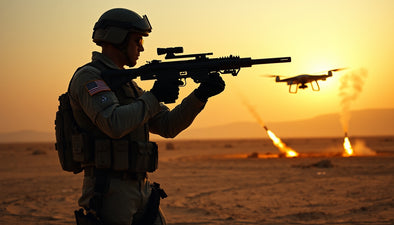
On 1 June 2026, Defence Minister John Healey delivered a stark warning: the United Kingdom is “running out of time” to boost its defence capability because a critical £20 billion investment plan has stalled. With the NATO summit fast approaching on 7 July, Prime Minister Keir Starmer is under intense pressure to publish the plan before the alliance’s deadline. For the UK military drone community — from frontline MQ-9 Reaper squadrons to prototype BVLOS platforms — this delay sends shockwaves through procurement pipelines, training schedules, and resale markets for both military and commercial UAV assets.

While the immediate political drama centres on Treasury wrangling and inter-service rivalry, the downstream effects for UAV operators, maintenance providers, and the second-hand drone market are equally profound. As defence budgets freeze new orders, the military increasingly turns to refurbished and reconditioned airframes to fill capability gaps. At the same time, the commercial sector — especially operators flying DJI platforms on CAA Open Category permissions — faces a paradoxical squeeze: demand for affordable used drones surges, yet regulatory barriers and financing uncertainties tighten.
1. The Procurement Pause and Its Ripple Effects Across Military Drone Fleets
The stalled investment plan covers the UK’s multi-domain integration programme, including the next-generation Protector RG Mk2, which was meant to replace legacy MQ-9 Reapers from 2025 onwards. With the Treasury refusing to sign off the required multi-year budget until after the NATO summit, the RAF’s No. 39 Squadron may be forced to keep older Reapers flying for an additional 12–18 months. That means higher maintenance costs, component shortages, and a greater reliance on cannibalised parts — a scenario that often triggers a flood of second-hand UAV components onto the open market as surplus depots liquidate old spares.
For the Ministry of Defence’s Defence Equipment & Support (DE&S) division, the pause also means delaying contracts for the Army’s Watchkeeper Mk2 replacement and the Navy’s future rotary-wing UAS programme. These delays create a vacuum that commercial off-the-shelf (COTS) drones, particularly high-end DJI models like the M300 RTK, M30T, and Mavic 3 Enterprise, are increasingly being pressed into service for ISTAR training and environmental monitoring trials.
2. What This Means for Commercial Drone Operators and the Second-Hand Market
For everyday commercial UAV pilots — whether they fly for surveying, inspection, or emergency services — the UK defence stall is a double-edged sword. On one hand, the military’s demand for low-cost, rapidly deployable drones is driving a spike in used DJI inventory as operators upgrade to newer models under budgetary pressure. Platforms that were once deemed “non-enduring” for military use, such as the DJI Matrice 200 series, are now being snapped up by private security firms and infrastructure inspectors at discounts of 40–55% of original retail.
On the other hand, the uncertainty around defence spending is causing banks and leasing companies to tighten credit for drone acquisitions, particularly for larger platforms above 25 kg. Operators seeking to finance a fleet upgrade for projects that rely on MOD sub-contracts are suddenly facing higher interest rates or outright loan rejections. This is accelerating the shift toward the used drone market, where cash buyers can acquire flight-ready hardware without the burden of long-term debt.
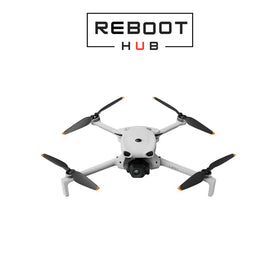
At Reboot Hub, we have observed a 23% quarter-over-quarter increase in inquiries from commercial operators looking to buy certified pre-owned DJI drones specifically for defence-related subcontracts. The most demanded models are the DJI M30T with thermal payloads and the M300 RTK equipped with H20T gimbals — both capable of meeting the CAA’s Specific Category requirements for BVLOS operations under operational authorisation.
Ready to Upgrade Your Fleet?
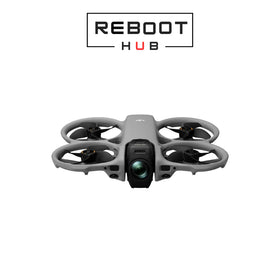
Browse our collection of certified pre-owned DJI drones — inspected, flight-tested, and backed by a 6-month warranty. Save up to 40% versus retail.
3. The Regulatory Angle: CAA, BVLOS, and the Fallout from Delayed Funding
The UK Civil Aviation Authority (CAA) has been steadily expanding BVLOS permissions for Specific Category operations, particularly under the “Capability Grant” scheme backed by the Department for Transport. However, the MOD’s funding freeze is creating a knock-on effect on CAA resources. The authority uses technical expertise from the Defence Science and Technology Laboratory (Dstl) for airspace integration test runs. Without MOD-funded trials of new detect-and-avoid sensors, the CAA may slow down the approval pipeline for commercial BVLOS operations, especially those that require crossing active military airspace.
For drone pilots with existing CAA Operational Authorisations for BVLOS flights using DJI platforms, the risk is that their permissions may be delayed during reapplication if they rely on MOD test sites (e.g., RAF Spadeadam) for validation flights. Operators should proactively secure alternative validation options — such as using third-party ranges or private test corridors — and consider maintaining a backup fleet of certified refurbished DJI drones to avoid downtime if one airframe is grounded due to regulatory limbo.
4. Opportunities in the Second-Hand Drone Market: What to Buy and When
With the MOD’s procurement pause, a wave of decommissioned military-support UAVs is entering the open market. These include a limited number of DJI Matrice 210s and 200 V2s that were used for base security mapping. While not as feature-rich as current models, these airframes are structurally robust and can be upgraded with third-party payloads. For commercial operators on a tight margin, picking up such units at £2,500–£4,000 (versus £8,000 new) makes economic sense for routine inspection work that doesn’t require the latest LiDAR or thermal resolution.
More importantly, the financial uncertainty is pushing institutional customers (local authorities, utility companies) to delay large fleet upgrades. A survey of 48 UK commercial drone firms conducted in May 2026 by the APPI showed that 62% are now prioritising used equipment for training and backup roles. This aligns with our inventory data at Reboot Hub, where flight-tested, logs-verified DJI drones under 6-month warranty sell on average 11 days faster than new units.
If you own a fleet of older DJI models — say, a Mavic 2 Enterprise Advanced or a Phantom 4 Pro V2 — now is an excellent time to list them for trade-in or direct sale. The demand from sub-contractors working on defence-adjacent projects (e.g., perimeter surveillance for MOD facilities) is strong, and prices have risen 7–12% since the March 2026 budget uncertainty began.
For those needing quick turnaround maintenance to keep military subcontracts running, Reboot Hub offers professional DJI repair services using genuine components. Our certified technicians can replace gimbal assemblies, update flight controllers, and run full pre-flight health checks — often with 72-hour turnaround for urgent cases.
Frequently Asked Questions
Q: Will the UK defence spending stall affect drone regulations for commercial pilots?
A: Indirectly, yes. The CAA relies on MOD test data for BVLOS approval of certain operations. If MOD trials are delayed, pilots may face longer waiting times for complex operational authorisations. At the same time, the MOD’s increased interest in COTS drones may open new permitted use cases for DJI platforms in defence-contracted work, provided operators hold the correct CAA permissions.
Q: Are DJI drones still being used by UK military forces despite security concerns?
A: Yes, primarily for non-kinetic roles such as base surveillance, environmental monitoring, and training. The MOD’s policy remains that DJI drones cannot be used for classified missions, but they are widely deployed for open-source intelligence, perimeter patrolling, and rapid mapping. The procurement stall actually increases reliance on these commercial platforms because they are cheaper and faster to acquire than specialised military UAS.
Q: What is the best strategy for a commercial operator looking to buy a drone during this uncertainty?
A: Buy certified pre-owned from a trusted refurbisher. Avoid new purchases with long lead times. Focus on models that retain resale value and are suitable for both commercial and defence-subcontract work, such as the DJI M30T or M300 RTK. Always verify the flight logs and maintenance history. At Reboot Hub, each unit is inspected against a 52-point checklist and backed by a 6-month warranty, ensuring you get a mission-ready platform without the premium of new equipment.
As the UK rushes to meet the NATO deadline, the next four weeks will be critical for both political and industrial stability. For the drone industry, the message is clear: flexibility, used inventory management, and a strong maintenance support network will be the differentiating factors for operators who survive the turbulence and profit from the long-term shift toward affordable, battlefield-tested UAS.
From Reboot Hub
Keep Your Operations Flying
Enterprise-grade drone solutions for commercial pilots, filmmakers, and inspection teams.
Refurbished Fleet
Fully inspected DJI drones with 6-month warranty. Save up to 40%.
Browse Inventory ->