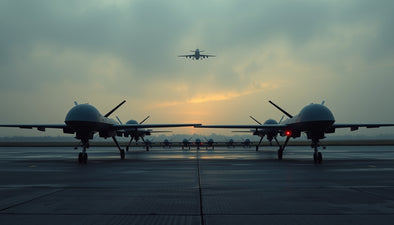
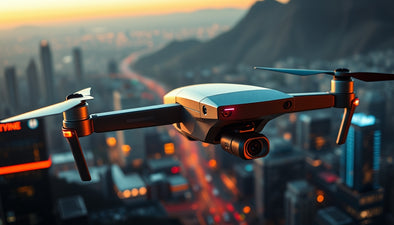
11,000 New Missiles: How the US Army’s Stinger Replacement Reshapes Drone Defense and Airspace
The Pentagon just launched an RFI for 11,000 next-gen interceptors to replace the Stinger, starting deliveries in FY2028. This isn’t a slow modernization—it’s a crash program against drone swarms, loitering munitions, and autonomous aerial threats. For commercial UAV operators flying under FAA Part 107, the fallout means tighter airspace restrictions, new EASA-style no-fly zones over critical infrastructure, and an exploding secondary market for counter-drone hardware. RTK surveyors, BVLOS route planners, and agricultural drone fleets will face immediate operational disruptions as military air defense zones expand. Miss this shift and risk grounding your entire fleet.

The United States Army has issued a sweeping Request for Information (RFI) targeting the production of 11,000 next-generation, short-range interceptors to replace the venerable FIM-92 Stinger missile system. The move, published in early June 2026 and requiring initial deliveries as early as Fiscal Year 2028, signals a fundamental strategic shift away from legacy man-portable air-defense systems (MANPADS) toward a new generation of interceptors purpose-built to defeat the defining aerial threat of the 21st century: unmanned aircraft systems (UAS), drone swarms, and loitering munitions.

For the commercial drone industry—already navigating the complexities of FAA Part 107 Remote ID compliance, evolving BVLOS waiver frameworks, and an increasingly crowded low-altitude airspace—this is not a distant Pentagon procurement story. It is a direct regulatory and operational signal. The hardware the Army chooses today will determine tomorrow's airspace restrictions, counter-UAS detection perimeters, and the economic viability of drone-dependent business models from precision agriculture to infrastructure inspection.
The Stinger Gap: Why the Army Is Pivoting to Next-Gen Interceptors
The FIM-92 Stinger has been the backbone of U.S. short-range air defense since 1981. But the missile was designed to engage manned aircraft—jets and helicopters—at ranges up to 8 kilometers. Against modern drone threats, the Stinger faces critical limitations: its infrared seeker struggles to lock onto the low heat signature of small electric drones, its warhead is oversized for lightweight UAS targets, and it cannot track or engage the high-speed, unpredictable flight paths of drone swarms. The Army’s own operational tests have repeatedly shown Stinger engagement success rates below 30% against Group 1 and Group 2 UAS.
The RFI explicitly calls for an interceptor optimized for the "short-range air defense (SHORAD) mission against UAS, cruise missiles, and rocket, artillery, and mortar (RAM) threats." This triple-threat requirement—with drones at the top of the list—is a direct response to combat observations from Ukraine, where both Russian and Ukrainian forces have demonstrated that cheap FPV drones and commercial quadcopters can saturate and overwhelm traditional air defense systems. The Army wants an interceptor that costs less than a Stinger, requires no specialized cooling or maintenance, and can be mass-produced at a scale of 11,000 units—roughly ten times the annual Stinger production rate before the Ukraine war surge.
The timeline is equally aggressive. First deliveries must begin in FY2028, which means the Army expects a mature design candidate within 18 months and production tooling ready by late 2027. Contractors including Raytheon, Lockheed Martin, Dynetics, and emerging directed-energy firms are expected to respond, with some proposals likely combining a miniature kinetic interceptor with a laser or high-power microwave (HPM) front-end for soft-kill capability against drone swarms.
Counter-Drone Technology Convergence: What the New Interceptor Must Do
Analysis of the RFI document suggests the Army is not simply seeking a Stinger replacement but a fundamentally different class of weapon. The key performance parameters (KPPs) include:
Multi-domain engagement: The interceptor must track and engage targets across the full spectrum of drone threats—from micro-UAS (Group 1, under 20 pounds) to large Group 3 tactical drones and cruise missiles. This requires a dual-mode seeker combining infrared imaging with an active radar or semi-active laser (SAL) designator to handle both low-signature and high-speed targets.
Swarm defeat capability: The system must engage multiple inbound targets in rapid succession, with a minimum of four engagements within 60 seconds. This pushes the technology toward magazine-fed launchers or directed-energy arrays rather than single-shot MANPADS tubes.
Cost-per-kill: The Army is demanding a unit cost below $150,000 per interceptor in full-rate production—roughly half the current cost of a Stinger Block I missile. For comparison, a single Switchblade 300 loitering munition costs around $6,000, and a DJI Mavic 3 can be weaponized for under $5,000. The Army explicitly notes that "economic viability at scale" is a KPP, acknowledging that defending against cheap drones requires equally cheap interceptors.
Open architecture C2: The interceptor must integrate with the Army's Integrated Air and Missile Defense (IAMD) Battle Command System, the Forward Area Air Defense (FAAD) C2 network, and emerging low-level air defense sensors like the M-SHORAD Stryker vehicle's radar and EO/IR turret.
Several industry observers believe the RFI's language points toward a hybrid solution: a lightweight kinetic interceptor (possibly based on the Coyote Block 2 or APKWS rocket) paired with a directed-energy element for close-range swarm defeat. Laser systems from companies like nLight and Rafael, as well as HPM systems from Epirus and Raytheon, are already being tested on Stryker and JLTV platforms.
Ready to Upgrade Your Fleet?
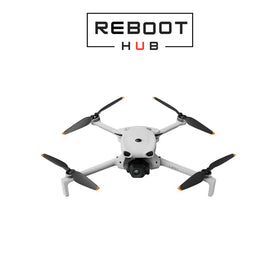
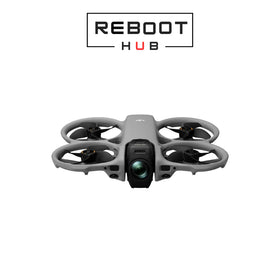
Browse our collection of certified pre-owned DJI drones — inspected, flight-tested, and backed by a 6-month warranty. Save up to 40% versus retail.
What This Means for Commercial Drone Operators in 2026 and Beyond
The direct impact of an 11,000-missile air defense build-up on civilian UAV operations is often underestimated. The Stinger replacement program is not being developed in isolation—it is part of the Army's larger Indirect Fire Protection Capability (IFPC) and Maneuver Short-Range Air Defense (M-SHORAD) modernization. These systems will be stationed at fixed bases, forward operating locations, and—crucially—at critical infrastructure sites across the continental United States. The Department of Defense is actively expanding its domestic air defense footprint in response to the 2023-2024 incursions of unidentified drones over military bases in Virginia, New Jersey, and Texas.
For commercial drone pilots, this translates directly into expanded restricted airspace, permanent no-fly zones around defense-critical infrastructure, and stricter enforcement of existing Temporary Flight Restrictions (TFRs). The FAA, under a 2025 interagency memorandum with the Department of Defense, has already begun designating "Air Defense Identification Zones (ADIZ)" around power plants, refineries, transportation hubs, and government facilities. These zones require all drone operations to obtain prior authorization through the LAANC system or a waiver under FAA Part 107. The Stinger replacement program will only accelerate this trend.
Operators flying BVLOS routes—particularly those conducting long-distance linear inspections of pipelines, railways, or power lines—will need to carefully audit their flight paths against these new ADIZ perimeters. A single incursion over a protected facility during an automated BVLOS inspection could result in the drone being engaged by a counter-UAS system, civil penalties under 14 CFR Part 107 exceeding $10,000 per violation, and potential criminal referral. The insurance implications are equally severe: several major drone insurers, including Global Aerospace and Old Republic, now include specific exclusions for operations within 5 nautical miles of DOD-designated air defense sites.
The second-hand and refurbished drone market is also feeling the effect. As military-grade counter-UAS systems proliferate, the demand for older drone models that lack encrypted ADS-B Out, Remote ID broadcast capability, and geo-fencing compliance is declining. Operators are increasingly trading in their legacy Mavic 2 Enterprise and Phantom 4 RTK units for newer models that meet the stricter airspace integration standards. This shift is creating a robust market for certified refurbished DJI drones that have been upgraded with the latest firmware, Remote ID modules, and geo-fencing databases—units that retain their value and compliance credentials in the face of expanding defense airspace.
The Second-Hand Market Ripple Effect: Defense Programs Driving Commercial Fleet Upgrades
The intersection of military air defense expansion and the commercial drone aftermarket is a dynamic we track closely at Reboot Hub. The used drone market is experiencing a bifurcation: high-spec, recent-model aircraft with full compliance suites are commanding premium prices, while older generation drones without Remote ID or ADS-B Out are seeing steep depreciation. The Army's 11,000-missile buy accelerates this trend by signaling to commercial operators that airspace restrictions will only tighten.
For enterprise drone operators managing fleets of 10 to 50 aircraft, the calculus is straightforward. The total cost of ownership (TCO) for a legacy drone fleet now must include the risk of airspace non-compliance, insurance premium increases, and potential fleet grounding if a single drone violates an expanded ADIZ. Upgrading to a fleet of compliant, inspected, and warranty-backed used drones is often more cost-effective than purchasing new. Reboot Hub's certified pre-owned DJI aircraft—including the Matrice 300 RTK, Mavic 3E, and Phantom 4 RTK v2.0—are individually flight-tested and updated with the latest DJI Pilot 2 flight software and Airsense ADS-B receivers, ensuring they remain airworthy and compliant as defense perimeters expand.
Additionally, the program's emphasis on cost-per-kill—the economic viability of intercepting cheap drones with expensive missiles—has a direct corollary in the commercial sector: the cost of replacing a drone that is shot down. Insurers and fleet managers are increasingly factoring the probability of counter-UAS engagement into their risk models. Maintaining a fleet of professional DJI repair services ensures that even if an aircraft is damaged during a mission near restricted airspace, it can be economically restored to service rather than written off. This service-oriented approach reduces fleet downtime and preserves capital.
Regulatory and Market Outlook: Preparing for the 2028 Timeline
The Army's FY2028 delivery target for the first 11,000 interceptors creates a clear planning horizon for the commercial drone industry. Between now and late 2027, we expect:
Expanded DoD-FAA coordination: The interagency working group on UAS airspace security will publish a revised version of FAA Order 7400.2 (Procedures for Handling Airspace Matters) that formalizes "National Defense Airspace Zones" around all M-SHORAD and IFPC deployment sites. Commercial operators should expect pre-coordination requirements, time-of-day restrictions, and altitude caps as low as 200 feet AGL in these zones.
EASA-style remote identification mandates: The European Union's Delegated Regulation 2019/945 already requires broadcast Remote ID for all drones over 250 grams. The US FAA, under pressure from DoD, is expected to finalize a similar mandate for all commercial operations by 2027—regardless of drone weight—within 10 nautical miles of any air defense installation. This will affect operators flying sub-250g micro-drones for indoor inspection or low-altitude mapping.
Counter-UAS testing proliferation: As the Army evaluates interceptor candidates between now and 2028, live-fire test ranges in New Mexico, Arizona, and Oklahoma will see an increase in drone target sorties. Operators in these regions should anticipate more frequent temporary flight restrictions (TFRs) at unannounced times, potentially disrupting mapping and survey missions that require consistent daylight schedules.
Second-hand market stratification: The demand split between compliant and non-compliant drones will widen. Aircraft equipped with ADS-B Out, broadcast Remote ID, and encrypted GNSS receivers will hold 60-70% of their new value after two years, while non-compliant legacy units will depreciate to under 30%. This creates a compelling buying opportunity for operators who acquire compliant refurbished units at current prices before the premium drives them higher.
From a market perspective, the Stinger replacement RFI is one of the most significant defense procurement signals for the drone industry in the last decade. It confirms that drone threats are now a permanent feature of the national security landscape, and that airspace regulators, insurers, and fleet operators must adapt accordingly. The commercial drone sector is not merely an observer of this military program—it is an active participant through airspace access, regulatory compliance, and fleet investment decisions.
FAQ: Stinger Replacement and the Commercial Drone Market
How does the Army's 11,000-missile RFI affect commercial drone pilots flying under FAA Part 107?
The RFI signals expanded and accelerated creation of Air Defense Identification Zones (ADIZ) around military bases, critical infrastructure, and eventually other protected sites. Drone pilots should expect more restricted airspace, tighter Remote ID requirements, and stricter enforcement. Flights that today require only LAANC approval may soon require prior coordination with military authorities. Operators conducting BVLOS inspections near power plants or refineries should review their flight corridors for potential overlap with future ADIZ boundaries and plan for alternative routes or higher altitude authorizations.
Will the new interceptor program affect the resale value of my existing drone fleet?
Yes. The secondary market is already pricing in the compliance gap between modern drones with full Remote ID, ADS-B Out, and geo-fencing support versus older models that lack these capabilities. Drones that cannot broadcast Remote ID or receive integrated NOTAM updates will see accelerated depreciation. Upgrading to a certified refurbished DJI drone from Reboot Hub ensures your aircraft remains compliant with evolving airspace regulations while offering significant savings over new retail prices. Each unit is inspected, firmware-updated, and backed by a 6-month warranty.
What should drone fleet managers do now to prepare for the FY2028 interceptor deployment?
Fleet managers should take three immediate steps: (1) Audit all aircraft for Remote ID compliance and ADS-B Out capability—upgrade or replace non-compliant units now before prices rise; (2) Review insurance policies to confirm coverage in or near DoD-designated air defense zones; (3) Establish a maintenance and repair contract with a certified service provider to ensure rapid turnaround if a drone is damaged during a mission near restricted airspace. Reboot Hub's professional DJI repair services use genuine parts and factory-level diagnostics to keep your fleet mission-ready, reducing downtime and preserving aircraft value.
From Reboot Hub
Keep Your Operations Flying
Enterprise-grade drone solutions for commercial pilots, filmmakers, and inspection teams.
Refurbished Fleet
Fully inspected DJI drones with 6-month warranty. Save up to 40%.
Browse Inventory ->