Navy Budget Crisis: Will the Trump Class Battleship Sink America’s Drone Carrier Ambitions?
As Congress demands proof that a new “Trump-class” battleship won’t destroy US nuclear shipbuilding, the looming budget crunch threatens critical UAV programs including the MQ-25 Stingray, carrier-based drone operations, and future unmanned combat aerial systems. For commercial operators flying Part 107 BVLOS routes, the Pentagon’s spending shift may tighten airspace access and delay military procurement that trickles down to civilian drone tech.

On June 5, 2026, a heated exchange on Capitol Hill has thrown the future of U.S. naval aviation and unmanned systems into sharp relief. A bipartisan group of legislators has demanded that the Navy provide irrefutable evidence that the proposed “Trump-class” battleship will not devastate the already strained nuclear-powered aircraft carrier and submarine construction pipelines. While the headline battle rages over hulls and propulsion, the ripple effects for unmanned aerial vehicle (UAV) programs—especially carrier-based drones integral to the Navy’s future fleet architecture—are drawing intense concern from defense analysts and commercial drone operators alike.

The War Zone first reported the legislative ultimatum, which directly challenges the Navy’s contention that adding a new class of surface combatant will not crowd out funding for key platforms like the Columbia-class submarine, Ford-class aircraft carriers, and the accompanying unmanned aircraft they are designed to launch and recover. The subtext of this budgetary squeeze is a potential restructuring of unmanned aviation priorities, threatening the timelines for the MQ-25 Stingray tanker drone, the Next-Generation Air Dominance (NGAD) family of systems that includes collaborative combat aircraft (CCAs), and foundational technologies that underwrite commercial drone operations across the United States.
For Reboot Hub, a platform deeply embedded in the commercial UAV lifecycle—from certified refurbished systems to professional repair and fleet management—this geopolitical tension is not abstract. It directly influences the availability of military-spec components, regulatory momentum for Beyond Visual Line of Sight (BVLOS) operations, and the secondary market for enterprise drones that often trace their technological DNA to defense programs. This news analysis dissects what the Trump-class battleship controversy means for the drone industry, the likely winners and losers, and how commercial operators should prepare for a disrupted procurement environment.
The Budgetary Collision Course: Battleship vs. Unmanned Aviation
The Trump-class proposed by the Navy (or pushed by congressional proponents) represents a return to large-deck surface warfare—a platform that demands escalation in steel, manpower, and, most critically, funding. The Congressional Budget Office (CBO) has estimated that a single Trump-class hull could cost upwards of $14 billion, a figure that does not include lifetime maintenance and modernization. Competing against the Columbia-class submarine program (already tracking at $8 billion per hull) and the Ford-class carrier program (with per-ship costs exceeding $13 billion), the battleship creates a zero-sum game within a finite shipbuilding account.
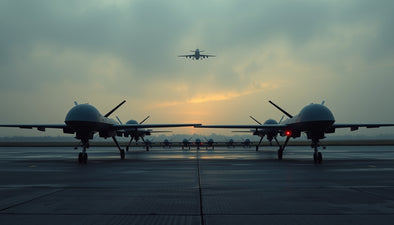
What is less discussed in mainstream defense coverage is how this battle directly impacts the Navy’s unmanned aviation roadmap. The MQ-25 Stingray, designed to provide carrier-based aerial refueling and eventually intelligence, surveillance, and reconnaissance (ISR) capability, is a critical enabler for extending the combat radius of F-35s and future NGAD platforms. Currently, the MQ-25 program is in low-rate initial production, with the Navy planning to procure a total of 76 aircraft. However, any significant redirection of shipbuilding funds could delay the acquisition timeline, reducing annual procurement rates and pushing back full operational capability beyond the mid-2030s.
Similarly, the Navy’s Unmanned Carrier Launched Airborne Surveillance and Strike (UCLASS) program, which was originally envisioned as a stealthy penetrating strike platform, has been largely subsumed into the NGAD family. The NGAD system-of-systems includes multiple unmanned Collaborative Combat Aircraft (CCAs) that require massive investments in AI, secure datalinks, and autonomous operations. If the Trump-class battleship siphons $3-5 billion annually from the Navy’s R&D accounts, these CCA programs face a direct threat. As one senior Capitol Hill aide noted to The War Zone, “You cannot build a super-battleship and simultaneously fund the unmanned revolution without breaking the bank.”
Ready to Upgrade Your Fleet?
Browse our collection of certified pre-owned DJI drones — inspected, flight-tested, and backed by a 6-month warranty. Save up to 40% versus retail.
Immediate Implications for Defense Drone Contracts and Commercial Spillover
The Naval Air Systems Command (NAVAIR) is currently managing contracts for the MQ-25 with Boeing, with subcontractors including Pratt & Whitney, GE Aviation, and Sierra Nevada Corporation. A delay or re-scoping of the MQ-25 program would impact not only prime contractors but also a supply chain of specialty component manufacturers—many of whom also supply parts for the commercial drone market. For example, advanced LiDAR sensors, secure telemetry modems, and high-efficiency turbofan engines developed for military unmanned systems often find their way into high-end enterprise drones used for pipeline inspection, precision agriculture, and public safety missions.
Commercial operators flying under FAA Part 107 are already watching the Pentagon’s budget cycles for clues about future airspace integration rules. When military unmanned programs are perceived as unstable, the Pentagon is less likely to push for accelerated BVLOS waivers that require sharing restricted airspace with civil drones. The technology transfer from military to commercial drones also slows, as defense contractors prioritize cost-plus contracts over commercial derivative products. “Every dollar spent on a battleship is a dollar not spent on the digital infrastructure needed for safe unmanned operations,” said a former FAA drone integration engineer now consulting for the commercial sector.
For the second-hand drone market—the core audience of Reboot Hub—the most immediate impact is on the availability of high-end used enterprise drones like the DJI Matrice 350 RTK, DJI M30T, and even older M600 Pro platforms often repurposed from military training fleets. When the Navy orders fewer MQ-25 test units, the cascade effect reduces the number of “surplus” components that later appear in civilian repair channels. This shortage drives up prices on the refurbished drone market, making it harder for operators to acquire certified refurbished DJI drones at competitive prices. Conversely, if the battleship debate results in a shift toward greater unmanned investment, the subsequent technology boom could increase the supply of military-grade sensors and flight controllers in the secondary market.
What Does This Mean for Drone Pilots, Fleet Managers, and Refurbishers?
For the purpose of clarity, we present a direct Q&A format highlighting the key questions arising from this legislative standoff:
Q: How might a Trump-class battleship delay affect FAA BVLOS rulemaking?
The Pentagon is a major stakeholder in the FAA’s integration of unmanned aircraft. If the Navy diverts funding away from unmanned programs to pay for battleship construction, the operational data required to demonstrate safe BVLOS operations over water and near naval vessels may be deferred. This could push back the timeline for BVLOS waivers that commercial operators depend on for long-range utility inspection and offshore energy surveying. Without military-led proof of concept, the FAA is less likely to grant expansive waivers.
Q: Will second-hand drone prices rise or fall if the Navy reduces its UAV procurement?
In the short term, reduced procurement means fewer new-built military drones entering the inventory, which in turn reduces the number of platforms that eventually get surplused or sold in the second-hand market. This tightens supply, especially for high-end models like the DJI M300 and M350 series, which are often upgraded with thermal and RTK payloads originally developed for military contracts. Expect a market where the used drone market becomes more sellers-friendly, with premiums on fully inspected units.
Q: What about repair services and spare parts availability?
If defense contracts shrink, suppliers may reduce production of certain avionics chips, motors, and sensor arrays that are also used in commercial drones. Fleet managers relying on professional DJI repair services may face longer lead times for genuine replacement parts. At Reboot Hub, we maintain a deep inventory of components sourced from both military overstock and commercial channels, but a prolonged budget uncertainty could strain even that buffer.
The Legislative Demand: More Than a Paper Exercise
The letter from lawmakers—reportedly signed by members of both the House Armed Services Committee and the Senate Armed Services Committee—is more than a procedural request. It demands that the Navy submit an independent cost-benefit analysis comparing the Trump-class battleship’s impact on all other shipbuilding and aviation accounts, with specific attention to the Columbia-class submarine and Ford-class carrier programs. Importantly, the letter also asks the Government Accountability Office (GAO) to evaluate the effect on “unmanned systems procurement and sustainment.”
This creates a direct line of accountability that could force the Navy to publicly disclose trade-offs. If the GAO concludes that the battleship would delay the MQ-25 or reduce funding for the Navy’s Unmanned Systems Integrated Product Team, Congress may insert language in the FY2027 National Defense Authorization Act (NDAA) that sets minimum funding floors for unmanned aviation. Such protections would insulate these programs from budget raids, providing more predictable investment signals for contractors and, indirectly, for commercial drone component manufacturers.
For Reboot Hub readers, the bottom line is this: the legislative calendar between now and October 2026 (the start of FY2027) is critical. Budget hearings scheduled for July and August will include testimony from NAVAIR and program executive officers for unmanned systems. We strongly recommend that fleet managers subscribe to our weekly market intelligence newsletter to track these developments. When a decision is made, it will reverberate through the secondary market within 90 days.
The drone industry has long understood that military investment is a double-edged sword: it accelerates technology but can also create volatility. The Trump-class battleship controversy is a textbook case of that dynamic. While commercial operators and refurbishers cannot control Washington’s spending calculus, they can hedge by sourcing reliable equipment from trusted refurbishers. Reboot Hub’s inventory of certified refurbished DJI drones offers a cost-efficient buffer against supply shocks, with each unit flight-tested and certified for Part 107 operations. Whether you fly for precision agriculture, infrastructure inspection, or public safety, having a backup platform is no longer optional—it is a strategic necessity.
FAQ
Will the Trump-class battleship directly cause drone program cancellations?
Not immediately, but it introduces budget pressure that could delay procurement and R&D for carrier-based drones like the MQ-25 Stingray and NGAD collaborative combat aircraft. The Navy may also postpone upgrades to existing unmanned systems on destroyers and submarines.
How should I adjust my commercial drone fleet planning?
Monitor the FY2027 NDAA for specific language on unmanned minimum funding. In the near term, consider securing a refurbished enterprise drone as a cost hedge against potential price increases. Reboot Hub offers warranty-backed units that mitigate supply chain risk.
Where can I find reliable information on military drone budget impacts?
Follow Reboot Hub’s Defense & Regulation blog category for monthly updates, and cross-reference with official Navy budget justification books published to the DoD comptroller website. Our team curates only the data that directly affects the commercial and secondary drone market.
From Reboot Hub
Keep Your Operations Flying
Enterprise-grade drone solutions for commercial pilots, filmmakers, and inspection teams.
Refurbished Fleet
Fully inspected DJI drones with 6-month warranty. Save up to 40%.
Browse Inventory ->