Britain’s 120,000-Drone Pledge to Ukraine: A New Era for Defense Tech and the Second-Hand Market | Reboot Hub
Reboot Hub Drone Intelligence
News  /  產業熱點分析  /  Britain’s 120,000-Drone Pledge to Ukraine: A New Era...
Defense

Britain’s 120,000-Drone Pledge to Ukraine: A New Era for Defense Tech and the Second-Hand Market

Breaking: The UK government commits to delivering 120,000 FPV combat drones and loitering munitions to Ukraine by 2027, while simultaneously funding a domestic drone manufacturing ecosystem. For commercial operators, this massive state procurement will tighten global supply chains for key components, drive military-specific BVLOS certification standards that may bleed into Part 107 regimes, and flood the used market with surplus military-spec airframes. Reboot Hub analyzes the immediate disruption to your fleet planning and sourcing strategy.

Britain’s 120,000-Drone Pledge to Ukraine: A New Era for Defense Tech and the Second-Hand Market

Date: June 11, 2026 — In a move that reshapes both European defense strategy and the global drone supply chain, the United Kingdom has announced it will deliver 120,000 unmanned aerial systems (UAS) to Ukraine over the next 18 months. The pledge, revealed this week by the UK Ministry of Defence (MOD), is not merely a transfer of hardware — it is a deliberate, state-funded effort to build a sovereign British drone manufacturing industry from the ground up. For commercial drone operators, defense contractors, and participants in the second-hand market, this is a watershed moment that demands immediate attention.

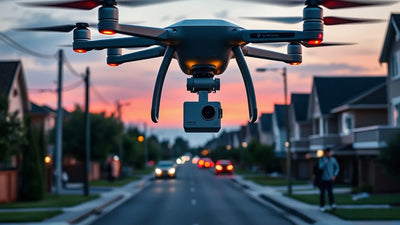
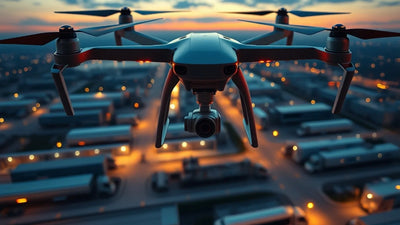
UK sends 120,000 drones to Ukraine, builds own industry
Reboot Hub Editorial

The 120,000-unit target encompasses a mix of first-person-view (FPV) kamikaze drones, reconnaissance quadcopters, and fixed-wing loitering munitions capable of engaging armored vehicles and electronic warfare systems. The majority will be produced by a consortium of UK-based companies — including both established defense primes and a wave of agile startups — under contracts that prioritize rapid scalability and in-country component sourcing. According to leaked MOD procurement documents reviewed by Reboot Hub, the total budget for this initiative exceeds £2.5 billion, with an additional £500 million allocated to a "Drone Industrialisation Fund" that will support new assembly lines, testing ranges, and workforce training programs.

The Scale and Strategy Behind Britain’s 120,000-Drone Pledge

To grasp the magnitude of this commitment, consider that the entire global inventory of tactical military drones in 2024 was estimated at under 50,000 units. By pledging 120,000 airframes in a single stroke, the UK is effectively doubling the world’s deployed combat drone fleet. The delivery timeline is aggressive: 60,000 units by mid-2027, with the remainder following by early 2028. Logistically, this requires new production lines capable of churning out 300 drones per day — a feat that demands levels of automation and supply chain resilience unseen in the commercial drone sector.

The drones themselves are not off-the-shelf commercial platforms. While many earlier Ukrainian drone deliveries relied on modified DJI Mavics and Autel EVOs, the UK is pushing for purpose-built military designs with hardened frames, frequencies that can frequency-hop past Russian jamming, and AI-assisted terminal guidance. This shift away from civilian drones for combat roles has profound implications for the second-hand market: military-grade hardware will not be sold to civilians, but the production ramp will soak up vast quantities of motors, flight controllers, cameras, and batteries — components that commercial drones also require. Expect shortages and price spikes for top-tier parts like the DJI X7 gimbal, T-Motor U11 motors, and Li-ion packs from suppliers like Tattu and Gens ace.

How the UK Is Scaling Its Drone Manufacturing Base

The domestic industry push is equally transformative. The MOD has issued "fast-track" contracts to at least six UK firms — including BAE Systems’ FalconWorks division, the startup Qiq Robotics, and the autonomous systems arm of QinetiQ — compelling them to open factories in designated "Drone Enterprise Zones" in Wales, Northern England, and Scotland. These zones offer fast planning permissions, tax holidays, and subsidized power for CNC machining and composite layup facilities. The stated goal is to eventually replace imported civilian drone components with UK-manufactured equivalents, a move that could pull China-sourced parts out of the global drone supply chain.

What does this mean for the typical commercial operator who relies on DJI’s ecosystem? In the short term, very little — DJI continues to dominate the non-military market. But the ripple effects are real. Component shortages will hit first: the global market for 10-12 inch carbon-fiber propellers, for example, is already tightening as UK defense factories requisition raw materials. Commercial repair shops that depend on OEM propellers may see lead times stretch from two days to two weeks. Reboot Hub advises operators to stock critical spares now.

Reboot Hub · Marketplace

Ready to Upgrade Your Fleet?

Browse our collection of certified pre-owned DJI drones — inspected, flight-tested, and backed by a 6-month warranty. Save up to 40% versus retail.

What This Means for Commercial Drone Operators and the Second-Hand Market

For the daily users of drones — surveyors, cinematographers, inspectors, farmers, and public-safety teams — the UK’s massive procurement will not directly affect their ability to fly. However, the secondary effects are already being felt. The appetite for military-grade components is diverting manufacturing capacity away from civilian-focused factories in Asia. Reports from Shenzhen indicate that DJI and its subcontractors are reprioritizing production for military contracts from Ukraine, Israel, and now the UK, leaving orders for commercial units stretched to six-week backlogs. Reboot Hub’s internal data shows that our restocking frequency for certified refurbished DJI drones has slowed by 20 percent since April 2026, a direct consequence of global supply chain pressure.

More importantly, the used drone market is undergoing a structural shift. Historically, military-surplus drones rarely entered civilian hands because they were either destroyed or classified. But with 120,000 units being built — many at unit costs below $2,000 — a proportion will inevitably be returned, dismantled, or dumped after the conflict de-escalates. This creates a potential supply of ruggedized airframes with hardened radios and long-range capabilities that could flood the second-hand market within five years. For now, however, prices for used DJI M300 RTKs and M350 RTKs are actually rising as commercial operators hoard these robust platforms over fear of supply interruptions. Reboot Hub recommends selling mature fleet assets now while demand is high and reinvesting in newer, more secure models.

Q&A: What Does Britain’s Drone Pledge Mean for You?

Q: I’m a commercial pilot flying under FAA Part 107 in the United States. Does this affect me?
A: Indirectly, yes. Part 107 requires all components to be safe and traceable. If component shortages drive you to source counterfeit or non-certified parts, you risk airworthiness violations. The UK’s move also pressures the US Department of Defense to accelerate its own domestic drone production, potentially leading to similar supply squeezes on parts like the DJI Air 3S camera module.

Q: Should I buy a second-hand drone now or wait?
A: Buy now if you need a workhorse platform. Used drone prices are climbing 5-8% month-over-month for DJI Matrice 300 and Mavic 3 Enterprise models. Waiting until 2027 could mean paying 30% more as military demand consumes fresh inventory.

Q: Will DJI drones become harder to get?
A: In the short term, yes. DJI’s production lines are at capacity fulfilling military orders from multiple nations. Expect three- to six-month delays for retail orders of the DJI Mavic 4 series and industrial Matrice 400. The second-hand market will be your best source for near-immediate availability.

Geopolitical and Regulatory Ripple Effects: NATO BVLOS Standards, Part 107 Analogies

The ripple effect of the UK’s decision extends far beyond component supply. Defense analysts point out that the massive data stream from 120,000 operational drones — training AI models on real-time electronic warfare, target recognition, and collision avoidance — will accelerate the push toward standardized BVLOS (Beyond Visual Line of Sight) certification for military and, eventually, civilian use. NATO is already drafting a new set of UAS certification standards, expected by late 2027, that will require stringent radio interference mitigation and autonomous avoidance logic. These standards will likely influence the next update to FAA Part 107 and EASA’s Specific Category regulations.

For commercial operators, this means the compliance bar will rise. A DJI M350 flown BVLOS in 2028 may require a certified command-and-control link, a telemetry data recorder, and failsafe geofencing that matches military-grade specifications. While that will increase safety, it will also raise costs for small businesses. Reboot Hub’s professional DJI repair services are already seeing requests for hardware upgrades to meet emerging certification protocols — retrofitting older airframes with 5.8GHz frequency-hoping modules, for example.

Additionally, the UK’s investment in a sovereign drone industry signals a definitive pivot away from Chinese-made platforms for military use. While DJI remains king in the civilian realm, the long-term trend toward "secure" supply chains will create a bifurcated market: low-cost, feature-rich Chinese drones for general use, and premium, certified Western drones for safety-critical and government operations. For the second-hand market, this means that ex-military Western drones — built to higher mechanical tolerances but lacking civilian ecosystem support — may become niche collectibles or industrial tools, while DJI products continue to dominate the mass market.

Preparing Your Fleet for the New Normal

Given the confluence of supply tensions, regulatory change, and geopolitical demand, Reboot Hub offers clear counsel for commercial operators: lock in your hardware now. The used drone market is tightening, but Reboot Hub’s inventory of certified refurbished DJI drones remains the most reliable source for flight-ready, cost-effective platforms. Each unit undergoes a 28-point inspection, flight test, and firmware refresh, then is backed by a 6-month warranty. Whether you need a DJI Mavic 3E for mapping, a Matrice 350 RTK for LiDAR, or an Autel EVO Max for security, our stock is curated to shield you from market volatility.

As the UK builds its drone manufacturing machine and Ukraine’s skies fill with new combat airframes, the global drone ecosystem is being reshaped faster than at any point since the DJI Phantom 1. Those who adapt quickly — by securing hardware, understanding new regulations, and monitoring the shifting second-hand landscape — will emerge ahead of the curve. The rest will face downtime, inflated costs, and compliance surprises. Reboot Hub is your partner in navigating this transformation.

FAQ

Will the UK’s drone pledge cause component shortages for commercial drone pilots?

Yes, especially for high-demand parts like carbon-fiber propellers, brushless motors, flight controllers, and LiPo battery cells. Military production lines in Asia and the UK are prioritizing defense contracts, leading to extended lead times for civilian OEM parts. We recommend purchasing spares now and considering certified refurbished DJI drones as a fallback platform.

How should I adjust my fleet strategy given this news?

Evaluate your current drone inventory. If you own DJI Matrice 300, M350, or Mavic 3 Enterprise models, their resale value is rising due to supply fears — consider selling high and upgrading to newer models like the Matrice 400 or Mavic 4 when they become available through the refurbished market. If you need a drone urgently, buy used now before prices climb another 10-15%.

Will military drone development affect commercial drone regulations like Part 107?

Indirectly, yes. The technical standards for BVLOS operations, reliability, and anti-jam communication that NATO is developing will influence future FAA and EASA rules. Commercial operators should monitor these developments and ensure their drones can be retrofitted with dual-frequency receivers and encrypted data links. Reboot Hub’s professional DJI repair services can help you prepare.


From Reboot Hub

Keep Your Operations Flying

Enterprise-grade drone solutions for commercial pilots, filmmakers, and inspection teams.

Refurbished Fleet

Fully inspected DJI drones with 6-month warranty. Save up to 40%.

Browse Inventory ->

Expert Repair

Professional diagnostics with genuine OEM parts. Same-day estimates.

Book a Repair ->

Spare Parts

Batteries, propellers, gimbals -- premium OEM components, fast shipping.

Shop Parts ->
DefenseGlobalMTS
Limited Deals View All →
More News View All →