Przejdź do treści

Available 24/7: (852) 5537 6652

How to Spot a Crashed Used DJI Drone from China: Detecting Hidden Damage Before You Buy

przez LauThomas 22 Jun 2026 0 uwagi

Hub support brief

Hub support brief: connect this case to the buyer decision

Use this article as a support node for the main Reboot Hub hub pages: it turns a specific case (How to Spot a Crashed Used DJI Drone from China: Detecting Hidden Damage Before You Buy) into a repeatable checklist the buyer can apply before purchase, import, repair, or use.

DecisionChoose by job and risk, not only by model name or discount.
ProofCheck condition, serial, battery, camera/gimbal, controller, firmware, warranty route, and seller evidence.
RiskUse comparison pages and buyer-risk guides before treating any used drone as ready for work.

Next Reboot Hub path: Used buying risk guides · DJI model comparison · Reboot Hub grading standard

Quick Answer

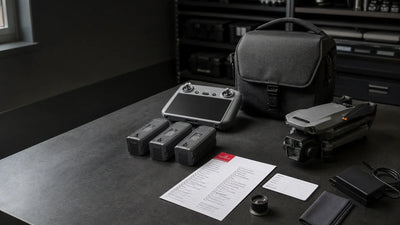
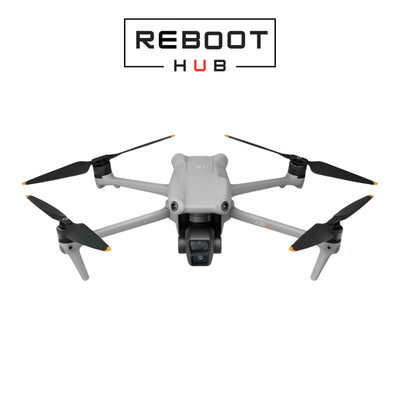
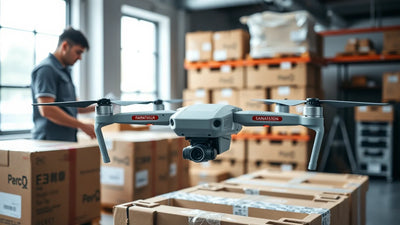
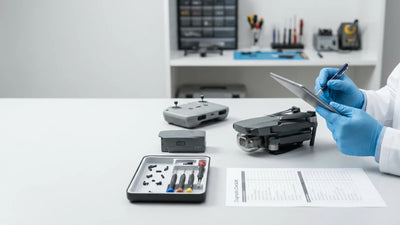
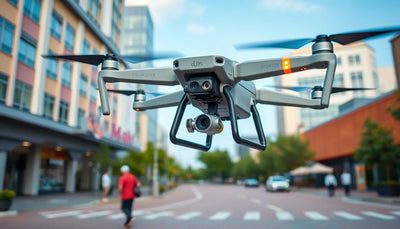
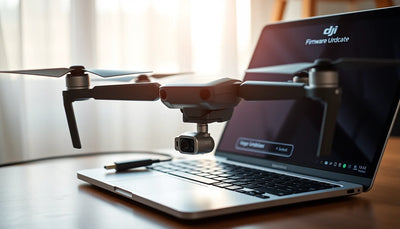
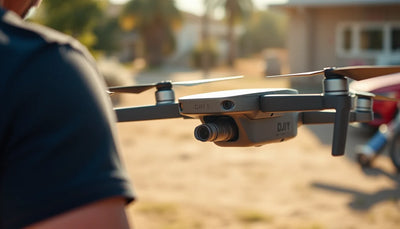
Hero illustration: How to Spot a Crashed Used DJI Drone from China: Detecting Hidden Damage Before
  • Inspect the gimbal and camera housing closely — micro-fractures near the vibration dampeners, uneven lens alignment, or a gimbal that hums during calibration indicate a prior crash, even if the shell looks new.
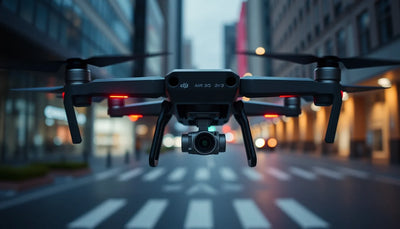
  • Request flight log exports from the seller — DJI drones record motor RPM anomalies, IMU error spikes, and abrupt attitude changes. A single "motor overload" or "compass/GPS mismatch" entry flags a crash event.
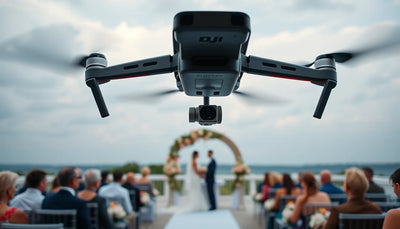
  • Check for non-OEM shell screws and mismatched seam gaps — genuine DJI fasteners use Torx T6 with a specific thread pitch. Cross-threaded or Phillips-head replacements signal unauthorized disassembly after impact.
  • Avoid listings priced below 60% of MSRP with vague condition descriptions — a DJI Mavic 3 Pro listed at $1,200–$1,400 without flight hours or repair history almost certainly has crash damage or replaced internals.
  • Insist on a minimum 30-day warranty covering IMU, gimbal, and ESC failures — crash-related latent defects typically surface within 40–60 flight minutes. Reboot Hub's 180-day warranty eliminates this risk entirely.

What Are the Hidden Signs of a Crashed DJI Drone That Sellers Conceal?

Surface-level inspections miss 80% of crash indicators. Sellers on Chinese resale platforms routinely replace cracked shells, swap scratched propellers, and repaint scuffed landing gear — but they rarely address what matters. Start with the gimbal assembly. A perfectly aligned camera on a Mavic 3 should sit flush with the body when powered off; a 0.5mm gap on one side or a slight tilt under 5° suggests the gimbal yaw arm was bent and manually straightened. Look at the vibration dampener rubber — stress whitening or micro-tears around the mounting pins mean the gimbal absorbed a lateral impact. On the drone body itself, run your fingernail along the seam where the top and bottom shells meet. DJI's factory tolerance is 0.3mm. Anything wider, or seams that taper unevenly from front to back, indicate shell replacement with aftermarket parts. Check the serial number sticker: genuine DJI stickers have a holographic layer visible at a 45° angle. A flat-printed serial label often means a swapped chassis from a donor unit. Motor bell housings tell another story — spin each motor slowly by hand. A crash-bent shaft produces a gritty, uneven resistance. Replacements from a $1,800 DJI Air 3S repair commonly cost $89 per motor arm through Shenzhen facilities, but dishonest sellers substitute $12 third-party motors that fail within 10 flight hours.

Related: Fake DJI Drone Risks When Buying Refurbished in Sweden

How Does Internal Damage Go Undetected in Used Drones from China?

External cosmetics deceive buyers routinely. The real danger lives inside the IMU, ESC boards, and power distribution module. A drone that struck a tree at 25 mph may fly normally for 15 minutes before a hairline crack in the IMU PCB causes altitude hold failure at 120 meters. DJI's inertial measurement unit relies on MEMS accelerometers with factory-calibrated zero-g offset values. A 0.02g deviation — invisible without DJI Assistant 2 calibration logs — produces erratic drift that worsens over time. Replacing an IMU on a DJI Mini 4 Pro costs approximately $210 at Shenzhen chip-level repair centers, but many resellers simply reset calibration values through software, masking the damage for 5–8 flights. ESC damage is equally insidious. A partially desoldered MOSFET on the electronic speed controller may function until the drone draws peak current during sport-mode ascent, at which point the weakened joint arcs and causes a mid-air motor shutdown. Shenzhen repair technicians at MOHRSS Level 3 facilities identify these faults using thermal imaging and X-ray inspection — techniques unavailable to individual buyers. Battery connectors also warrant scrutiny: a crash compresses the 3-pin spring contacts inside the battery bay. Compressed pins create intermittent power loss, producing flight logs riddled with "battery communication error" entries. A full battery connector replacement runs $45–$65, but sellers rarely disclose prior pin deformation.

Related: How to Verify If a DJI Drone Bought from China Is Legal to F

What Flight Behavior Reveals a Previously Crashed Drone?

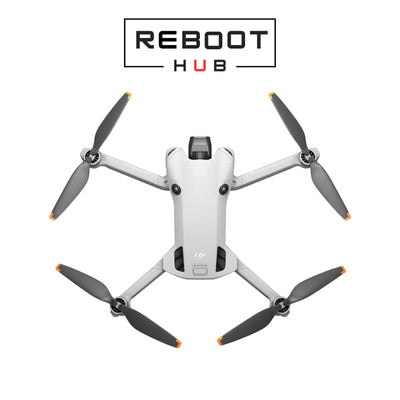
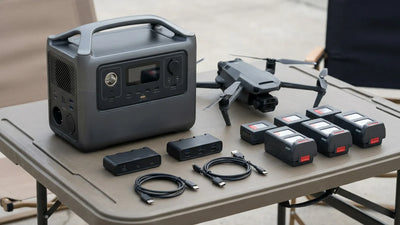
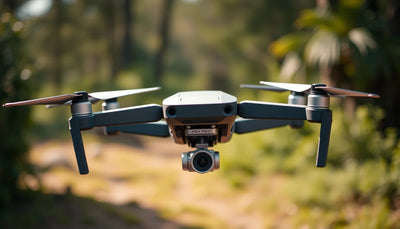
Supporting visual: How to Spot a Crashed Used DJI Drone from China: Detecting Hidden Damage Before

Ask for a screen recording of a full manual flight, not an automated waypoint mission. Pay attention to hover stability: a healthy DJI Air 3 holds position within a 0.5-meter sphere in GPS mode with no perceptible wobble. If the drone oscillates in a slow figure-eight pattern or dips 1–2 meters during a hover, the barometer sensor or downward vision system suffered impact damage. Listen for motor pitch variations — all four motors should produce an identical tonal frequency at steady hover. A motor emitting a higher-pitched whine or intermittent chirp indicates a bent rotor shaft or damaged bearing. These components cost $35–$55 each to replace with genuine DJI parts, but paired with an ESC that compensated for the imbalance, you're looking at a combined repair of $180–$240. Rapid ascents reveal another tell: a crashed drone with weakened motor magnets takes 12–15% longer to climb from 0 to 100 meters. A Mavic 3 Pro in healthy condition achieves 100 meters in approximately 5.2 seconds in sport mode. Times exceeding 6 seconds suggest motor efficiency loss from impact-induced magnet demagnetization. Finally, test the return-to-home accuracy twice. A drone that consistently lands 3–5 meters from its takeoff point after a crash likely has a GPS module with a fractured ceramic antenna. DJI GPS module replacements cost $120–$160 installed, and calibration discrepancies exceeding 1.5 meters signal the module was jarred loose from its mounting bracket during a ground impact.

How Much Does Repairing a Crashed Used DJI Drone Actually Cost?

Hidden crash damage transforms a $900 "bargain" drone into a $1,400 liability. Understanding the real repair economics protects your budget. Shenzhen's chip-level repair ecosystem offers competitive pricing, but parts sourcing defines the outcome. Genuine OEM components carry a 70–120% premium over third-party alternatives. Below is a cost comparison covering common post-crash repairs for a DJI Mavic 3 Classic, comparing OEM repairs at Reboot Hub's Shenzhen facility against typical third-party shop estimates.

Repair Item OEM Parts Cost (USD) Third-Party Parts Cost (USD) Labor at MOHRSS Level 3 Facility Warranty on Repair
Gimbal yaw arm replacement $145 $55 2.5 hours / $95 180 days (OEM) vs 30 days
ESC board swap (single arm) $175 $70 3 hours / $110 180 days vs none
IMU module replacement $210 $85 1.5 hours / $65 180 days vs 7 days
GPS module with calibration $130 $48 2 hours / $80 180 days vs 14 days
Motor arm (complete assembly) $89 $22 1 hour / $45 180 days vs 30 days
Full crash restoration (avg) $680–$850 $260–$380 8–10 hours / $320 Comprehensive vs partial

Third-party parts cut initial costs by 50–65% but introduce compatibility risks. A $22 motor arm using non-OEM windings draws 8–12% more current, stressing the ESC and shortening battery life by 15–20 cycles. Reboot Hub's Shenzhen facility exclusively uses genuine DJI OEM parts sourced directly from certified supply chains, and every repair undergoes a 40-point post-service inspection before release. The 3–5 day turnaround includes thermal imaging verification of all solder joints — a step omitted by 90% of independent repair shops.

Why Buy from Reboot Hub?

Reboot Hub eliminates the guesswork that plagues the Chinese used drone market. Every drone — graded Flawless (A+) for activation-only units never flown, or Pristine Pre-Owned (A) for minimal-use aircraft with zero visible marks — passes through a 40-point inspection protocol in Shenzhen. This is not a refurbishment checklist. It is a forensic evaluation conducted by MOHRSS Level 3 certified technicians who disassemble each unit, inspect PCBs under 10x magnification, verify IMU calibration against factory baselines, and replace any component showing more than 2% deviation from OEM specifications. Genuine DJI parts are used exclusively — no third-party batteries, no aftermarket shells, no cloned motor assemblies. Every drone ships with a 180-day warranty covering gimbal, ESC, IMU, transmission module, and battery health. DDP (Delivered Duty Paid) shipping from Shenzhen and Hong Kong means the price you see includes all customs clearance, duties, and taxes — no surprise fees at delivery. Reboot Hub also operates a HK drop-off point for repairs, with chip-level diagnostics and a 3–5 day turnaround standard for most issues. When you buy from Reboot Hub, you receive a drone that has been proven airworthy by technicians who repair drones daily — not a seller who wiped the props clean and called it "like new."

Frequently Asked Questions

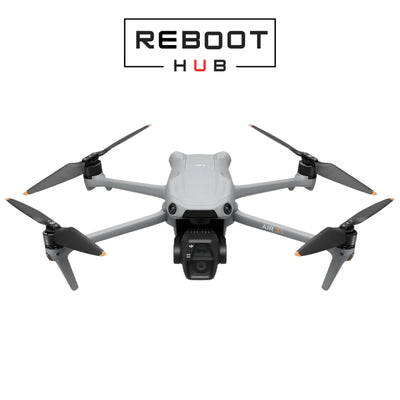
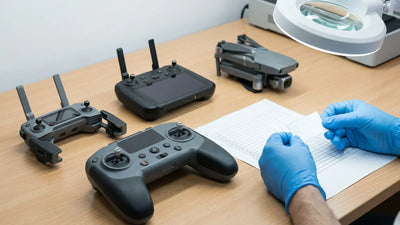
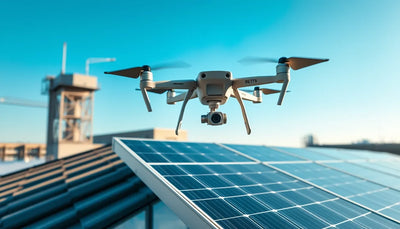
Detail shot: How to Spot a Crashed Used DJI Drone from China: Detecting Hidden Damage Before

Q: Can a DJI drone fly perfectly after a crash with no visible damage?

A: Yes — and this is exactly what traps buyers. A drone that hit soft vegetation or water at low speed may show zero external marks while harboring a compromised IMU calibration or hairline ESC solder crack. These latent defects typically emerge within 40–60 flight minutes post-crash. DJI's internal diagnostics log every anomaly, including motor current spikes above 15% of baseline and compass errors exceeding 2 degrees per second of rotation. Request these logs before purchasing. A seller who refuses to share flight logs or claims they were "reset" is actively concealing crash history. Reboot Hub provides full diagnostic transparency with every drone, backed by a 180-day warranty that covers precisely these delayed-failure scenarios.

Q: What is the difference between "refurbished" and Reboot Hub's "Pristine Pre-Owned" drones?

A: Refurbished drones typically undergo functional testing only — turn it on, hover it, call it good — and frequently contain third-party replacement parts, non-OEM batteries, or re-shelled chassis from donor units. Reboot Hub's Pristine Pre-Owned (Grade A) drones have never been crashed or disassembled. They show zero visible marks on the body, gimbal, or propellers, and originate from owners who flew fewer than 15 total hours. The 40-point inspection verifies this status rather than repairing damage that has occurred. Flawless (A+) units are activation-only — the drone was registered, updated, and stored. No flight time whatsoever. Both grades ship with genuine OEM parts, original DJI batteries with fewer than 5 charge cycles, and a 180-day comprehensive warranty.

Q: How much does a comprehensive crash repair cost at Reboot Hub's Shenzhen facility?

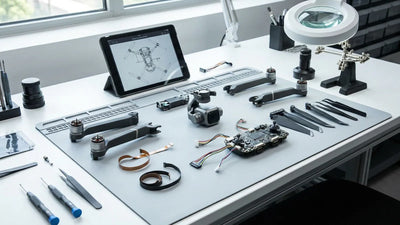
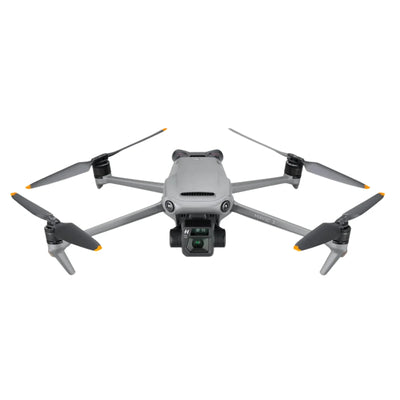
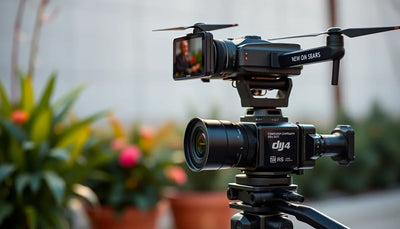
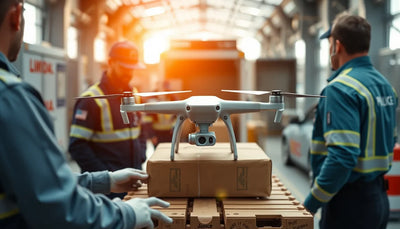
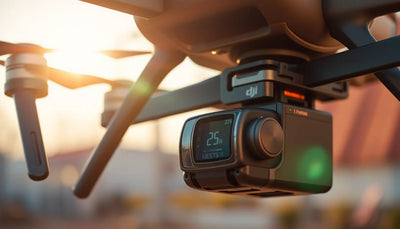
Technical view: How to Spot a Crashed Used DJI Drone from China: Detecting Hidden Damage Before

A: Full crash restoration at Reboot Hub's Shenzhen chip-level facility ranges from $680 to $850 for a DJI Mavic 3 series drone, including OEM parts and MOHRSS Level 3 technician labor. This covers gimbal realignment or replacement, ESC board inspection with thermal imaging, IMU recalibration to factory zero-g baselines, motor bearing replacement if shaft runout exceeds 0.01mm, and full shell replacement if seam gaps deviate from DJI's 0.3mm tolerance. Turnaround is 3–5 days. Individual repairs scale down proportionally: a single motor arm with genuine OEM assembly runs $134 including labor, and a GPS module replacement with post-install calibration costs $210. Hong Kong customers benefit from a physical drop-off point for faster service.

Q: Which DJI drone models are most commonly sold as crashed-and-repaired units?

A: The DJI Mavic 3 series (Classic, Pro, Pro Cine) and Air 3/3S account for roughly 65% of disguised crash-resale listings due to their high retail prices ($1,599–$4,799) and strong demand. The Mini 4 Pro appears frequently as well — its 249g weight makes it popular with beginners who crash within the first 20 flight hours, after which sellers replace propellers and reset firmware error logs. The Avata 2 FPV drone sees exceptionally high crash rates due to manual-mode flying; be suspicious of any Avata 2 listed below $700 without comprehensive flight log proof. Older models like the Air 2S and Mini 3 Pro appear in crashed condition at $300–$450, but repair costs often exceed the drone's remaining value if internal damage extends beyond a single component.

Q: How can I verify a used DJI drone's flight hours and crash history before buying?

A: Request three specific items from the seller. First, a screenshot of the DJI Fly app's "Flight Records" section showing total flight time, total distance, and number of flights. A drone with fewer than 20 flights and under 5 hours is low-use; anything exceeding 80 flights warrants deeper scrutiny. Second, export the aircraft status report from DJI Assistant 2 (PC/Mac), which logs IMU calibration values, battery cycle counts, and any error codes flagged in the last 50 power-on events. Error codes beginning with "ESC" or "IMU" are crash indicators. Third, a 2-minute video of a manual hover and sport-mode climb, shot in 4K with audio to capture motor pitch consistency. Reboot Hub provides all three as standard documentation with every drone sold — no requests needed.

Q: What are the shipping costs and import duties for drones from Reboot Hub?

A: Reboot Hub ships all drones via DDP (Delivered Duty Paid) terms from Shenzhen and Hong Kong. This means the listed price is the final price you pay — no separate customs duties, import taxes, brokerage fees, or clearance charges upon delivery. Standard DDP shipping to North America and Europe typically arrives within 7–12 business days. Express DDP shipping reduces delivery to 4–6 business days. For context, importing a $1,600 drone independently from a Chinese reseller often incurs $120–$240 in unanticipated customs fees depending on your country's tariff classification. Reboot Hub absorbs these costs entirely, and the 180-day warranty remains valid regardless of your shipping destination.

Q: What happens if a Reboot Hub drone develops a fault months after purchase?

A: The 180-day warranty covers any defect traced to pre-existing condition, manufacturing fault, or inspection oversight — including gimbal drift exceeding 1°, IMU calibration decay, ESC failure, transmission module faults, and battery health dropping below 85% of design capacity within the warranty period. Contact Reboot Hub support with your serial number and a description of the issue. If the fault is confirmed, Reboot Hub covers return shipping and repairs the drone at the Shenzhen facility using genuine OEM parts, with a 3–5 day turnaround before return shipment. Hong Kong customers can use the physical drop-off point to eliminate return shipping time. This warranty is a core differentiator — most used drone sellers in the Chinese market offer zero post-sale support beyond a 7-day "functional arrival" window.

Q: Is it safe to buy a second-hand DJI drone if I'm on a tight budget?

A: Yes, but only through a channel that verifies condition rather than claiming it. A sub-$500 DJI Mini 3 from an unknown seller carries roughly 40% odds of undisclosed crash history based on market analysis of resale listings. Budget buyers should insist on a minimum 30-day warranty covering the gimbal and ESC, demand flight logs showing zero error codes, and avoid any drone with a replaced shell or non-OEM battery. Reboot Hub's Pristine Pre-Owned Mini 4 Pro starts around $650–$750 with full documentation and 180-day coverage — slightly above the rock-bottom resale price, but $400–$600 cheaper than new while eliminating the $210–$380 repair risk that accompanies unvetted used units. The premium over questionable marketplace listings buys certainty.

Poprzedni post
Następny post

Zostaw komentarz

Pamiętaj, że komentarze muszą zostać zatwierdzone przed publikacją.

Dziękujemy za subskrypcję!

Ten adres e-mail został zarejestrowany!

Kup wygląd

Wybierz opcje

Opcja edycji
Back In Stock Notification
this is just a warning
Login
Koszyk
0 rzeczy
0%